Category: AFRICA

  • New Year Address from Rugby Africa President, Herbert Mensah

    New Year Address from Rugby Africa President, Herbert Mensah

    CAPE TOWN, South Africa, January 11, 2024/ — Herbert Mensah, President of Rugby Africa (www.RugbyAfrique.com), the continental governing body of rugby across Africa, issues end of year message reflecting on 2023:

    Amidst our joyful farewell to 2023, I am thrilled to share my reflections as the President of Rugby Africa, the continental governing body of rugby in Africa. Together, our collective accomplishments have not only defined this year but have also laid a foundation for the promising future of Rugby Africa.

    Milestones and Achievements

    As we reflect on the remarkable journey of the past nine months, it is with immense pride that I share the highlights of our accomplishments. From the success of the Rugby Africa Women’s tournament in Madagascar to the significant Rugby Africa Men’s Olympic qualification tournament in Zimbabwe, the thrilling Rugby Sevens tournament in Mauritius, and the vibrant scene in Tunisia’s Monastir, our efforts have truly shone on the rugby stage. Notably, a significant portion of our achievements this year has been dedicated to francophone countries.

    We celebrate the re-admittance of Nasser Bougja as Vice President, the return of the Moroccan Rugby Federation to Rugby Africa, an established pathway solution for Cameroon, Ghana and management of other upcoming elective Annual General Assemblies and the momentous milestone of signing the long-awaited agreement with the French Development Agency (AFD) to foster the development of women’s rugby in Africa.

    We have addressed administrative challenges by rectifying loose agreements within Rugby Africa that were either uncontracted or unpaid. Internally, administrative efficiency has been enhanced with the establishment of committees, each equipped with clear terms of reference and KPIs for committee members.

    Looking ahead, we are committed to annual reassessments, ensuring that our committees maintain the highest standards of performance. It’s important to note that accountability remains a cornerstone, and those unable to meet expectations will be subject to be reassigned from their roles.

    Commitment to Progress

    As President of Rugby Africa, I continue to call for a mindset change recognizing that sport is big business. This plea heralds a new era, challenging the status quo with a comprehensive constitutional review—a ground breaking initiative unprecedented in our history.

    This review, initiated by Rugby Africa through the Executive Committee, involves input from various committees, our judicial council, external legal experts and a final presentation to member unions for ratification. This transformative process signifies our commitment to transparency and progress, setting a new standard for Rugby Africa.

    Strategic Planning

    We have successfully developed and received approval for our strategic plan, a blueprint aimed at providing financial support to all 39 member unions of Rugby Africa. Considering the limited funding from World Rugby, which primarily supports 21 out of the 39 Rugby Africa member unions, this strategic plan is a significant milestone for Rugby Africa.

    The plan, meticulously reviewed and presented across our committees, places a strong emphasis on securing financial backing to ensure that all Rugby Africa member unions have the necessary support to play competitively and thrive in the world of rugby.

    Financial Initiatives

    In a strategic effort to maximize our resources, Rugby Africa has introduced a series of financial initiatives. For the first time ever, hosts are now entrusted with covering all hosting grants- a move anticipated to result in cost savings.

    Guided by our Competition Manager, Johnbosco, calculations are underway to access the potential impact of these changes. Furthermore, Rugby Africa is in discussions for multiple sponsorship opportunities, with an official announcement expected mid 2024.

    These initiatives underscore Rugby Africa’s commitment to foster more opportunities for rugby across the continent, reshape competitions and elevating the overall rugby experience. Among our own initiatives, we remain hopeful to receive greater levels of financial support from World Rugby, to further support our development and advance the growth of rugby in Africa.

    Unity Among Unions

    We approach the future with a sense of optimism and gratitude. My sincere appreciation goes to all the unions that have embraced the challenges. In Southern Africa, Lesotho, Eswatini, Mozambique and Botswana, have successfully organized a spirited competition, reflecting the true spirit of rugby.

    Burkina Faso actively engaged in a Seven’s competition, demonstrating their dedication to the sport. Guinea participated in an international match with Sierra Leone, fostering unity in our rugby community.

    Over the past two months, Ghana has actively engaged in matches with Benin and Togo. Beyond borders, collaborative efforts between Rwanda, Burundi and Tanzania are gaining momentum as they work towards organizing their own competitions.

    I was particularly enthused by the huge efforts of Uganda’s test matches in Tunisia and Algeria’s proposed test match against Senegal. Furthermore, the 2023 Indian Ocean Island Games hosted by Madagascar, with countries such as Mauritius participating, provided an additional opportunity for increased game time. I am deeply grateful for the collective enthusiasm displayed by the unions across the continent. Together, as a federation, we are charting a path of enthusiasm and progress in the world of rugby.

    Acknowledgement and Gratitude

    I extend my heartfelt gratitude to APO Group, South Africa Rugby Union, French Rugby Federation (FFR), French Development Agency (AFD), and World Flair for their invaluable support. Their commitment and collaboration have provided us with a powerful platform to champion our firm belief that the development of rugby in Africa is not just a sport but an investment in the future of the continent.

    Together, with the support our partners, we are building a foundation for the growth of rugby, fostering community engagement, and contributing to the overall development and well-being of Africa. Thank you for your unwavering dedication to this shared vision. This year, Rugby Africa has asserted itself on the global stage, making it abundantly clear that Africa is key player in the world of rugby.

    During the Bloomberg Gateway Conference in Morocco, our message reached an audience of over 3.5 million people, emphasizing the vast business opportunities inherent in investing in rugby across Africa, showcasing our continent at the forefront in the global marketplace.

    At the Africa Investment Forum in Marrakesh, I had the privilege of engaging in discussions with the President of the African Development Bank, highlighting rugby’s potential to drive economic growth through investment opportunities emerging from the continent itself. These events are instrumental in shaping Rugby Africa’s global positioning, paving the way to a future where rugby across Africa can ascend to new heights.

    We continue to ask ALL to accept a mindset shift to give the opportunity of sports (Rugby) a chance. Sport is NOT a charity it is BIG business!

    Reflections and Greetings

    A substantial amount of work has been accomplished by members of the executive committee, along with dedicated efforts of staff members and myself. As President of Rugby Africa, I believe it becomes evident that 2023 has been dedicated to laying the foundational groundwork.

    We anticipate that the fruits of our labour will begin to manifest from the second half of 2024 onwards. In extending my sincere gratitude, I wish season’s greetings to everyone, embracing the diversity of religious traditions that enrich our continent. This is a time for unity, for coming together, breaking bread, and celebrating the strides we made collectively.

    God be with all of us!

    Herbert Mensah
    President of Rugby Africa

    Download official letter here: https://apo-opa.co/3SdGAsV

    Distributed by APO Group on behalf of Rugby Africa.

    Media contact:
    Nicole Vervelde
    Communications Advisor to the President of Rugby Africa
    rugby@apo-opa.com
  • Economic uncertainty is impacting Africa’s real estate market attractiveness

    Economic uncertainty is impacting Africa’s real estate market attractiveness

    Tilda Mwai (first Published 3 weeks ago)

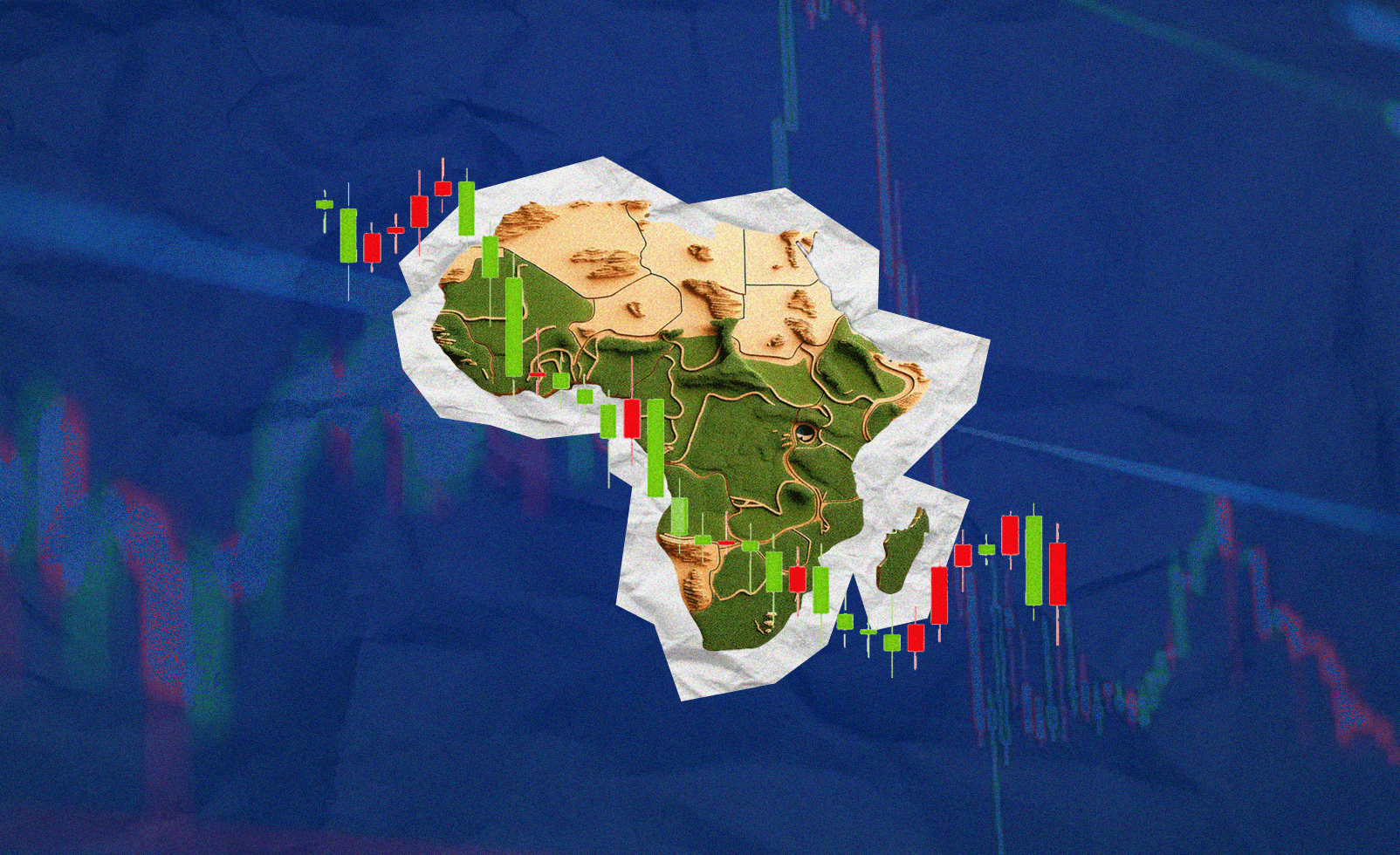
    The real estate sector in Africa, often touted for its potential and growth opportunities, has been grappling with a myriad of challenges, notably macroeconomic and political uncertainty, along with the repercussions of global tensions. These factors have converged to create a landscape where the attractiveness of real estate markets is increasingly influenced by core macroeconomic…

    The real estate sector in Africa, often touted for its potential and growth opportunities, has been grappling with a myriad of challenges, notably macroeconomic and political uncertainty, along with the repercussions of global tensions.

    These factors have converged to create a landscape where the attractiveness of real estate markets is increasingly influenced by core macroeconomic indicators, leading to a noticeable decline in market activity across the continent.

    In this article, we highlight the top real estate markets based on macroeconomic performance as well as key market nuances to watch out for.

    • Botswana and Morocco rank at the top of the real estate market attractiveness index

    The real estate market attractiveness index seeks to rank countries based on their relative stability. The index has incorporated six different core indicators that include currency changes, a country’s debt to GDP ratio, credit rating, inflation, construction costs and GDP growth rate.

    These indicators were then assessed across 17 of the major economies in Africa with a spread across East, West, North and South.

    Notably,  Botswana and Morocco ranked at the top of the real estate market attractiveness ranking. This has been underpinned by the relative currency stability, low inflation rates and lower construction costs.

    For example, Botswana and Morocco recorded inflation rates at 3.1% and 4.3% respectively which is significantly low compared to Egypt’s 35.8% and Ghana’s 35.2%. In addition, Morocco’s construction costs per sqm are estimated at an average of US$ 600 compared to the all country average of US$ 1,366.

    On the other hand, Ghana and Angola ranked as the least real estate attractive countries for 2023. Ghana’s performance has been impacted by its heightened inflation estimated at 35.2% effectively ranking as the second highest after Egypt, lower GDP growth rate and above average construction costs.

    Angola’s performance has been impacted by high currency depreciation rate with currency changes in the year to December 2023 estimated at 67% as well as a higher debt to GDP ratio estimated at 111%.

    Interestingly, Nigeria also ranked as the third last market due to heightened currency changes (83.66% YTD), high inflation rate (27.33%) and high construction costs estimated at USD 1,700 per sqm.

    • Currency changes remain the single most important impacting factor on performance

    There is no doubt that currency performance is most often a great indicator of a country’s economic stability.However, investors currently have a reason to be jittery. With inflation already on the rise, increasing debt levels and potential default,countries are already seeing a cut back in investment preference.

    So far, Nigeria’s Naira has recorded the highest rate of depreciation in the year to December 2023 with a 83% decline on the official rate.This has been followed by Angola’s Kwanza recording a 67% decline during the same period. Interestingly, historically stable markets such as Tanzania have also recorded a 7.5% decline during the period under review pointing to the continued stress in the macroeconomic environment across board.

    However, Morocco has emerged as an outlier, ranking as the only country whose currency has appreciated against the dollar by up to 3%. This has been underpinned by a stronger macro economic environment pointing towards an overall recovery in different sectors including real estate driven by increased foreign investments and trade.

    Generally, this currency performance is set to impact on commercial real estate leasing activity especially for retail and office sectors as well as green field investments financing especially for social infrastructure such as Affordable housing.

    Already, financing allocation, often influenced by Development Finance Institutions, is primarily dollar based. Continued local currency depreciation means that such debt will be expensive to undertake. With a limited domestic capital raising landscape, we are likely to see limited development pipeline in the majority of the markets with the only developments undertaken being previously negotiated ones.

    A bright spot to this has been the development of alternative financing methods. Although still in their nascent stages, countries such as Kenya and Nigeria are actively championing the development of alternative domestic financing for real estate. Notably, this has led to increased momentum in Kenya’s REITs market. So far, three out of the four authorised REITs entities in the market have been listed over the past two years since 2013 when the first REIT was listed.

    While in Nigeria, this  alternative financing landscape has been reflected through an income fund shift. Institutional investors such as Actis have sought to raise capital through its inaugural West Africa income funds

    • The  subdued macro environment is impacting on the logistics sector growth.

    Logistics warehousing ‘hype’ has cooled off across the continent with new development announcements at record lows during 2023. This has been attributed to the ensuing macroeconomic challenges that have seen drivers such as e-commerce and manufacturing slowdown.

    This has led to market exits by key manufacturers such as GSK in markets such as Lagos and Nairobi with a refocus on their business model while occupiers such as Twiga Foods in Kenya have had to consolidate their operations by shutting down over ten distribution centres earlier on in the year.

    As a result, the markets are seeing limited new take up with the majority of the activity being driven by lease renewals. As such, the majority of the logistics developers are expected to continue offering market incentives in a bid to attract potential occupiers even as existing occupiers reassess their portfolios.

    Interestingly, while there is a slowdown in demand, grade A warehouse rents have remained stable in markets such as Kenya at approximately US$ 6 psm. Still, currency depreciations are seeing developers record losses especially in the absence of dollar based leases. Additionally, occupiers are opting for shorter and flexible lease terms as a mitigating strategy to the subdued macro economic conditions

    • Hospitality market remains the most active real estate sector

    Interestingly, the hospitality market has remained the most active sector in terms of transaction volumes and development pipeline across the continent. In Kenya for example approximately USD 44.4 million has been expended in the sector between 2021 and 2023 through existing acquisitions such as three City Lodge hotels acquired by Actis in 2021, and Crowne Plaza Hotel by Kasada in 2022  and pipeline transactions such as Safari Club Hotel set to be acquired by Swiss-Belhotel International in Q1:2024.

    Market activity has also been underpinned by a vibrant development pipeline. According to W Hospitality Group, approximately 482 hotels are set to be developed across the continent in 2023 compared to 447 in 2022. Egypt, Nigeria and Morocco rank as the leading countries in terms of development activity accounting for 103, 42 and 46 hotels respectively.

    Despite their relatively subdued macro economic environment, Egypt and Nigeria have continued to record considerable hotel investment interest.

    This trend is expected to continue as developers seek to formalise the hospitality market as well as meet existing demand from international and domestic markets.

    SOURCE

    Estate Intel News

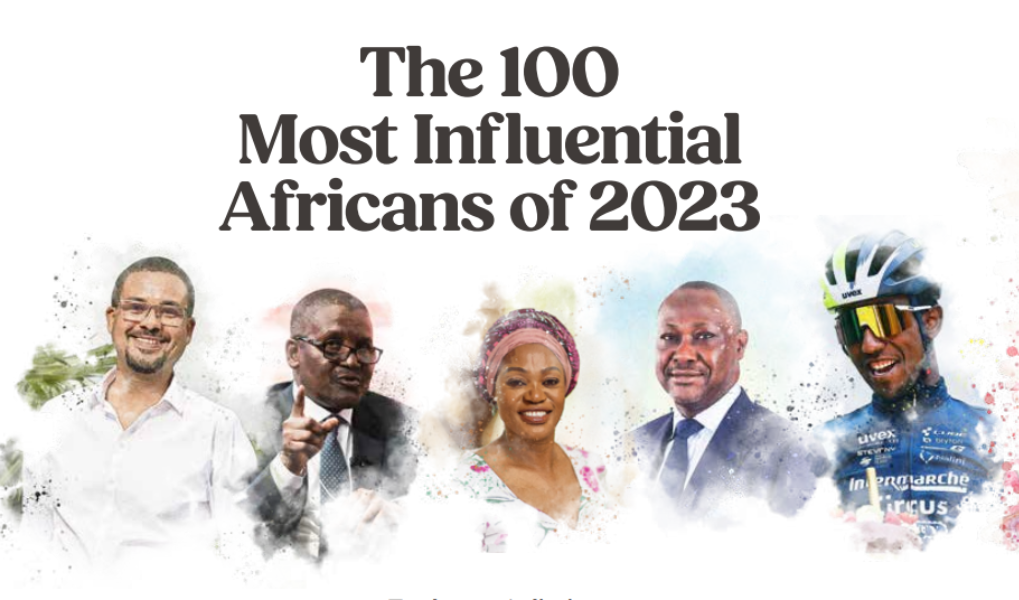
  • New African Magazine reveals the 100 Most Influential Africans of 2023

    New African Magazine reveals the 100 Most Influential Africans of 2023

    • The list features a diverse and inspiring group of men and women from various fields and sectors, who have made a positive impact on the continent and the world
    • Creatives dominate the ranking with 31 representatives, followed by Business with 25 entries
    • Nigeria is the country most represented on the list
    • The list reflects the shifting trends and priorities in Africa, as the continent faces new challenges and opportunities

    02 January 2023 – New African magazine released today its annual listing of the 100 Most Influential Africans of 2023. The list celebrates the achievements and contributions of Africans from various fields and sectors, who have made a positive impact on the continent and the world.

    The list features a diverse and inspiring group of men and women, who have demonstrated excellence, innovation, leadership, resilience, and vision in their respective domains. They include politicians, entrepreneurs, industrialists, environmentalists, creatives, scientists, educators, sports personalities, and more.

    The list also reflects the shifting trends and priorities in Africa, as the continent faces new challenges and opportunities in the post-pandemic era. Creatives dominate the ranking with 31 representatives, including singer Abel Tesfaye, aka The Weekend, filmmaker Alice Diop and writer Nana Darkoa Sekyiamah.

    The second category with the highest number of entries was the Business section, with 25 entries. The section included two behemoths from DFIs, supporting a private sector approach to investing: Samaila Zubairu from Africa Finance Corporation and the President of Afreximbank, Benedict Oramah, undoubtedly Africa’s juggernaut from the last few years leading Africa’s transformation. Also on the list is the former CEO of Eskom and whistleblower who nearly paid with his life André de Ruyter.

    Nigeria was the country most represented on the list, highlighting the country’s dominance in the creative sector and business. William Ruto, the President of Kenya, and Bola Tinubu, President of Nigeria, were the only heads of state to make it, along with the Guinean military leader Mamady Doumbouya. Doumbouya created quite a stir at this year’s UN General Assembly and appears to have found a solution around the Simandou mining saga.

    With Climate Change at the top of the agenda, the list features several players in the environmental space, such as James Mwangi, formerly from Dalberg Group who has set up his own venture fund investing in climate related businesses, and Elizabeth Maruma Mrema, the Executive Secretary of the UN Convention on Biological Diversity.

    In the media, we have two media leaders from Côte d’Ivoire, Fabrice Sawegnon, founder of communications agency Voodoo, and Daniel Ahaoussa, serial entrepreneur and founder of a number of websites in West and Central Africa. Also included are the journalist Alan Kasujja, the BBC journalist, and Branko Brkic, founder of Daily Maverick, arguably the most powerful media in South Africa today.

    And in sports, record breakers Faith Kipyegon and Kelvin Kiptum make it, as well as the Springboks team, under the leadership of their captain Siya Kolisi. Patrice Motsepe, the President of CAF, a close friend of FIFA president Gianni Infantino and an increasingly influential voice in sports, is also included.

    The 100 Most Influential Africans of 2023 is a special edition of New African magazine, which offers a comprehensive and insightful overview of the lives and achievements of the selected individuals. The magazine also provides a platform for the readers to learn from their stories, and to be inspired by their examples.

    Download the 100 Most Influential Africans of 2023 special edition of New  African or see below the list in full.

    Politics and Public Service

    • William Ruto
    • Ibrahima Cheikh Diong
    • Sidi Ould Tah
    • Akinwumi Adesina
    • Ngozi Okonjo-Iweala
    • Bola Tinubu
    • Mamady Doumbouya
    • Ousmane Sonko
    • Nadia Fettah Alaoui
    • Tsitsi Masiyiwa
    • Tidjane Thiam

    Business

    • Mohamed Kande
    • Sim Tshabalala
    • Karim Beguir
    • Didier Acouetey
    • Olugbenga Agboola
    • Samaila Zubairu
    • Prof. Benedict Okey Oramah
    • Ralph Mupita
    • Ibrahim Sagna
    • Simon Tiemtoré
    • Jules Ngankam
    • Riham ElGizy
    • André de Ruyter
    • Aliko Dangote
    • Ham Serunjogi
    • Serge Ekué
    • Bahija Jallal
    • Coura Sène
    • Bernard Koné Dossongui
    • Hassanein Hiridjee
    • Shola Akinlade
    • James Mwangi
    • Pascal Agboyibor

    Science and Academia

    • Anna Adeola Makanju
    • Chao Tayiana Maina
    • Nemat Talaat Shafik
    • Ismahane Elouafi
    • Moungi Bawendi
    • Timnit Gebru

    Environmental

    • James Irungu Mwangi
    • Ephraim Mwepya Shitima
    • Wanjira Mathai
    • Rashid Sumaila
    • Elizabeth Maruma Mrema
    • Dr Musonda Mumba

    Creative

    • Kaouther Ben Hania
    • Danai Gurira
    • Ncuti Gatwa
    • Black Coffee
    • Tyla Laura Seethal
    • Temilade “Tems” Openiyi
    • Lesley Lokko
    • Mulenga Kapwepwe
    • Alice Diop
    • Wanuri Kahiu
    • Bassem Youssef
    • Malenga Mulendema
    • Jadesola Osiberu
    • Editi Effiong
    • Ali Said Alamin Mandhry
    • Abel “The Weekend” Tesfaye
    • Pretty Yende
    • Julie Mehretu
    • Pierre Thiam
    • Teju Cole
    • Thebe Magugu
    • David Diop
    • Burna Boy
    • Serge Attukwei Clottey
    • Nana Darkoa Sekyiamah
    • Aïda Muluneh
    • Omoyemi Akerele
    • Mariam Issoufou Kamara
    • Victor Ekpuk
    • DJ Snake
    • Gandhi “Maitre Gims” Djuna

    Media

    • Claude Grunitzky
    • Chioma Nnadi
    • Edward Enninful
    • Alan Kasujja
    • Wode Maya
    • Anton Harber
    • Khabane “Khaby” Lame
    • Charity Ekezie
    • Moses “Uncle Mo” Kiboneka
    • Branko Brkic
    • Tomiwa Aladekomo
    • Marie Mbullu
    • Nicolas Pompigne-Mognard
    • Daniel Ahaoussa
    • Fabrice Sawegnon

    Sports

    • Francis Ngannou
    • Faith Kipyegon
    • The Springboks, led by captain Siya Kolisi
    • Patrice Motsepe
    • Kelvin Kiptum
    • Victor Osmihen
    • Biniam Girmay
    • Yassine Bounou


  • Africa’s Natural Gas Sector is Building Momentum in 2024

    Africa’s Natural Gas Sector is Building Momentum in 2024

    By NJ Ayuk, Executive Chairman, African Energy Chamber

    The recently signed liquefied natural gas (LNG) development project in South Africa’s Mpumalanga province is a promising step on the long road to Africa’s just energy transition.

    The project, being jointly developed by Kinetic Energy of Australia and the Industrial Corporation of South Africa (IDC), a national development finance institution, will capitalize on Kinetic Energy’s recent 3.1 billion cubic feet natural gas discovery in Amersfoort, Mpumalanga. The project is expected to produce 50 megawatts (MW) of equivalent energy and eventually expand to 500 MW.

    The project, which Kinetic Energy describes as South Africa’s largest onshore LNG project, exemplifies natural gas’ potential to grow the country’s economy and meet domestic energy needs.

    This all comes about as South Africa works to expand its oil and gas operations in order to curb its reliance on coal and help pave the way to eventual decarbonization.

    South Africa is not alone, either. As the African Energy Chamber (AEC) covers in our recently released “The State of African Energy 2024 Outlook Report,” natural gas production is on the rise both globally and in Africa. Even more promising, our report notes that “upstream operators are now revising their strategies and aligning their future investments more in line with energy transition, and natural gas is being looked at as transition fuel.”

    The African Energy Chamber will support the Invest in African Energy Conference in Paris this year organise by Energy Capital and Power. African Energy Week will definitely be the home of Natural Gas investment in Africa.

    Gas: A Logical Transition Fuel

    I find it heartening that, despite calls by environmental organizations and wealthy countries to cease investment in African oil and gas projects, many of the companies actually operating in Africa appear to recognize natural gas’ value as a transition fuel. Too long has the solution to the climate crisis been oversimplified: Decarbonization is not a goal that can be reached overnight nor without first building up the infrastructure required to support development of renewables.

    Such a task is relatively simple for Western countries, which have spent centuries building their economies and infrastructure off the backs of fossil fuels. The same cannot be said for African states, which have long lacked these same development opportunities and must now play catch-up at an accelerated pace.

    Even worse, we are told to play this game of catch-up with our hands tied: to leave our natural resources in the ground while the developed nations of the world continue to exploit their natural non-renewable wealth. We are expected to jump straight to building wind farms, solar farms, and hydroelectric dams while hundreds of millions of Africans are still living without access to electricity.

    Where will the capital for such a miraculous development come from?

    Who will build the foundational infrastructure needed to support it?

    Developed nations are quick to promise, “We will!” but reticent to follow through on their promises. What’s more, their foreign “aid” has frequently focused more on alleviating the symptoms of Africa’s economic and energy poverty rather than resolving the source.

    With all this in mind, it is clear to me who must provide the lion’s share of capital and build the infrastructure: Africans ourselves. And we cannot do that without tapping our own natural resources, natural gas being the most vital among them. Its properties that burn cleaner than oil and coal, its abundance, its ease of storage and transport, and its applications in manufacturing and synthesis make natural gas the best option for Africans to establish energy security and achieve decarbonization.

    Companies Leading the Way

    So, again, it is encouraging to see that the AEC is not alone in our stance that natural gas production makes sense for Africa — and for energy companies. More and more energy companies describe policies that call for pursuing energy transition measures for tomorrow while providing the natural gas to power the world today.

    Look at French major TotalEnergies, which is responsible for much of the upstream activity in our continent. Following the discovery of two huge gas fields in South Africa in 2019 and 2020, TotalEnergies is continuing its exploration and production efforts there, despite environmentalists’ efforts to block further activity. TotalEnergies also is driving the Mozambique LNG project, considered one of Africa’s most important hydrocarbon developments.

    Then there’s German independent, Wintershall Dea, which is increasing its participation in the Reggane Nord natural gas project in Algeria by 4.5%. The company is acquiring interest from Italian utility company Edison in the project. Wintershall Dea, which has a strong presence in North Africa, also announced first gas with its partners (Cheiron Energy, INA, and the Egyptian Gas Holding Company) at the East Damanhur block in the onshore Nile Delta earlier this fall.

    I love what Wintershall Dea’s CEO and Chief Operating Officer Dawn Summers wrote about natural gas in a November opinion piece, released just before the 2023 United Nations Climate Change Conference (COP28).

    “At first glance, it would seem that the gas and oil industry is merely part of the climate problem — but it will also be part of the solution,” Summers wrote. “If gas were used instead of coal, CO2 emissions would immediately go down — by almost half. Already today, we are decreasing the environmental impact of our activities worldwide by drastically reducing our methane emissions. In addition, with technologies such as CO2 storage and H2 production, we are helping other sectors to decarbonise, and we aim to harness our expertise to ensure that the future energy system is more sustainable. In short, the oil and gas industry can, must and will be part of the solution to the climate problem.”

    Well said! Africa’s gas industry is part of the solution as well. And, as our report notes, the forecast for continued natural gas projects in our continent is looking good.

    Africa’s Tremendous Natural Gas Potential

    Our report finds that Africa continues to hold immense natural gas potential and is positioned to not only increase its outputs but also capitalize on the underserved LNG market and meet Europe’s ongoing demand. Our estimates show an increase from Africa’s 2023 natural gas output of about 265 billion cubic meters (bcm) to over 280 bcm by 2025.

    North Africa currently drives the majority of the continent’s output, although its production is expected to remain flat throughout the rest of the 2020s. Production ramp-up is expected through the second half of this decade as Mozambique increases its LNG output. As new-gas start-ups across the rest of the continent come online, this trend in increased output will become further pronounced.

    Nigeria and Algeria, meanwhile, are expected to drive an increased focus on LNG exports, with additional flows coming from Egypt, Equatorial Guinea, Mozambique, and waters off Senegal- Mauritania.

    Africa’s natural gas sector stands poised to prepare the entire continent for eventual decarbonization, as do many of the companies operating here.

    The goal of a continent fueled by renewable power cannot be achieved, however, unless the developed world also recognizes this and allows African states to transition on their own schedule, not one imposed on it by others.

    Download the AEC’s 2024 outlook report here.

  • West African Development Bank (BOAD) announces acquisition of an equity interest by the Arab Bank for Economic Development in Africa (BADEA) in its capital

    West African Development Bank (BOAD) announces acquisition of an equity interest by the Arab Bank for Economic Development in Africa (BADEA) in its capital

    COTONOU, Benin, December 27, 2023/ — The West African Development Bank (BOAD) (https://www.BOAD.org/) is pleased to announce that the Arab Bank for Economic Development in Africa (BADEA) has joined its capital.

    Following a favorable opinion issued by the Bank’s Board of Directors, at its 139th meeting held on 20th December 2023 in Cotonou, the WAMU Council of Ministers met on 21st December 2023 and approved the participation of BADEA in BOAD’s capital. This opens up the second phase of the Bank’s capital increase process, the first phase of which was completed in December 2022 for an amount of XOF554.38 billion.

    As a reminder, the BOAD capital increase process, referred to as “Peninsula” project, is structured into two phases: a first phase involving the issue of shares reserved for the Bank’s current shareholders, and a second phase involving the issue of shares open to new shareholders, whose accession is subject to approval by the Council of Ministers, as provided for by BOAD’s Articles of Association.

    The participation of BADEA in the Bank’s capital as a class B shareholder (non-regional shareholder) is part of this second phase, and involves an amount of US$30 million, or XOF18.47 billion. This stake is equivalent to 1.20% of BOAD’s subscribed share capital, giving this first-rate institution a seat on its Board of Directors.

    Established on 28th November 1973 and operational since March 1975, BADEA, with head office in Khartoum (Sudan), is a financial organization whose aim is to be a “world bank for Africans”, comprising 18 member countries including Saudi Arabia, Kuwait, Iraq, Libya, the United Arab Emirates and Qatar. It is rated Aa2 with a positive outlook by Moody’s.

    The two institutions are breaking new ground for their long-standing cooperation, which to date has been marked by the provision by BADEA of resources on preferential terms, and by the co-financing of several infrastructure projects in WAEMU countries, as well as the granting of subsidies to BOAD to support structuring projects.

    For President Serge Ekué, “BADEA’s participation as a new shareholder follows 10 years after the Kingdom of Morocco joined BOAD’s capital in 2013. This was the result of a series of discussions over the past two years. It is the translation of excellent relationships between both of our institutions, but also the result of a perfect common understanding between the President of BADEA, my dear friend and brother, Mr. Sidi Ould Tah, to whom I wish to pay a heartfelt tribute. My warmest congratulations to our respective technical teams”.

    Distributed by APO Group on behalf of Banque Ouest Africaine de Développement (BOAD).

    Link to additional content: https://apo-opa.co/48zmTkq

    For further information, please contact:
    Communication and Public Relations Department

    Tel.: +228 22 23 25 65 / WhatsApp: +228 99 99 32 15
    Fax: +_228 22 23 24 38
    Email: boadsiege@boad.org

  • Weaving the Culinary Tapestry: A Journey through the African Diaspora

    Weaving the Culinary Tapestry: A Journey through the African Diaspora

    DUBAI, United Arab Emirates, December 28, 2023/ — Food is a unique storyteller, a cultural bridge and a carrier of traditions. As a result, the culinary traditions and rich tapestry of cuisines belonging to the global Black community have played a valuable role in contemporary culture.

    These traditions not only illustrate the inspiration, creativity and shared heritage of Black people, but also serve as a common thread that connects diverse cultures and geographies. From the shores of West Africa to the vibrant streets of the Caribbean, the flavors, techniques and dishes of the African diaspora have transcended borders, uniting people from across the globe. The Global Black Impact Summit (GBIS) — which unites and celebrates the achievements of the global Black community on February 27, 2024 in Dubai — will explore the influence of the African diaspora on a wide range of industries, such as the culinary arts.

    Africa: The Roots of Flavor
    An exploration into the culinary heritage of the global Black community begins with the roots of African cuisine. The continent’s diverse landscape and myriad cultures have given rise to a vast array of ingredients, cooking methods and flavors.

    In West Africa, staples like yams, okra, plantains and an array of vibrant spices are central to the local cuisine, with traditional local dishes including Jollof rice, Fufu – made from cassava root – and Egusi soup.

    In South Africa, the fusion dish Bobotie – a spiced minced meat bake with an egg-based topping – reflects the country’s historical influences, blending Dutch, Malay and Indian flavors. Central Africa contributes to this culinary tapestry with dishes like Saka-Saka in Congo, made from cassava leaves cooked with spices, and Poulet Nyembwe in Gabon, featuring chicken in a rich red palm nut sauce. These dishes highlight the use of local ingredients and establish the roots of traditional African cuisines across regions.

    The African Diaspora and a Fusion of Cultures
    Starting from the 16th century, the transatlantic slave trade facilitated the movement of millions of Africans to various parts of the world, including the Americas and the Caribbean. These journeys brought with them longstanding culinary traditions, which over time, evolved and adapted to the ingredients and resources found locally, while preserving the foundations of authentic cooking methods and flavors.

    In the Caribbean, the fusion of African, indigenous and European culinary traditions and techniques gave birth to Creole cuisine. Dishes like Gumbo — a hearty stew served over rice and Callaloo — a leafy green stew — showcase the rich melding of influences.

    They tell the story of a resilient people who had to adapt and create new traditions, while preserving their roots. In the United States, African Americans developed Soul Food, a cuisine that celebrates their enduring connection to their African heritage. Dishes like collard greens, a flavorful leafy green dish, cornbread and fried chicken, stand apart from traditional African dishes. Yet they provide more than just sustenance; they serve as a celebration of cultural resilience, warmth, protection and identity.

    The influence of the African diaspora on global cuisine is undeniable. Dishes like Acarajé in Brazil – a stuffed fritter sold and eaten as street food – finds its roots in the Yoruba people from Nigeria, Benin and Togo, while Ackee and saltfish – Jamaica’s national dish – was initially brought to the Caribbean from Ghana and stems from the name for the Akyem people. These examples reflect how the diaspora has enriched culinary traditions around the world and are a testament to its enduring impact on food and culture.

    Pioneers and Innovators in the Culinary World

    Throughout history, pioneering Black chefs have broken barriers in the culinary world. In the US, renowned chefs like Edna Lewis and Patrick Clark paved the way for the next generation of Black chefs to innovate and shape the world of food. Chef Marcus Samuelsson, an Ethiopian-born Swedish-American, is renowned for his culinary empire that spans from Harlem to Sweden.

    Kwame Onwuachi, a Nigerian-American chef, has left his mark on the culinary scene with a background that includes training in the world’s top kitchens. Sheldon Simeon, a Filipino-Black chef, celebrates the fusion of two cultures by exploring the ancestral roots of Hawaiian cuisine.

    GBIS 2024 strives to recognize and celebrate the achievements of Black individuals across industries, with a view to creating a more diverse and inclusive professional landscape. Just as culinary traditions continue to evolve and innovate, the Summit aims to unleash the full potential of the global Black community and explore the vast array of traditions and heritage associated with the African diaspora.

    Distributed by APO Group on behalf of Energy Capital & Power.
    SOURCE
    Energy Capital & Power
  • African Development Bank President Wins Obafemi Awolowo Leadership Prize

    African Development Bank President Wins Obafemi Awolowo Leadership Prize

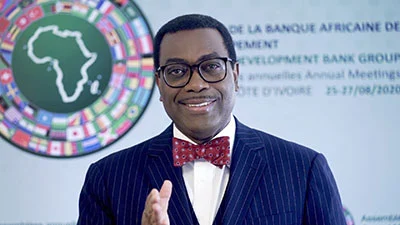
    ABIDJAN, Ivory Coast, December 21, 2023/ — The President of the African Development Bank Group (www.AfDB.org), Akinwumi Adesina, has been awarded the prestigious Obafemi Awolowo Prize for Leadership.

    The award which promotes the legacy and democratic ideals of the late Nigerian nationalist and federalist leader Chief Obafemi Awolowo, also “recognises and celebrates excellence in leadership.”

    The Foundation’s Executive Director, Ambassador Dr Tokunbo Awolowo-Dosumu said, “Dr Adesina was the unanimous choice of the Foundation’s Selection Committee, which described Adesina as possessing the attributes for the award to the highest degree.”

    According to Ambassador Awolowo-Dosunmu, “The attributes considered to have characterised Chief Awolowo’s excellent leadership, include integrity, credibility, discipline, courage, selflessness, accountability, tenacity of purpose, visionary and people-centred leadership.”

    The former Nigerian President, Goodluck Ebele Jonathan was one of several world leaders who nominated Adesina. “He epitomises and combines qualities of extraordinary leadership that are often rare to find: great visionary, incredible courage, the ability to take on huge and difficult challenges, extraordinary dedication and commitment to deliver programmes and policies that transform the lives of millions of people,” Jonathan said.

    Former British Prime Minister Tony Blair also praised Adesina’s leadership. “His contributions to the African continent and global leadership have been exceptional. Under his leadership the African Development Bank has delivered bold interventions to address some of the greatest challenges of our time,” he said.

    Another globally renowned figure, Ambassador Kenneth Quinn, President Emeritus of the World Food Prize Foundation, saluted Adesina’s commitment to food security: “President Adesina has traversed the African continent evangelising his profound vision to end childhood stunting through enhanced nutrition; uplifting smallholder farmers, the great majority of them women; providing critical financing for a broad array of infrastructure projects so critical to development and modernisation.”

    Former UN Secretary-General Ban Ki-moon and Global Center on Adaptation CEO Prof. Dr Patrick Verkooijen, jointly said, “We can think of no person more highly qualified or deserving of this prestigious award. Dr Adesina is forged in the same mould as Chief Obafemi Awolowo, a shining example of leadership.”

    Dr Akinwumi Adesina is the third recipient of the Award. Others include Nigerian writer and Nobel Laureate Wole Soyinka and the former South African President Thabo Mbeki.

    An award ceremony is scheduled for 6 March 2024, and will include keynote lecture by the honouree.

    The Obafemi Awolowo Foundation, founded in 1992, is a non-profit non-partisan organisation.

    • Press statement by the Chairman of the Selection Committee of the Ọbafẹmi Awolọwọ Prize for Leadership (https://apo-opa.co/3vg7Pd4)
    Distributed by APO Group on behalf of African Development Bank Group (AfDB).

    Contact:
    Peter Burdin,
    Communication and External Relations
    media@afdb.org

    SOURCE
    African Development Bank Group (AfDB)

  • Desert to Power Initiative: African Development Fund approves nearly $303 million for Mauritania-Mali electricity interconnection project

    Desert to Power Initiative: African Development Fund approves nearly $303 million for Mauritania-Mali electricity interconnection project

    ABIDJAN, Ivory Coast, December 19, 2023/ — The Board of Directors of the African Development Fund, the concessional window of the African Development Bank Group (https://apo-opa.co/3trS2Yo) (http://www.AfDB.org), has approved a $302.9 million loan co-financing for a multinational power project that will connect 100,000 households across Mauritania and Mali.

    The Mauritania-Mali 225kV Electricity Interconnection and Solar Power Plant Development Project form part of the Desert to Power (https://apo-opa.co/3ROS5H3) Initiative. The funds comprise $269.6 million for Mauritania and $33.3 million for Mali. Other partners, including climate funds, will contribute to the project cost, which is estimated at $888 million.

    The Mauritania-Mali 225kV electricity interconnection project, combined with the development of solar power plants, represents a strategic investment to support rapid solar energy production and guarantee universal access to electricity in the two Sahel countries.

    The project will establish a high-voltage electrical interconnection over 1,373 kilometres, with a 600 megawatt (MW) transfer capacity between the two countries; build a 50 MW solar power plant in Kiffa, Mauritania, linked to the interconnection, and connect 100,000 new households (80,000 in Mauritania and 20,000 in Mali) to the power grid in the areas crossed by the cable. The project will also create opportunities for young people and women to establish agricultural and service businesses.

    This project forms part of the regional roadmap approved by the countries that will benefit from the Desert to Power Initiative. It is the first section of the trans-Sahel spine aimed at linking Mauritania to Chad via Mali, Burkina Faso and Niger. The interconnection will enable the development of new renewable power plants, whose production will be more closely integrated into interconnected grids. Commissioning it will facilitate access to a high-quality, low-carbon electricity supply at an affordable price.

    Malinne Blomberg, the Bank Group’s Deputy Director General for North Africa and head of the Bank’s Country Office in Mauritania commended the Malian and Mauritanian governments for  supporting the Bank in the project’s preparation.

    Blomberg said: “This is an inclusive, sustainable project that translates into reality our policy of supporting the development of green infrastructure in Africa. It will also have an impact on promoting both the private sector and trade, and creating job opportunities.”

    Adalbert Nshimyumuremyi, head of the Bank’s Country Office in Mali, said the approval represents the Bank’s commitment to supporting African countries’ development. “Permanent access to a high-quality electricity supply at an affordable cost will strengthen the resilience of populations in the beneficiary areas,” he said, adding that the project will be implemented in Mali’s Kayes region and will benefit 500,000 inhabitants, including 20,000 households in the 50 areas that will be connected to the grid.

    Distributed by APO Group on behalf of African Development Bank Group (AfDB).

    Media contact:
    Romaric Ollo Hien,
    Communication and External Relations Department,
    media@afdb.org