Category: AFRICA

  • Ecobank Day 2023 focused on the acquisition of digital skills by Africa’s children and youth

    Ecobank Day 2023 focused on the acquisition of digital skills by Africa’s children and youth

    LOMÉ, Togo, October 24, 2023/ — The Ecobank Group (http://www.Ecobank.com), the leading pan-African banking group, celebrated the 10th anniversary of Ecobank Day, its flagship social impact event, last Saturday, October 21, 2023. To mark the occasion, Ecobank launched a three-year ‘Transforming Africa Through Education’ campaign, which it kicked-off with a focus on digital education and equipping children and youth with the digital skills they need for the jobs of tomorrow.

    Jeremy Awori, Chief Executive Officer of Ecobank Group, said: “Ecobank Day reflects the giving spirit of all 14,000 Ecobankers across the Group. For 10 years, it has given us an opportunity to manifest our commitment to making a positive impact in the communities we serve. This year, we focus on digital education, which is critical for Africa to leapfrog and accelerate its development.

    For several years, Ecobank has embarked on a journey of digitalization – consistent with our deep belief in the transformative power of digital technology for a more inclusive future in Africa. It is only natural that on this Ecobank Day, we have supported the launch of a series of training programmes and provided the necessary infrastructure to offer basic digital education to youth across Africa.”

    Ahead of the Ecobank Day celebrations, Ecobank Foundation, in partnership with the Global Partnership for Education and UN Women, organised a webinar entitled ‘Igniting Africa’s Digital Future through the Power of Coding’.

    The webinar was well-attended with over a thousand participants, and featured experts and the youth, discussing the importance of ensuring that all African children and youth have access to digital skills, mostly coding and programming, that are essential for jobs of the future and a fulfilled life. You can watch the webinar here (https://apo-opa.info/3Q1PjMs).

    Ecobank’s affiliates across 33 sub-Saharan African countries continue to hold a range of activities to raise awareness and knowledge of the importance of digital skills for Africa’s children and youth. These activities include creating or equipping IT Labs, refurbishing schools, providing youth digital skills training workshops, partnering with schools to improve digital facilities, mentoring initiatives and more.

    Ecobank Day has supported a wide range of causes over the years since 2013. These have included Education for young people in Africa (2013); Malaria prevention and control (2014); Every African child deserves a better future (2015); ICT education in schools and improving maternal health (2016); Safe water management (2017); Orphanages (2018); Cancer (2019); Diabetes (2020); Mental health (2021) and financial literacy and financial inclusion (2022).

    For more information about Ecobank Day, please visit https://apo-opa.info/497yZT1

    Distributed by APO Group on behalf of Ecobank Transnational Incorporated.
    Media Contact:
    Christiane Bossom
    Group Communications
    Ecobank Transnational Incorporated
    Email: groupcorporatecomms@ecobank.com
    Tel: +228 22 21 03 03
    Web: www.Ecobank.com
  • Celebrating Black Innovation: the Global Black Impact Summit (GBIS) 2023 to Connect the Global Healthcare Community

    Celebrating Black Innovation: the Global Black Impact Summit (GBIS) 2023 to Connect the Global Healthcare Community

    DUBAI, United Arab Emirates, October 25, 2023/ — The healthcare sector has long stood as a vessel for innovation, driven by relentless efforts to prevent disease, promote health education and wellness while advancing global health security and resilience.
    This industry has been at the forefront of modernization, and in the field, Black entrepreneurs have emerged as trailblazers, bringing innovative solutions to tackling health crises, strengthening systems, and equipping people and communities with the tools they need to thrive.

    The global COVID-19 crisis in 2020 was a testament to the critical role the healthcare system and associated innovation and collaboration play. The crisis represented one of the biggest health-related disasters in the world since the rise of modern medicine, leading to a dramatic loss of human life and presenting challenges to public health, food systems, and the world of work, according to the World Health Organization (WHO).

    In this time of unprecedented crisis, the strength of innovation came to the fore, as well as of collaboration and connection. WHO emphasizes that during times such as the pandemic, the world must remain committed to pooling our expertise and experience.
    As such, the Global Black Impact Summit (GBIS) – taking place in Dubai from November 30 to December 1 – is centered around connecting the global Black healthcare community, celebrating the innovators and entrepreneurs who are shaping the industry today.

    Black healthcare innovators have long played an instrumental part in strengthening healthcare systems, unlocking new levels of research and development while contributing significantly to modern medicine and treatment. Across the industry, the Black community’s inventive approaches continue to not only identify but also bridge critical healthcare gaps, fostering inclusivity while transforming challenges into opportunities.

    This underscores the community’s dedication to equitable and increasingly modernized healthcare solutions. From technology-driven telehealth to affordable treatments and education platforms, these entrepreneurs showcase adaptability, creativity, and a profound commitment to improving lives.

    Taking a look at some of the Black healthcare innovators who have made ground breaking discoveries, developed creative tools and solutions while inspiring new levels of research and education, it is clear that the global Black healthcare community has and will continue to be at the forefront of driving transformational change. Dr. Hadiyah-Nicole Green, for example, is a physicist and cancer researcher whose ground breaking approach to employing laser-activated nanoparticles to target and eliminate cancer cells has changed treatment strategies worldwide.

    In 2016, Green founded the Ora Lee Smith Cancer Research Foundation, aiming to improve cancer treatment effectiveness with fewer side effects and make it accessible and affordable for all. On the cardio-side, Daniel Hale Williams made history when, in 1893, he performed the world’s first successful heart operation, suturing a damaged artery while the heart still beat, revolutionizing surgery without modern tools. Dr. Patricia Bath, an ophthalmologist and inventor, developed the Laserphaco Probe for cataract treatment, an invention which has helped restore vision to millions worldwide.

    Additionally, Dr. Cato Laurencin is a surgeon-scientist known for his pioneering work in regenerative engineering. He has made significant contributions to tissue engineering and regenerative medicine, aiming to create solutions for tissue repair and regeneration. Dr. Kizzmekia Corbett is a viral immunologist who played a key role in the development of the Moderna COVID-19 vaccine. Her research focuses on developing vaccines for emerging infectious diseases. These individuals are just a few of the many inspiring and instrumental healthcare stakeholders who have changed the way we look at and approach medicine.

    Going forward, Black innovation is poised to inspire a new era of technology-driven health solutions. GBIS 2023, as a platform featuring innovators and thought-leaders from across the entire global economy, connects both the Black healthcare community while fostering engagement and integration between the healthcare industry and various other facets of the global economy. Specifically, by facilitating networking between healthcare and technology stakeholders, GBIS 2023 aims to foster new opportunities for integrated healthcare solutions.

    The tech industry itself has played a crucial role in modernizing both health systems and medicines. Examples include the fusion of health technology and artificial intelligence which has paved the way for personalized medicine, predictive analytics, and remote patient monitoring. These trends offer opportunities for inventive solutions customized to individual needs. As the world transitions into a tech-based future, GBIS 2023 plays an instrumental part in fostering the innovations of tomorrow.

    Don’t miss this chance to be a part of a global community that supports and unites Black innovators and entrepreneurs in healthcare at GBIS 2023. There is still time to secure your participation and network with some of the best in healthcare, technology, and more. To secure your participation, register now at https://GlobalBlackImpact.com/.

    Distributed by APO Group on behalf of Energy Capital & Power.

    SOURCE
    Energy Capital & Power

  • Call for applications – YouthADAPT Challenge 2023: empowering Africa’s female tech innovators to tackle climate change

    Call for applications – YouthADAPT Challenge 2023: empowering Africa’s female tech innovators to tackle climate change

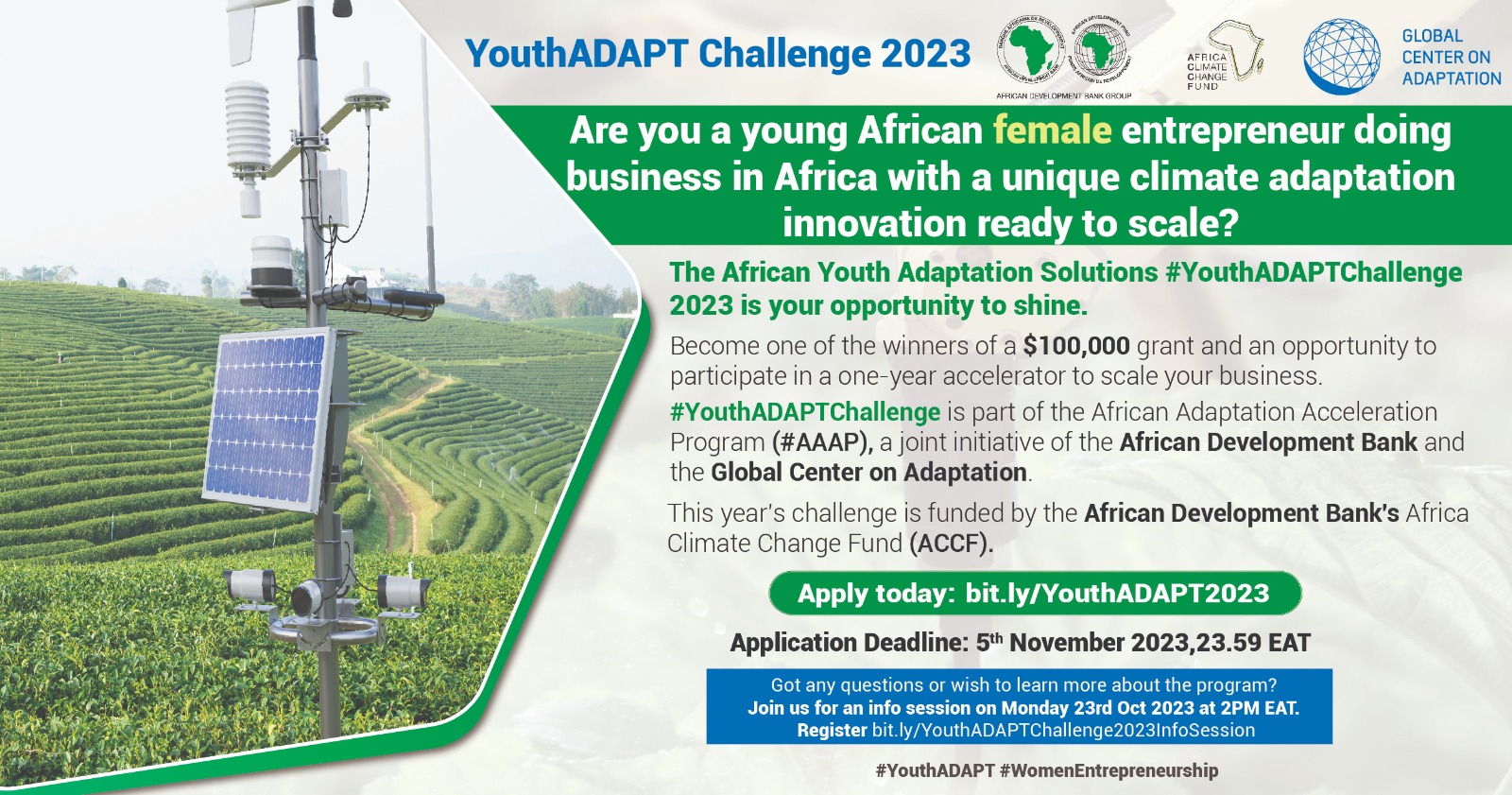
    ABIDJAN, Ivory Coast, October 25, 2023/ — The Africa Adaptation Acceleration Program (https://apo-opa.info/3s7IvoI), a joint initiative of the African Development Bank (http://www.AfDB.org) and the Global Center on Adaptation, has launched a call for applications for the third edition of the YouthADAPT Challenge, which seeks to support young entrepreneurs driving solutions to tackle climate change.

    The annual YouthADAPT competition invites young entrepreneurs leading micro, small, and medium enterprises in Africa to submit innovative solutions and business ideas that can drive climate change adaptation and resilience across the continent.

    This year’s call focuses on female-owned enterprises pioneering Fourth Industrial Revolution technologies such as artificial intelligence; big data analytics; virtual reality; robotics; internet of things; quantum computing; additive manufacturing; blockchain, and fifth-generation wireless for climate adaptation.

    With support from the Africa Climate Change Fund (https://ACCF.AfDB.org/), hosted by the Bank, the winners will be awarded $100,000 each, alongside mentorship and coaching to further their climate change adaptation solutions and business ideas. They will also join the YouthADAPT Alumni Network to learn from a dynamic community of youth entrepreneurs throughout Africa.

    To be eligible, applicants must be between the ages of 18 to 35. Their ventures should be youth-led and offer tangible solutions to real-life climate challenges. They must be registered and operational in Africa, with at least two years’ worth of accounts.

    Apply by visiting the YouthADAPT competition portal (https://apo-opa.info/3Q8WLVZ).  The closing date for applications is 5 November 2023 at 17:00 GMT. An information session is scheduled for 23 October 2023 at 11:00 GMT to share details about the YouthADAPT Challenge 2023. This session will cover eligibility criteria, the application process, important deadlines, and the advantages of participation, such as grants, mentorship, and business development services.

    Distributed by APO Group on behalf of African Development Bank Group (AfDB).

    Contacts:
    African Development Bank
    Joash Ntenga Moitui,
    Communications and Knowledge Management,
    Africa Adaptation Acceleration Program
    E-mail: j.moitui@afdb.org

    Africa Climate Change Fund
    Rita Effah, Coordinator,
    Africa Climate Change Fund
    r.effah@afdb.org

    Global Center on Adaptation
    Alex Gee,
    Head of Communications,
    Global Center on Adaptation
    E-mail: alex.gee@gca.com

    SOURCE
    African Development Bank Group (AfDB)

  • Inspiring and supporting Junior High School Girls

    Inspiring and supporting Junior High School Girls

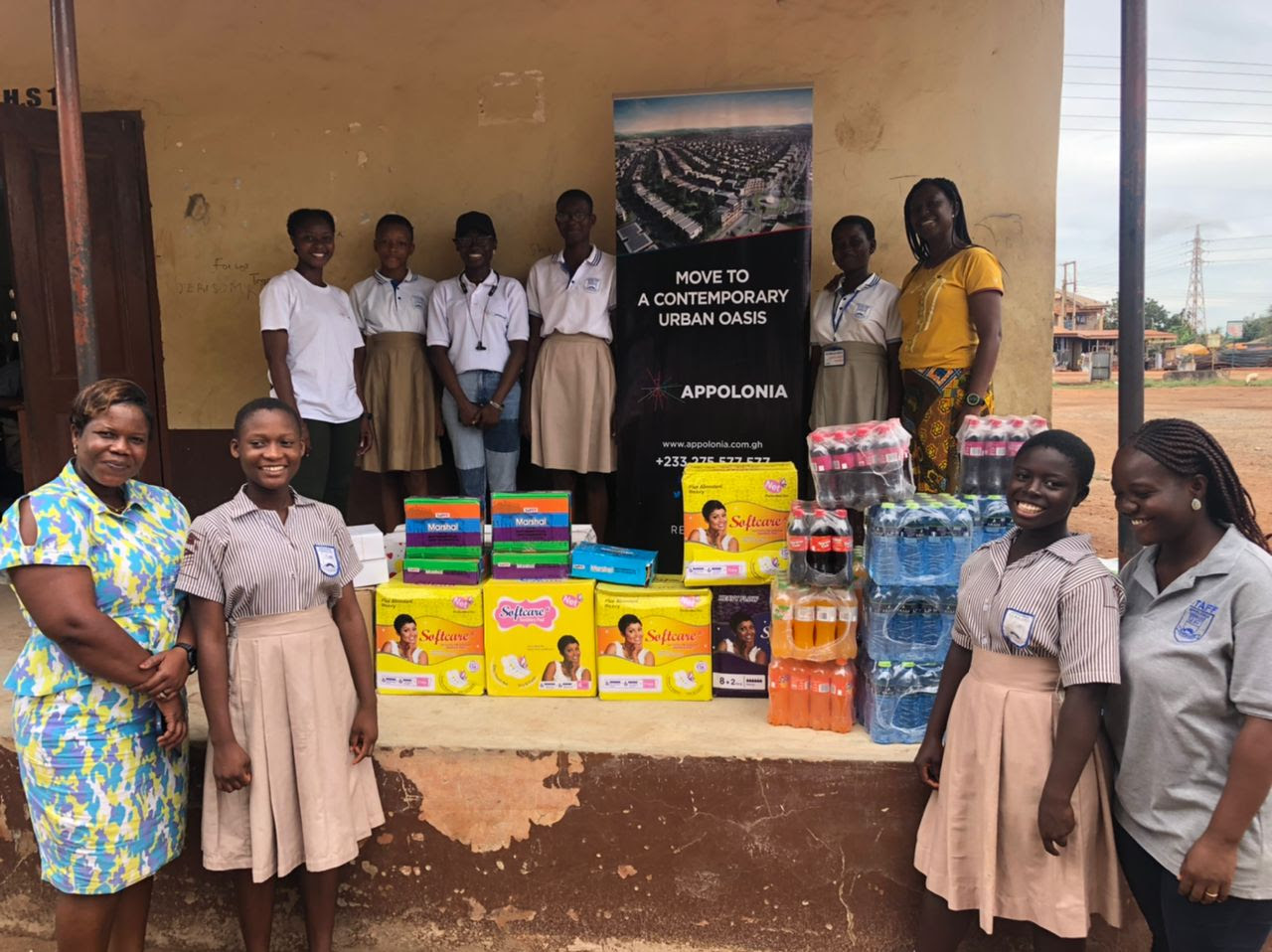
    Appolonia City24 October 2023 – Appolonia City’s dedicated female staff visited Appolonia Kpone Katamanso District Assembly Junior High School for an inspiring interaction with final-year female students. The visit, which commemorated International Day of the Girl Child, aimed to empower and encourage young women to strive for success.

    The team from Appolonia City, led by Claudia Otoo, Head of City Management, also included members of the sales and marketing departments. The Appolonia City women shared their personal stories with the girls, highlighting the struggles and obstacles they faced on their journeys to success. They emphasized the importance of perseverance, determination, and the pursuit of education as a means to overcome life challenges.

    The team presented gifts – which included sanitary pads, math sets for examinations, water and drinks – to support their girls’ education and well-being.

    Isabella Bedu, the girls’ prefect at Appolonia Junior High School, expressed her gratitude on behalf of her fellow girls.

    “We thank Appolonia City for their thoughtful gesture and promise to make the entire city proud,” Isabella said. “It is inspiring to see what we can become when we work hard and focus on our books. We pledge that we, as a team, will strive to ensure that the highest-performing student in next year’s Basic Education Certificate Examination will be a girl from Appolonia Junior High School.”

    Appolonia City is a partnership between Rendeavour, Africa’s largest new city builder, and the chiefs and the people of the Appolonia stool.

    Appolonia City is a mixed-use and mixed-income urban development designed to provide housing for around 100,000 residents and facilities for 30,000 daily visitors.

    The 2,325-acre project encompasses residential, commercial, retail and light industrial developments, as well as social amenities like schools, healthcare and family parks.

    Situated in the growth trajectory of bustling Accra, the location allows residents to commute to the city centre or enjoy a live-work-play environment within Appolonia City itself. On a national scale, Appolonia City is helping to reduce Ghana’s housing deficit and, regionally, the project is an engine of development for the local area.

    Appolonia City has obtained all local and national regulatory approvals, and site infrastructure such as electricity, water, underground drains and tarred roads are ready for Appolonia City’s first occupants.

    Unique in Ghana, Appolonia City has high quality property maintenance and is governed by strict development controls and owners associations, to ensure residents and businesses live in harmony.

    SOURCE

    APPOLONIA CITY NEWS

  • Giving a Graphite touch to  Wa’s Emerging Gold Image in Ghana

    Giving a Graphite touch to Wa’s Emerging Gold Image in Ghana

    Story: Mohammed A.Abu

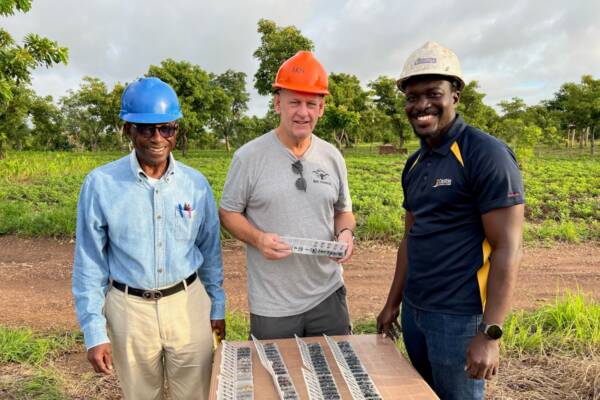
    Over a decade of passion and commitment on the part of  the Australia Securities  Exchange(ASX) listed company ,Castle Minerals Ltd ,is set to give Ghana’s up country’s generally agrarian driven economy, a diversification to  commercial gold and Graphite(one of the”Critical Minerals”) production touch.

    Gold

    The company’s  ambitious Wa Gold Project owned by its local subsidiary,Azumah Resources Ghana Ltd,has since earned for the Upper West region in international investor community circles the accolade, ‘The Emerging North Western  Gold Province”

    The project is located approximately 10km away from the regional capital of Wa. It extends over a total land holding of 3,164km² and comprises three main deposits namely Kunche, Bepkong and Julie along with two satellite deposits Aduane and Collette.

    The open pit gold mining project includes a 1.2 million tonne per year carbon-in-leach (CIL) processing plant for treating oxide and transition ore. It is estimated to produce approximately 100,000oz of gold a year over an initial mine life of seven years.

    Graphite

    In an official announcement  today, Monday, Castle Minerals Managing Director,Stephen Stone notes, “Castle Boosts Kambale Graphite Resource to 22.4Mt Higher Confidence Indicated Resource Increased 55% Solid Platform Established to Underpin Development Ambitions”

    “Graphite concentrate sample successfully produced during Perth test work is now in Germany undergoing evaluation for its use in lithium-ion batteries (“LiBs”), the announcement disclosed.

    The emerging flagship Kambale Graphite Project owned by 100% Ghanaian subsidiary, Kambale Graphite Limited, is located in the country’s Upper West region.

    Castle Managing Director, Stephen Stone commented:

    “We are delighted to deliver for the fast-emerging Kambale Graphite Project a 38% increase in contained graphite and can now boast a Mineral Resource Estimate of 22.4 million tonnes grading 8.6% TGC containing 1.94 million tonnes of graphite. Forty-three percent of the MRE is in the higher confidence Indicated Resource category.

    “The MRE increase provides a very solid platform upon which to advance our development ambitions, especially now that Castle has demonstrated in test work that a fine flake graphite concentrate of commercial specifications can be produced using a conventional flotation process. This is the primary material used in the manufacture of lithium-ion battery anodes.

    “This all comes just as China this week has introduced a surprise ban on natural and synthetic graphite exports to protect its battery and car manufacturing industries.

    “This will immediately intensify the multi-billion-dollar rush by the USA, EU and other non-China EV manufacturing nations to secure other sources of graphite, battery anodes and EV batteries which they are presently almost totally reliant on China for.

    “The accelerating take-up of EVs alone is driving an enormous increase in demand for graphite for use in lithium-ion batteries for EVs, power storage units and other chargeable consumer devices.

    “Each EV contains between 30kg and 60kg of battery grade graphite where every kg of that is derived from at least 3kg of natural flake concentrate.

    “With another 100 million light EVs forecast to be on the road by 2030, it’s no surprise that forecasters are predicting a natural graphite concentrate supply deficit as current and proposed supply is wholly inadequate.

    “Castle continues to fast-track and de-risk its Kambale Graphite Project and has just kicked off a specialist evaluation in Germany of the concentrate to confirm its suitability for the manufacture of lithium-ion batteries.

    “Mining and metallurgical engineering groups will be appointed shortly to assess the technical and commercial merits of establishing on-site a commercial-scale mining and processing facility.

    “With good access to two international ports in Ghana that can service the USA and EU markets, Kambale has a strategic importance as a still uncommitted resource.

    “The Project will also use mainly hydro-generated “green-grid” power. With Ghana recognized as a safe, stable and established mining jurisdiction, this all bodes well for the Project’s future.” Mr. Stone further disclosed.


    ..


  • Gbewaa Palace Denies Blasting of Hon Ken Allegation

    Gbewaa Palace Denies Blasting of Hon Ken Allegation

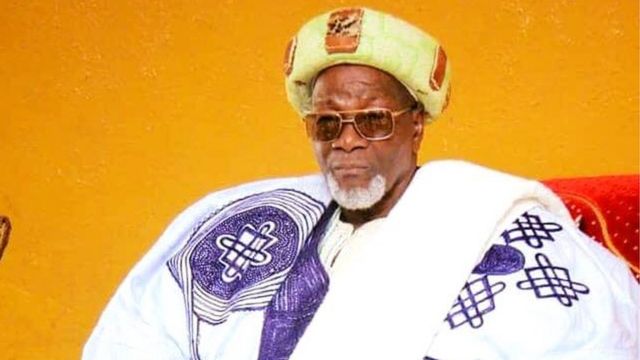
    The office of His Royal Majesty, Ndan Yaa Naa Abukari II, the King of Dagbon State in Ghana’s Northern Region, has vehemently denied ever having blasted Hon Kennedy Agyapong, a New Patriotic Party(NPP) Presidential hopeful according to an official statement issued in Yendi, Friday.

    This was in response to allegations carried by some online media portals to the effect that, the King had taken a swipe at the latter during his recent courtesy call on him at the Royal Gbewaa Palace in Yendi.

    “This is a palpable falsehood and a figment of the author’s imagination.

    “Hon Kennedy Agyapong was accorded high respect and dignity befitting a contender to the high office of President of Ghana during his visit to the Palace.

    “His Majesty and the Royal Court appreciate Honourable Agyapong and could not have made such derogatory remarks to him.

    “His Majesty did not certainly use words or language on Honourable Agyapong, a person with enormous respect for the palace.

    “The Gbewaa Palace therefore condemns this wicked and despicable lies and political propaganda and caution all and sundry to desist from patent distortion of statements and remarks by His Majesty the Yaa Na, especially during the visits of politicians.

    “The Gbewaa Palace is apolitical and wishes Hon Kennedy Agyapong well in his campaigns” the official statement signed on behalf of His Royal Majesty by his secretary, Alhaj Abdul-Rahman Mohammed, concluded.

  • Unlocking  Opportunities for Print Service Providers in the Booming African Print Decor Market

    Unlocking Opportunities for Print Service Providers in the Booming African Print Decor Market

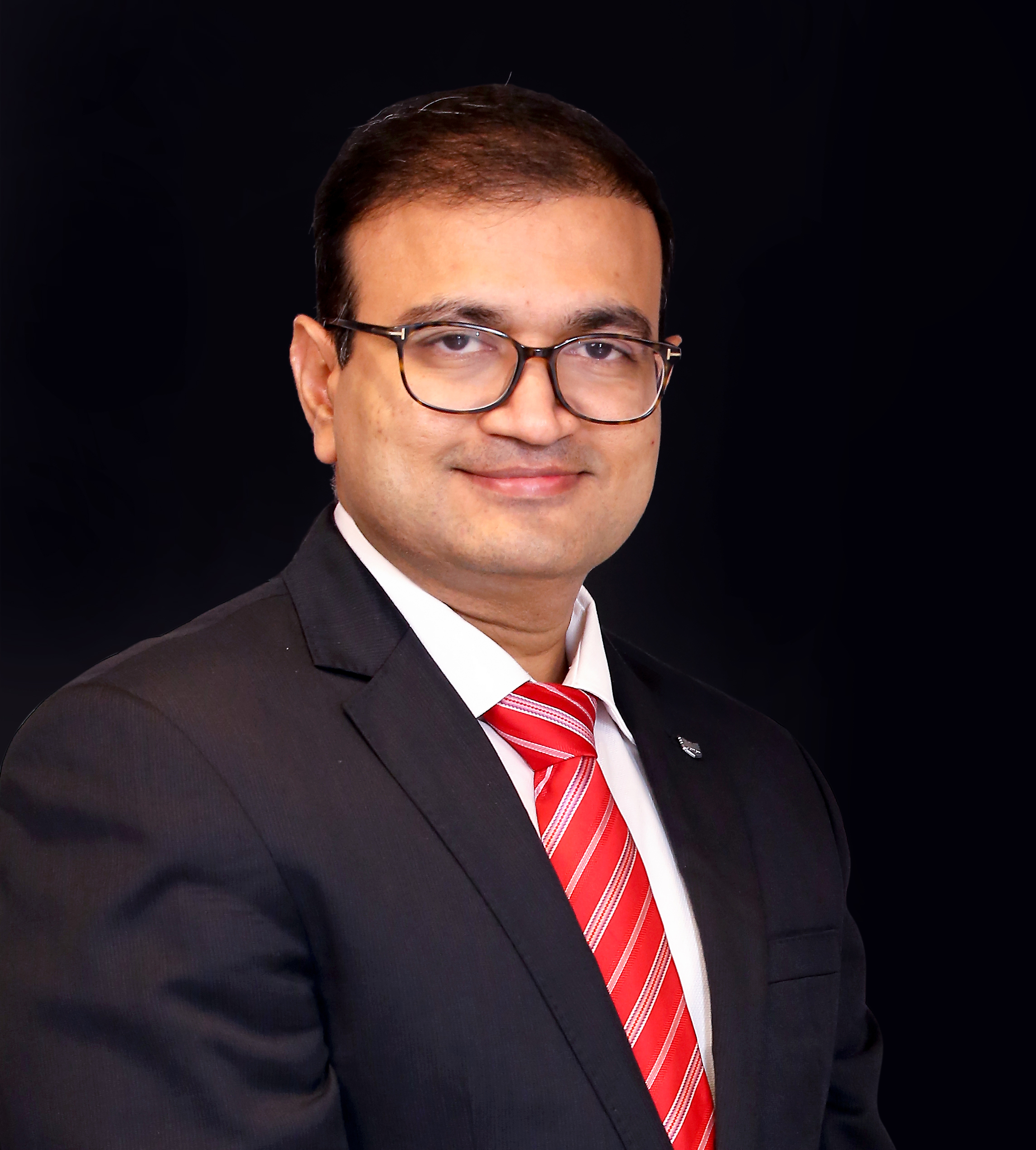
    By Somesh Adukia, Managing Director – Canon Central and North Africa

     In recent years, Africa’s interior decor industry has witnessed a remarkable surge in the demand for printed decor solutions, a trend that shows no signs of slowing down.

    With the African printing industry projected to reach a staggering value of US$235.3 million by the end of 2031, the timing couldn’t be better.

    The market remains vibrant and promising, offering lucrative growth prospects for print service providers (PSPs) across various sectors of interior decor, including wallcoverings, fine art prints, and applications in both residential and commercial settings. According to Big Picture Magazine and Keypoint Intelligence’s 2022 ‘Application and Utilization Survey’, interior decor and wall coverings were among the top five most profitable applications for PSPs in the current market landscape

    Enhancing Consumer Experiences

    This flourishing trend is driven by a confluence of factors tailored to meet evolving consumer habits in Africa. The surge in e-commerce popularity has compelled global retailers to focus on delivering seamless online and in-store shopping experiences.

    Simultaneously, the importance of enhancing the aesthetic appeal of retail spaces and creating immersive customer experiences has soared. From wayfinding and point-of-sale solutions to floor and display graphics, retail decor is evolving rapidly. Brands are increasingly employing colourful signage and banners to support seasonal celebrations and events, aiming to draw customers back into physical stores.

    The rise of pop-up shops and markets presents new opportunities for PSPs to provide turnkey print-based solutions that empower small businesses to create a captivating brand identity and engage in effective guerrilla marketing strategies.

    Canon has been active in the decor segment for many years, with a range of wide format production solutions, specialist software and media, and extensive expertise in interior print applications. With such a plethora of vibrant printed decor applications available and the market projecting continued growth, it’s a great time for print businesses to dive into this expanding market and show customers just how effective print can be.

    Printed Decor in Hospitality and Workplaces

    Printed decor plays a pivotal role in the hospitality sector, contributing to branding, ambiance creation, and enhancing the overall guest experience. A similar trend extends to the workplace, where employers are increasingly turning to digitally printed decor elements to create more attractive and inspiring environments for their employees. This strategy is designed to entice staff back into the office, marking one of several approaches taken by organisations to adapt to evolving work dynamics.

    Africa’s Dynamic Print Decor Market

    However, thriving in the African printed decor market demands adaptability. The market is dynamic, and characterized by ever-changing design and fashion trends, meaning that décor service providers must remain agile, responsive, and adaptable to remain competitive.

    Moreover, adopting a consultative mindset is critical for PSPs. They must proactively engage with prospective customers, presenting them with creative solutions and showcasing the myriad of available options. This involves inspiring clients with achievable ideas on how to refresh their spaces and explaining the practical and cost advantages of print-on-demand over traditional decorating and renovation methods.

    PSPs can further inspire clients by going beyond printing customer designs and providing them with creative interior décor content ideas. This collaborative approach opens up opportunities for partner artists, photographers, and designers to showcase their work through an expanded network of online marketplaces.

    The New World of AI in Design

    The emergence of generative AI presents an exciting opportunity for PSPs to create and inspire by bringing new visual concepts to life. Whether starting from scratch or updating previous images and concepts, generative AI can facilitate innovative design processes with relative ease.

    With an array of vibrant printed decor applications available and the market poised for continued growth, this is an opportune moment for print businesses in Africa to immerse themselves in this expanding market and demonstrate to customers the remarkable effectiveness of print in transforming living and working spaces.


  • The Etymology of Dagbon’s Damba Festival

    The Etymology of Dagbon’s Damba Festival

    By: Mohammed A. Abu

    The official endorsement of the rebranding of the 2023 edition of the age-old Damba  by the Kingship of Dagbon,in Ghana’s Northern region for peace and development, marked  a great turning point in history of the festival. A  full programme line up  heralded the event making it eventful than all previous ones.

    Major side attractions like the first ever football match between historical playmates of the Savulgu and Kumbungu townships to compete for the Gbewaa Damba Trophy,horsemanship competition,Dagbon traditional menu cooking competition among others,indeed enriched the Dagbon Damba flavour.

    For when did this most patronized festival in the entire Dagbon’ start,read on now

    Background

    Even though Damba is today the single largest annual traditional festival in Dagbon celebrated with pomp and pageantry amidst traditional drumming and dancing, it is also said to have Islamic historical antecedents. Thus, it is said to be a fusion of some aspects of Islam and Dagbon’s cultural drumming and dancing in a most harmonious manner.

    The Wangara or Mende Clerics factor is said to have predated the Hausa clerics factor so far as the early presence of Muslims in Dagbon is concerned. The introduction of Islam to Dagbon some observers note, widened the cultural dimensions of the Kingdom.

    In some written accounts mention is made about the earliest Mende clerics who had settled at Sabari, near Yendi in Dagbon around 1680 and traced their ancestry to Shaykh Sulayman Bagayugu of Timbuktu.

    Some oral accounts say among the early day clerics of notable importance who were said to have played significant roles worthy of mention in Dagbon was the Mende cleric who had been elevated to the status of the Imam of the legendary mosque of Sabali (Yeri Na Yamusah Al Wagari. Then also, is the Hausa cleric, Mallam Mahama Zangina al Kashnawi who is also said to have settled at Kamshegu.

    The early day emigrant clerics from various ethnic kingdoms and states across pre-colonial West Africa to Dagbon oral and written accounts say adopted tactful diplomacy with their rulers.

    They are said to have kept the practice of Islam within their own circles and avoided an openly missionary approach that could draw them into loggerheads with Dagbon’s traditional religionists. They only hoped and prayed that one day someone from a royal setting would embrace Islam and make a strong pitch for Islam in Dagbon and it was to come to pass.

    The Zanginan Age, the Golden Age of Islam in Dagbon

    The conversion to Islam of one of Dagbon’s Princes by a Hausa cleric, Mallam Mahama Zangina al Kashnawi is said to have been a great turning point for Islam in Dagbon.

    The Muslim convert Prince is also reported to have embarked upon trade missions to a number of ethnic states including Wangara land (today’s Mali/Northern Ivory Coast)) Hausa land (in today’s Northern Nigeria) among others.

    His deep attachment to today’s Northern Nigeria city of Kano is said to have earned him among Dagbamba(Dagbombas) a nickname,” Mahmadu Kano” (Mohammed Kano) which later was to be an appellation for him corrupted for Dagbani (language of the Dagomba People) as “Mankaanu”.

    Oral accounts have it that he scaled up his knowledge in Islam by also schooling in Hausa land before he was to later return to Dagbon to contest for Dagbon Kingship and became King.

    He is said to have adopted the name of his Hausa cleric who had converted him to Islam, Mallam Mahama al Zangina (I am going to build in Hausa) from Kastina, Hausa Land in present day Nigeria.  His skin name Na Zangina attracts the appellation,” Mankaanu” or better to be put,” Mahmadu Kano”.

    The Historic Pact at Sabali Mosque

    Both oral and written accounts talk about Na Zangina’s historic visit to Sabali shortly after ascending to the throne. At the legendary Sabali mosque thanksgiving and special prayers was made for Dagbon to witness a golden age.

    Another important aspect of the trip was said to be a historic pledge he had made before a number of clerics assembled at Sabali for the prayers including his very own, Mallam Mahama Al Zangina, Al Kashnawi

    Na Zangina from oral sources was said to have held a copy of the Holy Qur’an and pledged to make a strong pitch for Islam in Dagbon via making open Islamic missionary activities permissible in the Kingdom for the first time.

    Na Zangina’s Administration’s Policy Framework for Islam in Dagbon (1648 – 1677)

    Na Zangina during his reign is said to have kept to his word and even went beyond the expectations of the clerics. He is reported to have adopted a most favorable open door policy towards Islam. Under an open door policy, he is said to have gone the extra mile by sending emissaries to the surrounding neighboring ethnic Kingdom and states to invite known Islamic clerics of great repute there to consider relocating to Dagbon.

    Notable among the emigrant clerics under Na Zangina’s open door policy were said to be Yidan Kambara, who migrated from Gonja Land. He was said to have been given oversight responsibility of preparing the corpse of a dead Yaa Na for burial. Another emigrant cleric was appointed “Walgu Na” or chief in charge of the preparation of the King’s spiritual fortification concoctions (‘rubutu in Hausa).

    The Dagbon’s first Muslim King, oral accounts from current Moleyili sources say thought it worthy of detailing then Prince Andan Sigli to present day Burkina Faso to officially invite a very popular Mende cleric who was to be later known as Yidan Moli in Dagbon’s traditional governance landscape and the eventual principal architect of the Damba celebrated in Dagbon today.

    Assigning of Islamic clerics to play certain specific roles deemed important in Dagbon’s traditional governance was first to be introduced by Na Zangina. It is however pertinent to note that Na Zangina, Dagbon’s first Muslim convert, King was the first to give an official touch to Islam in Dagbon as a ruler.

    He wasn’t however, the first to introduce Islam to Dagbon for the first time in Kingdom’s history as some might have been made to believe. The presence of Islamic clerics in Dagbon according to both oral and some written accounts far predates the late 17th to early 18th Century reign of Na Zangina.

    It is pertinent to also add that, Na Zangina even though was the first Muslim to have ascended to the Kingship throne of Dagbon but he was never Dagbon’s first king as some Arab historical sources tend to have misrepresented him in their writings. Na Zangina was the first 18th King of Dagbon.

    Yidan Mole’s entrance into Dagbon and the Birth of Damba

    Even though it was Na Zangina who is said to have officially invited Yidan Moli to Dagbon he however unfortunately did not live to see the arrival of the highly respected cleric passed on before Yidan Mole could finally arrive in Dagbon during the reign of Na Binbegu.

    Yidan Mole another Mende cleric elders say, was a relative of the Imam of Sabali, Yeri Na Ya Musah al Wangari. Yidan Moli who was an emigrant Islamic cleric residing in then Moshieland (today’s Burkina Faso). His long protracted delay in relocation to Dagbon, elders say, was due to a number of factors and, couldn’t be immediate as Na Zangina had wished for it. Elders say Yidan Mole upon his arrival he first put up with his cousin the Imam of Sabali and later relocated to Kamshegu.

    Na Gariba-Yidan Moli Historic Engagement

    Upon ascending the Dagbon Kingship Na Gariba I was said to have engaged Yidan Moli as his personal psychic consultant and which had paved the way for the birth of what is today celebrated as Damba

    Yidan Moli is said to have been holding the annual Muslim Maulid Anabi (Prophet Muhammad’s birth day celebration) as an individual scholar initiative supported by his followers. He was said to have conceived the idea of giving Damba a Dagbon state level celebration and managed to convince the Na Gariba I to buy into it.

    Na Gariba elders say, also had invited Yidan Moli to settle in Yendi but upon realizing the numerical strength of his following and the accommodation problem it could post to the host town, the King decided to grant him land elsewhere to establish his independent settlement and which is today known as Moliyili.

    Yidan Mole Sells Damba to Na Gariba I(1700 – 1720)

    The benefits of giving the Damba official state status Yidan Moli is said to have told the Na Gariba were that marking Prophet Muhammad’s birth day anniversary would attract Allah’s blessings for his Kingdom, it would serve as a medium for annual renewal of allegiance to him by his paramount chiefs that would also come with gifts, among others that would inure to Dagbon Kingdom’s well-being. Na Gariba, elders say after carefully thinking through the proposal finally embraced it.

    The Damba Ecosystem

    The word Damba is said to be derived from the Mende root words, “Don” (dance) and “Ba” (big),” Donba” or big dance but corrupted for Dagbani usages as “Damba”. Yidan Moli after getting the buy-in of Na Gariba of celebration of Damba at state level was also said to be very conscious about its sustainably. Thus he specially engineered Damba as a blend the Islamic Maulid a Nabi with Dagbon’s cultural performance and tradition.

    Sighting of the Damba Moon

    The sighting of the crescent heralds the preparations towards the Damba festivities. Planning on when is most appropriate to be earmarked for the Damba festivities is based on broad based consultation among Yidan Moli and the Kingship and elders.

    Somo or Mole Damba

    A measure Yidan Moli is said to have adopted towards ensuring the long term sustainability of Damba was the institutionalization of his own edition of the Damba to be celebrated in his camp (Somo or Mole Damba) which could be said to the preceding minor Damba edition.

    This entails the slaughtering of the Damba bull to symbolize the birth of the Holy Prophet Muhammad(S.A.W.) and goes with special prayers for the Holy Prophet Muhammad(S.A.W.)

    A special side attraction is Yidan Moli himself doing the Damba dance himself and known as ‘SOMO’ or MOLI DAMBA. The King as a goodwill gesture provides Yidan Moli with some foodstuff, money and a bull for the event and his representative is therefore to participate in the ceremonies and merry making. Yidan Moli by tradition sends a fore arm of the slaughtered Damba to the King through his elders.

    Na Damba

    The Na or King’s Damba which is preceded by the Moli Damba or minor Damba is the major component of the annual Damba festival celebrated as the Kings edition of the event. The major paramount chiefs across the Dagbon Kingdom who serve the King also have their editions of the Damba

    The Damba Rice

    The rice to be used for the preparation of the Damba feast during the Na Damba form an important integral part of it. This is to the extent that, someone was to be charged with oversight responsibility of growing the rice and presenting to the king through his elders ahead of the Damba festivities

    Kor Mori’s Role

    The ‘Kori Mori” or the cultivator of grass an idiomatic expression of the rice crop He grows the Damba rice harvest it and sends it to the King in Yendi through his appropriate state elders assigned to receipt and formal presentation to the King.

    Kaanshgu near Savulgu in Western Dagbon was where Kor Mori was granted to settle and engage in the cultivation, harvesting and sending of the Damba rice to Yendi as one of the key preparations towards the annual Damba festival.

    Cleansing of the Uncooked Damba Rice (“Stones Picking”)   

    Cleaning of the cultivated rice is another integral function preceding the Na Damba edition. Here a blend of religion and tradition is at its best as clerics do their bit using their hands to ensure that impurities such as stones and chaff are removed from the rice. They pass it on to the traditionalists who uses a calabash to take a portion of the rice for their bit of the cleansing.

    Elders intimate that the “Shinkaafa guga gahimbu” translated, “rice cleansing” is only symbolic and constitutes a key ritual preceding the Na Damba during which Yidan Moli and other clerics converge to say special prayers for the King and Dagbon as a Kingdom.

    What is more they say, given present day mechanization of rice, the Damba meal rice wouldn’t have that much of stones requiring such a gathering to be able to remove them before it is used for cooking. If it were actually intended to remove stones and impurities from the rice, it would have since completely lost its relevance in this modern day era.

    The Damba Sacrificial Cow Ritual

    The Damba sacrificial cow is a second and most important symbolic ritual that precedes the Na Damba and intended to mark Prophet Muhammad’s(S.A.W.) birth and outdooring which goes with a sacrificial animal as per Islamic tradition best practice.

    While the cow is tethered, Muslim clerics led by Yidan Moli offer special benedictions to the Prophet in circular motion. The doing of with doing three circuits while the sacrificial animal in this case, a bull is tethered to symbolize the sacrificial ram for outdooring the newly born as per Islamic prophetic tradition. His Royal Majesty, Ndan Yaa Naa is to demonstrate his vigour by dancing three times around the cow

    It is interesting to note that in the Wala version of Damba, in Ghana’s Upper West Region, His Royal Highness, the Wa Na, is on his part required by tradition, to jump over the cow three times to assure his people that he is in good health to continue with his great task of leading them.

    The Muslim clerics component of special prayers goes concurrently with the Dagbon cultural drumming component. The drumming isn’t just an ordinary drum beat but really a drum beat recitation of a verse of the Holy Qu’ ran chapter Al Yassin,” Wa ilaihi turja uun” in response to the prayers of the Muslim clerics.

    Recitations of benediction in Arabic to the Prophet Muhammad(S.A.W.) is also recited by the Islamic cleric Yidan Mole, while the traditionalists including the King, repeat same after him. The office of Yidan Mole has been officially charged with oversight responsibility over the Islamic component of the Damba for the past

    Kings Dance Performance

    The doing of the Damba dance by the King himself component is brief as he emerges during dawn on the Damba day. The King’s Damba presents a most spectacular showcase of Dagbon’s cocktail of diversified cultural performances.

    Damba of the Major Paramount Chiefs

    Aside the Na Damba at the seat of Dagbon Kingship, we also have the Damba of the major Paramount Chiefs in both Eastern and Western Dagbon, namely the Mion, Karaga, Savulgu, Gulpke Na, Kumbung Na, Tolon Na, among others.

    Belkulsi

    The wrap up or saying goodbye to the annual Damba festival is termed as the “Belkulsi” which is observed across the kingdom. Visiting homes of elders who had supported in various ways to make the Na Damba a success is intended as a thank you gesture and sign of appreciation which also marks a close of the annual Damba event until another edition arrives again.

    Damba in Other States

    Damba is not only celebrated by Dagbamba(Dagombas) alone but it is also celebrated among the others in the Mamprusis, Nanumbas, Wala (uses Domba rather than Damba) and Gonjas.   Where and when did it start and what others did for its start with the other cultures requires some research and the Research Team of your favourite, Eco-Enviro News Africa, magazine

     (An Eco-Enviro News Africa Blog Article)

    References

    1.A Note on the Early Spread of Islam in Dagomba by Ivor Wilks

    2.Imams of Gonja the Kamaghate and the Transmission of Islam to the Volta Basin by Andreas Walter Massing

    3.Muslims and Rulers during the Precolonial Period by Holger Weiss

    4.AL-HAJJ SALIM SUWARI AND THE SUWARIANS: A SEARCH FOR SOURCES BY IVOR WILKS

    5.Austen, Ralph, African Economic History, Internal Development and External Dependency, Currey/Heinemann, 1987

    6.Lovejoy, Paul, Caravans of Kola: Hausa Kola Trade 1700-1900, OUP 

    7.A NOTE ON THE EARLY SPREAD OF ISLAM IN DAGOMBA by Ivory Wilk

    8.Africa Remembered: Narratives of West Africans from the era of the Slave Trade Edited by Philip Curtin with Introductions annotations by Philip Curtin, G.I. Jones, et al.

  • Reparation Justice for Africa Set to get Major Boost

    Reparation Justice for Africa Set to get Major Boost

    Story: Mohammed A. Abu

    Within the context of the Black History Month(BHM) Commemoration event, the maiden international conference of the All-Party Parliamentary Group on Afrikan Reparations (APPGAR) designed for in-person and virtual participation, is scheduled to take place at the weekend in the Westminster Houses of the British Parliament, London, UK, according to APPGAR’s  official sources.

    The inauguration of APPGAR constitutes one of the major highlights of the BHM event alongside the Indigenous Peoples Day of Resistance Commemoration, Preparatory Action learning for all Parliamentary Commission of Inquiry for truth, Reparatory Justice(APPCITARJ), Peoples hearing on the maangamizi crimes against Indigenous Peoples,

    APPGAR Event Chairpersons

    Being held within the context of the annual Black History Month(BHM) month commemorative event, the APPGAR is going to have as its Co-Chairpersons Bell Ribeiro-Addy, the Chair of the APPGAR, assisted by Diane Abbot, MP, and Dr. Julius Garvey.

    Opening Ceremony

    Two major African royals among the non-UK resident dignitaries of special mention who would be attending the APPGAR opening ceremony are, Osie Adza Tekpor VII, the Paramount Chief of Avatime, in Ghana’s Volta Region who is a Co-Chair of the MAATUBUNTUMITAWO Global Afrikan Family Reunion International Council (MAATUBUNTUMITAWO-GAFRIC); and Professor Mutjinde Katjiua, the Ombara Otjitambi (Paramount Chief) of the indigenous Ovaherero nation in and beyond Namibia in Southern Africa.

    Plenary & Breakout Sessions

    In addition to three Plenary sessions, the APPGAR International Conference will also have topical Breakout Sessions with Panel Lead Discussants to kick-start conversations on the Meaning,

    Key Thematic Areas

    Purposes and Politics of Afrikan Reparations, Faith and Spirituality, Pan-Afrikanism, Restitution, Education, Law and Reparatory Justice, Political Economy and Social Enterprising, Women, Community Regeneration, Geopolitics and International Relations, Environmental Justice for Planet Repairs, Local and National Governance, Heirs and Allies, and some others to be confirmed.

    Confirmed Participants

    Among the confirmed leading participants are also Professor Kimani Nehusi, now at Temple University in the USA, who is a Co-Founder of the erstwhile Afrikan Reparations Movement in the United Kingdom (ARM-UK), led by Ancestor Bernie Grant, MP.

    Other leading confirmed participants are Professor Maulana Karenga, the Founder of Kwanzaa, Akyaaba Addai-Sebo, the Founder of Black History Month in the United Kingdom, Dr. Jared Ball of the Black Power Media in the USA, Eugene Puryear of Break Through News, Besa Awletor Ashiagbor of the Afrikan Traditional Freedom Movement (ATFEM) in Ghana, Akin Bongani of the Benkos Bioho-founded Palenque San Basilio in Cartagena, Colombia, in Abya Yala, among several others.

    Other ARM-UK Co-Founders like Kwame Adofo Sampong, Explo Nani-Kofi of the Pro-Nkrumah Unity Movement (PRO-NUM) in Ghana and Kofi Mawuli Klu of PARCOE and the Stop the Maangamizi Campaign are expected to participate.

    Expected Participants 

    Expected as leading participants are Esther Stanford-Xosei of the Maangamizi Educational Trust (MET), Onyekachi Wambu of AFFORD and Kobina Amokwando of the Pan-Afrikan Reparations Youth Forum (PARYF) who, together with Kofi Mawuli Klu, are all members of the APPGAR Secretariat, with responsibility for working together with a wide range of organizations and networks in co-designing and facilitating the Conference among several others.


    .