Category: AFRICA

  • President Ramkalawan attends official opening of G77 and China Summit in Cuba

    President Ramkalawan attends official opening of G77 and China Summit in Cuba

    16 September 2023 | Foreign Affairs

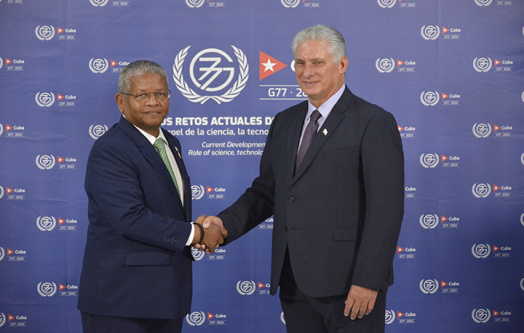
    Havana, Cuba 15 September 2023: The President of the Republic of Seychelles, Mr Wavel Ramkalawan joined fellow leaders of the Group 77 and China Summit of Heads of State and Government currently taking place in Havana Cuba. The two-day summit is taking place under the- guided theme “Current Development Challenges: The Role of Science, Technology and Innovation. ”

    The official opening ceremony was held on Friday morning (15th September), where President Ramkalawan was formally welcomed at the International Conference venue by the President of Cuba, President Miguel Diaz-Canel Bermúdez.

    During the opening ceremony President Diaz-Canel Bermúdez, welcomed and expressed appreciation to world leaders of the various G77 plus China members states for responding to the call of the summit and for their presence in Cuba. The Secretary General of the United Nations, Mr António Guterres took the floor before the G77 and China Heads of State and Government Summit was officially declared open.

    The ceremony was followed by the delivery of statements by Heads of State and Government during the General Debate session. The President was accompanied at the official opening ceremony by the Minister for Foreign Affairs and Tourism, Mr Sylvestre Radegonde.

    SOURCE

    STATEHOUSE NEWS

    » View all


  • EDITORIAL COMMENT

    EDITORIAL COMMENT

    To issue international sovereign bonds, financial markets require countries to have a credit rating from at least one or more of the three leading international credit rating agencies (CRAs) namely, Fitch, Moody’s and Standard & Poor’s (S&P).

    This constitutes a minimum requirement for capital market borrowing by market regulators, as adherence to international best practices of information disclosure and to reach out to a wider base of potential investors.

    The Financial and economic cost implications for Africa emanating from subjective credit ratings by international rating agencies(CRAs) has since left some African capital market players grumbling and dissatisfied as alluded to in various independent research study findings.

    The UNDP study report and policy brief on “Lowering cost of borrowing the role of Rating Agencies” has therefore come to make a yet most compelling case and sufficient justification for Africa to take her destiny into her own hands.

    On the back of this UNDP report came the African ministers, development actors and research institutes meeting on 14 April in Washington DC, on the margins of the 2023 World Bank/IMF Spring Meetings, to discuss the impact of credit ratings on the cost of development finance in Africa.

    At this meeting, organized by the United Nations Development Programme (UNDP), the Africa Growth Initiative at the Brookings Institution and AfriCatalyst, they raised the need to review international financing systems and particularly the determination of sovereign credit ratings for African countries, where data is often missing or of poor quality.

    The event was centered around a new study by UNDP which shows that African countries could save up to US$ 74.5 billion if credit ratings were based on less subjective assessments. This, in turn, would enable them to repay the principal of their domestic and foreign debt and free up funds for investments in human capital and infrastructure development.

    If we want to bring about change, we need to change the game, H.E. Oulimata Sarr, Minister of Economy, Planning and Cooperation, Republic of Senegal emphasized during the meeting in Washington.

    Subjective credit ratings, the Minister underscored, increase the cost of servicing debt, and put cash-strapped countries in a difficult position, having to choose between repaying debt and feeding their population.

    Furthermore, he noted, non-objective credit ratings also reduce the amount of investment that countries receive, as they are perceived to be riskier than they really are.

    “These negative impacts can occur even if the inaccurate credit ratings are not due to conscious bias, but rather to inadequate data and/or methodologies that are too subjective”.

    To issue international sovereign bonds, financial markets require countries to have a credit rating from at least one or more of the three leading international credit rating agencies (CRAs) – Fitch, Moody’s and Standard & Poor’s (S&P) – as a minimum requirement for capital market borrowing by market regulators, as adherence to international best practices of information disclosure and to reach out to a wider base of potential investors

    What Other Independent Studies say about CRAs

    It is worthy of note that it is not only the UNDP that has issues with subjective ratings by IRAs. In a review article on the study titled, “International credit rating agencies in Africa: Perceptions, trends and challenges” authored by Misheck Mutize, University of Cape Coast, Ghana and McBride Peter Nkhalamba African Peer Review Mechanism,

    Criticisms of CRAs by Researchers 

    In a quest to either improve or maintain favorable SCRs, governments subject themselves to the fiscal and monetary policy recommendations by the three international CRAs (Armstrong, 2016).

    Victims of CRAs downgrading

    South Africa

    Armstrong (2016) argues that a government that crafts an economic policy that contradicts the recommendations of the three international CRAs consequently suffers the loss of being downgraded. For instance, South Africa is facing a high threat of sovereign downgrade partly because of the land expropriation bill (IMF, 2018).

    Kenya

    Kenya facing downgrade by Moody’s following its delay to implement value added tax (VAT) on fuel products and proposal to remove petroleum tax (Irungu and Alushula, 2018). S&P warned South Africa against its R500 million stimulus package aimed at cushioning the economic impact of corona virus, citing that it will result in rising public debt.

    Barta and Johnston (2017) adds that there is an absence of sound economic logic behind CRA’s discouraging certain economic policies in emerging economies, which suggests that SCRs may be prone to being used as punitive measures against states that contradict western interests.

    Restrictive CRAs Policy Recommendations

    Policy recommendations by rating agencies are restrictive and forbid fiscal stimuli through government spending and tax relief, which usually align with emerging economies to increase consumer demand, encourage private investment, create jobs and stimulate economic growth.

    However, in contrast, extreme forms of these expansionary policies highly denounced in emerging economies are permitted and left unquestioned in the European and American setting under the banner of monetary easing and/or bailouts

    Despite the long-term economic potential in African countries, the credit rating methodologies over-emphasize the political risk in the rating criteria (Ahern and Painter, 2016).

    These circumstances have taken away the economic freedom of credit rated Africa governments and their sovereignty to freely craft their preferred long-term economic policies without threats of sovereign downgrades

    It is therefore against this background that, we of the Eco-Enviro News Africa magazine, wish to emphatically state that the decision of the AU to put in place a local African rating agency is appropriate and long than due but better late than never.

    It is our hope that the establishment of the African rating agency would bring sanity into the African capital market landscape and provide a level playing ground.

    Africa’s Ballooning Debt Overhung

    As a percentage of GDP, Africa’s share of external debt has risen from approximately 19% in 2010 to nearly 29% in 2022. Simultaneously, its external debt as a share of exports has risen from 74.5% to 140% over the same period.

    In 2022, public debt in Africa reached USD 1.8 trillion. While this is a fraction of the overall outstanding debt of developing countries, Africa’s debt has increased by 183% since 2010, a rate roughly four times higher than its growth rate of GDP in dollar terms.

    With Africa’s public debt now a cog in the wheel of the development of the continent, the need diversify mode of funding has become more imperative than ever before.

    Serious consideration ought to be given to alternative modes of development funding with relatively lower cost and also ensure investments in projects of strategic economic importance which has good returns on investments and can pay for itself.

    Alternative non interest based modes of funding as bridge financing, sovereign sukuk or zero interest Islamic bonds, public banking, etc. are worth considering.

    Mohammed A.Abu
  • African Union plans to launch its own credit ratings agency

    African Union plans to launch its own credit ratings agency

    FINANCIAL SERVICES

    African Union plans to launch its own credit ratings agency

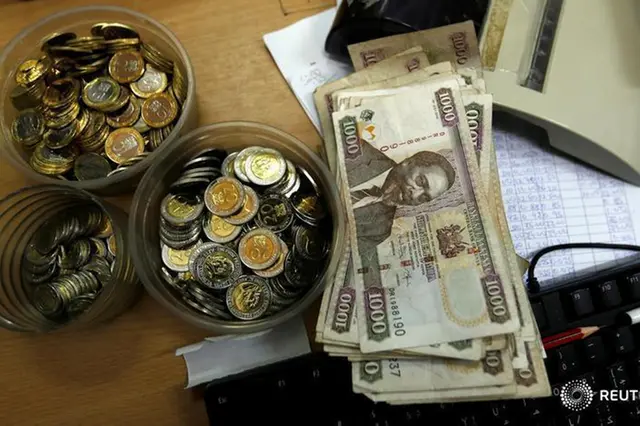
    Kenya shilling coins and notes are pictured inside a cashier’s booth at a forex exchange bureau in Kenya’s capital Nairobi, April 20, 2016. REUTERS/Thomas Mukoya
    Reuters Images

    The agency, which would craft its own assessment of the risks in lending to African countries

    Libby George, Reuters News

    September 12, 2023

    ECONOMYAFRICAFINANCIAL SERVICES

    The African Union plans to launch a new African credit rating agency next year to address the group’s concerns that ratings given to countries on the continent are unfair, an official told Reuters.

    The agency, which would craft its own assessment of the risks in lending to African countries, would be based on the continent, said Misheck Mutize, lead expert for country support on rating agencies with the African Union.

    It will also add context to the information investors consider when deciding whether to buy African bonds or lend privately to countries.

    “We already have quite a huge interest in the private sector to support the implementation of this,” Mutize said, adding they are targeting a launch in 2024.

    The AU, and leaders of member nations from Ghana to Senegal to Zambia, allege that the “big three” ratings agencies – Moody’s, Fitch and S&P Global Ratings – do not fairly assess the risk of lending to African countries, and say they are quicker to downgrade them during crises such as the COVID-19 pandemic.

    All three ratings agencies have denied bias and say their ratings follow the same formula across continents.

    Moody’s and S&P Global Ratings did not immediately respond to a request for comment. Ravi Bhatia, S&P’s lead analyst for sovereign ratings, told Reuters recently that the agency applies the same criteria consistently all regions.

    A Fitch Ratings spokesperson said all sovereign rating decisions use “globally consistent and publicly available criteria” and that all rating drivers were clearly identified.

    OUTSTANDING BONDS

    Broadly speaking, credit ratings are designed to gauge a borrower’s risk of default, and factor in the terms on which banks and others will lend to them. More than a dozen African countries have outstanding international bonds.

    A United Nations Development Programme study in April showed that African countries could save up to $74.5 billion if credit ratings were based on less subjective assessments, citing “idiosyncrasies” in the frequency of ratings actions for African countries as an example.

    Mutize said the new agency was a push to change the narrative.

    “Our goal has not been to replace the big three…we need them to support access to international capital. Our view has been to widen diversity of opinions,” he said.

    “We know the big three follow the opinion of other smaller ratings agencies. They’ve acknowledged that other smaller ratings agencies have got an edge in understanding domestic dynamics.”

    AU finance ministers passed a resolution over the summer to endorse the plan for the new agency, an effort spearheaded by the African Peer Review Mechanism (APRM), a branch of the AU formed last year to improve governance across the continent. The full AU executive council is expected to adopt the same resolution in February.

    The agency would be self funded and private-sector driven with AU oversight, Mutize said.

    “Investors have been quite positive. They want to see what will be the output of this,” he added. “Any investor will pay attention to anything that brings them information.”

    (Reporting By Libby George, additional reporting by Marc Jones, editing by Christina Fincher and Ed Osmond)

    SOURCE

    ZAWYA.COM

  • Message from Rugby Africa President Herbert Mensah to South Africa’s Springbroks amidst the 2023 Rugby World Cup

    Message from Rugby Africa President Herbert Mensah to South Africa’s Springbroks amidst the 2023 Rugby World Cup

    CAPE TOWN, South Africa, September 10, 2023/ — As South Africa prepares for their opening game today, Herbert Mensah, the newly elected President of Rugby Africa, (www.RugbyAfrique.com), the continental governing body of rugby across Africa, issues letter addressed to Mark Alexander, President of the South Africa Rugby Union:
    A warrior fights with courage, not with anger. African proverb
    From the four (plus) corners of the greatest continent in the World, AFRICA We wish You, The Springboks well. We stand by You as we love, respect and honour You and with all the collective strengths of our Gods and our Ancestors We pray for You!
    You are “Our” World Champions (1995, 2007 and 2019) …. all 1.3 billion of us. You give us hope and send the message that the rainbow stretches from Ras ben Sakka (most northerly point of Africa) to the Cape Aglhas (South Africa) and from Cape Verde Peninsula (most westerly point of Africa) to Xaafuun (Hafun) Point, near Cape Gwardafuy, Somalia (most Easterly point of Africa).
    Rugby Africa watched with keen interest as head coach Jacques Nienaber named the South Africa Rugby World Cup squad and we knew that this squad would be ready for the battle. Winners all. What will the opposition squad do with seven mighty forwards on the bench

    FORWARDS                                                            
    Props
    Vincent Koch
    Ox Nché
    Frans Malherbe
    Trevor Nyakane
    Steven Kitshoff
    Hookers
    Bongi Mbonambi
    Malcolm Marx
    Locks
    Marvin Orie
    RG Snyman
    Jean Kleyn
    Eben Etzebeth
    Back-rows
    Marco van Staden
    Jasper Wiese
    Kwagga Smith
    Pieter-Steph du Toit
    Duane Vermeulen
    Siya Kolisi (captain)
    Utility forwards
    Franco Mostert
    Deon Fourie
    BACKS
    Scrum-halves
    Faf de Klerk
    Jaden Hendrikse
    Grant Williams
    Cobus Reinach
    Fly-halves
    Manie Libbok
    Damian Willemse
    Centres
    Andre Esterhuizen
    Jesse Kriel
    Damian de Allende
    Back-three
    Canan Moodie
    Cheslin Kolbe
    Makazole Mapimpi
    Kurt-Lee Arendse
    Willie le Roux
    Mark from the tribes of the Zulu, Masaai, Berbers, Fula People, Nubians, Somalis, Oromo People, Shona People, Habesha Peoples and my own Ashanti representing some of the most famous warriors in our history, We are ready to share and carry your pain and propel you to victory.
    We are proud of You
    Herbert
    Distributed by APO Group on behalf of Rugby Africa.
    Media contact:
    Nicole Vervelde
    Communications Advisor to the President of Rugby Africa
    rugby@apo-opa.com

  • Dagbon delegation signs condolence book for late Ga Manye

    Dagbon delegation signs condolence book for late Ga Manye

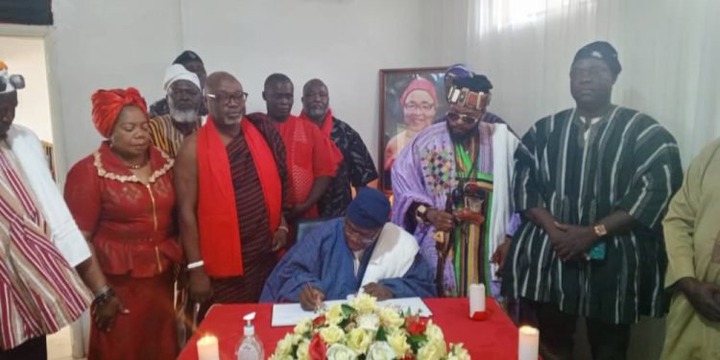
    A delegation from Dagbon, sent by the King of Dagbon, Ya Na Abubakari II, has signed the book of condolence opened in memory of the late Ga Manye, Naa Dedei Omaedru III.

    The delegation presented items including schnapps, 20 boxes of water, and 2,000 Ghana cedis (GH₵2,000) towards the funeral.

    The late Ga Manye, Naa Dedei Omaedru III, passed away in December last year and burial rites are expected to commence on October 23.

    The Paramount Chief of Sing in the Kumbungu District in the Northern Region and Leader of the Ya-Na delegation, Singlana Alhaji Iddi Lansah Seidu II, expressed his deepest condolences to the Ga state in an interview with Citi News.

    “It is always sad to lose a personality in the capacity of the Ga Traditional Paramount Queen Mother. So the whole of the Dagbon state mourns with our brothers the Ga people for the loss of our mother and aunt. We are telling them to take consolation in the fact that it is God who gives, and it is God who takes away.”

    “Whoever loves God so much, God also loves that person very much. And we are praying that God will replace her with a better person to uphold the unity of the Ga state,” he stated.

    Credit(CITINEWS.COM)

  • Islamic Banking Kicks Off In Uganda As BoU Issues 1st License To Salaam Bank Ltd

    Islamic Banking Kicks Off In Uganda As BoU Issues 1st License To Salaam Bank Ltd

    By Frank Kamuntu

    Uganda’s central bank has issued its first Islamic banking license since the country passed legislation to accommodate Shariah-compliant finance activities in June.

    The license went to Salaam Bank Ltd., a unit of Djibouti-based Salaam African Bank, the Bank of Uganda said in a statement Friday.

    The adoption of Islamic finance, which doesn’t allow the charging of interest, could unlock significant growth in East Africa’s third-biggest economy by attracting customers who have avoided traditional lenders on religious grounds.

    Shariah-compliant assets are among the world’s fastest-growing financial instruments and are forecast to reach $3 trillion worldwide in the next decade, from about $2.1 trillion at the end of 2016.

    “We believe that Islamic banking has the potential to make a significant contribution to the development of Uganda’s financial sector,” the central bank’s Deputy Governor Michael Atingi-Ego said in the statement.

    Salaam African Bank entered the Ugandan market last year through the acquisition of Top Finance Bank Ltd. — part of a broader strategy to expand in East Africa.

    The Ugandan parliament authorized Islamic banking in the country in June.

    CREDIT(SWIFT DAILY NEWS) 

  • Stop Sitting on Blocks: Participate in the AEW 2023 African Farmout Forum

    Stop Sitting on Blocks: Participate in the AEW 2023 African Farmout Forum

    By: N.J.Ayuk

    Africa’s oil and gas wealth will go to waste unless countries and companies stop sitting on blocks and invest in the production of future energy supplies

    Africa represents one of the final frontiers for hydrocarbon exploration worldwide. At a time when demand for oil and gas is skyrocketing globally and African nations are making great strides towards industrializing their economies, developing untapped oil and gas resources will be instrumental. Yet, the continent continues to see a trend whereby companies acquire blocks and hold onto the asset until someone else makes the investment and carries it to success.

    While this may have worked decades ago, this is not the way to invest in Africa. Holding onto assets without making the financial commitment will not alleviate energy poverty: it simply brings to light ineffective partners and uncommitted companies. The industry is changing, and independents, major E&P firms and investors need to commit or get out and let others take the reins.

    With over 600 million people currently without access to electricity and over 900 million without access to clean cooking solutions, Africa requires a collaborative approach to bringing new supplies on the market. Efforts to industrialize have brought to attention current trends of block inactivity, unexploited acreage and potential markets.

    Governments want to see movement, to see investment, and to see companies fulfilling their financial and exploration commitments. The time is over where companies take an asset without taking the exploration risk. For Africa to unlock the full potential of its resources, companies with intentions to commit need to be connected to blocks, and this is where the African Farmout Forum steps in.

    During this year’s edition of the African Energy Week (AEW) conference and Exhibition – scheduled for October 16-20 in Cape Town – an African Farmout Forum will connect new investors to blocks, foster partnerships to stimulate exploration and kickstart a new era of oil and gas development on the back of block acquisition.

    The African Farmout Forum is spearheaded by financial services company Moyes & Co; global acquisition and divestment advisor Envoi; and oil and gas deal listing platform FarmoutAngel, alongside the African Energy Chamber (AEC), and represents a not-to-be-missed event for global upstream players.

    For E&P firms, the African Farmout Forum presents a strategic opportunity to tap into untapped acreage in Africa. The forum hosts policymakers and governments from across the entire African continent, with major plays on show including Angola, the Democratic Republic of the Congo (DRC), Sierra Leone, Kenya and many more.

    National delegations will provide presentations on upcoming licensing rounds, current merger & acquisition activity and future projections for ongoing exploration initiatives. Meanwhile, for countries with unexploited hydrocarbon potential, the forum allows for direct discussions with independents and major players, fostering engagement that allows for new deals to be signed.

    The continent’s proven oil and gas resources currently measure 125 billion barrels of oil and 620 trillion cubic feet (tcf) of gas. However, many markets are yet to reveal the full extent of their hydrocarbon deposits. Nigeria, for example, with proven gas reserves of 200 tcf, likely holds more than 600 tcf in recoverable resources while South Africa likely holds up to 209 tcf of onshore gas. Additionally, countries such as the DRC, Zimbabwe, Sierra Leone, Sudan, Kenya and many more have not fully identified resource quantities, paving the way for fresh discoveries and developments.

    At the same time, many proven oil-rich basins have blocks that are currently not being developed. Companies are either being slow to invest or countries are being relaxed with procedures and timing. If Africa is going to alleviate its energy crisis, spurring long-term economic growth and industrialization on the back of oil and gas, these blocks need to be developed in an urgent manner.

    The African Farmout Forum will introduce companies with oil blocks, permits or licenses to investors and publicly traded companies through interactive executive management presentations. The forum will feature live presentations from company executives and industry experts, with opportunities to engage in Q&A sessions with presenters. This enables collaboration and direct negotiation, eliminating barriers such as lack of clarity. Additionally, the forum offers the chance for stakeholders to schedule one-on-one meetings with company management, further enhancing opportunities for engagement.

    “For small and independent companies seeking liquidity, and large companies looking for a balance of individual and institutional investment, the forum offers attendees the ability to engage with a large number of investors from across the globe. Africa needs to stop this trend of sitting on untapped blocks. If the continent wants to make any progress to industrialize and make energy poverty history, independents, major energy firms, state-owned companies and governments need to proactively develop both on- and offshore acreage,” stated NJ Ayuk, Executive Chairman of the AEC.

    The African Farmout Forum provides companies from across the private and public sectors the unique opportunity to meet, connect and sign deals. Spearheaded by industry experts and featuring numerous upstream market presentations, the forum introduces investors to untapped acreage. Join the African Farmout Forum today and be part of the next wave of upstream success in Africa.

    AEW is the AEC’s annual conference, exhibition and networking event. AEW 2023 will unite African energy policymakers and stakeholders with global investors to discuss and maximize opportunities within the continent’s entire energy industry. For more information about AEW 2023, visit https://aecweek.com.


  • At Africa Climate Summit, Afrobarometer survey sheds light on the continent’s climate reality: increasing drought, low climate awareness, and call for urgent action

    At Africa Climate Summit, Afrobarometer survey sheds light on the continent’s climate reality: increasing drought, low climate awareness, and call for urgent action

    NAIROBI, Kenya, September 7, 2023/ — The Africa Climate Summit (ACS) kicked off on Monday in Nairobi, Kenya bringing together governments, businesses, international organisations, and civil society. Afrobarometer (www.Afrobarometer.org) led an Action Hub event highlighting Africans’ views on climate change, including perceptions of worsening drought and an urgent need for climate action.

    ACS takes place two months ahead of the United Nations Climate Change Conference of the Parties, COP28 in Dubai, United Arab Emirates, setting the stage for meaningful conversations around climate action.
    At Monday’s TEDx-style event, representatives from the Institute for Development Studies at the University of Nairobi, Afrobarometer’s core partner for East Africa, shared findings from Round 9 surveys in 36 African countries in 2021-2022, shedding light on Africans’ perceptions of climate change.

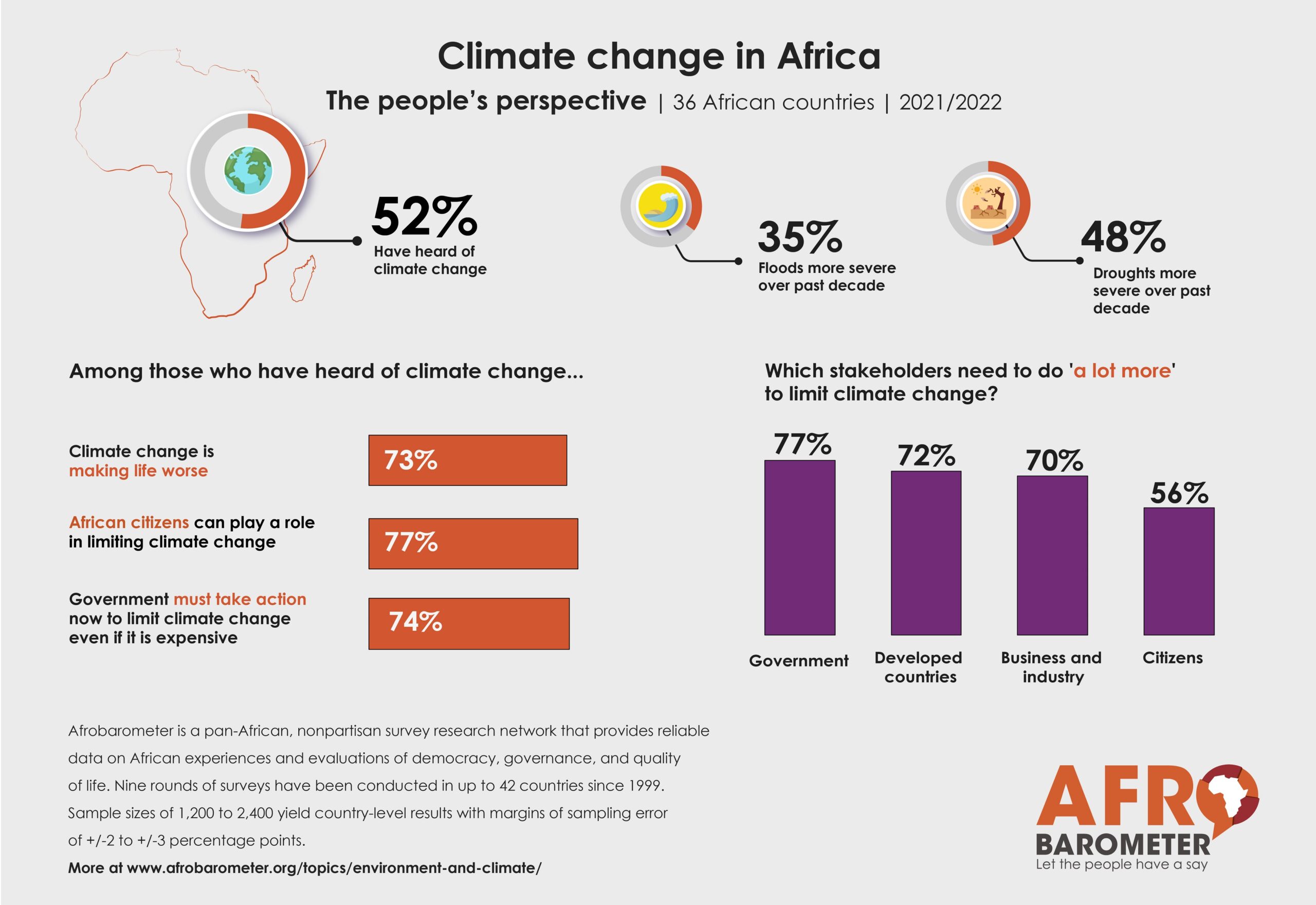
    Project Manager Sam Balongo revealed that citizens demand urgent government action on climate change: Majorities in all 36 countries want their government to take action now to limit climate change, even if it is costly, causes job losses, or takes a toll on the economy. In 14 countries, 80% or more of citizens who are aware of climate change share this view.
    The findings also show that only about half (52%) of citizens across 36 countries have heard of climate change. Awareness is as high as 80% in Seychelles, 74% in Malawi, 73% in Mauritius, and 70% in Gabon, but as low as 22% in Tunisia and 29% in Botswana.
    Fielding questions from the audience on climate-change awareness Balongo said, “The fact that only half of Africans are aware of this very important issue underscores the urgent need for enhanced education and decisive climate action.”
    Among citizens who are aware of climate change, most say it is making their lives worse. This perception is especially widespread in Madagascar (91%), Lesotho (88%), Mauritius (86%), Malawi (86%), and Benin (85%).
    On the worsening impact of climate change on citizens’ lives, Afrobarometer Assistant Project Manager Anne Okello noted that “about half of Africans say droughts have become more severe over the past 10 years, while one-third say the same about floods.”
    This year’s ACS is organised around four dynamic systems-based tracks, energy systems and industry; cities, urban and rural settlements, infrastructure and transport; Land, ocean, food, and water; and Societies, health, livelihoods, and economies.

    Distributed by APO Group on behalf of Afrobarometer.
    For more information, please contact:
    Daniel Iberi
    Communications coordinator for Eastern Africa
    Telephone: +254 725 674 457
    Email: diberi@afrobarometer.org


  • EDITORIAL COMMENT

    EDITORIAL COMMENT

    Mohammed A.Abu

    The exploitation and continuous exploitation of the natural resources of African and other countries associated with colonialism and at the expense of the environmental health in exploited countries has contributed immensely to the present day climate change impact in those countries, some climate justice activists, contend.

    The use of extracted natural resources from the former colonies by former colonial masters for their industrialization, wealth creation and fast tracked development has led to the ever yawning global development/wealth-poverty gap.

    Aside former colonies having been impoverished as a result of the exploitation of their natural resources, their people are also left to bear the brunt of the socio-ecological cost of wealth being made from their natural resources in exchange for a pittance.

    Carbon emissions from the advanced world fueled by the global fossil fuel boom and industrialization in advance wealthy nations is the main driver of the climate change impact African and other exploited countries worldwide, are now being made to endure without any meaningful assistance from the polluters.

    The former NASA scientist James Hansen has estimated that now rich advanced world countries were responsible for 77 percent of all carbon emissions between 1751 and 2006. The United States alone produced 28 percent of carbon dioxide emissions in that period. Other estimates reveal similar disparities: according to the German database PRIMAP-hist, developed countries were responsible for 68 percent of carbon dioxide emissions between 1850 and 2016.

    It is therefore against this background that, we of the Eco-Enviro News Africa magazine finds the call made by African leaders within the context of the Nairobi Declaration on the major polluters and global financial institutions to take full responsibility by committing more resources to help poorer nations, the victims of their wealth making and major pollution, as being on point.

    The Rich Get Richer and Poor Gets Poorer

    The multinational mining and oil and gas corporates from the advanced world belong to the world’s richest one (1) percent who own half of global wealth. Some of them operate in extractive industries in Africa and other parts of the world, and are said to me making too much money from mineral rich African countries through illicit financial transfer(IFFs) while also, impoverishing their host countries and leaving their people to bear the brunt of the environmental mess they had created.

    According to the Economic Development in Africa Report 2020 by the UN Conference on Trade and Development (UNCTAD), Africa loses about US$88.6 billion, 3.7 per cent of its gross domestic product (GDP), annually in illicit financial flows.

    A “UNU WIDER research article published in 2019 said, Tax havens have become a defining feature of the global financial system. Multinational companies can use various schemes to avoid paying taxes in countries where they make vast revenues.An estimated  US$420 billion in corporate profits is said to shifted out of 79 countries every year.

    This equates to about US$125 billion in lost tax revenue for these countries. As a result, their state services are either underfunded or must be funded by other, often lower-income taxpayers. It contributes to rising inequality both within countries across the world.

    According to cnbc.com, the world’s millionaires, richest 1 percent who own half of global wealth were expected to do the best in the coming years. There are now 36 million millionaires in the world, it says, and their numbers were expected to grow to 44 million by 2022.The U.S. still leads the world in millionaires, with 15.3 million people worth $1 million or more.

    The Wealth-Poverty Gap

    Yet commodity export dependent countries among developing countries suffering climate change  impact  are also losing as much as 67 per cent of their exports earnings, worth billions of dollars, due to trade misinvoicing, according to a new study by UNCTAD, which for the first time analyses this issue for specific countries and commodities.

    This research provides new detail on the magnitude of this issue, made even worse by the fact that some developing countries depend on just a handful of commodities for their health and education budgets,” UNCTAD Secretary-General Mukhisa Kituyi said.

    Africa’s Climate Change Impact Snapshot

    The  International Federation of the Red Cross and Crescent Societies reports that in September 2020 alone, torrential rainfall, river floods, and flash floods affected 192,594 people across 22 states in Nigeria (including 826 injuries, 155 fatalities, and 24,134 displacements).

    An estimated 27 to 53 million people in Nigeria ,the report said,might have to relocate with an (0.5 m) increase in the sea level. Sea level rise is threatening other low-lying countries in Africa, with research suggesting that cities like Abidjan, Cape Town, and Dar es Salaam will be totally submerged with (1.0 m) global sea level rise. At the same time, oil and diamond-mine infrastructure in coastal African countries worth trillions of dollars are very susceptible to sea level rise and coastal erosion.

    Climate change is also causing a decrease in productivity of many staple food crops in Africa. About 86 per cent of Africa’s agriculture is rain-fed, implying that even moderate variations in rainfall, temperature and precipitation patterns could have immediate impact on agricultural production.

    Under this unjust world economic and financial order,at which Africa and others have always been  at the receiving end,African governments aren’t  sitting down arms folded and asking for handouts from the rest of the world, but she is doing her bit under the given circumstances. African governments have demonstrated willingness to take strong action on climate change but the world’s most wealthiest minority ought must do the needful now in order  to complement their efforts.

    Climate Actions in Africa

    Nigeria has recently submitted a revised Nationally Determined Contributions that promises 20 per cent Green House Gas emission reduction by 2030. Several other countries like the Gambia, Congo, Malawi, Namibia and Liberia have also submitted revised NDCs.

    Nigeria has raised $60+ million in green bonds; the country has also strengthened its 2030 emission targets with specificity on addressing emissions reductions from the waste sectors and increasing conditional contributions. Malawi and South Africa have developed a fund to finance green growth projects, while Rwanda has created its $11 billion, 10-year Climate Plan, among others.

    To this end, we of the Eco-Enviro News, Africa magazine,wish to state that, the call on the polluters to do more should also be directed categorically at the multinationals engaged in Africa’s extractive industries as the have the money.

    We also support Mohammed Adow’s expert opinion that the most straightforward way that developed nations can address that inequity is through financial transfers and technological support to developing nations.

    In his feature under the title. “The Climate Debt what the West Owe the Rest “published in Foreign Affairs in 2020, Mr. Adow notes that, as part of negotiations under the aegis of the UN Framework Convention on Climate Change (UNFCCC), wealthy countries have agreed in principle to provide $100 billion a year by 2020 to assist their poor counterparts.

    The amount he also notes, is hardly enough to help developing nations adjust to the effects of climate change, receive compensation for loss and damage as a result of extreme weather, and transition to low-carbon economies.

    “Even that funding has not fully materialized, and its lack of implementation suggests a continuing imbalance between the rich and the rest”, he intimated


  • Masdar, Africa50 align efforts to hasten clean energy transition across Africa

    Masdar, Africa50 align efforts to hasten clean energy transition across Africa

    Africa50 and Masdar will also explore opportunities to collaborate on the implementation of the Alliance for Green Infrastructure in Africa

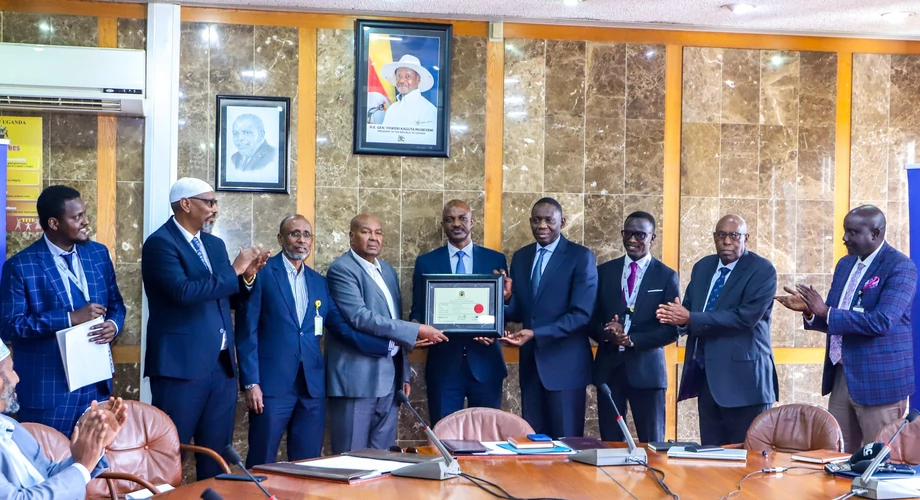
    Abu Dhabi-based Masdar has announced a partnership with Africa50, the pan-African infrastructure investment platform.

    The clean energy giant will identify, drive and scale clean energy projects across the continent.

    The UAE’s clean energy leader and Africa50 have signed a memorandum of understanding (MoU), which will work to bridge the infrastructure funding gap and mobilise public and private finance.

    The agreement will see both parties work collaboratively to catalyse sustainable development of the clean energy sector in Africa.

    Masdar has committed $2bn of equity as part of the UAE finance initiative, which was announced during Africa Climate Summit by Dr Sultan Al Jaber, Chairman of Masdar and COP28 President-Designate.

    The Africa Climate Summit is the first of four global climate summits ahead of COP28,

    SOURCE

    GULF TIMES