





12 June 2023 | Foreign Affairs
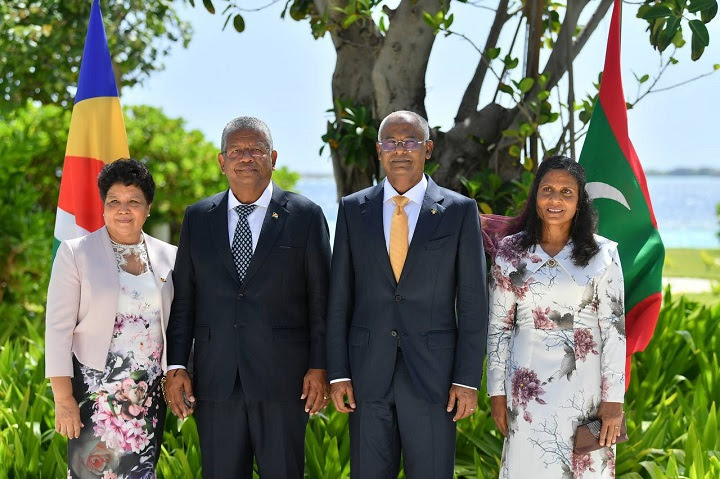
1. On the invitation of His Excellency Ibrahim Mohamed Solih, President of the Republic of Maldives, His Excellency Wavel Ramkalawan, President of the Republic of Seychelles, undertook a State Visit to the Maldives from 11-14 June 2023.
President Ramkalawan was accompanied by Her Excellency Linda Ramkalawan, First Lady of the Republic of Seychelles and a high-level delegation, including His Excellency Sylvestre Radegonde, Minister for Foreign Affairs and Tourism.
2. President Ramkalawan was accorded a ceremonial welcome in Malé, on 12 June 2023.
3. This is the first State Visit of a Head of State of Seychelles to the Maldives. The visit is a true reflection of the shared commitment of the two countries to take their relationship to new heights, as neighbours in the Indian Ocean, sharing similar historical, socio-economic, and cultural values and bonds.
4. President Ibrahim Mohamed Solih and President Wavel Ramkalawan held Official Talks on 12 June 2023, in a warm, cordial, and friendly atmosphere, with both sides expressing their desire to work together towards elevating their bilateral relations to a strategic partnership.
5. President Solih recalled his successful State Visit to the Republic of Seychelles in August 2019 and thanked President Ramkalawan and the Government of Seychelles for the warm hospitality accorded to him, First Lady Fazna Ahmed, and the accompanying delegation.
6. His Excellency Faisal Naseem, Vice President of the Republic of Maldives, His Excellency Mohamed Nasheed, Speaker of the People’s Majlis and Former President and His Excellency Abdulla Shahid, Minister of Foreign Affairs, paid courtesy calls on His Excellency President Ramkalawan. His Excellency President Solih hosted a State Banquet in honour of His Excellency President Ramkalawan and his delegation.
7. During the official talks, the two leaders highlighted the importance of people-to-people contacts, and the need to promote cultural exchanges and economic linkages between the two countries.
8. In recognizing the essential role of youth in enhancing bilateral cooperation, both leaders acknowledged the need for increasing exchange of training opportunities and the fostering of camaraderie among the two peoples.
9. As internationally acclaimed tourist destinations, both leaders agreed to broaden collaborative efforts in the field of tourism, with a view to exchanging experiences, both at the working level, as well as at the expert level, and nurturing the development of human resources by encompassing vocational training and facilitating job enrichments within the tourism sectors of the two countries.
10. As fellow Small Island Developing States (SIDS) and active members of the Alliance of Small Island States (AOSIS), both nations reaffirmed that climate change continues to pose a significant risk to SIDS and its adverse impacts undermine the ability of all countries to achieve sustainable development. Both leaders further expressed their commitment to enhance collaboration to effectively address the detrimental effects of climate change through global mechanisms, including working together to ensure that the hard-won Loss and Damage Fund is operationalized at COP28.
11. Recognizing the important role of the Indian Ocean for their sustainable development, both leaders agreed to collaborate closely in the areas of blue economy and marine conservation and to jointly promote blue economy initiatives at the international fora.
12. Both leaders also reaffirmed their firm commitment to the security of the Indian Ocean Region and agreed to work closely together to enhance cooperation in the field of maritime security, counterterrorism, Illegal, Unreported and Unregulated (IUU) fishing, counter-piracy, and combatting drug trafficking, both bilaterally as well as multilaterally, especially within the context of the Indian Ocean Rim Association (IORA).
13. Both leaders have reiterated the importance for the two countries and other Small Island Developing States (SIDS) to continue to advocate for the creation of a Multidimensional Vulnerability Index (MVI). This will underscore the need for SIDS to be assessed on the basis of their vulnerabilities instead of solely their GDP per capita.
14. The two leaders agreed to enhance multilateral cooperation, including collaborating closely at the United Nations on issues of mutual interest such as addressing climate change, protection and promotion of human rights, the implementation of the 2030 Agenda for Sustainable Development. The two leaders also agreed to collaborate closely through other multilateral avenues such as IORA and the Organisation of African, Caribbean and Pacific States (OACPS). President Ramkalawan congratulated the Maldives on its membership to the OACPS as well as its Presidency of the 76th Session of the United Nations General Assembly for the period September 2021 to September 2022.
15. Both leaders also expressed appreciation for the excellent cooperation between the two countries in various multilateral forums, including support for international initiatives and candidatures. President Solih thanked President Ramkalawan for the Government of Seychelles’ support for Maldives’ candidatures to the United Nations Security Council, for the term 2033-2034 and to the Economic and Social Council, for the term 2027-2029.
16. Following the Official Talks, building on the several agreements that were concluded between the Maldives and Seychelles in 2019, during President Solih’s State Visit to Seychelles, the two leaders witnessed the exchange of the following bilateral instruments between the two countries:
a. Agreement between the Government of the Republic of Maldives and the Government of the Republic of Seychelles on Short Stay Visa Waiver.
b. Agreement between the Government of the Republic of Maldives and the Government of the Republic of Seychelles Concerning Air Services.
c. Memorandum of Understanding for Youth Development Cooperation between the Ministry of Youth, Sports and Community Empowerment of the Government of the Republic of Maldives and the Ministry of Youth, Sports and Family of the Government of the Republic of Seychelles.
d. Protocol between the Government of the Republic of Maldives and the Government of the Republic of Seychelles on the Cooperation to Combat Transnational Organised Crime and other Maritime Security and Safety Threats.
17. His Excellency President Ramkalawan conveyed his gratitude to His Excellency President Solih and the people of Maldives for the warm welcome and gracious hospitality extended to him and the members of his delegation during their stay in the Maldives.
SOURCE:(STATE HOUSE NEWS)
| The Bank co-organized this year’s commemoration event with the Ivorian Ministry of Environment and Sustainable Development, the United Nations Environment Programme (UNEP), and the Netherlands |
| ABIDJAN, Ivory Coast, June 9, 2023/ — Cote d’Ivoire hosted the 50th anniversary of World Environment Day (https://apo-opa.info/3MYYnjN) on the 5th of June 2023, with the African Development Bank (www.AfDB.org) as a core partner for the annual event. The Bank co-organized this year’s commemoration event with the Ivorian Ministry of Environment and Sustainable Development, the United Nations Environment Programme (UNEP), and the Netherlands. Under the theme, ‘Solutions to Plastic Pollution,’ the event rallied more than 300 people to discuss why Africa should shift towards the circular economy and what the opportunities are. Jean-Luc Assi, Côte d’Ivoire’s Minister of Environment and Sustainable Development, restated her country’s ban on the production, import and marketing, possession and use of plastic bags. He said the ban has encouraged businesses to switch to reusable and biodegradable packaging. “They are being encouraged. So, let’s all be aware of the need to combat plastic pollution. Let’s act now and all say stop to plastic pollution,” Minister Assi stressed. Inger Andersen, UNEP Executive Director, said acting together to end plastic pollution is a major opportunity – particularly for developing countries. She said: “If we act with unity of purpose, we can eliminate plastic pollution by 2040. Reduce social, environmental and human health costs. Create hundreds of thousands of new jobs, mainly in developing countries, and new markets and business opportunities.” Kevin Kariuki, African Development Bank’s Vice President for Power, Energy, Climate and Green Growth, urged collective efforts in exploring workable solutions to sustainably address plastic pollution, “one of the most pressing global environmental issues of our time.” He said the African Development Bank, as the driver of Africa’s development agenda, is well-positioned in promoting initiatives against the continent’s environmental challenges. The Bank is implementing programs and special initiatives that contribute to environmental management and sustainability. Two of these are the African Circular Economy Alliance (ACEA) (https://apo-opa.info/3J2U2e9) and the Africa Circular Economy Facility (ACEF) (https://apo-opa.info/3WXU3FW), which aim to promote circularity and sound management of waste – including plastic – in Africa. During a panel, Rose Mwebaza, Director of UNEP’s Africa Office, noted that there is no single solution to the plastic pollution crisis. “The good news is that all the technological solutions needed have already been invented, with a wave of innovative companies and forward-looking governments joining forces to make plastic pollution history,” she said. The African Development Bank led the organization of the Forum of Solutions to Plastic Pollution to help companies to stop plastic pollution in Africa. “The solutions already exist,” said Al Hamndou Dorsouma, the Bank’s Climate and Green Growth Manager. “We don’t have excuses! Africa should move to Circular Economy. The future is circular.” Distributed by APO Group on behalf of African Development Bank Group (AfDB). |

08th June 2023
Today, we are commemorating the World Oceans Day as a reminder of the immense significance our oceans hold for all of humanity, and in particular, for us, the Seychellois people. Our oceans are not merely vast bodies of water; they are the lifeblood of our nation, providing sustenance, livelihoods, and inspiration. They are a source of beauty and wonder, and they connect us to the rest of the world. Today, we come together to celebrate this invaluable resource and to acknowledge the collective action required to ensure its sustainable use and preservation.
The ocean has always been an integral part of Seychelles’ identity. It is interwoven into our culture, our history, and our very way of life. From the vibrant coral reefs that surround our islands to the diverse marine species that call our waters home, we are blessed with a natural heritage that is unrivaled. But with this privilege comes a great responsibility. We must be steadfast guardians of our oceans, protecting them for future generations and upholding our commitment to sustainable practices.
In this pursuit, the blue economy emerges as a driving force, propelling us toward a future where economic growth and environmental stewardship go hand in hand. The blue economy is not merely a concept; it is a testament to our belief that sustainable development is possible, that we can harness the potential of our oceans while safeguarding their integrity. It is an invitation to explore new frontiers, where innovation and conservation converge, creating opportunities for our people and securing a vibrant future for Seychelles.
But the blue economy cannot thrive in isolation. Collaboration and partnership are the linchpins of success. Today, we stand united, recognizing that no single entity or nation can single-handedly manage the vast expanse of our oceans. We must work hand in hand, sharing knowledge, expertise, and resources, to ensure the effective and responsible management of our marine ecosystem.
I stand before you today as the Patron of the Ocean Decade Alliance, as a testament to the power of collaboration. It is through partnership that we have made great strides in marine use and conservation, establishing marine protected areas, developing emerging blue economy sectors such as marine biotechnology and circular economy, implementing sustainable fishing practices, and pioneering innovative solutions to combat climate change. Together, we have achieved significant milestones, but our work is far from over.
As we move forward, let us engage with communities, empower our youth, and foster a sense of ownership and responsibility for our oceans. Seychelles is known as the African Union Blue Economy Champion, but you, the people, are the real champions, because it is you who has the power to effect change! Let us be the champions of change, working together to ensure that our marine resources are managed wisely and that the splendor of our oceans endures for generations to come.
On this World Oceans Day let us be inspired by the beauty and resilience of our oceans, and let us remember that their fate is in our hands. Together, we can build a future where the blue economy flourishes, where sustainable practices guide our actions, and where the ocean remains a source of inspiration, prosperity, and life.
Thank you!
SOURCE: (STATE HOUSE)
| Africa’s Top Rated Hospitality Investors due Nairobi
……As Africa Hospitality Investment Forum(AHIF 2023) Holds Story: Mohammed Abu The Organizers of Africa’s premier hospitality industry event, the Africa Hospitality Investment Forum(AHIF),the Bench, announced on Wednesday that, Africa’s top notch and largest hospitality industry investors are due, Nairobi, Kenya and would be live on stage for the 2023 edition of the event. The investors the official announcement said, include Olivier Granet, Managing Partner & CEO, Kasada Capital Management, Alyshia Mangalji, VP Europe & Africa, Westmont Hospitality Group, Rahul Chaudhary, Managing Director, CG Corp Global and more. Investors of their caliber, the announcement noted, can help to fund projects that create thousands of jobs and boost international tourism, which is a major source of export revenue for many African countries. Their presence, alongside numerous other hotel owners, it added, has attracted top hospitality executives, government ministers, officials, bankers, consultants, and industry experts from over 50 countries to network and discuss the most pressing issues affecting the development of hotels across the continent. The AHIF program will cover a wide range of topics, including global risks and their impact on Africa’s hospitality industry, achieving net-zero targets, implementing environmental, social, and governance (ESG) strategies, access to capital, transformational travel, hotel development challenges and opportunities, hotel financing criteria, successful tourism entrepreneurship, operational excellence, the importance of human skills, alternative accommodation, emerging market dynamics, the latest trends, the future of hospitality investment in Africa and more.The event is further enhanced by AviaDev Real Estate, which overlaps with the last day of AHIF. It offers high-level discussion and case study presentations on successful airport real estate projects. Pre-set appointments will connect the owners and operators of African airports to those with the finance, expertise, and contacts to help them maximise revenue from their airport infrastructure, including from hospitality, as well as retail, cargo, warehousing, and other activities. Sponsored by Host Partner, Actis and Westmont Hospitality Group, Radisson Hotel Group; Reception Host: Kasada Capital Management; Accor, Aleph Hospitality, BWN Hotels, CHIC, CityBlue Hotels, Colliers, Equate, Hansgrohe, IHG Hotels & Resorts, Insignia, among several others, AHIF 2023 offers a highly influential speaker line-up that includes: Hon. Peninah Malonza OGW, Cabinet Secretary, Ministry of Tourism & Wildlife Kenya Haitham Mattar, MD MEA & SW Asia, IHG Hotels & Resorts Peter Greenberg, Travel Editor, CBS News Rajan Datar, Host of BBC Travel Show & BBC World News Pat Thaker, Economist Intelligence Unit Thomas Mundy, Head of Capital Markets Strategy & Research EMEA, JLL Jameel Verjee, Founder & CEO, CityBlue Hotels Catherine Hendry, Principal: Property Finance Africa, Nedbank Srividya Jagannathan, Manager Consumer and Social Services, International Finance Corporation, World Bank Group Vimbai Masiyiwa, CEO, Batoka Hospitality Group Karim Cheltout, Regional Vice President, Lodging Development Africa & All-Inclusive EMEA, Marriott International Trevor Ward, Managing Director, W Hospitality Group Billy Cheung You Tung, Chairman of the Board, Century Park Hotel and Residences Ltd Dupe Olusola, CEO, Transcorp Hotels Hamza Farooqui, Founder & CEO, Milat Investments Wytze Van den Berg, VP EMEA, BWH Hotels Daniel Silke, Political Futures Consultancy and an array of other impressive individuals, discussing more topics such as empowering women, green tech, and regional sourcing. “We feel honoured to have such an exceptional list of speakers for this year’s Africa Hospitality Investment Forum,” said Matthew Weihs, Managing Director of the bench. “Their expertise and unique perspectives will undoubtedly produce enlightening discussions on the key issues shaping the African hospitality industry. Thanks to their engagement and our commitment to providing a platform for industry leaders to connect and collaborate, AHIF will continue to play a vital role in driving investment and growth in the sector.” Mr.Weihs intimated. The Africa Hospitality Investment Forum (AHIF) is the premier gathering of industry leaders, investors, government officials, and hospitality professionals in Africa. It provides a platform for discussing investment opportunities, forging strategic partnerships, and promoting sustainable growth within the African hospitality sector. With its dynamic program, influential speakers, and networking opportunities, AHIF drives investment and development across the continent. Over the past 25 years, Bench has established a legacy for delivering business forums and conferences in Europe, Africa, the Middle East, and Latin America. It has built a reputation for delivering immersive virtual events, energizing masterclasses and innovative B2B digital strategies for its clients. For more details about AHIF, which takes place on 12th – 14th June in Nairobi, and to register for the event, please visit www.ahif.com.
|
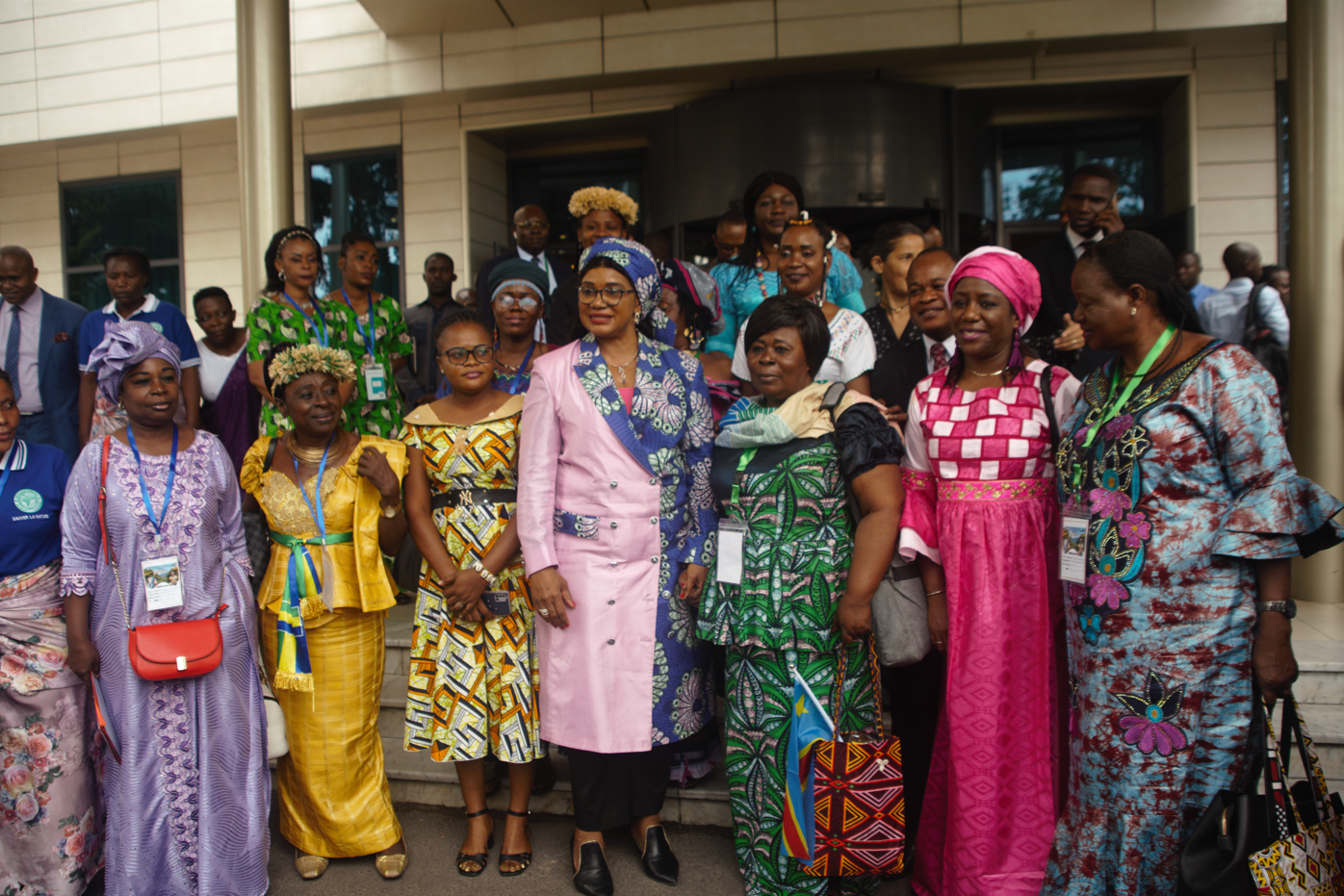
BRAZZAVILLE, Congo (Republic of the), May 15, 2023/ — More than 200 participants from 20 countries gathered in Brazzaville, Republic of Congo (RoC) last week for the First Forum of Indigenous and Local Community Women in Central Africa and the Congo Basin.
The forum was organized by the Network of Indigenous Peoples and Local Communities for the Sustainable Management of Central African Forest Ecosystems (REPALEAC) with support from the Rights and Resources Initiative (RRI) and the Central African Forest Commission (COMIFAC) under the patronage of RoC’s Minister of Justice, Human Rights and the Promotion of Indigenous Peoples.
Strengthening women-led conservation and climate resilience initiatives in Central Africa
Rosalie Matondo, the Minister of Forest Economy of RoC, chaired the event and welcomed donors, ministers, representatives from non-governmental organizations, and Indigenous and local community women to share experiences and learn how to scale up direct funding for women-led initiatives in Central Africa.
“We hope this is just the beginning of a very long partnership,” said Rosalie Matondo at the opening ceremony.
The Congo Basin’s ecosystem in Central Africa is the world’s second lung after the Amazon rainforest, home to extraordinary biodiversity of crucial importance to global climate goals.
Aissatou Aissatou Oumarou, Mbororo leader from Chad, vice-coordinator of REPALEAC at the sub-regional level, and president of the forum, said, “We, as Indigenous Peoples, always live in harmony with nature: animals, plants, and people. Now, we are coming together as women and Guardians of Mother Earth to build our own road.”
Dr. Solange Bandiaky-Badji, Coordinator of RRI’s global coalition of Indigenous Peoples, Afro-descendant Peoples, and local communities said in her opening remarks, “We are here today because for too long, the incredible contributions of Indigenous and local community women for the protection and management of natural ecosystems in Central Africa and the Congo Basin have not received the attention they deserve. REPALEAC and RRI are committed to ensuring that this forum leads to concrete actions with an implementable roadmap.”
Cécile Ndjebet, President of the African Women’s Network for Community Management (REFACOF) said, “We don’t need to prove Indigenous and community women’s role in restoring and protecting nature; the evidence is already there. What we need now is to ensure that these women have direct access to conservation funds.”
New Indigenous-led support mechanism for women and girls
The women of Central Africa and the Congo Basin worked together to build their own roadmap and Declaration that clearly expressed what they want and need to be able to continue protecting Earth’s most biodiverse landscapes.
They also agreed to develop a new Indigenous-led funding mechanism to help donors channel this support directly to the region’s women and girls.
They identified four priority areas through consensus decision-making:
Participants appointed Casey Box, Director of Global Strategy at the Christensen Fund, and Solange Bandiaky-Badji, Coordinator of the Rights and Resources Initiative, as mediators to mobilize funds and monitor the progress of donor commitments to support REPALEAC’s implementation of the forum’s roadmap in Central Africa.
“Communities can expect that donors will hear their voices, take the outcomes of their roadmap and declaration, and send them worldwide,” said Casey Box. “We are committed to being open liaisons to support their mission and help bring more attention to their issues and needs.”
This Indigenous-led mechanism, which will be overseen by REPALEAC in alignment with its 2018–2025 strategic plan, will empower Indigenous and local community women in Central Africa to make their own decisions about where and to whom funds go.
“There is incredible capacity in the room today. It is time donors also build capacity and start putting people, especially women and girls, first,” said Casey Box during the closing ceremony.
International solidarity and knowledge exchange strengthens movement
In the spirit of global solidarity and knowledge exchange, members of the Women in Global South Alliance for Tenure and Climate (WiGSA) (https://apo-opa.info/42TmaI7)
“We are here to learn from each other, for each other, and for our Mother Earth. We are not divided, but united,” said Jenifer
Sara Omi, Embera leader from Panama, President of the Mesoamerican Territorial Women Leader Coordination, and member of GATC said, “This forum has been essential to connect with Indigenous and local women across the world, to understand their needs, and to learn about their processes of resistance and struggle.”
On the last day of the forum, dialogue between international donors and participants led to several commitments to help further just and equitable development for women and girls in the region.
The second Forum of Indigenous and Local Community Women of Central Africa and the Congo Basin will be held in 2024 to take stock of funds committed and progress made on implementing the roadmap to continue strengthening women’s engagement in biodiversity conservation and climate resilience.
About Rights and Resources Initiative (RRI):
The Rights and Resources Initiative (RRI) is a global Coalition of 21 Partners and more than 150 rightsholders organizations and their allies dedicated to advancing the forestland and resource rights of Indigenous Peoples, Afro-descendant Peoples, local communities, and the women within these groups.
RRI is coordinated by the Rights and Resources Group, a non-profit organization based in Washington, D.C. For more information, please visit www.RightsAndResources.org.
SOURCE
Rights and Resources Initiative (RRI)

|
Fintech has revolutionized the way financial institutions manage financial assets, helping them tackle major challenges that arise on a daily basis
|
|
LONDON, United Kingdom, May 15, 2023/ — Under the High Patronage of His Majesty King Mohammed VI, GITEX AFRICA 2023 (https://GITEXAfrica.com/), from May 31 to June 2, 2023 in Marrakech, the largest Tech & Startup event on the African continent, amplifies Africa’s digital aspirations and achievements.
Capital Quant Agency (https://www.CapitalQAgency.
As the world becomes increasingly interconnected, capital and financial markets have become more complex and volatile than ever before, the case of the city of London. The rise of digital technologies and globalization has brought unprecedented opportunities and challenges for investors and financial institutions alike. Technology has enormous potential in Finance, and more specifically in capital and financial markets. When it comes to market finance and financial asset management, there has been a huge rise in the use of technology over recent years. This is due to some major challenges faced by financial institutions, trading rooms – asset managers and institutional investors on a daily basis.
The expression “Fintech” combines the terms “Finance” and “Technology”: it refers to an innovative start-up that use technology to rethink and solve some specific financial services challenges.
The rise of Financial Technology (Fintech) has transformed the landscape of market finance, and it’s essential for trading rooms and institutional investors to stay informed on this trend. Fintech has revolutionized the way financial institutions manage financial assets, helping them tackle major challenges that arise on a daily basis. Through the use of advanced data analysis, Artificial Intelligence (AI), and Machine Learning (ML) algorithms. Some fintech startups like Capital Quant Agency are developing an innovative decision-making software as a service (SaaS) that can help financial institutions optimize their portfolios, assess investment opportunities, and migrate financial risks.
This is where Capital Quant Agency comes in. As a leading fintech startup, based at Casablanca (Morocco), it can help its clients make more informed decisions, increase efficiency as well as revenue through maximizing transparency, automation, and connectivity. Quantitative analytics require robust, interactive and easy-to-use interface. By leveraging advanced analytics and quantitative resources capable of producing better results for both institutional investors, investment – asset managers, financial institutions and hedge funds. The software will help them assess the best investment opportunities, optimize their portfolios and migrate financial risk. Moreover, it is committed to using ethical and responsible practices in all its operations.
By adhering to high standards of data privacy, cybersecurity, and ethical conduct, Capital Quant Agency helps its clients build trust and confidence in their decision-making process. This is particularly important in an age where unethical practices are becoming increasingly common in the financial industry.
Fintech is revolutionizing market finance, and it’s crucial for trading rooms and institutional investors to stay informed. Understanding the power of fintech can help financial institutions optimize their operations, streamline their processes, and maximize profitability. However, navigating this new digital landscape requires careful attention to the latest trends and developments in fintech. By staying informed, financial institutions can unlock the full potential of fintech and stay ahead of the game in the ever-changing world of market finance. Distributed by APO Group on behalf of Capital Quant Agency.
SOURCE |
|
The African Green Bank initiative was conceived as part of measures to facilitate access to global finance from the current 3% to 10% annually by 2030
|
|
ABIDJAN, Ivory Coast, May 15, 2023/ — The African Development Bank (www.AfDB.org) is set to roll out the first green finance facilities in two public financial institutions in Benin and Côte d’Ivoire as part of its ground-breaking African Green Bank initiative. The host institutions are La Caisse des Dépôts et Consignations du Bénin (CDC Benin) and the Ivorian National Investment Bank (BNI).
As Africa’s premier development finance institution, the African Development Bank does not only provide fiscal resources to its regional member countries; it also galvanizes global support in promoting resilient, green, and sustainable growth. It launched the African Green Bank Initiative in November last year to support the implementation of African countries’ Nationally Determined Contributions (NDCs). African countries still face significant challenges in financing their climate transition. While investment needs resulting from NDCs are estimated at $2.8 trillion by 2030, funds invested on the continent still represent a limited share of global green finance flows, and the share covered by the private sector remains limited. The African Green Bank initiative was conceived as part of measures to facilitate access to global finance from the current 3% to 10% annually by 2030. The Initiative followed an assessment by the African Development Bank and the Climate Investment Funds in six African countries; Benin, Ghana, Mozambique, Tunisia, Uganda, and Zambia. The assessment revealed that green banks have significant potential for attracting new sources of catalytic funds when supporting low-carbon, climate-resilient development through blending capital and mobilizing local private investment for green investments in Africa. Bank vice president for Energy, Power, Climate and Green Growth, Kevin Kariuki, noted: “The African Green Bank Initiative is a powerful tool for reducing financing costs and mobilizing private sector investments in climate action in Africa.” The Initiative would bolster the capacity of local financial institutions to build a robust pipeline of bankable green projects while de-risking investments and entrenching long-term investor confidence toward climate-resilient and low-carbon projects in Africa. According to African Development Bank Vice President for Private Sector, Infrastructure and Industrialization, Solomon Quaynor, “this technical assistance will enhance local financial institutions’ climate governance, green projects’ origination and monitoring which is therefore key to attract private capital by entrenching long-term investor confidence.” Audrey-Cynthia Yamadjako, the Initiative’s coordinator, said some $1.6 million had already been secured to create the first two facilities. She said green finance facilities, newly created or hosted in existing financial institutions, are “the solution to bring private finance at scale in climate action.” Climate Investment Funds, a major global climate finance mechanism, Canada Climate Action Africa, the Green Bank Network, and the European asset management firm, Amundi support the initiative. Amundi backs the Initiative through technical assistance activities, including training green facilities’ management and investment teams. Amundi will also mobilize its investment vehicles dedicated to sustainable development in emerging markets and developing economies to support green facilities’ capitalization and thus participate in developing green investments across the continent. Distributed by APO Group on behalf of African Development Bank Group (AfDB).
SOURCE |

15 May 2023 | Blue Economy
The Office of the President has today announced the appointment of Mrs Phillianne Ernesta as the new Principal Secretary for The Blue Economy, effective from the 1st May, 2023. This follows the recent appointment of Mr Kenneth Racombo as Ambassador.
Mrs Ernesta holds a Bachelor Degree of Arts in anthropology from the Nelson Mandela Metropolitan University and a Diploma in General Management of the Guy Morel Institute.
Mrs Ernesta has 18 years of working experience in the public service.
Mrs Ernesta joined The Blue Economy Department in October 2016 as the Director for Maritime Boundary Delimitation. In February 2019, she took charge of the Blue Economy’s Policy and Programme Management Division as Acting Director General and in January 2020 she was confirmed in the post of Director General of the same Division, a position she has held until her new appointment as Principal Secretary.
Source: (State House News Alert)