Category: AFRICA

  • Using Science to Cope with Climate Change Impact Challenges

    Using Science to Cope with Climate Change Impact Challenges

    WATEX system set to fish out Africa’s hidden Groundwater Goodies

    …. As RTI Exploration Drives the “Water for Peace” Paradigm  

    Story: Mohammed Abu

     In March this year, the Representative of Public Affairs and Congress of the US Millennium Challenge Corporation(MCC) publicly announced that the French company RTI Exploration, after two years of research, had identified, from an innovative technology, about 50 billion m3 of available groundwater, with an annual recharge estimated at 2 billion m3.

    This, historic discovery represents a volume of water almost ten times greater than that of Lake Chad, the country’s largest source of surface water after the Niger River. This revolutionary discovery makes Niger the most groundwater-rich country in the Sahel region.

    This abundant groundwater resource discovered in Niger will increase its irrigation capacity on an area of more than 2 million hectares of arable land covering these aquifer systems, nearly a third of the size of Lake Michigan (57,750 km2).

    This means that smallholder farmers will be better able to feed their families and sell their surplus crops. This allows them to improve their living conditions and livelihoods and build resilience to climate change.

     “This study to map underground aquifers is the first of its kind in Niger. We are amazed by the results of the study, as the available groundwater makes Niger the most groundwater-rich country in the Sahel,” said Diafarou Moumouni Ali, the Supervisor of this activity for MCA-Niger.

    Adamou Hassane, a hydrologist who participated in the study, added that “these results motivate us for the next steps which will be to decide on the use of these aquifers to increase crop yields for the benefit of all Nigeriens-

    Backround

    The initiative is within the context of the MCC’s $442.6 million Niger compact program aimed at addressing two major constraints to economic growth and investment in Niger: lack of access to water for productive uses and physical access and institutional barriers to trade.

    Niger is said to be highly vulnerable to the changing climate and regularly experiences extremes: floods give way to extended droughts, with a backdrop of low and unpredictable rainfalls. This results in unproductive agricultural lands and is causing widespread food insecurity across the country.

    According to the World Food Programme, more than 4.4 million Nigeriens– almost 20 percent of the population– are food insecure and nearly half of children under age 5 suffer from acute malnutrition

    The Context 

    In partnership with the Government of Niger, the MCC compact is increasing rural incomes by improving the sustainable productive use of natural resources for agricultural production and improving trade and market access for agricultural products. The compact has the potential to benefit approximately 3.9 million people.

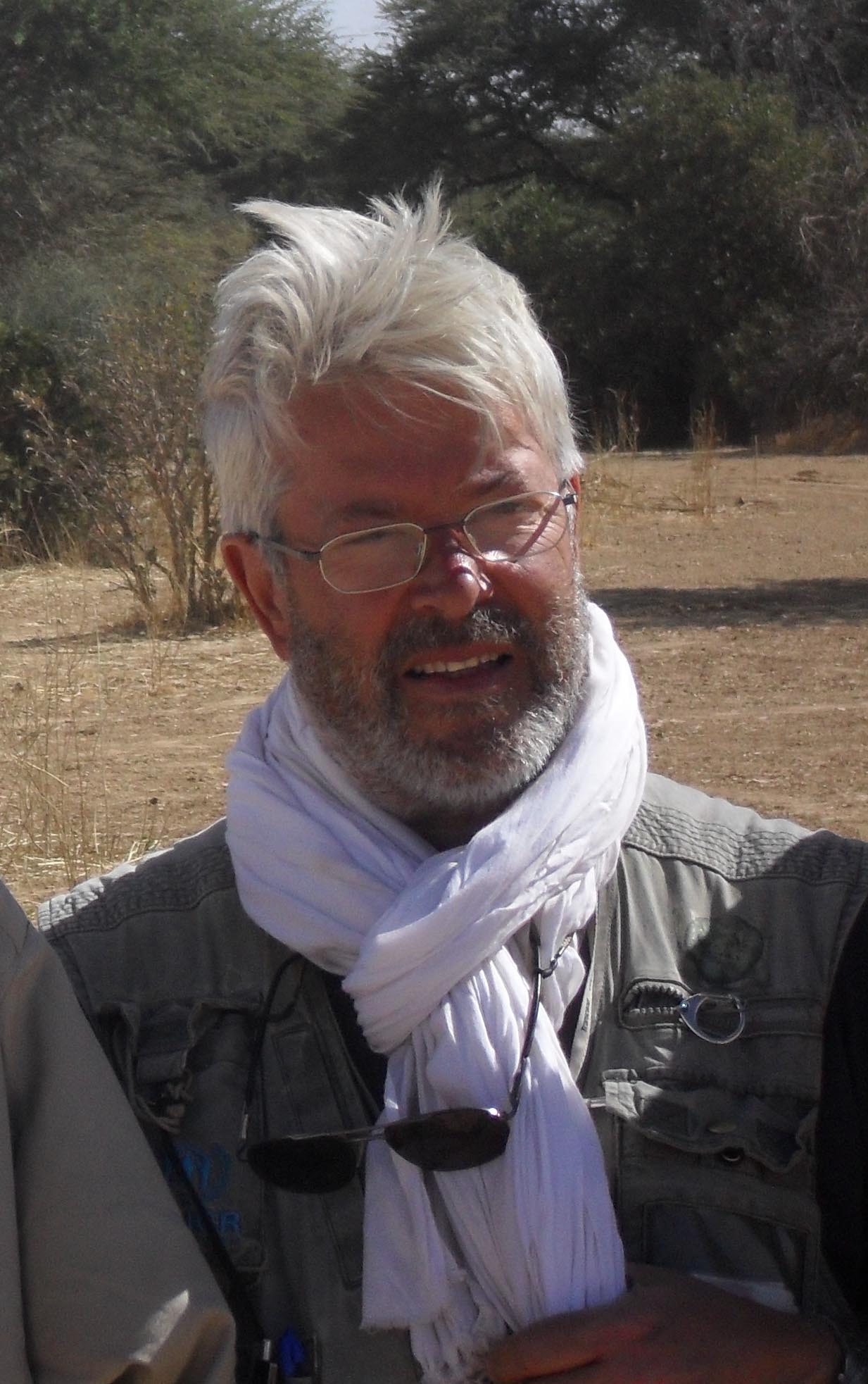
    For more insights, your favorite, Eco-Enviro News Africa, magazine got the man behind the scientific research driven innovative technological solutions to unearthing the hidden ground water aquifer goodies of countries worldwide with the most recent, being in Niger desert making her the most groundwater rich country in the Sahel region, Dr. Alain Gachet, Founder/ CEO, RTI Explorations.

    The WATEX® System, an algorithm combining spatial, geophysical, geological and climatic data, was invented, tested worldwide and implemented by the team of Dr. Alain Gachet, who is also a former explorer of Elf Aquitaine and founder in 1999 of RTI Exploration.

    Now read on for the details of our exclusive Interview with Dr. Gachet

    1.EENA: Courtesy RTI’s three years painstaking research and hard work in the Niger desert, the country is today crowned as the most groundwater rich country in the Sahel region of Africa. What was the motivating factor behind the project and could you share this most exciting moment with our readers?

    AG The motivating factor is to prove that there are solutions to alleviate the consequences of Climate change and create prosperity in a country badly struck by drought and threatened by food insecurity.

    Our WATEX system invented by RTI Exploration allowed us reveal the invisible and quantify new groundwater resources by billions of cubic meters from shallow depths (ranging from 5 to 60 meters) to deeper depths (from 60 m to 500 meters) with almost 2 million hectares of arable soils not cultivated today: people could not imagine that such huge groundwater quantities were lying under their homes, ready for use and to change their lives.

    Beside the surprise and excitement of such discoveries, is to experiment the power of science combined to brain, thanks to the financial support of the US Government. That is the way to save millions of persons and change the destiny of a whole country and more than that, restore hope to the new generation of farmers and herders.

    If little water brings war and conflicts around wells, a lot of water can bring peace through prosperity. That is the ultimate goal of my company expressed through my next book: WATER AND PEACE

    2.EENA: Is Niger the first African country to ever benefit from the exploits of RTI, or other countries preceded her and what were the statistics?

    No, Niger is a part of our exploration field spreading from Afghanistan to South America with a drilling success rate reaching 98% based on 2700+ wells since the Darfour crisis in Chad and Sudan in 2004.

    3.EENA: After Niger which other African country or countries are on RTI’s list to benefit from its game changer technology?

    AGI am not allowed yet to answer to such a strategic question

    4.EENA: What was the motivating factor behind your switchover from mineral exploration to water exploration as a globally reputed mineral exploration geologist ?

    AG  I learnt a lot of geosciences  and I made lots of discoveries during my 20 years of oil exploration, and a lot more in diamonds and gold exploration worldwide. But I understood since the Darfur crisis in early 2004, that we were driving to hell with the Climate Change which would spread like a fireball far beyond Sudan and Chad very soon, because ultimately, you don’t eat gold and diamonds and you don’t drink oil. My straight answer was to find this invisible water using my former exploration tools combined with a new generation of satellites to bring quick and efficient responses to what appeared aa a new challenge for humanity.

    5.EENA: Could you compare and contrast the socio-ecological cost associated with the two exploration divides vis-à-vis the on-going discourse on sustainable development?

    AG We are aware of the impact of mining activities on the environment with human and social associated costs.

    Nevertheless, any civilization needs and minerals and I remain an Engineer using science to cope with any challenge. We can produce commodities in a cleaner way: bringing water to the mining sites will offer new sustainable benefits for the environment such as reforestations, soils remediation using bacteria and fungi (mycorrhization).

    People call me Dr. Gachet but I am not the doctor of humans, but doctor of the Earth, finding the invisible water to heal and clean the wounds inflicted by humanity to the Earth: ESG commitment remains of our ultimate goal.

    EENA: Thank you very much for your time


  • Annual Investment Meeting, Emirates Angel Investors Association partner to strengthen efforts towards promoting startup activities

    Annual Investment Meeting, Emirates Angel Investors Association partner to strengthen efforts towards promoting startup activities

    The collaboration between AIM and EAIA is a significant step towards creating a vibrant ecosystem for innovation, entrepreneurship, and investment in the UAE

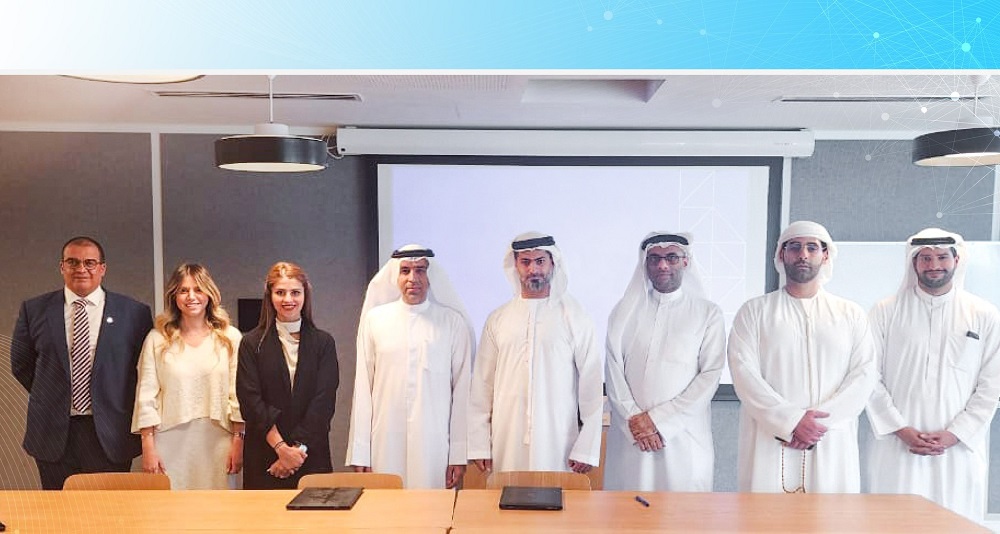
    Abu Dhabi, United Arab Emirates, May 10, 2023: The Annual Investment Meeting (AIM) and Emirates Angel Investors Association (EAIA) have come together to strengthen their efforts towards promoting startup activities through signing a partnership agreement.

    The collaboration between AIM and EAIA is expected to create a positive impact on the UAE’s startup ecosystem, which has been rapidly growing over the past few years. The partnership will provide startups with access to a wide network of investors, as well as the necessary resources and mentorship to help them grow and succeed.

    Commenting on the partnership, Mr. Walid A. Farghal, Director General of AIM, said, “The purpose of the partnership is to enhance investment opportunities in the UAE. By partnering with the Emirates Angel Investors Association, we hope to facilitate this growth and help create an environment where innovation, entrepreneurship, and investment can flourish. We are confident that this partnership will provide new opportunities for investors to get involved and create a more dynamic ecosystem, that will enable individuals and organizations to be inspired to invest in the region.”

    AIM has been at the forefront of promoting investment in emerging markets, and with this partnership, it aims to foster an environment of innovation and entrepreneurship in the UAE. The EAIA, on the other hand, has been promoting angel investment and mentorship in the UAE since 2010. Together, the two organizations aim to create a synergy that will provide startups and entrepreneurs with the necessary support to take their ideas to the next level.

    As part of the partnership, AIM and EAIA will also be organizing events, workshops, and training programs to help startups and entrepreneurs gain a deeper understanding of the investment landscape in the UAE. The events will bring together prominent investors and entrepreneurs from around the world to share their insights and experiences, creating a vibrant ecosystem for innovation and investment.

    The collaboration between AIM and EAIA is a significant step towards creating a vibrant ecosystem for innovation, entrepreneurship, and investment in the UAE. It is expected to attract a large number of investors and entrepreneurs to the region, creating new opportunities for growth and development.

  • Humanity International Investments: DRC and UAE to Collaborate on Economic Cooperation, Investment, and Infrastructure as discussed at Annual Investment Meeting

    Humanity International Investments: DRC and UAE to Collaborate on Economic Cooperation, Investment, and Infrastructure as discussed at Annual Investment Meeting

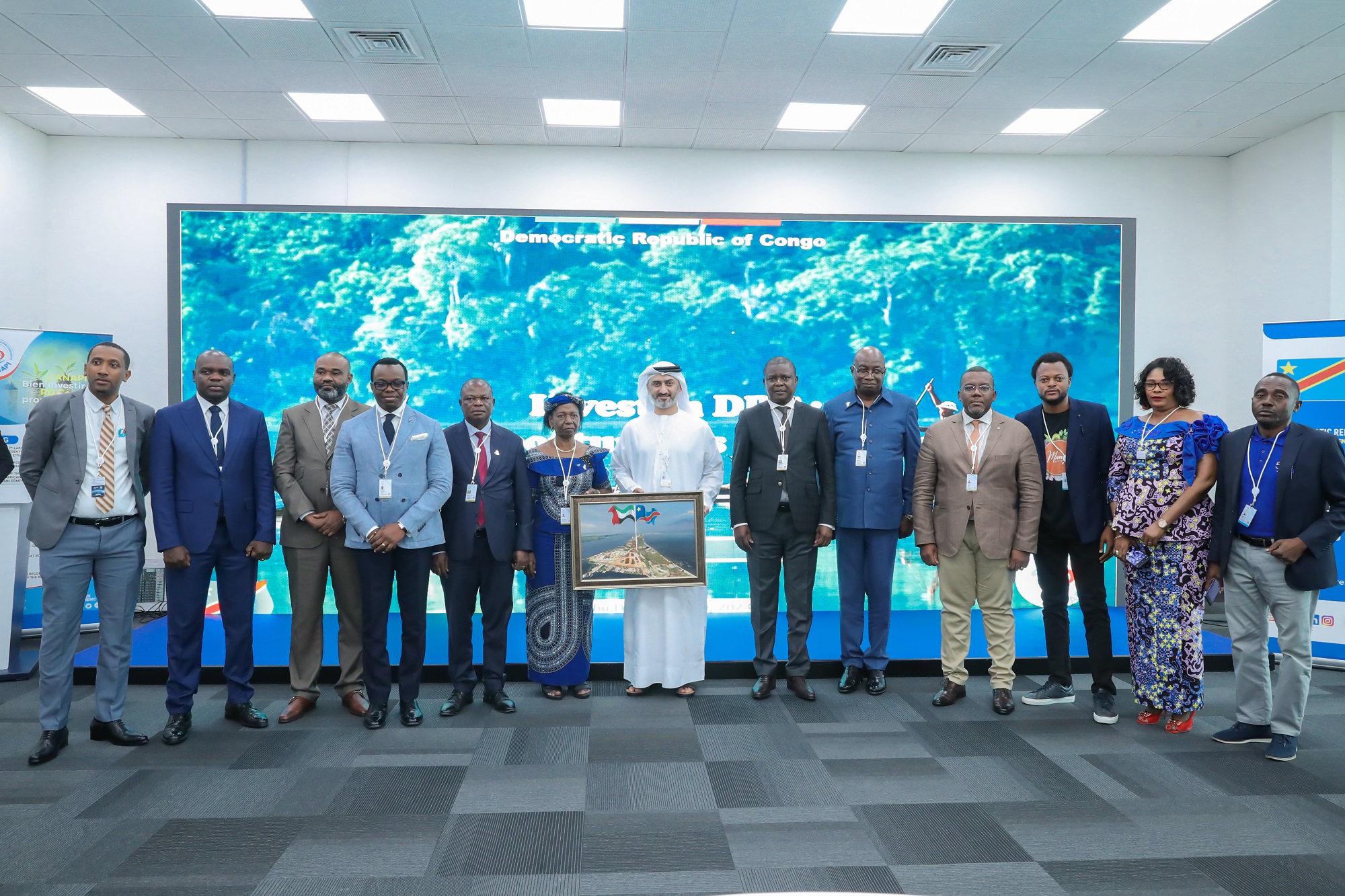
    Abu Dhabi, United Arab Emirates, May 10, 2023: The 12th edition of the Annual Investment Meeting (AIM) announced today that the Democratic Republic of the Congo (DRC) and the United Arab Emirates will collaborate on various projects focused on economic cooperation, investment, and infrastructure in addition to promoting humanitarian assistance efforts.

    This forum was led by Aly Ramji, the General Partner at Humanity International Investments, and included several high-profile speakers as H.E. Mrs. Marie Ndjeka Opombo, the Ambassador of the Democratic Republic of the Congo to the United Arab Emirates, Rashid Al Taneji, Director of Trade, Marcel Kanda, Chief of Staff of the Planning Ministry of Congo, John Kabeya Shikayi, Governor of Central Kasai, Malo Mobutu, Governor of North Ubangi, Governor Jean Claude Mabenze of South Ubangi, Dr. Guy BANDU Governor of Central Congo and Governor Jean Robert Nzanza Bombiti of Bas Uele province .

    This session highlighted various reconstruction projects and collaborations with stakeholders as well as focused on a partnership between Congo and the UAE that is aimed at investing in gold. The session highlighted the formation of a joint venture with the Minister of Finance and Treasury with 55% for the UAE and 45% for Congo, which would focus on gold.

    The session also discussed the significant 45% bilateral growth rate in trade between the UAE and the DRC. The UAE is seeking potential partners to invest in the DRC and has signed agreements with India, Israel, Turkey, and Indonesia, and is now looking forward to enhancing relations with African countries as well, including the DRC.

    Marcel Kanda, Chief of Staff of the Planning Ministry of Congo, expressed his ambition for agricultural transformation in the country by developing a value chain in agriculture by 2040, aiming to position Congo as an emerging country. The government of Congo is committed to implementing structural reforms that focus on improving infrastructure and creating a conducive business environment to attract investors.

    In addition, the forum also highlighted the agricultural and mining potential of the Central Kasai province, citing that the region has 8,000 acres of fertile land and favorable natural conditions that allow for the possibility of producing crops up to three times a year. It also emphasized the agricultural and mining potential of the North Ubangi province and highlighted the natural resources of gold and diamonds in the region, as well as its involvement in various projects related to agriculture and infrastructure.

    Lastly, the session also provided the importance of developing the agriculture in Bas Uele for its vast forests and favourable climate conditions, which can support the cultivation of various crops. The governor’s vision is to make the DRC one of the greatest countries in terms of agriculture and attract expertise and business investment in the sector.

    In conclusion, this partnership will open doors to investment and trade opportunities that will benefit both countries while promoting stability and development in the region.


  • Admirals Expands Global Presence with Opening of New Office in Nigeria

    Admirals Expands Global Presence with Opening of New Office in Nigeria

    Global fintech player expands its presence in the African market

    8 May 2023, Lagos Admirals, a global fintech leader with 22 years of experience and expertise, has announced the establishment of its the physical presence in Nigeria, aiming to further position itself as a major financial services provider on the African continent.

    Admirals offers a wide range of financial products and services to the Nigerian traders, such as trading with stocks, forex and CFDs on indices, metals, energies, stocks, bonds, and digital currencies. It is also set to boost financial literacy in the region with the help of its educational materials such as courses, webinars, seminars, e-books to name a few.

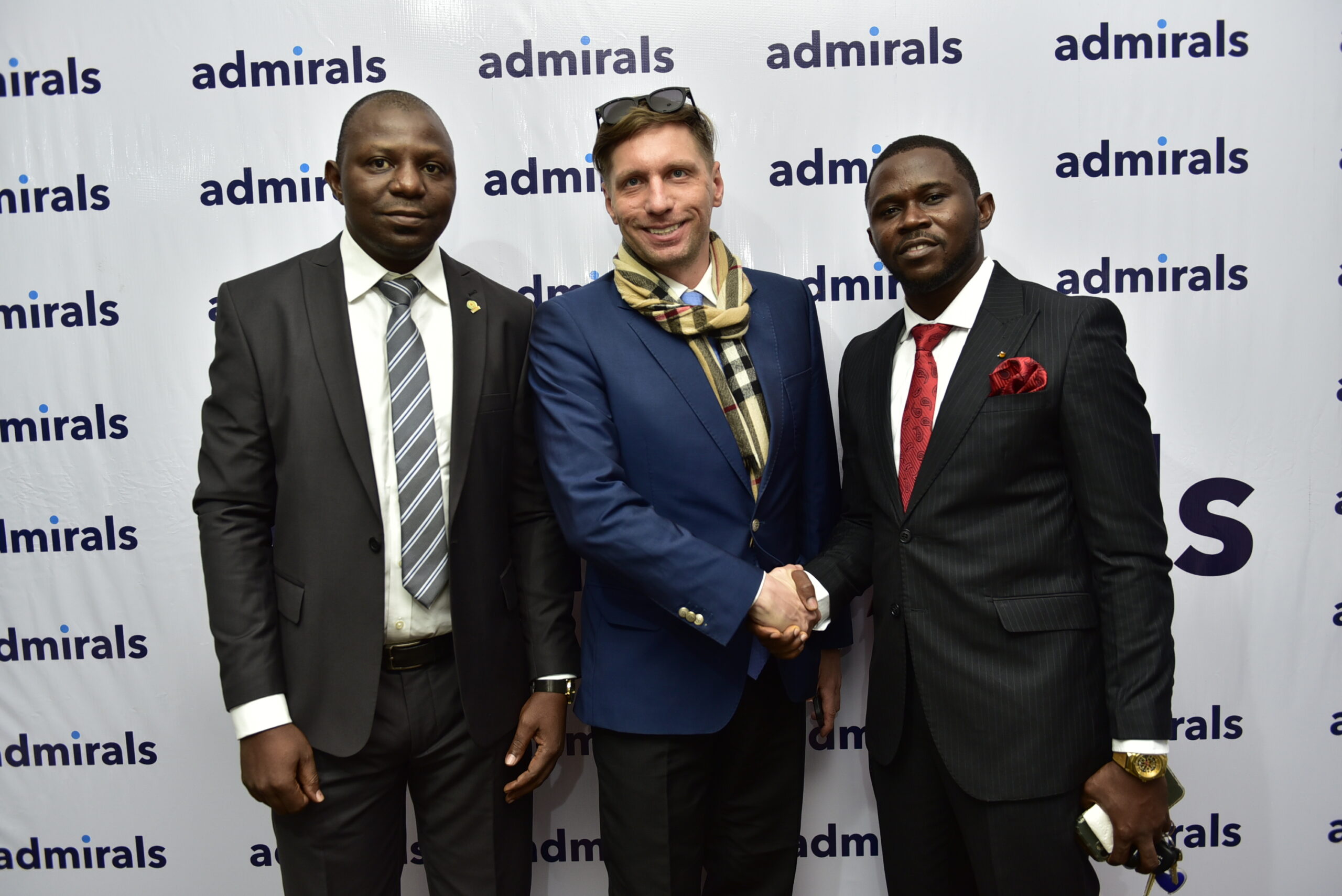
    The inaugural event was held in Lagos at the end of April, featuring prominent financial services industry experts, Boriss Gubaidulin, Admirals Africa Director, Davies Babalola, Admirals Global Sales Team Lead, and Nelson Daramola, stockbroker and authorised dealer on the Nigerian Exchange Limited (NGX), confirming their commitment to educating and empowering traders with the knowledge and tools needed to succeed in the financial markets.

    Expressing his excitement at the launch event Boriss Gubaidulin, Admirals’ Africa Director, and a veteran in the financial industry said, “We are extremely thrilled to have opened another hub on the African continent.”

    “With Admirals being a well-regulated and renowned global fintech company, we plan to expand our conventional trading by granting access to international financial markets and educational resources in Nigeria,” he continues.

    “Our end goal remains the same, and that is to enhance financial accessibility and literacy for traders in the local region by providing them with strong financial services and support. Admirals is looking forward to helping the growth of our traders, investors, partners, and anyone who is interested in expanding their financial knowledge,” Gubaidulin said.

    Admirals’ Nigeria Manager and Sales Team Lead, Davies Babalola, commented on the launch by stating, “We have received significant traction from traders in Nigeria, which prompted us to establish a local presence to better support our community of local traders in Nigeria.”

    “With this launch we are reiterating our goal to allow traders to safely engage in online forex trading in developing countries, and to diversify their investment portfolio with Admirals’ tailor-made solutions,” Babalola said.

    The Admirals launch event presented attendees with an engaging opportunity to learn about the Admirals brand and the world of trading and investing. Attendees were also informed about the Admirals special trading features such as the Welcome bonus and the No Deposit Bonus, for new and advanced traders to sign up and start trading.

  • Côte d’Ivoire: Gninlnagnon Koné dreams of supplanting the leading players in food supplements in Côte d’Ivoire with his Chérubins baby formula

    Côte d’Ivoire: Gninlnagnon Koné dreams of supplanting the leading players in food supplements in Côte d’Ivoire with his Chérubins baby formula

    Cherubins formula is made from brown or black rice, which is high in fibre and also an excellent antioxidant
    ABIDJAN, Ivory Coast, May 10, 2023/ — Even as a child, Gninlnagnon Koné , a young man from Katiola in north central Côte d’Ivoire, liked to follow his parents, who grew tubers and maize, to their farm.

    Today, an engineer in agricultural business management, he says, “When I became an engineer, I realised that our agricultural producers still face the same difficulties with processing their products. People work hard but ultimately their products are undervalued and sell poorly. It made me want to change things. I decided to process these products to create added value and give farmers the chance to live a better life from the fruits of their labour,” he explains.

    He too tried hard to set up an agricultural business without success. That is, until he encountered the Enable Youth Côte d’Ivoire project.

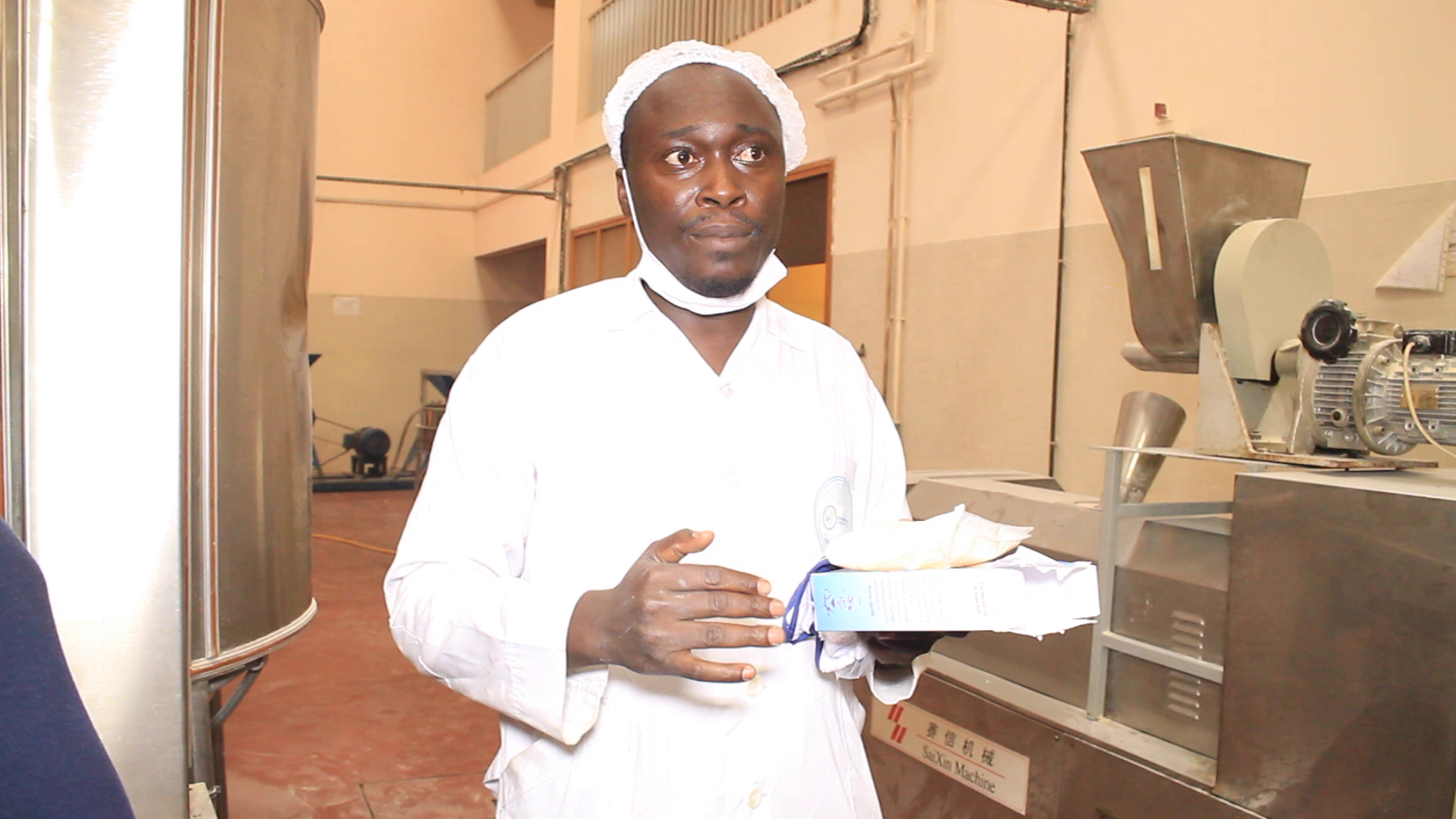
    “My sole idea in coming to the Higher School of Agronomy (ESA) in Yamoussoukro, the country’s political capital, was to get access to tools that would enable me to become a real agricultural entrepreneur as I’ve always dreamed,” he says, standing in front of a machine that roasts tiger nuts and maize.

    Koné’s food supplement for babies—named Cherubins— is a formula based on rice and tiger nuts. It also contains agricultural ingredients that set it apart from other food supplements available in Côte d’Ivoire, a market dominated by major brands, as Koné – good salesman that he is – hastens to add.

    “The product is a fortified infant formula, made with 100% highly nutritious local agricultural products. It complies with all World Health Organization (WHO) standards in terms of infant nutrition. And it’s identical to all the imported infant formulas that flood our markets,” he explains.

    “It’s an alternative we’re offering to mums to ensure that children transition safely from breastmilk to solid food,” adds Koné.

    Packed in 200g bags and then into attractive little blue boxes decorated with tiger nuts and grains of rice, Cherubins formula is made from brown or black rice, which is high in fibre and also an excellent antioxidant.

    The rice is combined with other locally produced cereals, such as tiger nuts and soya. This adds lipids, proteins and carbohydrates, he explains.

    “We also add mineral and vitamin supplements derived from other local products, such as roselle, moringa, carrot, mango and sometimes ginger to give the formula – which tastes amazing – a special flavour,” Koné adds.

    “We researched the market for infant formulas and developed a strategy to enable us to penetrate the market by meeting consumer expectations. We’re now ready to tackle it, with a well-honed strategy, solid market research and a number of test products. It all points to our being able to compete with the products already on the market,” he explains.

    Set up by the government of Côte d’Ivoire with funding from the African Development Bank, the Enable Youth project is a national programme that seeks to attract young people into the agricultural sector. Its primary aim is to support young graduates to create businesses all along the agricultural value chain.

    As well as offering a six-month training course, the project will provide partial funding for 20 young entrepreneurs to set up their businesses.

    Subsistence agriculture plays an important role in the economy of Côte d’Ivoire, the world’s leading cocoa producer. The authorities now want to see agricultural products processed locally to create added value for the country’s economy which, with over 7% annual growth since 2013 – excluding the Covid-19 years – remains one of the world’s most dynamic economies.

    Distributed by APO Group on behalf of African Development Bank Group (AfDB).

    SOURCE
    African Development Bank Group (AfDB)

  • Green Entrepreneurship: A Key Driver for Competitiveness and Sustainability Highlighted at the Annual Investment Meeting’s Entrepreneurs Investment Summit

    Green Entrepreneurship: A Key Driver for Competitiveness and Sustainability Highlighted at the Annual Investment Meeting’s Entrepreneurs Investment Summit

    The Summit discussed new strategies and opportunities in green investment for entrepreneurs

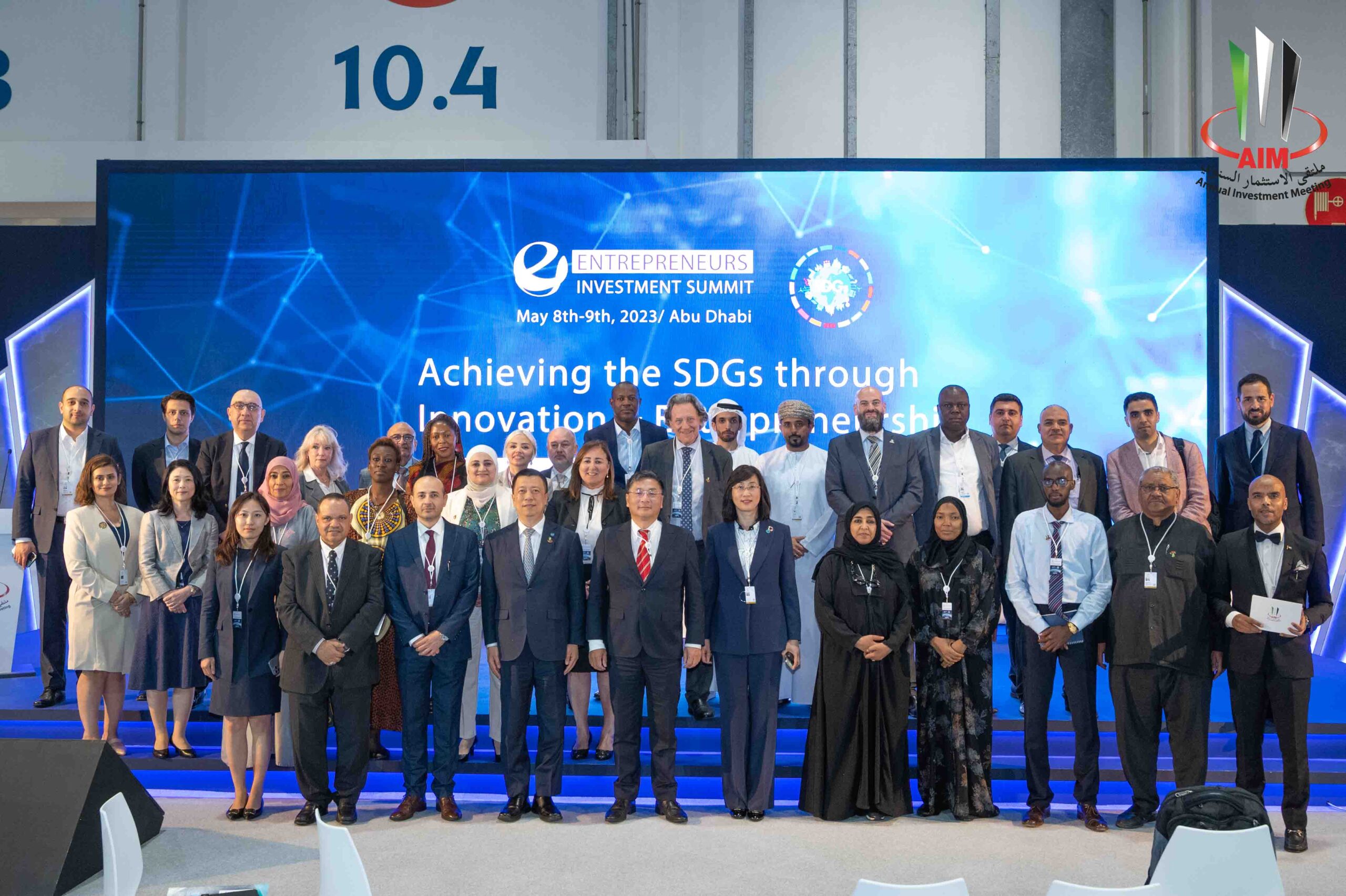
     Abu Dhabi, UAE, 9 May 2023 The Entrepreneurs Investment Summit opened its doors to industry leaders and experts from around the world to discuss new strategies and opportunities for investment. Held at the 12th edition of the The Annual Investment Meeting (AIM), which took place at the Entrepreneurs Room located at the Abu Dhabi National Exhibition Centre, The Summit witnessed a range of distinguished speakers who shared their thoughts and insights on the subject.

    The forum commenced with opening remarks from Dr. Hashim Hussien – Executive Director World Entrepreneurs Investment Forum. He said, “This summit marks a new beginning for the Interpreters Forum Secretariat, with more focused events that aim to create an optimal platform for entrepreneurs to connect with major investors, experts, and unicorns. We are focusing on Arab and African entrepreneurs, but we have also invited entrepreneurs from all over the world to share their experiences and build more resilient enterprises.

    Over the next three days, we will hear from 55 speakers from 23 countries, representing Europe, Asia, Africa, Latin America, and of course, the Arab region. We will be discussing issues that challenge entrepreneurs and economic development worldwide, as well as the ecosystems regionally and internationally. Thank you for coming together to invest, network, and share experiences, and I hope you have a successful and enjoyable summit.

    In addition, H.E. Dr. Khaled Hanafy – Secretary General – Union of Arab Chambers said, “This event, the Entrepreneur Investment Summit, is a crucial platform for addressing the challenges and opportunities that exist in the Arab world. However, before we delve into these issues, let me shed light on some of the Givens or facts that characterize the Arab world.

    To begin with, the 22 Arab countries are not homogeneous. Each country has its unique mix of factors of production, including labor force, which makes it challenging to generalize about the region. Secondly, around 88% of the Arab world’s population has access to the Internet, and 94% own mobile devices. Thirdly, poverty is a prevalent issue in the region, with around 40% of the population living below the poverty line. Of this percentage, 50% are youth aged between 18 and 30. When it comes to entrepreneurship, while there is a significant number of small and medium enterprises (SMEs) in the Arab world, only 1.3% of them are startups, which is a considerably low rate. Given these Givens, it is imperative that we consider how to address these challenges.

    As the Union of Arab Chambers, we are organizing this summit to represent the private sector in the Arab countries. The private sector accounts for almost 70-75% of the GDP and employment in the region and is a leader in growth and development. Thus, we aim to emphasize that the private sector cares deeply about entrepreneurship and investment in SMEs. We understand that there are bugs and problems in some Arab economies, but we also believe that there is potential in every Arab country.”

    H.E. Dr Ali Saeed Bin Harmal Al Dhaheri – First Vice Chairman- Abu Dhabi Chamber of Commerce & Industry said, “As part of the annual investment meeting 2023, we are excited to welcome you to the Arab African Entrepreneurs Summit. Over two days, this summit will showcase bankable investment opportunities led by intrapreneurs, SMEs, and micro-investments from African and Arab regions. It will provide a platform for sharing best practices to stimulate joint investment opportunities between Africa and the region, contributing to African economic integration.

    “The Abu Dhabi Chamber’s new strategy spanning 2023-2025 aims to drive economic cooperation and create business opportunities for the private sector, locally, regionally, and internationally. Our participation in this event aligns with our commitment to support policies, adaptive innovation, and digital transformation to build a knowledge-based economy”

    Continental African trade is estimated to be $80 billion US dollars in 2041, according to the African African bank. Plans are underway to strengthen trade exchange between Africa and the Arab region, with initiatives such as the Arab Africa guarantee fund and Cairo’s plan to increase exports to Africa to $10 billion US dollars by 2025. The UAE has emerged as one of the largest investors in Africa among the GCC states, with the Abu Dhabi Fund for Development financing more than 66 projects and 28 African countries valued at $16.6 billion US dollars between January 2016 and July 2021. The African entrepreneurs summit will build on these initiatives by creating solid partnerships between SMEs and entrepreneurs in Africa and our region.”

    Following the opening remarks, ‘The Entrepreneurs Investment Summit’ commenced. This was marked by the presence of several distinguished guests, including HE Dr. Ahmed Abu El Gheit, Secretary General of the League of Arab States, HE Dr. Haidara Fatou, Deputy Director General and Managing Director of the Directorate of Global Partnerships and External Relations, and Director General’s Special Representative for Africa, H.E. Sameer Abdulla Nass, President of the Union of Arab Chambers.

    H.E. Dr. Ahmed Abu El Gheit – Secretary General League of Arab States said, “We are working collaboratively towards a historic milestone for entrepreneurs, with a strong focus on community development and creating opportunities to support SMEs that can drive economic growth and increase investment opportunities. The introduction of digital techniques has made it easier for investors to take an interest in these opportunities. The Arab world recognizes the importance of transitioning towards shared opportunities between the private and public sectors, and empowering local industries to prepare for economic growth, employment, and the best interests of the region.”

    H.E. Dr. Haidara Fatou – Deputy General and Managing Director, Directorate of Global Partnerships and external relations, and Director General’s Special Representative for Africa, said “The need to achieve Sustainable Development Goals (SDGs) has become more urgent, and investment opportunities have arisen at a critical time for the community.

    “It is essential to address global challenges, create jobs, and drive economic growth. Several nations are experiencing a decline in the number of start-up businesses, and many young people are unable to find employment after leaving school. This makes it crucial to invest in youth to ensure future generations can thrive.”

    H.E. Sameer Abdulla Nass – President at – Union of Arab Chambers said, “I would like to highlight the Arab Chamber’s efforts to increase trade and investment among Arab countries. Unfortunately, the current level of trade, which is only 50% among 22 countries, falls short of our expectations. Therefore, we need to focus on creating recommendations and bylaws to enhance trade relations among union countries. Entrepreneurship has always been a crucial concept in our region, and we need to emphasize its importance.

    “We must support the digital economy and entrepreneurship to secure a better future for upcoming generations and build a strong trading network between Africa and the Arab region. It is imperative to establish better links between SMEs in Africa and Arab regions to overcome any challenges and create new opportunities. Through this summit, we hope to provide a platform that facilitates trade and generates recommendations to strengthen these links.”

    The summit also hosted several panels, with experts sharing their insights on topics such as ‘Supporting Green Entrepreneurship: Greening SMEs for more Competitiveness and Sustainability – Opportunities for SMEs in a greener value chain’. Speakers for this panel included Rasmus Wiinstedt Tscherning, Managing director, Creative Business Network, Denmark:, Douja Ben Mahmoud Gharbi, CEO RedStart Tunisia Accelerator and President DAMYA Angels, Dr. Ahmed Nasser, Green Hub, Osama Rais, Head of the Entrepreneurship Unit and Digital Transformation Expert, Arab Organization for Agricultural Development and Hatem Mohammad AbouOllo, Founder of Saber Incubators & Accelerators.

    Rasmus Wiinstedt Tscherning – welcomed the participants and the panellists for this session. The pane started with key remarks by Douja Ben Mahmoud Gharbi who said, “It is important to provide support to women entrepreneurs because they have a significant role to play in identifying successful business opportunities. Climate change, pollution, and waste management are real-world problems that require innovative solutions. As we face these challenges, we need entrepreneurs who can introduce new business models, technology, and innovations that can be connected with large corporations that are responsible for impacting our environment and social well-being. Therefore, it is crucial to work on promoting the green economy as it will have a transversal impact on all the other sectors of the business ecosystem.”

    Dr. Ahmed Nasser said, “Our expertise lies in digital and western transformation, which emphasizes scalability and autonomy. To achieve digital transformation, it’s crucial to understand that it can apply to communities, villages, and different business sectors. The key is to use suitable technologies to transform businesses, and proper training and education are essential for a successful transformation. We have developed solutions such as virtual reality and augmented reality for training and self-learning.

    Digital transformation can have a significant impact on businesses, including cost savings and more efficient supply chains. Our company is also working on a new platform to support startups with an easy-to-use and cost-effective solution. We believe that digital transformation will play a crucial role in promoting a green economy, but we also need professional criteria for growth and secure platforms to manage businesses. We aim to support more startups in the future.”

     Osama Rais said, “Our focus is on bringing innovative solutions to drive the shift towards agricultural waste reduction and clean energy in greenhouses. We aim to do this while maintaining our commitment to the planet’s decarbonization and overall health. To achieve this goal, we believe in the importance of changing the mindset of the youth to direct their organizational efforts towards personal development and purposeful work.

    Digital transformation is key to all our efforts, from planning and analyzing data to achieving a global picture of food security and developing effective logistics policies. We believe that by bringing together innovative solutions and cutting-edge technology, we can drive progress towards a greener, more sustainable future.”

    Hatem Mohammad AbouOllo said,We specialize in city branding and revitalization and have a website, but there are also startups that invest in businesses oriented towards quality of life. Our focus is on high-tech, fast-growing businesses, and we’ve studied the 15 best practices worldwide to create our framework for city branding and revitalization. As part of this framework, we emphasize smart city solutions, not just in terms of infrastructure and facilities, but also in terms of activation and programming.

    To encourage visitors, residents, and local economy players to contribute to the environment, we launched a crowdsourcing platform where people can plant trees. Companies that we work with also use this platform to offset their carbon footprint. When it comes to consumers, our objective is different.

    Instead of traditional gifts like flowers or chocolates, we promote the idea of sharing gifts that are healthy and sustainable, like a tree planted on a special occasion or milestone in someone’s life. For example, a new parent might receive a tree to plant when they have a baby, or a company might give a biogas plant to an employee as a gift. We aim to align consumer psychology with smart technology through our crowdsourcing platform.”

    In addition, a special session on ‘Fostering International Partnerships Energy and Environment – Call for High Impact Cleantech’, by UNIDO ITPO Italy was conducted. Key panellists as Phillip Sellwe, Managing Director Bayon Holdings, Botswana, Samuel Okioro, Co-founder Drop Access, Kenya and Roger Mori Pizzino, CEO Ciclo, Peru discussed their expert insights. The session aimed to promote international collaboration and partnerships for the development and implementation of clean and smart energy technologies.

    Phillip Sellwe, pointed out that international partnerships face common obstacles such as cultural differences, intellectual property protection issues, time zones, legal and regulatory framework. He emphasized the need for clear and mutual goals transparency as well as respect for cultural differences to overcome or manage these obstacles. He cited successful collaborations in clean tech products between Tesla and Panasonic, and General Electric and Perceiver as examples, and encourages working together to achieve clean tech goals.

    Samuel Okioro – said that his company aimed to provide real-time access to cell-based and other grains, reduce post-harvest loss of fresh food both on the farm and the household by manufacturing coal preaches that utilize solar energy solar power. Roger Mori Pizzino highlighted the importance of the structure of buildings as they are responsible for 39% of the planet’s greenhouse gases.

    He explained that his startup aims to increase the sustainability indicators for construction companies by making eco-materials from recycling construction and demolition waste. Their solution is based on two value propositions: construction companies pay them for their waste, and they turn it into equal materials that they finally sell back to the same construction market.

    Next in line wsa a Special Initiative by UNIDO Global on ‘Clean and Smart Energy for Inclusive and Sustainable Industrial Development, spearheaded by Mr. Wu Yabin, Head UNIDO ITPO Beijing was conducted. He said, “Global Call Containment, is an event that identifies and promotes innovative energy solutions for sustainable development. This year’s theme is clean, smart energy, with three main tracks: green hydrogen, energy efficiency, and clean energy innovation. The event is open to all, including multinationals, SMEs, and startups, and participants receive benefits like matchmaking with financial institutions, coaching, and technical support. The Global Call is a successful institutional partnership among ITPO offices and external partners, and follow-up actions will help award winners penetrate industry sectors.”

    Another highlight was a panel discussion on ‘Improving SMEs Access to Finance: Finding Innovative Solutions to Unlock Sources of Capital in MENA Region and the African Continent’. This panel discussed the barriers to finance in 2022/2023, and the tools for improving access to finance and unlocking sources of capital for SMEs.

    It featured speakers as Reem Badran, Founder MENA Business Women Network Panelists, Dr. Wissam Fattouh, Secretary General Union of Arab Banks (TBC), Pauline Koelbl, Founder/Managing Partner – ShEquity’s, Baybars Altuntas, Chairman, World Business Angels Investment Forum, Michel Fossaert, Board Member – World Union of SMEs, Mohamed Hreimou, Executive Manager – Emirati Entrepreneurs Association, and Ali Muqaibal, Chief Executive Officer, Sharakah – Oman.

    Reem Badran said, “SMEs in our region represent a significant potential for economic growth and job creation, but two major obstacles are preventing them from reaching their potential: operating in the informal sector and lack of access to finance. The finance gap for MSMEs in our region is significant, with many SMEs not obtaining sufficient bank lending.

    The traditional lending method is proving insufficient, so FinTech platforms can be leveraged to reduce barriers to SMEs’ access to finance. Banks must change their way of thinking regarding SMEs, or FinTech start-ups will take a significant share of the market. In the West, big banks are already acquiring and absorbing FinTech start-ups to facilitate lending for segments that cannot be served using traditional lending mechanisms.”

    Pauline Koelbl said, “Investing in African women is not just charity, but a proven way to achieve sustainable development goals. McKinsey reports show it can add to African GDP by 2025. Rather than just microfinance, an ecosystem approach combining cash investment and VC investment can stimulate growth and impact sectors. Women’s innovative solutions can address challenges faced by people on the continent. To build a sustainable world, we must invest in women and put money on the table.

    Baybars Altunas explained that access to finance is a common concern for capital and equity markets, but it’s important to differentiate between startups and SMEs. SME owners typically focus on growing their business with no exit strategy, while startups have an exit strategy in mind and aim to turn their business into a success story within five to seven years. Access to finance sources for entrepreneurs today include ICO, IPO, crowdfunding, angel investors, and more.

    However, small businesses need more than finance to compete globally, and angel investors can offer mentorship and networking opportunities. The COVID pandemic accelerated the growth of the startup economy, with traditional business owners now investing in startups to stay competitive in the digital age.

    On the other hand, Michel Fossaert highlighted that 50% of SMEs lack access to finance, and with economic challenges in some countries, it will become more difficult for them to obtain loans from banks. He suggests innovation is needed in cooperation with banks, and proposes a mix of donor guarantees and private investment as a solution for SMEs to access loans and equity. He focuses on the agricultural sector in Africa as an opportunity for growth and job creation.

    Mohamed Hreimou leads the Emirati Emerging Entrepreneurs Association, which connects MSMEs with government bodies to improve local content and increase in-country value. They focus on building capabilities through training and expanding opportunities for entrepreneurs to access finance. One issue they’ve identified is the lack of a unified database for categorizing companies, which they are working on to help financing institutions better understand which companies are eligible for funding.

    Ali Muqaibal explained that their organization supports various pillars of the ecosystem, with access to finance being a key focus for entrepreneurs and SMEs due to collateral requirements and poor credit reporting. They offer different types of financing, including venture capital, and work with regulators to increase additionality in the ecosystem.

    One initiative they have undertaken is creating credit goals with a central bank to provide ratings for SMEs and establish a credit guarantee agency to incentivize more companies to access funds. They are also investing in crowdfunding and advising local platforms on the business model and regulatory procedures. Overall, their goal is to help more companies gain access to finance and elevate the ecosystem.

    Reem concluded the session by asking the panel’s thoughts on how to bridge the gap and who would be best for funding i.e Government, donors, NGO, etc. Dr. Wissam shared his thoughts initially by stating that the government should present and finance SMEs to bridge the gap at least partially.

    According to experts, SMEs represent 90% of the businesses and more than 50% of employment worldwide and contribute to up to 40% of national income GDP in emerging economies, making it very important to think about new sources of capital for SMEs. However, many SMEs in the MENA region and African continent face significant barriers in accessing formal credit and financing. This panel explored innovative solutions and tools that can be used to improve SMEs’ access to finance and unlocked sources of capital, enabling them to grow, create jobs, and drive economic development.


  • Annual Investment Meeting brings to focus the opportunities and challenges of investing in distressed assets and non-performing loans (NPLs)

    Annual Investment Meeting brings to focus the opportunities and challenges of investing in distressed assets and non-performing loans (NPLs)

     The session highlighted how real estate, like any other sector carries risks and uncertainties, which can lead to distressed assets

     Abu Dhabi, UAE, May 2023:  Investment experts from around the world discussed the opportunities and challenges of investing in distressed assets and non-performing loans (NPLs) at the 12th edition of the The Annual Investment Meeting (AIM), which took place at the Future Room located at the Abu Dhabi National Exhibition Centre.

    The conference was held in two panels. The first panel ‘The Role of Distressed Real Estate in a Diversified Portfolio’ examined the current economic environment and how rising interest rates are creating opportunities for distressed debt investors. The speakers discussed the challenges that could limit the growth of this market, including the absence of covenants in credit documents, the amount of dry powder in the market, and the maturity wall not ramping up until 2025.

    This session was led by Viktoria Soltesz, CEO, PSP Angels. Featuring experts as Mihai Pop, Investment Director APS Investments, Hans-Jörg Baumann, Chairman of StepStone Private Debt, CH, Federico Gaito, Managing Director, Taurus Asset Management, ES, Christophe Beauvilain, Managing Partner, Pygmalion Capital Advisers, UK, the session highlighted how real estate investments can be an attractive option for investors seeking diversification and long-term returns. They also highlighted how, like any investment, real estate carries risks and uncertainties, which can lead to distressed assets. A distressed asset is a property that is under financial or operational distress, often due to foreclosure or bankruptcy.

    Christophe Beauvilain said, “The majority of the reason in financial difficulty is because it’s easy to fall in love with the project. It’s a warning, don’t do that. In hotel assets, the bank will seize your assets if things get bad, but even then, that’s not very likely to happen. When things get bad, we sell. Our role is to go and negotiate with sellers and help the buyers buy assets. Before Covid, we were at peak, and then we saw a sudden crash. The loan and salary inflation are bad, so there aren’t many investors. The next massive issue is the financing rate. We are focusing on Italian hotels and are looking forward to it as they provide quality. The Italian market is keener with their buyers.”

    Mihai Pop said, “No simple way of escaping inflation because it has caused harm to high earners as well as low earners in the market. In Europe, there is no rounding price market. There is a difference when it comes to foreign businesses, it’s better if you are local and invest locally. We will see better fair in the local market. Keep in mind the location and regional funds.”

    Federico Gaito said, “”Working with local experts from a data and theoretical point of view can avoid and price it very differently. Lack of transparency brings an opportunity to people with a lack of experience in data. In hotel with distress angels, we can get 18-20%. Distressed is never advertised. In Europe, bankruptcy is very efficient and gets dragged to 5-8 years. The value is high. We always focus on consensual deals. With a discount of 50% on average, it gives us confidence to achieve three-quarters of our goals. We very often negotiate with existing loans or lenders. We don’t buy your loan and become a creditor, it’s risky.”

    Hans-Jörg Baumann said, “Performance is the sum out of potential. When it comes to assets, we need to deny the disturbances that are many. It’s tangible. If financing doesn’t work, then it’s a tremendous problem for real estate. Do you need to generate income? How much flow is real estate going to generate? It could be refinancing costs, there is market stress. Do you have the legislative power to stay in this business? Acquiring a legal system is a must when it comes to endorsing your rights. The Anglo-Saxon world has an advantage over the foreign market. The only choice is obtaining luxury information about the legal system and assets. Entering a transaction is easy, exiting is hard. If low on income, offense with capital. Don’t go for bulk risk.

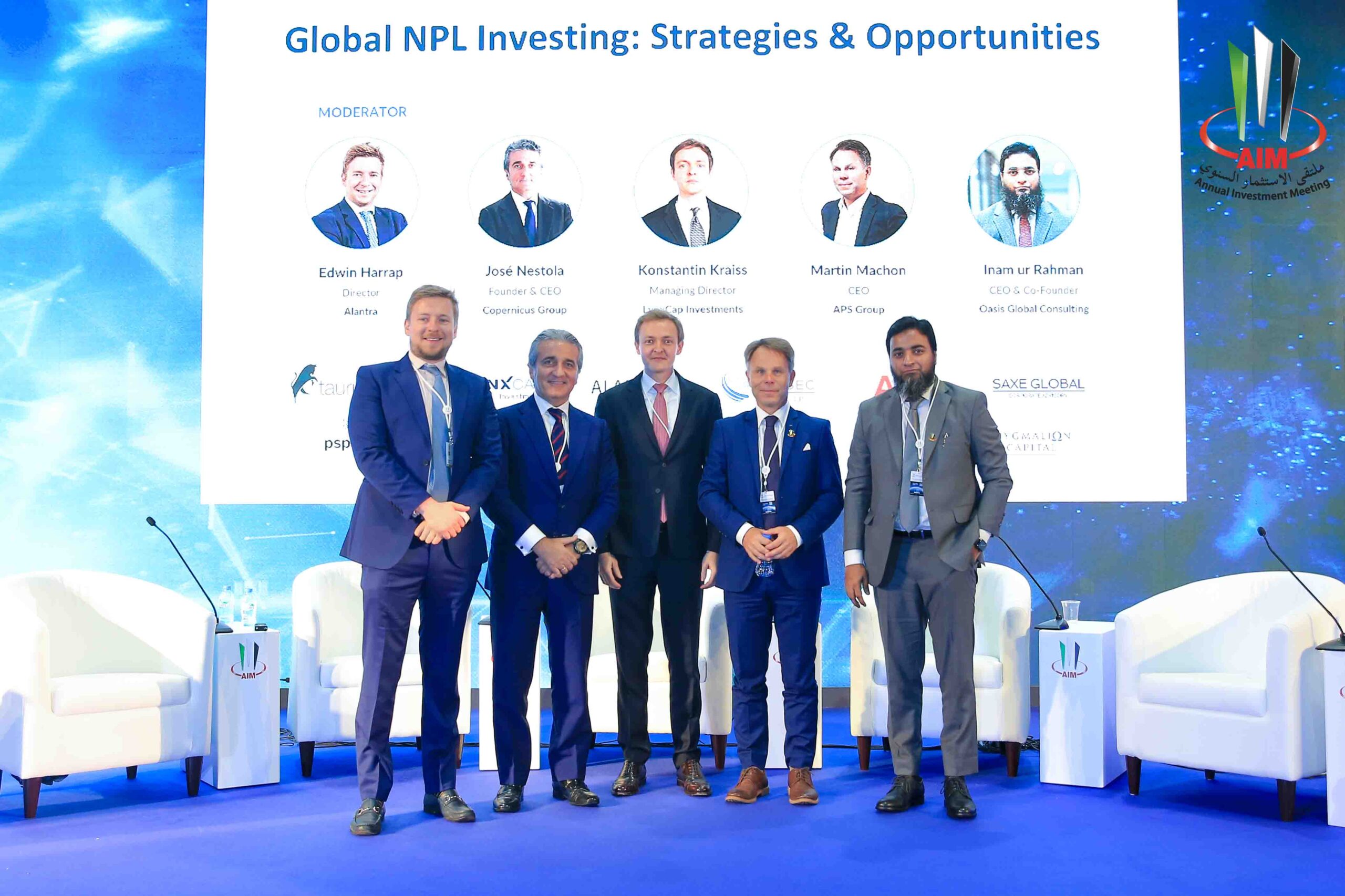
    The second panel, ‘Global NPL Investing: Strategies & Opportunities’ explored the world of global distressed and NPL investing, with insights into the strategies and opportunities available in this space. The speakers discussed the different asset classes in this sector of the market, including real estate, corporate, and consumer debt, the secondary market, and the directions the market is heading in due to macroeconomic forces.

    The session was led by Edwin Harrap, Director, Alantra, UK, and included panellists as José Nestola, Founder & CEO, Copernicus Group, ES, Konstantin Kraiss, Managing Director, LynxCap Investments, CH, Martin Machon, CEO, APS Group, CZ and Inam ur Rahman CEO & Co-Founder, Oasis Global Consulting, USA.

    According to experts in this session, non-performing loan (NPL) investing has become an increasingly popular strategy for investors seeking high returns. Panellists shared their experiences and analysis of investing in distressed and NPL assets across different geographies, including emerging markets and developed economies. They also discussed the challenges and opportunities of investing in these markets, taking into account macroeconomic conditions, industry-specific trends and the unique regulatory and legal frameworks that govern these transactions.

    José Nestola said, “We are spread over six countries, and the real challenge is the quality of data. Not everything is clear when it is given to us by people. In two to three years, we shall be talking about millions moving into the bank. But how? Such information is difficult to get your hands into. Especially in the corporate world. We focus on second opportunities. Lack of information will stop you from pricing better. Real estate, legal, and financial knowledge is a must. When done right, equity returns (13-15%). Here your return will be achieved. When we price everything at the end of the day, we try to see what the potential buyers want and who they are. The banks are for selling to the right investors and managing the reputation of themselves. Who is going to check the services in the market, and what treatment will they have? It’s a tough scheme. Buying a portfolio of loans is difficult for banks and debtors.”

    Konstantin Kraiss said, “Entering new markets is all about learning and gaining experience. It took us 6 years before making the first investment because it’s not easy. Financial distress is the most occurred. If there is opportunity, then there is a debt sitting around, but there are legal services to get ourselves out of it. Having partners is a must because if someone goes on strike in the middle of your forecast, then it’s troublesome. Key role is to follow the market and the supply and stay open to find the best opportunity. There are plenty of opportunities out there and we must be wise to choose, and it’s a bit exciting.”

    Martin Machon said, “Entering the industry is not easy, it takes time and effort, especially in new markets and first transactions. With the current inflation and work crisis, the risks are higher. We must be careful and aware of the legal framework and have a good partner. When starting out, it’s better to go for smaller assets. The banking system has evolved, but we still face challenges in dealing with limited tools from them. We need to investigate the services beforehand and strengthen them through knowledge sharing.”

    Inam ur Rahman said “I believe that NPL markets were thriving before Covid, but it is difficult to predict how it will be impacted in the future. The legal framework for NPL varies across countries, and some countries have developed strict NPL laws, which could be beneficial for investors. Technology has also had a positive impact on the industry, and I am optimistic about the future.

    However, investing in NPL is challenging, and it requires a proper team to navigate the legal landscape. Lack of clarity and understanding could lead to losses. Technology, such as blockchain, can help minimize the risk of fraud. To succeed in this industry, it is crucial to have a team of experts who can evaluate and assess the situation.”

    Experts emphasised that investors need to have a solid understanding of the different NPL investment strategies available in order to make informed investment decisions. For example, some investors may prefer to focus on purchasing individual NPLs, while others may prefer to invest in portfolios of NPLs. Additionally, investors need to be aware of the unique risks associated with investing in distressed assets, such as potential legal and regulatory hurdles, liquidity risks, and market volatility.

    Overall, global NPL investing presents a promising opportunity for investors looking to diversify their portfolios and capitalize on distressed assets in the market.

  • Global Leaders Debate at Annual Investment Meeting focuses on future of investment world to foster sustainable economic growth

    Abu Dhabi, United Arab Emirates, 9 May 2023: Global leaders gathered in Abu Dhabi to participate in the Global Leaders Debate, which took place on the sidelines of the 12th edition of the Annual Investment Meeting. The discussion brought together top decision-makers, thought leaders, and experts from various sectors to discuss the future of the investment world and foster sustainable economic growth, diversity, and prosperity.

    The panel discussion titled “Global Leaders Debate: The Future Paradigm Shift: Future Investment Opportunities to Foster Sustainable Economic Growth, Diversity, and Prosperity,” took place in two sessions. Spearheaded by May Ben Khadra, Business Anchor at CNBC Arabia, the first session included panelists such as Fatou Haidara, Deputy Director General, United Nations Industrial Development Organization; Antonio Pedro, Acting Executive Secretary, United Nations Economic Commission for Africa; Rashed Alblooshi, Undersecretary, Abu Dhabi Department of Economic Development; and Jung Sook Park, Secretary General, WeGO.

    Experts emphasised how the future paradigm shift towards sustainable economic growth presents numerous investment opportunities. These opportunities include investments in renewable energy, sustainable agriculture, clean technology, and green infrastructure. Additionally, investments in education and innovation can also drive economic growth and foster diversity, while promoting sustainable development. The key is to prioritize investments that have the potential to create long-term value while also addressing critical environmental and social challenges.

    Ms. Haidara said: “Equal opportunity should be provided to all stakeholders, including the private sector, as job creation cannot be achieved without their involvement. Rather than viewing the private sector as a hindrance, it is essential to develop appropriate policies and create a favorable environment for their participation. Collaborating with institutions and supporting entrepreneurs in making technological decisions are crucial steps in promoting investment and private sector technology.

    “Industrial development is a complex process that requires the contribution of the private sector. Women empowerment, government partnership, financial institutions, and inclusivity towards youth are also crucial in this process. The private sector plays a significant role in ensuring competitiveness within the value chains. To move towards renewable energy and away from fossil fuels, partnerships with organizations such as the African Union are necessary as one organization alone cannot achieve this goal.”

    Commenting on smart solutions in the UAE that drive economic growth, H.E. Alblooshi said, “The aftermath of the COVID-19 pandemic has resulted in changes in the way services are provided to stakeholders. Nowadays, smart applications are used to provide various services, making life easier and more convenient for investors.

    Looking at the industries, the economy has grown by 10% in 2022, and the non-oil sector has grown by 10.3%, indicating significant development in the economy. For both foreign and local investors, the UAE is a safe place to invest, thanks to its various incentive programs and clear strategy for diversifying the economy away from oil. The goal is to achieve sustainable economic growth that is built on innovation and knowledge-based sectors.”

    Highlighting the public sector’s role in driving growth, Ms. Park said: “Centralization refers to the decision-making power being shifted from national affairs to sub-national affairs, resulting in better accountability and delivery of services to citizens. Promoting political participation is essential for driving democracy, which is crucial for increasing productivity and economic growth.

    Decentralization is a key element in this transition. In Abu Dhabi, we see how cities like Masdar City, Sustainable City, and Expo City are built to prioritize conservation and job creation for the local economy. To support and focus on the public sector, urgent investments are required in the healthcare and education sectors due to the pandemic. The private sector is facing decline due to uncertainty. However, this is the best time for the public sector to invest in making cities better, as the pandemic and climate change have made inequality more evident through the digital demand and natural disasters.”

    In addition to the UAE, another country in focus that the panel discussed was Africa. Mr. Pedro said: “Africa is positioned to be a global leader in the future, but it must address issues such as carbon emissions and the growth of the transportation sector.

    By partnering with other nations, Africa aims to create job opportunities and increase exports by 2025. The COVID-19 pandemic has resulted in financial difficulties and increased debt, which highlights the need for a well-designed strategy and structure. Addressing fundamental issues is crucial, and the African government union commission is already taking steps towards this goal.”

    He further stated, “Although the economy is still dependent on oil by 50%, the non-oil sector is equally important. Among the six sectors that have a high impact on the economy, including ICT, financial services, tourism, bio and healthcare, and industry, the government has invested AED 10 billion in the industrial sector over the next five years.

    The aim is to double the GDP to AED 172 billion by 2031 and increase non-oil trade by AED 178.8 billion, creating 13,600 new jobs through various programs, including utility incentives. Abu Dhabi is known for its safety and security, making it an attractive destination for investors and their families.”

    The second part of the session was led by Ismail Ersahin, WAIPA CEO & Executive Director. It included speakers such as H.E. Wamkele Keabetswe Mene, Secretary General, African Continental Free Trade Area; Jun Ge, Group CEO, ToJoy; Georges Rebelo Pinto Chikoti, Secretary General, Africa Caribbean Pacific (OACPS); and H.E. Rustam Minnikhanov, Head, Republic of Tatarstan.

    H.E. Mene discussed about the opportunities that can be provided for intra-African trade and development. He said: “The current rate of intra-African trade is only 4%, which is relatively low due to existing barriers. Therefore, there is a need to establish protocols that provide investors with greater legal protection to instil confidence in their investments. The main objective is to promote African trade, create employment opportunities, foster innovation, drive industrialization, and address the current technology deficit faced by the continent.”

    In addition, Mr. Ge said, “China is seen as a promising destination and a driving force behind the world’s economic growth. It has offered higher returns on foreign investments compared to other developed countries in the last five years. If China’s GDP grows at a steady rate of 5% for the next five years, it will contribute to growth equivalent to the combined economies of Japan, India, and Indonesia.

    China’s technology sector is looked upon by many as a model to emulate, with a substantial share of global unicorns, indicating its potential in the industry. In healthcare, the market is expected to reach approximately USD2.5 trillion by 2030, and the pandemic has opened up opportunities for investors.

    Moreover, China is taking proactive measures towards a sustainable, low-carbon economy and has committed to investing USD20 trillion in this direction. Given these developments, China’s status as a key player in the global economy, with a focus on innovation and diversity, cannot be overlooked, despite the ongoing geopolitical tensions.”

    Mr. Chikoti said: “We are looking forward for investment in transformation of products so it can be transported and circulated across the continent and transform our economy of 1.2 billion people. Legislation facilities will focus on getting stronger to facilitate opportunity for what major investors has to offer our country which has been severely affected in the pandemic. Proud to be a part of this platform that will help our country with grants and eventually help our economy grow.”

    The panellists covered the most pressing issues affecting the global economy, such as disruptive technologies, climate change, geopolitical tensions, inflation, and debt levels. The panel discussion also examined investment opportunities that can transform the global investment landscape and investment world.


  • African Critical Minerals: The Key to a Green Energy Future

    African Critical Minerals: The Key to a Green Energy Future

    Africa is well-positioned to leverage its immense wealth of critical minerals to participate in the global shift towards renewables while promoting socioeconomic growth, job creation, and local content development
     
    JOHANNESBURG, South Africa, May 8, 2023/ — Critical minerals are essential for the development of renewable energy technologies such as solar panels, wind turbines, green hydrogen, electric vehicles (EVs), and battery storage, and Africa’s mineral wealth has the potential to benefit not only the continent, but to provide a foundation for the global energy transition (https://apo-opa.info/42cMbC9).

    Accounting for more than 85% of most solar photovoltaic components, aluminum – for which bauxite accounts roughly 98% of its primary production – is used in most low-carbon technologies.

    Africa (https://apo-opa.info/3pmYNZa) is home to approximately one-third of global bauxite reserves, with Guinea alone having accounted for over half of global aluminum ore exports in 2020.

    What’s more, chromium accounts for over a third of the mineral demand for both geothermal and hydropower technologies and serves as a requisite material for the development of concentrated solar power (CSP). South Africa (https://apo-opa.info/44BqM7o) accounted for nearly 45% of the world’s chromium production in 2021, while Africa accounted for over 80% of global chromium ore exports in 2020. According to the International Energy Agency (IEA), chromium demand is expected to triple by 2030.

    Meanwhile, the IEA predicts that global demand for cobalt will rise six-fold by 2040, the vast majority of which is located in the DRC (https://apo-opa.info/3MTRYrB) and Zambia. Essential towards the production of lithium-ion batteries used in EVs and energy storage technologies, the DRC’s cobalt will be crucial towards the global shift from fossil fuel-based technologies.

    Additionally, Zambia and the DRC are world-leading producers of copper, which is used in renewable energy systems to generate power from solar, hydro, thermal, and wind energy. In 2021, the DRC mined the third largest amount of copper on the globe while Zambia currently accounts for over 12% of global production.

    Accounting for over one-fifth of the world’s reserves, Madagascar, Mozambique, and Tanzania’s combined graphite reserves will play a central role in the development of lithium-ion batteries, with the critical mineral serving as a crucial element for the development of EVs and battery storage technologies.

    Furthermore, accounting for over a quarter of mineral demand for CSP development and serving as a crucial element for many green energy technologies, demand for manganese is expected to increase three-fold by 2030, according to the IEA. Over 60% of manganese production occurs in Africa, with Ivory Coast, Gabon, Ghana, and South Africa all producing the critical mineral, with the latter serving as the world’s largest producer.

    The development of green hydrogen (https://apo-opa.info/3NMbwOW) and decarbonization of sectors such as heavy transport, heating, and industry would not be possible without the development of PGM minerals, which include the ideal metals, such as iridium, palladium, and platinum, for catalysts in proton exchange membrane fuel-cell technologies. South Africa accounted for over 70% of global platinum production between 2016 and 2020, and over 80% of global iridium production, while Zimbabwe serves as the world’s third largest producer of platinum and second largest producer of iridium.

    The extraction and development of critical minerals has been taking an increasingly central position in the global economy. As such, competition for access to Africa’s critical minerals is expected to grow exponentially in the coming decades as the world transitions to a low-carbon energy future, with the world’s largest economies – China and the U.S. – vying for strategic control over global critical mineral supply chains, thus placing Africa at the heart of the global energy transition.

    The nexus between the global energy transition and Africa’s critical minerals will be further unpacked during the African Critical Minerals Summit scheduled for this November in Johannesburg.

    The African Critical Minerals conference is organized by African investment promotion and events producer Energy Capital & Power.

    Distributed by APO Group on behalf of Energy Capital & Power.

    Contact Senior Director James Chester at james@energycapitalpower.com / +27 606754850 for information about participating in the summit.

    SOURCE
    Energy Capital & Power

  • Join the Movement: African Energy Week (AEW) Fosters an African Energy Renaissance with 2023 Theme

    Join the Movement: African Energy Week (AEW) Fosters an African Energy Renaissance with 2023 Theme

    African Energy Week 2023 will proudly take place under the theme, ‘The African Energy Renaissance: Prioritizing Energy Poverty, People, the Planet, Industrialization and Free Markets’
    JOHANNESBURG, South Africa, May 8, 2023/ — Africa’s estimated 125.3 billion barrels of crude oil and 620 trillion cubic feet of proven gas reserves present an opportunity for the continent to accelerate the diversification of the energy mix and address energy poverty while driving industrialization, employment creation, gross domestic product growth and environmental sustainability. In this regard, the 2023 edition of the African Energy Week (AEW) conference and exhibition – Africa’s premier event for the energy sector which takes place in Cape Town from October 16-20 – is proud to take place under the theme, ‘The African Energy Renaissance: Prioritizing Energy Poverty, People, the Planet, Industrialization and Free Markets.’

    With over 600 million people across the continent living in energy poverty, 900 million without access to clean cooking solutions and African economies grappling with chronic shortages and high energy prices, the AEW 2023 theme reflects the urgent need for Africa to prioritize the needs of its people while correspondingly promoting sustainable development and industrialization, creating opportunities for free and open markets.

    “Africa has the potential to become a global leader in energy, but we must first address the urgent need to provide reliable, affordable and sustainable energy to our people,” said Verner Ayukegba, Senior Vice President of the African Energy Chamber, adding that, “This year’s theme underscores the importance of addressing energy poverty, driving large-scale project developments across the oil, gas, renewable and broader power sectors. At the same time, it reflects that it is imperative that we create the right conditions for investment to flow and the private sector to flourish.”

    Alleviating energy poverty will all come down to the continent’s strong pipeline of oil and gas projects. On the oil front, upstream projects to the likes of Eni’s Baleine project in Ivory Coast; Namibia’s three-fold discoveries in the Orange Basin; Zimbabwe’s onshore exploration campaign in the Muzarabani Basin, among others, continue to showcase the potential for upstream investment. Downstream, Angola’s three-refinery developments (Soyo, Cabinda and Lobito); the East African Crude Oil Pipeline; and other infrastructure developments offer new opportunities for petroleum distribution in Africa. All of these projects will be key for addressing energy poverty while accelerating industrialization.

    Meanwhile, climate action remains a top priority for Africa, as it represents the continent most impacted by climate change. As such, a series of sizeable low-carbon natural gas projects have and continue to be launched including Eni’s Coral South Project in Mozambique; TotalEnergies’ Mozambique Liquefied Natural Gas (LNG) development; bp’s Greater Tortue Ahmeyim project in Mauritania/Senegal; Perenco’s $1 billion LNG development in Gabon, among others. These developments open new prospects for power generation and distribution, job creation and capacity building, as well as revenue generation for countries continent-wide. As such, AEW 2023’s theme reflects the urgency behind these projects, focusing dialogue and deals on energy poverty, people and the planet.

    On the renewables front, Africa has emerged as a global green hydrogen investment hub with large-scale projects underway in Mauritania, Namibia, Egypt and South Africa. These projects aim to capitalize on the continent’s immense solar and wind potential, accelerating energy access and reducing carbon emissions. The continent’s focus on sustainable energy is underscored by AEW’s focus on the planet.

    While global energy transition related policies and restrictive local regulations and fiscal terms have disrupted the flow of foreign direct investments into African energy, this year’s AEW theme depicts the need for both established and emerging African energy producers to revitalize energy laws and prioritize the creation of enabling environments in which the private sector will thrive.

    In order for the continent to meet its energy and economic developments goals, prioritization must be placed on free markets, and AEW 2023 represents the platform where discussions on this topic will be held. Featuring investment-dedicated discussions and summits, AEW 2023 enables industry stakeholders to discuss best practices for the continent to maximize private sector participation while addressing investment and infrastructure gaps.

    “AEW 2023 will be a critical opportunity to advance the energy agenda in Africa and promote sustainable development across the continent. We have said it time and time again, Africa needs free market, increased private sector participation and business-enabling fiscal terms to grow. The AEW theme reflects this clearly and we look forward to welcoming delegates from across the globe to Cape Town for what promises to be a dynamic and productive event,” Ayukegba continued.

    Under this market-focused theme, a suite of high-level speakers will discuss growth opportunities across Africa’s entire energy value chain with the aim of accelerating energy security, climate change mitigation and value addition for local economies and people. In addition to dialogue, AEW 2023 will feature exclusive networking sessions and deal-signings, uniting African energy policymakers and companies with global investors. Additionally, technical workshops and presentations will showcase the latest innovations in technology and services while youth-led side events provide a platform for young entrepreneurs and industry players to engage with market leaders.

    For more information about AEW 2023, please visit the event website at www.AECWeek.com and secure your spot at the biggest gathering of energy stakeholders on the continent. Join the African Energy Chamber’s AEW 2023 and be part of the African energy renaissance.

    Distributed by APO Group on behalf of African Energy Chamber.

    SOURCE
    African Energy Chamber