Category: COVER

  • Africa’s Natural Gas Sector is Building Momentum in 2024

    Africa’s Natural Gas Sector is Building Momentum in 2024

    By NJ Ayuk, Executive Chairman, African Energy Chamber

    The recently signed liquefied natural gas (LNG) development project in South Africa’s Mpumalanga province is a promising step on the long road to Africa’s just energy transition.

    The project, being jointly developed by Kinetic Energy of Australia and the Industrial Corporation of South Africa (IDC), a national development finance institution, will capitalize on Kinetic Energy’s recent 3.1 billion cubic feet natural gas discovery in Amersfoort, Mpumalanga. The project is expected to produce 50 megawatts (MW) of equivalent energy and eventually expand to 500 MW.

    The project, which Kinetic Energy describes as South Africa’s largest onshore LNG project, exemplifies natural gas’ potential to grow the country’s economy and meet domestic energy needs.

    This all comes about as South Africa works to expand its oil and gas operations in order to curb its reliance on coal and help pave the way to eventual decarbonization.

    South Africa is not alone, either. As the African Energy Chamber (AEC) covers in our recently released “The State of African Energy 2024 Outlook Report,” natural gas production is on the rise both globally and in Africa. Even more promising, our report notes that “upstream operators are now revising their strategies and aligning their future investments more in line with energy transition, and natural gas is being looked at as transition fuel.”

    The African Energy Chamber will support the Invest in African Energy Conference in Paris this year organise by Energy Capital and Power. African Energy Week will definitely be the home of Natural Gas investment in Africa.

    Gas: A Logical Transition Fuel

    I find it heartening that, despite calls by environmental organizations and wealthy countries to cease investment in African oil and gas projects, many of the companies actually operating in Africa appear to recognize natural gas’ value as a transition fuel. Too long has the solution to the climate crisis been oversimplified: Decarbonization is not a goal that can be reached overnight nor without first building up the infrastructure required to support development of renewables.

    Such a task is relatively simple for Western countries, which have spent centuries building their economies and infrastructure off the backs of fossil fuels. The same cannot be said for African states, which have long lacked these same development opportunities and must now play catch-up at an accelerated pace.

    Even worse, we are told to play this game of catch-up with our hands tied: to leave our natural resources in the ground while the developed nations of the world continue to exploit their natural non-renewable wealth. We are expected to jump straight to building wind farms, solar farms, and hydroelectric dams while hundreds of millions of Africans are still living without access to electricity.

    Where will the capital for such a miraculous development come from?

    Who will build the foundational infrastructure needed to support it?

    Developed nations are quick to promise, “We will!” but reticent to follow through on their promises. What’s more, their foreign “aid” has frequently focused more on alleviating the symptoms of Africa’s economic and energy poverty rather than resolving the source.

    With all this in mind, it is clear to me who must provide the lion’s share of capital and build the infrastructure: Africans ourselves. And we cannot do that without tapping our own natural resources, natural gas being the most vital among them. Its properties that burn cleaner than oil and coal, its abundance, its ease of storage and transport, and its applications in manufacturing and synthesis make natural gas the best option for Africans to establish energy security and achieve decarbonization.

    Companies Leading the Way

    So, again, it is encouraging to see that the AEC is not alone in our stance that natural gas production makes sense for Africa — and for energy companies. More and more energy companies describe policies that call for pursuing energy transition measures for tomorrow while providing the natural gas to power the world today.

    Look at French major TotalEnergies, which is responsible for much of the upstream activity in our continent. Following the discovery of two huge gas fields in South Africa in 2019 and 2020, TotalEnergies is continuing its exploration and production efforts there, despite environmentalists’ efforts to block further activity. TotalEnergies also is driving the Mozambique LNG project, considered one of Africa’s most important hydrocarbon developments.

    Then there’s German independent, Wintershall Dea, which is increasing its participation in the Reggane Nord natural gas project in Algeria by 4.5%. The company is acquiring interest from Italian utility company Edison in the project. Wintershall Dea, which has a strong presence in North Africa, also announced first gas with its partners (Cheiron Energy, INA, and the Egyptian Gas Holding Company) at the East Damanhur block in the onshore Nile Delta earlier this fall.

    I love what Wintershall Dea’s CEO and Chief Operating Officer Dawn Summers wrote about natural gas in a November opinion piece, released just before the 2023 United Nations Climate Change Conference (COP28).

    “At first glance, it would seem that the gas and oil industry is merely part of the climate problem — but it will also be part of the solution,” Summers wrote. “If gas were used instead of coal, CO2 emissions would immediately go down — by almost half. Already today, we are decreasing the environmental impact of our activities worldwide by drastically reducing our methane emissions. In addition, with technologies such as CO2 storage and H2 production, we are helping other sectors to decarbonise, and we aim to harness our expertise to ensure that the future energy system is more sustainable. In short, the oil and gas industry can, must and will be part of the solution to the climate problem.”

    Well said! Africa’s gas industry is part of the solution as well. And, as our report notes, the forecast for continued natural gas projects in our continent is looking good.

    Africa’s Tremendous Natural Gas Potential

    Our report finds that Africa continues to hold immense natural gas potential and is positioned to not only increase its outputs but also capitalize on the underserved LNG market and meet Europe’s ongoing demand. Our estimates show an increase from Africa’s 2023 natural gas output of about 265 billion cubic meters (bcm) to over 280 bcm by 2025.

    North Africa currently drives the majority of the continent’s output, although its production is expected to remain flat throughout the rest of the 2020s. Production ramp-up is expected through the second half of this decade as Mozambique increases its LNG output. As new-gas start-ups across the rest of the continent come online, this trend in increased output will become further pronounced.

    Nigeria and Algeria, meanwhile, are expected to drive an increased focus on LNG exports, with additional flows coming from Egypt, Equatorial Guinea, Mozambique, and waters off Senegal- Mauritania.

    Africa’s natural gas sector stands poised to prepare the entire continent for eventual decarbonization, as do many of the companies operating here.

    The goal of a continent fueled by renewable power cannot be achieved, however, unless the developed world also recognizes this and allows African states to transition on their own schedule, not one imposed on it by others.

    Download the AEC’s 2024 outlook report here.
  • Saudi Arabia and UAE officially join Brics: What will it mean for the bloc?

    Saudi Arabia and UAE officially join Brics: What will it mean for the bloc?

    Fareed Rahman

    Jan 01, 2024

    The expansion of the Brics bloc to include Saudi Arabia and the UAE is expected to offer new investment opportunities for the Arab world’s two largest economies while boosting the group’s influence globally, analysts said.

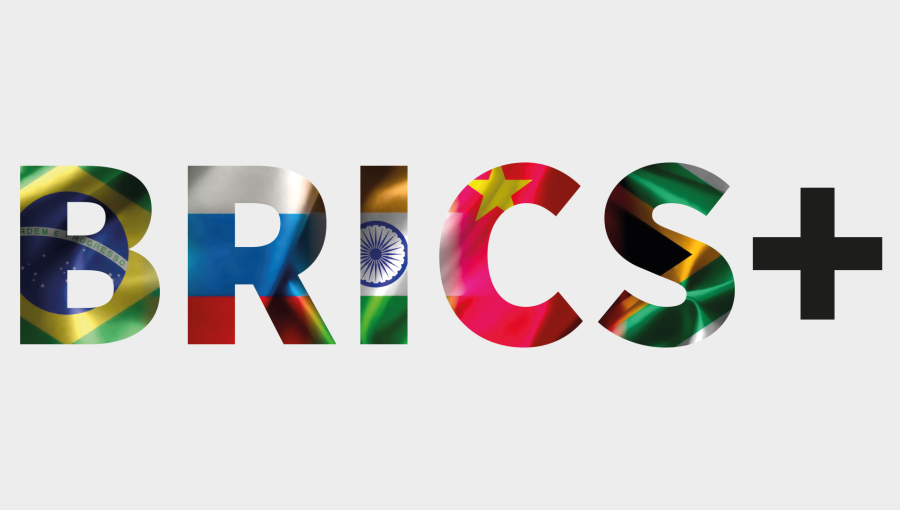
    Saudi Arabia along with the UAE, Egypt, Iran and Ethiopia joined Brics on January 1, doubling its membership to 10, with Brazil, Russia, India, China and South Africa the original members.

    “Expansion of the Brics multilateral bloc to include Saudi Arabia and UAE augurs extremely well amid ongoing geopolitical and economic challenges confronting the world economy,” Ullas Rao, assistant professor of finance at Edinburgh Business School of Heriot-Watt University in Dubai, said.

    “Both Saudi and the UAE as [among] the richest countries on per capita and home to the biggest sovereign wealth funds, create enormous growth opportunities through investments, trade and commerce.”

    Saudi Arabia and the UAE have continued to post economic growth despite global uncertainties including high interest rates, inflation and geopolitical tensions as they focus on diversifying their economies.

    Saudi Arabia’s economy, which grew by 8.7 per cent in 2022, the highest annual growth rate among the world’s 20 biggest economies, is expected to expand by 0.8 per cent in 2023, according to the International Monetary Fund.

    The kingdom is also focusing heavily on its non-oil economy as part of its Vision 2030 diversification agenda.

    Meanwhile, the UAE’s economy is expected to grow 3.4 per cent in 2023 with oil GDP growth projected at 0.7 per cent and non-oil GDP at 4.5 per cent, backed by a strong performance in tourism, real estate, construction, transport, manufacturing and a surge in capital expenditure, according to a recent report from the World Bank.

    The Arab world’s second largest economy is signing trade deals to strengthen its ties with countries around. It is working towards signing 26 comprehensive economic partnership agreements as it seeks to attract more investment and diversify its economy.

    “The image of Brics in the past was of a financially vulnerable group, beholden to the global political superpowers. The financial power of Saudi and the UAE as net exporters of capital to the rest of the world will substantially change that perception,” Gary Dugan, chief investment officer at Dalma Capital, said.

    “Also as a collective, we expect Saudi Arabia and the UAE to be afforded easier access to the growth markets of the Brics countries on favourable terms.”

    The addition of two major oil exporters to the group “will reinforce their bargaining power and influence in Opec+ while also offering the space for them to align their strategies with other Brics members”, Ehsan Khoman, head of ESG, commodities and emerging markets research at MUFG, said.

    Opec+, which has been playing a crucial role in balancing oil markets, includes some of the world’s biggest crude producers including Saudi Arabia, the UAE and Russia.

    China and India, two key members of Brics, are the second and third biggest consumers of oil in the world with strong energy ties to the Gulf countries.

    New world order?

    Meanwhile, the calls for the overhaul of the international monetary system and the development of an alternative currency to the US dollar are expected to grow as Brics expands, according to Mr Rao.

    “As the world navigates for an alternative to the US dollar, even if less relevant today, the emergence of Brics common currency can act as a major harbinger in diversifying risks away from the stronghold of the dollar,” he said.

    Brics is poised to assume greater influence as a powerful voice to the Global South, he added.

    Ayham Kamel, head of Mena at Eurasia Group, is also bullish about the bloc wielding more influence globally.

    “The prospect of Saudi Arabia, the UAE, Iran and Egypt joining Brics creates new mechanisms that forces a degree of political co-operation by all the countries,” he said.

    “The Arab countries are looking for improving their global geopolitical influence and appear committed to avoiding detachment from the West.”

    SOURCE

    The Nation Business


  • Providing Islamic Fintech Solutions to the IF Industry for Sustainable Development

    Providing Islamic Fintech Solutions to the IF Industry for Sustainable Development

    Report: Mohammed A.Abu

    The Islamic Development Bank Institute(IsDBI) in partnership with EZBusiness,a private Business Consultancy firm has kicked off the development of the pioneering Islamic Finance Knowledge Pavilion Marketplace, an official statement distributed by the APO Group on behalf of the Institute said in Jeddah, Sunday.

    The Pavilion, according the statement, will provide a digital marketplace of validated solution providers (institutions, consultants, and experts) in Islamic finance and economic development, and offer a one-stop shop for listing opportunities and seamless digital experience in the matchmaking of suppliers and customers.

    Phase 1 of the project, it added, will cover a market assessment, feasibility study, and business plan addressing the competitive landscape based on outcomes of the market assessment and a 5-year financial model and sensitivity analysis while, Phase 2, will cover the development of the Pavilion platform including the interface and content.

    This project aligns with the IsDB Institute’s strategic objective to provide fintech knowledge solutions to the Islamic finance industry to support sustainable development in IsDB Member Countries and worldwide.

    “The Islamic Finance Knowledge Pavilion Marketplace is not just a platform, but it is also a catalyst for creative collaboration within the Islamic finance industry and the development landscape. We are confident that this initiative has the potential to create enduring value for all stakeholders.” Dr. Sami Al-Suwailem, Acting Director General, IsDBI, stated

    The Islamic Development Bank Institute is the knowledge beacon of the Islamic Development Bank Group. Guided by the principles of Islamic economics and finance, the IsDB Institute leads the development of innovative knowledge-based solutions to support the sustainable economic advancement of IsDB Member Countries and various Muslim communities worldwide.

    EZ2Business (https://EZ2Business.com), a business consultancy company that provides expert advice and builds custom solutions to address business transformation.

    For more information about the project, please contact Mr. Yazan Alsayed (yalsayed@isdb.org) or Mr. Mohamad Naamani (mnaamani@isdb.org).


    The Islamic Development Bank Institute(IsDBI) in partnership with EZBusiness,a private Business Consultancy firm has kicked off the development of the pioneering Islamic Finance Knowledge Pavilion Marketplace, an official statement distributed by the APO Group on behalf of the Institute said in Jeddah, Monday.

    The Pavilion, according the statement, will provide a digital marketplace of validated solution providers (institutions, consultants, and experts) in Islamic finance and economic development, and offer a one-stop shop for listing opportunities and seamless digital experience in the matchmaking of suppliers and customers.

    Phase 1 of the project, it added, will cover a market assessment, feasibility study, and business plan addressing the competitive landscape based on outcomes of the market assessment and a 5-year financial model and sensitivity analysis while, Phase 2, will cover the development of the Pavilion platform including the interface and content.

    This project aligns with the IsDB Institute’s strategic objective to provide fintech knowledge solutions to the Islamic finance industry to support sustainable development in IsDB Member Countries and worldwide.

    “The Islamic Finance Knowledge Pavilion Marketplace is not just a platform, but it is also a catalyst for creative collaboration within the Islamic finance industry and the development landscape. We are confident that this initiative has the potential to create enduring value for all stakeholders.” Dr. Sami Al-Suwailem, Acting Director General, IsDBI, stated


    The Islamic Development Bank Institute is the knowledge beacon of the Islamic Development Bank Group. Guided by the principles of Islamic economics and finance, the IsDB Institute leads the development of innovative knowledge-based solutions to support the sustainable economic advancement of IsDB Member Countries and various Muslim communities worldwide.


    EZ2Business (https://EZ2Business.com), a business consultancy company that provides expert advice and builds custom solutions to address business transformati
    For more information about the project, please contact Mr. Yazan Alsayed (yalsayed@isdb.org) or Mr. Mohamad Naamani (mnaamani@isdb.org).

    Distributed by APO Group on behalf of Islamic Development Bank Institute (IsDBI


    The Islamic Development Bank Institute(IsDBI) in partnership with EZBusiness,a private Business Consultancy firm has kicked off the development of the pioneering Islamic Finance Knowledge Pavilion Marketplace, an official statement distributed by the APO Group on behalf of the Institute said in Jeddah, Monday.

    The Pavilion, according the statement, will provide a digital marketplace of validated solution providers (institutions, consultants, and experts) in Islamic finance and economic development, and offer a one-stop shop for listing opportunities and seamless digital experience in the matchmaking of suppliers and customers.

    Phase 1 of the project, it added, will cover a market assessment, feasibility study, and business plan addressing the competitive landscape based on outcomes of the market assessment and a 5-year financial model and sensitivity analysis while, Phase 2, will cover the development of the Pavilion platform including the interface and content.

    This project aligns with the IsDB Institute’s strategic objective to provide fintech knowledge solutions to the Islamic finance industry to support sustainable development in IsDB Member Countries and worldwide.

    “The Islamic Finance Knowledge Pavilion Marketplace is not just a platform, but it is also a catalyst for creative collaboration within the Islamic finance industry and the development landscape. We are confident that this initiative has the potential to create enduring value for all stakeholders.” Dr. Sami Al-Suwailem, Acting Director General, IsDBI, stated


    The Islamic Development Bank Institute is the knowledge beacon of the Islamic Development Bank Group. Guided by the principles of Islamic economics and finance, the IsDB Institute leads the development of innovative knowledge-based solutions to support the sustainable economic advancement of IsDB Member Countries and various Muslim communities worldwide.


    EZ2Business (https://EZ2Business.com), a business consultancy company that provides expert advice and builds custom solutions to address business transformati
    For more information about the project, please contact Mr. Yazan Alsayed (yalsayed@isdb.org) or Mr. Mohamad Naamani (mnaamani@isdb.org).

    Distributed by APO Group on behalf of Islamic Development Bank Institute (IsDBI

  • West African Development Bank (BOAD) announces acquisition of an equity interest by the Arab Bank for Economic Development in Africa (BADEA) in its capital

    West African Development Bank (BOAD) announces acquisition of an equity interest by the Arab Bank for Economic Development in Africa (BADEA) in its capital

    COTONOU, Benin, December 27, 2023/ — The West African Development Bank (BOAD) (https://www.BOAD.org/) is pleased to announce that the Arab Bank for Economic Development in Africa (BADEA) has joined its capital.

    Following a favorable opinion issued by the Bank’s Board of Directors, at its 139th meeting held on 20th December 2023 in Cotonou, the WAMU Council of Ministers met on 21st December 2023 and approved the participation of BADEA in BOAD’s capital. This opens up the second phase of the Bank’s capital increase process, the first phase of which was completed in December 2022 for an amount of XOF554.38 billion.

    As a reminder, the BOAD capital increase process, referred to as “Peninsula” project, is structured into two phases: a first phase involving the issue of shares reserved for the Bank’s current shareholders, and a second phase involving the issue of shares open to new shareholders, whose accession is subject to approval by the Council of Ministers, as provided for by BOAD’s Articles of Association.

    The participation of BADEA in the Bank’s capital as a class B shareholder (non-regional shareholder) is part of this second phase, and involves an amount of US$30 million, or XOF18.47 billion. This stake is equivalent to 1.20% of BOAD’s subscribed share capital, giving this first-rate institution a seat on its Board of Directors.

    Established on 28th November 1973 and operational since March 1975, BADEA, with head office in Khartoum (Sudan), is a financial organization whose aim is to be a “world bank for Africans”, comprising 18 member countries including Saudi Arabia, Kuwait, Iraq, Libya, the United Arab Emirates and Qatar. It is rated Aa2 with a positive outlook by Moody’s.

    The two institutions are breaking new ground for their long-standing cooperation, which to date has been marked by the provision by BADEA of resources on preferential terms, and by the co-financing of several infrastructure projects in WAEMU countries, as well as the granting of subsidies to BOAD to support structuring projects.

    For President Serge Ekué, “BADEA’s participation as a new shareholder follows 10 years after the Kingdom of Morocco joined BOAD’s capital in 2013. This was the result of a series of discussions over the past two years. It is the translation of excellent relationships between both of our institutions, but also the result of a perfect common understanding between the President of BADEA, my dear friend and brother, Mr. Sidi Ould Tah, to whom I wish to pay a heartfelt tribute. My warmest congratulations to our respective technical teams”.

    Distributed by APO Group on behalf of Banque Ouest Africaine de Développement (BOAD).

    Link to additional content: https://apo-opa.co/48zmTkq

    For further information, please contact:
    Communication and Public Relations Department

    Tel.: +228 22 23 25 65 / WhatsApp: +228 99 99 32 15
    Fax: +_228 22 23 24 38
    Email: boadsiege@boad.org

  • Weaving the Culinary Tapestry: A Journey through the African Diaspora

    Weaving the Culinary Tapestry: A Journey through the African Diaspora

    DUBAI, United Arab Emirates, December 28, 2023/ — Food is a unique storyteller, a cultural bridge and a carrier of traditions. As a result, the culinary traditions and rich tapestry of cuisines belonging to the global Black community have played a valuable role in contemporary culture.

    These traditions not only illustrate the inspiration, creativity and shared heritage of Black people, but also serve as a common thread that connects diverse cultures and geographies. From the shores of West Africa to the vibrant streets of the Caribbean, the flavors, techniques and dishes of the African diaspora have transcended borders, uniting people from across the globe. The Global Black Impact Summit (GBIS) — which unites and celebrates the achievements of the global Black community on February 27, 2024 in Dubai — will explore the influence of the African diaspora on a wide range of industries, such as the culinary arts.

    Africa: The Roots of Flavor
    An exploration into the culinary heritage of the global Black community begins with the roots of African cuisine. The continent’s diverse landscape and myriad cultures have given rise to a vast array of ingredients, cooking methods and flavors.

    In West Africa, staples like yams, okra, plantains and an array of vibrant spices are central to the local cuisine, with traditional local dishes including Jollof rice, Fufu – made from cassava root – and Egusi soup.

    In South Africa, the fusion dish Bobotie – a spiced minced meat bake with an egg-based topping – reflects the country’s historical influences, blending Dutch, Malay and Indian flavors. Central Africa contributes to this culinary tapestry with dishes like Saka-Saka in Congo, made from cassava leaves cooked with spices, and Poulet Nyembwe in Gabon, featuring chicken in a rich red palm nut sauce. These dishes highlight the use of local ingredients and establish the roots of traditional African cuisines across regions.

    The African Diaspora and a Fusion of Cultures
    Starting from the 16th century, the transatlantic slave trade facilitated the movement of millions of Africans to various parts of the world, including the Americas and the Caribbean. These journeys brought with them longstanding culinary traditions, which over time, evolved and adapted to the ingredients and resources found locally, while preserving the foundations of authentic cooking methods and flavors.

    In the Caribbean, the fusion of African, indigenous and European culinary traditions and techniques gave birth to Creole cuisine. Dishes like Gumbo — a hearty stew served over rice and Callaloo — a leafy green stew — showcase the rich melding of influences.

    They tell the story of a resilient people who had to adapt and create new traditions, while preserving their roots. In the United States, African Americans developed Soul Food, a cuisine that celebrates their enduring connection to their African heritage. Dishes like collard greens, a flavorful leafy green dish, cornbread and fried chicken, stand apart from traditional African dishes. Yet they provide more than just sustenance; they serve as a celebration of cultural resilience, warmth, protection and identity.

    The influence of the African diaspora on global cuisine is undeniable. Dishes like Acarajé in Brazil – a stuffed fritter sold and eaten as street food – finds its roots in the Yoruba people from Nigeria, Benin and Togo, while Ackee and saltfish – Jamaica’s national dish – was initially brought to the Caribbean from Ghana and stems from the name for the Akyem people. These examples reflect how the diaspora has enriched culinary traditions around the world and are a testament to its enduring impact on food and culture.

    Pioneers and Innovators in the Culinary World

    Throughout history, pioneering Black chefs have broken barriers in the culinary world. In the US, renowned chefs like Edna Lewis and Patrick Clark paved the way for the next generation of Black chefs to innovate and shape the world of food. Chef Marcus Samuelsson, an Ethiopian-born Swedish-American, is renowned for his culinary empire that spans from Harlem to Sweden.

    Kwame Onwuachi, a Nigerian-American chef, has left his mark on the culinary scene with a background that includes training in the world’s top kitchens. Sheldon Simeon, a Filipino-Black chef, celebrates the fusion of two cultures by exploring the ancestral roots of Hawaiian cuisine.

    GBIS 2024 strives to recognize and celebrate the achievements of Black individuals across industries, with a view to creating a more diverse and inclusive professional landscape. Just as culinary traditions continue to evolve and innovate, the Summit aims to unleash the full potential of the global Black community and explore the vast array of traditions and heritage associated with the African diaspora.

    Distributed by APO Group on behalf of Energy Capital & Power.
    SOURCE
    Energy Capital & Power
  • African Development Bank President Wins Obafemi Awolowo Leadership Prize

    African Development Bank President Wins Obafemi Awolowo Leadership Prize

    ABIDJAN, Ivory Coast, December 21, 2023/ — The President of the African Development Bank Group (www.AfDB.org), Akinwumi Adesina, has been awarded the prestigious Obafemi Awolowo Prize for Leadership.

    The award which promotes the legacy and democratic ideals of the late Nigerian nationalist and federalist leader Chief Obafemi Awolowo, also “recognises and celebrates excellence in leadership.”

    The Foundation’s Executive Director, Ambassador Dr Tokunbo Awolowo-Dosumu said, “Dr Adesina was the unanimous choice of the Foundation’s Selection Committee, which described Adesina as possessing the attributes for the award to the highest degree.”

    According to Ambassador Awolowo-Dosunmu, “The attributes considered to have characterised Chief Awolowo’s excellent leadership, include integrity, credibility, discipline, courage, selflessness, accountability, tenacity of purpose, visionary and people-centred leadership.”

    The former Nigerian President, Goodluck Ebele Jonathan was one of several world leaders who nominated Adesina. “He epitomises and combines qualities of extraordinary leadership that are often rare to find: great visionary, incredible courage, the ability to take on huge and difficult challenges, extraordinary dedication and commitment to deliver programmes and policies that transform the lives of millions of people,” Jonathan said.

    Former British Prime Minister Tony Blair also praised Adesina’s leadership. “His contributions to the African continent and global leadership have been exceptional. Under his leadership the African Development Bank has delivered bold interventions to address some of the greatest challenges of our time,” he said.

    Another globally renowned figure, Ambassador Kenneth Quinn, President Emeritus of the World Food Prize Foundation, saluted Adesina’s commitment to food security: “President Adesina has traversed the African continent evangelising his profound vision to end childhood stunting through enhanced nutrition; uplifting smallholder farmers, the great majority of them women; providing critical financing for a broad array of infrastructure projects so critical to development and modernisation.”

    Former UN Secretary-General Ban Ki-moon and Global Center on Adaptation CEO Prof. Dr Patrick Verkooijen, jointly said, “We can think of no person more highly qualified or deserving of this prestigious award. Dr Adesina is forged in the same mould as Chief Obafemi Awolowo, a shining example of leadership.”

    Dr Akinwumi Adesina is the third recipient of the Award. Others include Nigerian writer and Nobel Laureate Wole Soyinka and the former South African President Thabo Mbeki.

    An award ceremony is scheduled for 6 March 2024, and will include keynote lecture by the honouree.

    The Obafemi Awolowo Foundation, founded in 1992, is a non-profit non-partisan organisation.

    • Press statement by the Chairman of the Selection Committee of the Ọbafẹmi Awolọwọ Prize for Leadership (https://apo-opa.co/3vg7Pd4)
    Distributed by APO Group on behalf of African Development Bank Group (AfDB).

    Contact:
    Peter Burdin,
    Communication and External Relations
    media@afdb.org

    SOURCE
    African Development Bank Group (AfDB)

  • Desert to Power Initiative: African Development Fund approves nearly $303 million for Mauritania-Mali electricity interconnection project

    Desert to Power Initiative: African Development Fund approves nearly $303 million for Mauritania-Mali electricity interconnection project

    ABIDJAN, Ivory Coast, December 19, 2023/ — The Board of Directors of the African Development Fund, the concessional window of the African Development Bank Group (https://apo-opa.co/3trS2Yo) (http://www.AfDB.org), has approved a $302.9 million loan co-financing for a multinational power project that will connect 100,000 households across Mauritania and Mali.

    The Mauritania-Mali 225kV Electricity Interconnection and Solar Power Plant Development Project form part of the Desert to Power (https://apo-opa.co/3ROS5H3) Initiative. The funds comprise $269.6 million for Mauritania and $33.3 million for Mali. Other partners, including climate funds, will contribute to the project cost, which is estimated at $888 million.

    The Mauritania-Mali 225kV electricity interconnection project, combined with the development of solar power plants, represents a strategic investment to support rapid solar energy production and guarantee universal access to electricity in the two Sahel countries.

    The project will establish a high-voltage electrical interconnection over 1,373 kilometres, with a 600 megawatt (MW) transfer capacity between the two countries; build a 50 MW solar power plant in Kiffa, Mauritania, linked to the interconnection, and connect 100,000 new households (80,000 in Mauritania and 20,000 in Mali) to the power grid in the areas crossed by the cable. The project will also create opportunities for young people and women to establish agricultural and service businesses.

    This project forms part of the regional roadmap approved by the countries that will benefit from the Desert to Power Initiative. It is the first section of the trans-Sahel spine aimed at linking Mauritania to Chad via Mali, Burkina Faso and Niger. The interconnection will enable the development of new renewable power plants, whose production will be more closely integrated into interconnected grids. Commissioning it will facilitate access to a high-quality, low-carbon electricity supply at an affordable price.

    Malinne Blomberg, the Bank Group’s Deputy Director General for North Africa and head of the Bank’s Country Office in Mauritania commended the Malian and Mauritanian governments for  supporting the Bank in the project’s preparation.

    Blomberg said: “This is an inclusive, sustainable project that translates into reality our policy of supporting the development of green infrastructure in Africa. It will also have an impact on promoting both the private sector and trade, and creating job opportunities.”

    Adalbert Nshimyumuremyi, head of the Bank’s Country Office in Mali, said the approval represents the Bank’s commitment to supporting African countries’ development. “Permanent access to a high-quality electricity supply at an affordable cost will strengthen the resilience of populations in the beneficiary areas,” he said, adding that the project will be implemented in Mali’s Kayes region and will benefit 500,000 inhabitants, including 20,000 households in the 50 areas that will be connected to the grid.

    Distributed by APO Group on behalf of African Development Bank Group (AfDB).

    Media contact:
    Romaric Ollo Hien,
    Communication and External Relations Department,
    media@afdb.org

  • Burkina Faso Solar Grandmothers initiative: Global Green Growth Institute’s (GGGI) contribution to the rural energy transition process

    Burkina Faso Solar Grandmothers initiative: Global Green Growth Institute’s (GGGI) contribution to the rural energy transition process

    OUAGADOUGOU, Burkina Faso, December 19, 2023/ — History of the “Solar Grandmothers” initiative
    During the India-Africa Forum held in New Delhi in April 2008, an agreement was reached between the Government of India and the African Union (AU) Commission on pan-African projects for the establishment of regional Barefoot College Training Center in Africa.

    This was followed by solar energy training for rural women from Burkina Faso in India with the United Nations Development Programme (UNDP) and the Global Environment Facility Small Grants Programme (GEF/SGP) financial support. In 2018, under the Ministry in charge of the Environment, the Regional Barefoot College Training Center in Burkina Faso (CRFBB) was created.

    Regional Barefoot College Training Center in Burkina Faso (CRFBB)

    Located in the village of Nioryida, in the South central region, about a hundred kilometer from Ouagadougou (the capital of Burkina Faso), the CRFBB is responsible for: (i) coordinating the identification of localities to benefit from its services; (ii) coordinating the selection of women to be trained at the Center, on the basis of objective criteria; (iii) providing theoretical and practical trainings for women; (iv) carrying out other types of additional trainings required to fulfil its mission; (v) taking all necessary measures to ensure a pleasant stay and high-quality trainings for the auditors; (vi) carrying out any mission entrusted by the competent authorities.

    The Center also ensures the transfer of solar technology to the following countries in the sub-region: Burkina Faso, Niger, Benin, Togo, Ghana, Côte d’Ivoire and Mali.

    Results of the Solar Grandmothers Project

    As part of the ” Solar Grandmothers project”, the Barefoot College training center in Burkina Faso, in partnership with the Global Green Growth Institute (GGGI) and the Prince Albert II of Monaco Foundation, has provided solar energy trainings for grandmothers from 07 regions of Burkina Faso (Centre, Centre-West, Centre-East, Sahel, North, Hauts-Bassins and Cascades).

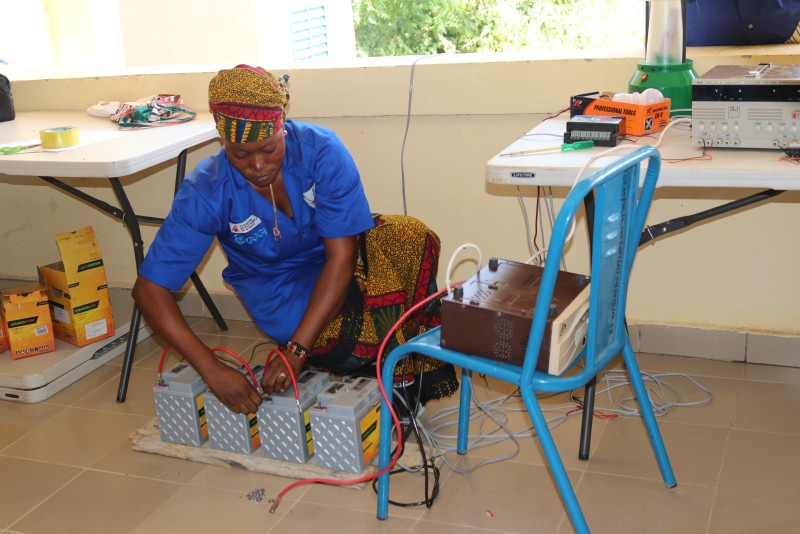
    The aim of the project was to empower older women to help reduce the negative environmental impact of fossil fuel use in Burkina Faso by promoting clean technologies and low-carbon energy sources. Thirty-one (31) solar grandmothers have benefited from intensive theoretical and practical trainings.

    They were given kits to equip their workshops, enabling them to carry out repairs and install solar kits. After the trainings, each solar grandmother received solar kits for households in her home village. Providing households with solar kits is part of the project’s contribution to the electrification of the selected villages.

    This is a “Pay As You Go (PAYG)” system managed by the local units after the beneficiary households have been selected. PAYG allows access to energy to be broken down into accessible payment schedules defined by the local committee. Setting up local management units helps to consolidate the achievements and sustainability of the project in the selected villages.

    These units play a key role in managing the solar kits made available to households. Among other things, they set up a system for recovering the cost of installing the kits for households. The amounts recovered are to be used to purchase new kits for new households.

    The project has made it possible to provide local expertise in solar technology in rural areas, and to increase the availability of and access to solar energy in rural areas, while improving the governance of solar energy at local level by setting up autonomous solar electrification units in the beneficiary villages.

    The project’s impact can be assessed, in particular, in terms of (i) changing the status of women in their living environment, (ii) helping to raise community awareness on climate change resilience and protection of the environment, (iii) reducing inequalities and improving the living conditions of beneficiary households, (iv) reducing gender inequalities in rural areas by involving women as full players in local development, which should be accelerated by the increase in income-generating activities in the villages of Burkina Faso.

    Originality and lessons learned from the project

    Originality

    The project’s main added value lies at several levels:

    • The choice of beneficiaries who are representative of Burkina Faso’s three agricultural climatic zones: in line with the requirements of the Barefoot College, the targeting of women of a relatively advanced age as solar grandmothers improved their status from that of vulnerable people to that of people involved in local development. This is a guarantee of the stability and sustainability of what has been achieved. In addition, the representative nature of the three agricultural climatic zones is a guarantee that all of the country’s realities will be taken into account and that the approach adopted will be inclusive;
    • Making the most of the expertise of former grandmothers: To train the 31 grandmothers, the Center and GGGI agreed to lean on local expertise. Three of the first grandmothers from the first class trained in India were chosen. They were able to conduct the process with professionalism. The quality of their service was unanimously recognized and praised, both by the learners and by all the stakeholders.
    • Synergy with the “Burkina Faso ecovillages” initiative: this synergy contributes to reducing social inequalities and achieving sustainable energy self-sufficiency, while helping to fight climate change and preserve the environment. It also provides a better quality of life for people in the selected villages, which are being transformed into ecovillages.
    • The successful experience of a Public-Private Partnership: the results achieved by the solar grandmother training project are the result of a partnership between four entities: (i) the Government of Burkina Faso, through the Ministry in charge of the Environment and the Barefoot College Training Center in Burkina Faso, entity co-initiator of the Project and in charge of hosting and supervising the training (ii) GGGI, entity co-initiator of the Project, in charge of general coordination of the Project (including fiduciary responsibility), (iii) the Prince Albert II of Monaco Foundation, international non-profit organization, (iv) Aliothsystem energy SAS (PAY-GO Solar Home System assembly unit and design and innovation start-up in the field of energy, renewable energy and energy efficiency) is the entity responsible for training and supplying the various items of equipment made available to grandmothers and households.

    Lessons learned

    The main lessons learned are:

    • The promotion of gender equality in the field of development is a long-term undertaking, requiring greater mobilization of resources and energies, because its scope of application concerns sensitive areas such as mentalities, beliefs and behavior;
    • Consolidating the evidence that if rural communities are empowered, well-organized and have their capacities properly strengthened, they are capable of caring for themselves and their development;
    • Solving the problems of sustainable development (environmental, social and climate issues) that the project aims to address is a complex and costly undertaking.
    • Energy, particularly renewable energy, remains essential to local development and is a real need to be met, with a view to improving people’s living conditions.
    Distributed by APO Group on behalf of Global Green Growth Institute (GGGI).
    SOURCE
    Global Green Growth Institute (GGGI)