Category: COVER

  • Africa’s youth are more educated, less employed, and less politically engaged than their elders, Afrobarometer study shows

    Africa’s youth are more educated, less employed, and less politically engaged than their elders, Afrobarometer study shows

    ACCRA, Ghana, November 20, 2023/ — Africa’s youth are more educated than their elders but are also more likely to be unemployed, according to Afrobarometer’s (https://www.Afrobarometer.org/) latest Pan-Africa Profile (https://apo-opa.co/46mmAb9).

    The study also shows that African youth are considerably less engaged than their elders in civic and political activities that could spur change, including voting in elections. One encouraging trend is a steady increase in young people’s contact with local leaders.

    Across 39 African countries surveyed in 2021/2023, unemployment is the top policy priority that 18- to 35-year-olds want their governments to address, followed by economic management. On both issues, overwhelming majorities in most countries see their government as failing. Compared to older generations, young people are less trustful of government institutions and leaders and more likely to view them as corrupt.

    Even so, young Africans are just as committed as their elders to democracy and opposed to non-democratic alternatives, including military rule, as their elders. But the youth are particularly dissatisfied with the way democracy works in their countries, and in the event that elected leaders abuse their power, they are more likely than their elders to countenance military intervention.

    Key findings

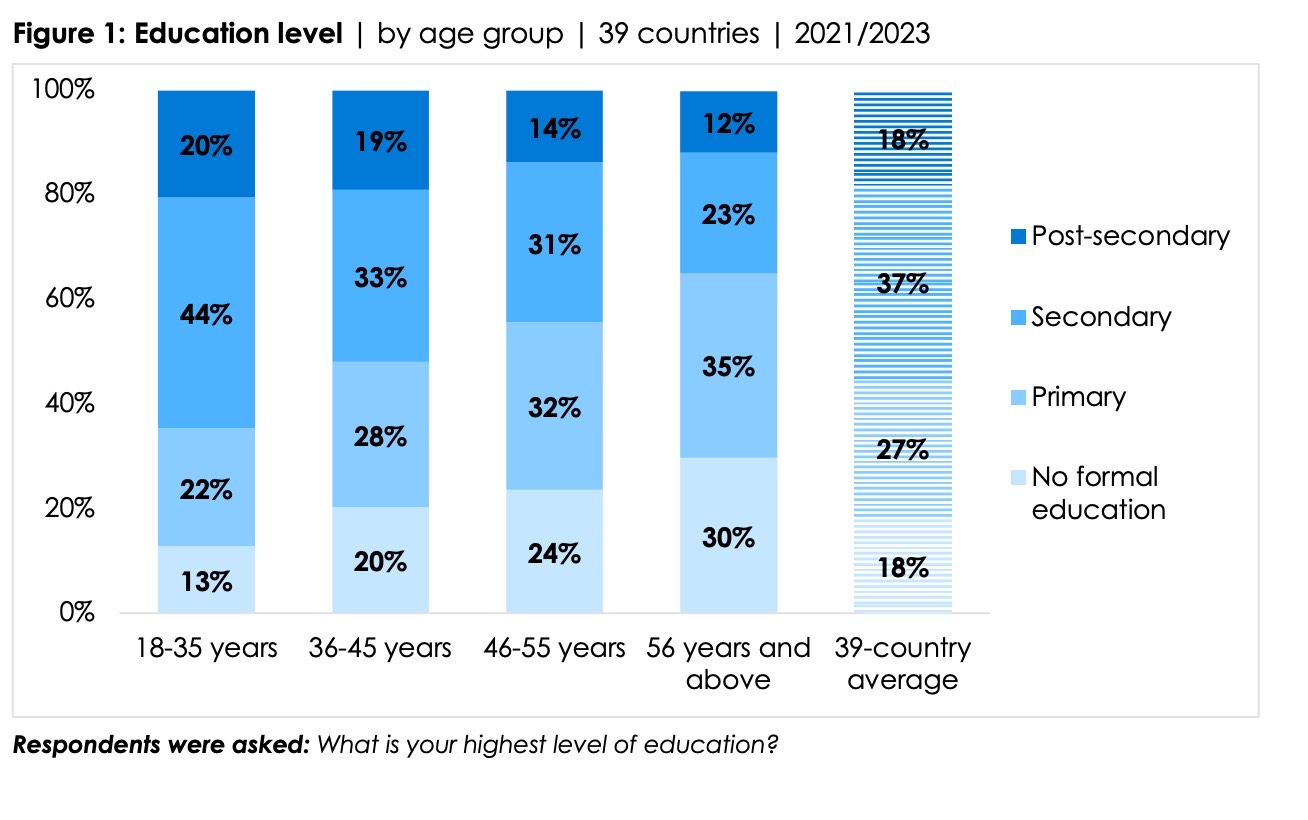
    • Almost two-thirds (64%) of youth (aged 18-35) have had at least some secondary school education, compared to 35% of citizens aged 56 and older (Figure 1).
      • But youth are considerably more likely than their elders to be out of work and looking for a job.
    • Unemployment tops the list of the most important problems that African youth want their government to address (cited by 37%), followed by management of the economy (30%) and health (26%) (Figure 2).
      • On average across 39 countries, only two in 10 youth (19%) say their government is performing well on job creation.
    • Like their elders, young Africans support democracy (64%) and reject such authoritarian alternatives as one-man rule (80%), one-party rule (78%), and military rule (65%) (Figure 3).
    • However, six in 10 (60%) are dissatisfied with the way democracy works in their country.
    • Youth are also more willing than their elders to tolerate a military takeover of the government if elected leaders abuse their power (56% among those aged 18-35 vs. 47% among those aged 56 and above) (Figure 4).
    • Youth are less likely than older citizens to vote in elections (63% vs. 84%), identify with a political party (37% vs. 45%), attend a community meeting (43% vs. 54%), and join others to raise an issue (39% vs. 45%) (Figure 5).
    • But while low, rates of young people’s contact with traditional leaders, local government councillors, political party officials, and members of Parliament have increased since 2014/2015.
    Distributed by APO Group on behalf of Afrobarometer.
    For more information, please contact:
    Josephine Appiah-Nyamekye Sanny
    Afrobarometer communications and knowledge manager
    Email: jappiah@afrobarometer.org
    Telephone: +233240933
  • Unleashing the Power of Partnerships to Transform Healthcare in Africa

    Unleashing the Power of Partnerships to Transform Healthcare in Africa

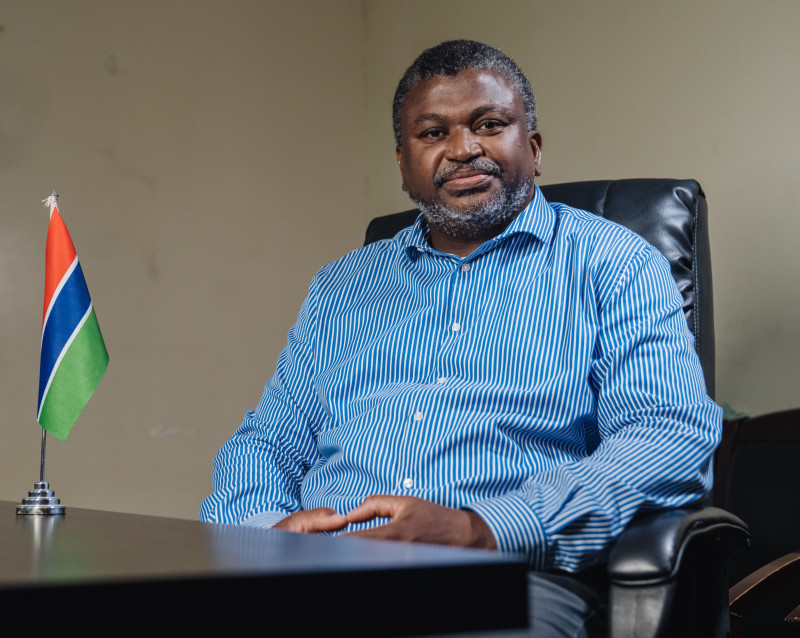
    DAKAR, Senegal, November 20, 2023/ — By Dr. Ahmadu Lamin Samateh, Minister of Health, Republic of The Gambia.

    In the realm of medicine, there are pivotal moments that can forever change lives. For me, that transformative moment occurred two decades ago when my path intersected with medical mission teams in our country, including Mercy Ships (www.MercyShips.org), an organisation committed to delivering life-changing surgeries to those who need it most. Witnessing their surgical interventions and the profound impact on people’s lives ignited my passion to become a surgeon.

    I realised that the human body’s needs transcend borders and the Gambian people deserved access to quality surgical care.

    Becoming a surgeon in The Gambia was not without challenges. With no medical school in our country at the time, I pursued education elsewhere. Armed with newfound knowledge and expertise, I returned to the country to make a positive impact on healthcare.

    Currently, the landscape of surgical care and education in The Gambia presents its own set of challenges. Surgery, being a diverse field, requires specialists, and specialists are often scarce in low-income countries like ours. Many individuals suffering from surgical conditions continue to endure unnecessary pain or rely on the assistance of organisations like Mercy Ships. Bridging this gap remains a significant challenge.

    In recent years the country has made notable progress, such as establishing a residency programme. This step is critical for sustainability and ensuring that we train our specialists in fields like surgery, gynaecology, internal medicine, paediatrics, and family medicine. However, expanding the scope of training to address the broad range of surgical disciplines remains a concern that also requires support from international partners.

    Resource limitations are deeply rooted in the country’s healthcare sector. With a population of approximately 2.7 million, our health budget pales in comparison to the staggering €2.9 billion budget I learned about during my recent visit to a European country. Treating acute appendicitis in New York, Tokyo, London, or Banjul requires the same expertise, yet our available resources differ significantly.

    The country also largely relies on imports for 100% of its medical consumables, making their cost and availability unpredictable. There is also a dire shortage of trained healthcare professionals. While we strive to equip our healthcare facilities with state-of-the-art equipment and medications, the lack of skilled personnel hampers our efforts.

    Despite these challenges, the government is actively working to address the gaps in its healthcare system, in collaboration with organisations like the World Bank, WTO, UNDP, UNICEF, UNFPA, Global Fund, and the World Food Program. These efforts, while commendable, require continuous dedication and strategic partnerships to achieve meaningful and lasting change.

    In the interim, we rely on the support of healthcare professionals from other countries, particularly Cuba and neighbouring African nations, to help us bridge the capacity gaps, ensuring that our patients receive the care they urgently need.

    In general, access to surgical care and education remains a critical concern across the continent. Finding ways to overcome these barriers is crucial. For instance, establishing manufacturing hubs in Africa to produce medical equipment and supplies would reduce dependency on imports and make these essential items more affordable and accessible.

    African countries should collaborate in training specialists, sharing knowledge and resources through partnerships and mutual training programmes. Through such partnerships we can strengthen healthcare infrastructure, improve access to quality services, and ultimately transform healthcare for the better.

    However, partnerships are not without their challenges. Limited resources, both financial and logistical, often hinder the progress of low-income countries. Limited health budgets make achieving global healthcare targets a daunting task. Despite the obstacles, we must capitalise on the resources available to us and maximise their potential to provide the best care possible.

    Partnerships with international organisations like Mercy Ships play a critical role in filling the gaps in surgical care. Mercy Ships’ recent field service in the country, where 92 patients were operated on and 122 healthcare professionals were trained, exemplifies the ripple effect of impactful interventions. Individuals who once faced social stigma and isolation due to their physical conditions now have a chance to thrive. Children who were unable to attend school due to disfigurements now have an opportunity to receive an education. Families burdened by the healthcare costs of their loved ones have found relief, enabling them to provide for their households.

    Continuing this collaboration, we are determined to expand the scope of interventions and address other critical areas, such as cancer care. By facilitating training opportunities for Gambian healthcare professionals on board Mercy Ships, we can enhance our local capacity and ensure sustainable healthcare services for our people.

    Looking ahead, our focus remains on building sustainable healthcare systems and ensuring access to quality surgery care for all. Uniting through partnerships, both within Africa and with international organisations, is crucial to overcome challenges and transform healthcare in Africa. The time for action is now! Together, we can bring hope, healing, and a brighter future to the millions of individuals who deserve nothing less.

    Distributed by APO Group on behalf of Mercy Ships.

    SOURCE
    Mercy Ships

  • Vice President Afif attends the Inauguration of the New Maldivian President

    Vice President Afif attends the Inauguration of the New Maldivian President

    20 November 2023 | Foreign Affairs

    The Vice President of the Republic of Seychelles, Mr. Ahmed Afif attended the Inauguration Ceremony of the new President of the Republic Maldives, H.E. Dr. Mohamed Muizzu which took place on 17 November 2023 at the Republic Square, Male.

    Following the Ceremony, the Vice President paid a courtesy call on President Muizzu at The President’s Office.  During the call, the Vice President congratulated the Maldivian President on his inauguration and wished him all the best in his tenure.

    The impact of climate change on the world, especially on Small Island Developing States (SIDS) was one of the main topics discussed. It was reiterated that in order to mitigate the effects of climate change SIDS should join forces and to voice out their concerns on the world stage. This will not only guarantee the protection of the islands but of its habitants for generations to come.

    Exchanges between the parliaments of both countries was another topic addressed. The Maldivian side expressed the importance exchanges of ideas and know how between those two institutions for their mutual development.

    Also present were several members of President Muizzu’s Cabinet.

    SOURCE

    Statehouse News Alerts


  • About “Jollof Wars” during IATF2023 in Egypt

    About “Jollof Wars” during IATF2023 in Egypt

    Story.Mohammed A. Abu

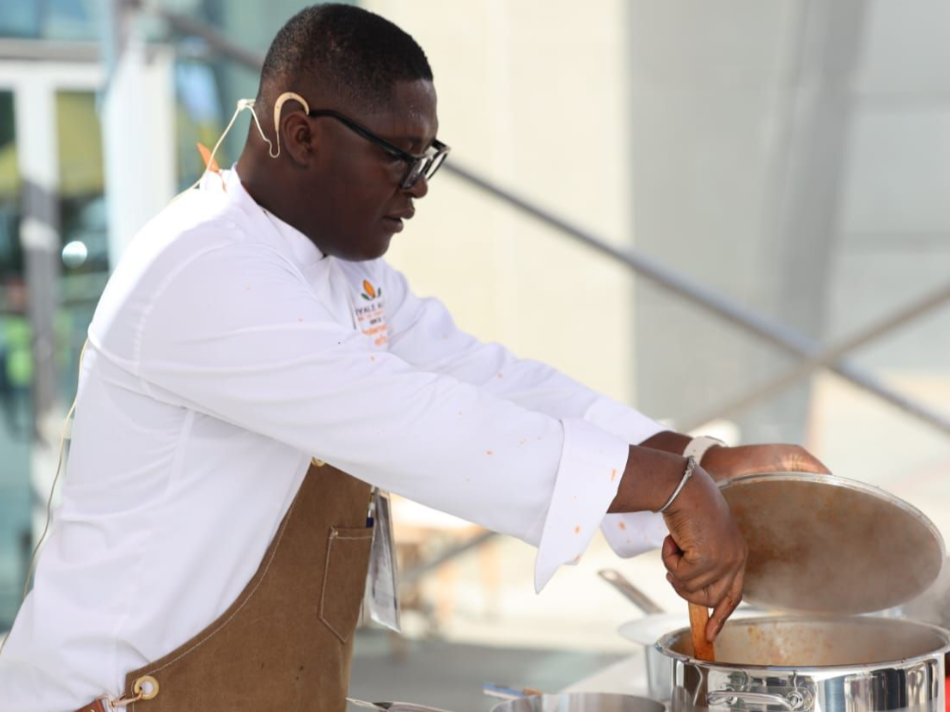
    A subtly spiced and smoky version of Ghana’s jollof rice prepared by Ghanaian Executive Chef Mr. Dediha George, gave him a win over his Senegalese Chef Mr. Abdoulaye Tamsir Ndir, and Nigerian Chef Mrs. Moyosoreoluwa Odunfa contestants.

    This was within the context of The African Export-Import Bank (Afreximbank)’s launch of an African Gastronomy and Culinary Arts Programme under its Creative Africa Nexus Initiative (CANEX) as one of the major outcomes of its recently ended 3rd Intra African Trade Summit(IATF2023) in Cairo,Egypt.

    The CANEX African Gastronomy and Culinary Arts Programme is the newest vertical within the CANEX programme and featured nine celebrity chefs from Africa and the Caribbean taking part in masterclasses, live cooking demonstrations and conversations with culinary experts.

    The inaugural session of the programme, concluded with a live demonstration, dubbed the “Jollof Wars” to highlight the unique flavours and cultural diversity of Jollof rice among Nigeria, Ghana and Senegal

    Prof. Benedict Oramah, President and Chairman of the Board of Directors of Afreximbank, said that the introduction of the programme would help to refocus continental efforts towards local food production to ensure food security, reduce high food costs and imports and minimise the impact of external shocks on Africa’s food supply chain.

    Delegates at the IATF2023 found themselves amidst a delightful culinary celebration, organized by CANEX and African Food Changemakers, and today’s spotlight was on the iconic Jollof rice—a dish that sparks the famous “Jollof Wars” between Nigeria, Ghana, and Senegal among other West African countries.

    The chefs behind these delectable creations included Ghanaian Executive Chef Mr. Dediha George, Senegalese Chef Mr. Abdoulaye Tamsir Ndir, and Nigerian Chef Mrs. Moyosoreoluwa Odunfa.


  • Integrated and efficient Payment System for Africa Highlighted

    Integrated and efficient Payment System for Africa Highlighted

    Story: Mohammed Abu


    The 2023 edition of Intra African Trade Fair(IATF2023) dubbed, the Africa Continental Free Trade Agreement(AfCFTA) Marketplace has ended in Egypt with emphasis on not just an integrated but most importantly, an efficient payment system for intra African trade

    In a detailed response during a press conference on the final day of IATF2023, H.E. Prof. Benedict Oramah, President and Chairman of the Board of Directors, Afreximbank, addressed the integration of payment systems among central banks in Africa.

    He highlighted the challenges and successes in implementing a unified payment system. Oramah pointed out that while some regions already have established systems, the goal is to collaborate or integrate these into a singular, more efficient system.

    He emphasized the significant progress made, citing the recent agreement among African Central Banks to adopt a unified architecture for payment systems.

    This move, strongly backed by early decisions at the African Union, supports the implementation of the African Continental Free Trade Area (AfCFTA), signaling a major political and economic milestone.

    Oramah further elaborated on the ongoing efforts to onboard central banks individually, acknowledging the complexity of the task.

    Additionally, he highlighted the collaboration with the Caribbean, mentioning CARICOM states’ agreement to adopt the pan-African system. This decision enhances the potential for increased trade and economic ties between Africa and the Caribbean.


    The Intra African Trade Fair or IATF was created as a platform for entry into Africa’s single market of over a billion people joined together through the African Continental Free Trade Area (AfCTA) platform.

    IATF 2023, the third edition of the event, held under the theme “Building Bridges for a Successful AfCFTA”., was hosted by The African Export-Import Bank (Afreximbank), in collaboration with the African Union and AfCFTA Secretariat, that welcomed heads of state, senior government officials; continental/global players in multiple sectors.

    The fair was expected to have attracted 75 participating countries,1600 business exhibitors, entrepreneurs, investors, financiers and 35,000 buyers and visitors with $43 billion worth of trade and investment deals expected to be closed.

    The African Development Bank played a lead sponsorship role given its active involvement on the IATF Advisory Council, and its commitment to AfCFTA implementation under its “Regional Integration” and “Industrialize Africa” High 5 priorities.

    Promoting the competitiveness of African member countries under the AfCFTA agenda also aligns with the Bank’s goal to support private sector development, competitiveness, and strong trade performance for African countries.

    The various sectors covered include agri-agrobusiness, health, environment and climate development, infrastructure – power (renewable energy), water, transport and logistics development.

    Major Outcomes of IATF 2023

    Launch of Intra-African EPC Contract Promotion Programme
    Afreximbank today in Cairo launched a new initiative that will open doors, allowing African contractors to capitalise on various infrastructure investments available across the continent.

    Prof. Benedict Oramah, President and Chairman of the Board of Directors of Afreximbank, joined by Rania Al-Mashat, Minister of International Cooperation of Egypt, launched the Afreximbank Intra-African Engineering, Procurement and Construction (EPC) Contract Promotion Programme during the Presidential Summit of the Intra-African Trade Fair 2023 (IATF2023).

    Prof. Oramah told guests that the programme was one of the Bank’s initiatives to support the implementation of the African Continental Free Trade Area (AfCFTA), saying that it aimed to enable African companies to successfully bid for, win and execute infrastructure contracts in Africa through capacity building, twinning, market access opportunities, financing, guarantees and technology solutions.

    AfreximbankSomoil Sociedade Petrolífera Angolana S.A.Deal

    Afreximbank is thrilled to announce the signing of a transformative USD 570 million Dual Tranche Term Loan and Revolving Facility with Somoil – Sociedade Petrolífera Angolana S.A. (Etu Energias)

    Signatories were Mr. Fernando Hermes, Chief Finance Officer of Etu Energias, and Mr. Rene Awambeng, Client Relations Global Head at Afreximbank.

    Etu Energias, the largest private oil company in Angola, has been a valued partner of Afreximbank, with a previously arranged and successfully closed USD 190 million facility in 2022. The new proposed USD 570 million Facility is crucial to further enhance Angola’s participation in the vital oil and gas sector, which contributes over 90% of the country’s exports. This initiative ensures the retention and development of local personnel, reinforcing Angola’s strategic position in this sector.

    Increase of Afreximbank’s Global Facility Limits for Elsewefy Electric to USD 300 million

    Afreximbank has increased its Global Facility limits for Elsewefy Electric to USD 300 million!

    This boost is dedicated to supporting contracting guarantees and working capital needs, empowering Elsewedy to tackle its backlog projects across Africa.

    The partnership with Elsewedy has been a journey of success, executing impactful projects in over 9 African countries. From Zambia to Tanzania, it’s been instrumental in bringing energy solutions and trade-enabling infrastructure to the continent.

    Afreximbank-Oando Deal

    Afreximbank confirmed the signing of a Mandate Letter for a USD 800 Million Syndicated Dual Facility with Oando. This financial package comprises a USD 500 Million Senior Secured Reserve Based Lending facility and a USD 300 Million Receivables Backed Term Loan facility.

    The aim is to fuel a strategic acquisition of a 20% participating interest in the Nigerian Agip Oil Company Limited (NAOC). This includes Oil Mining Leases 60, 61, 62, and 63, as well as the entire issued share capital of NAOC, acquired from Eni S.A.

    This move perfectly aligns with the Afreximbank’s unwavering commitment to supporting indigenous African institutions. The facility underscores our dedication to financing transactions that not only boost Africa’s trade but also empower local companies by transferring capacity from foreign institutions to African hands.

    This acquisition is a pivotal moment for Oando, propelling it to new heights in the oil industry by significantly enhancing its production capacity. Beyond that, this financing is a shining example of Afreximbank’s prowess in mobilizing capital for robust transactions within its member nation

    Afreximbank- Griner Engenharia S.A Deal

    In a landmark move towards fostering economic development in Angola and contributing to intra-African trade, Afreximbank announced the signing of a USD 30 million Corporate Loan Facility with Griner Engenharia S.A., a leading Angolan construction company.

    This deal, a term sheet, was signed by Mr. Joao Faria, Board Member of Griner Engenharia, and Mrs. Kanayo Awani, Executive Vice President, Intra-African Trade Bank, Afreximbank and signifies a strategic partnership that aligns with Griner’s remarkable track record and commitment to advancing trade-supporting infrastructure in Africa.

    Griner Engenharia, with its commendable presence and activities across multiple African countries, including Angola, Mozambique, Cape Verde, and Ghana, stands as an Intra-African Trade Champion. The USD 30 million facility, split into two tranches, is poised to have a substantial impact on both job creation and trade volumes.

    The provision of this facility is expected to generate over 1,500 job positions, further strengthening Griner’s commitment to fostering employment opportunities in Angola. Additionally, the supported contracts are projected to contribute more than USD 100 million to intra-African trade volumes and an additional USD 135 million to Angolan export volumes.

    Afreximbank-Access Bank Plc 500 Billion Naira Deal

    In a significant milestone, Afreximbank and Access Bank Plc successfully signed a Framework Agreement for a ground breaking 500 Billion Naira Sub Sovereign Financing Programme, empowering selected Nigerian sub-nationals.

    This initiative, realized under the Africa Sub-Sovereign Network Initiative, aimed to bolster economic diversification through the development of trade and trade-enabling infrastructure.

    The selected Nigeria states, including Anambra, Ekiti, Kwara, Ogun, and Oyo, are poised to transform into manufacturing and logistics hubs, catalyzing job creation, elevating income levels, and ensuring the enduring diversification of the Nigerian economy.

    The deal was signed by key stakeholders, including governors of participating states, such as His Excellency Governor Chukwuma Soludo CFR of Anambra State and His Excellency Governor Seyi Makinde of Oyo State. The signatories from Access Bank Plc and Afreximbank included Mr. Roosevelt Ogbonna, Group Managing Director of Access Bank Plc, and Mr. Rene Awambeng, Client Relations, Afreximbank.

    The collaboration marked a monumental step towards fostering economic prosperity and sustainable development.

    Afreximbank launches African gastronomy and culinary arts programme

    The African Export-Import Bank (Afreximbank) launched an African Gastronomy and Culinary Arts Programme under its Creative Africa Nexus Initiative (CANEX).

    The CANEX African Gastronomy and Culinary Arts Programme is the newest vertical within the CANEX programme and featured nine celebrity chefs from Africa and the Caribbean taking part in masterclasses, live cooking demonstrations and conversations with culinary experts.

    The inaugural session of the programme, concluded with a live demonstration, dubbed the “Jollof Wars” to highlight the unique flavours and cultural diversity of Jollof rice among Nigeria, Ghana and Senegal

    Prof. Benedict Oramah, President and Chairman of the Board of Directors of Afreximbank, said that the introduction of the programme would help to refocus continental efforts towards local food production to ensure food security, reduce high food costs and imports and minimise the impact of external shocks on Africa’s food supply chain.

    Other deals worthy of mention included the following:

    • Afreximbank announced its approval to participate in a USD 130 million Senior Term Loan Facility, contributing to the USD 168 million total, dedicated to Azikel Petroleum Limited
    • EVP Ms Kanayo Awaniand President of Basketball Africa League (BAL) Mr Amadou Gall Fall have signed a deal announcing the U23 BAL4HER Basketball Camp
    • Afreximbank announced a strategic partnership with the Africa Center marking a commitment of USD 5,000,000 over four years
    • Afreximbank confirms a partnership with the Basketball Africa League (BAL), a collaboration between the International Basketball Federation (FIBA) and the NBA, investing USD 750,000
    • Afreximbank is set to empower Matrix Energy with a USD 100 million Receivables-backed Corporate Term Loan Facility, solidifying its commitment to fostering growth in Nigeria’s oil and gas sector
    • Afreximbank signed a USD 50 million Term Loan Facility in favor of Green Economic Zone Kaduna
    • Afreximbank is providing a USD 75 million Guarantee Facility to Sterling Bank Plc
    • Afreximbank announced a collaboration with Banque Nationale pour le Developpement Economique (BNDE), Senegal involving a EUR 40 million dual-tranche facility
    • Afreximbank announced a EUR 12 million facility extended to SAMAPECHE
    • Afreximbank signs a EUR 11.2 million Term Sheet O3S – Oil Senegal Support Servicesa pioneering 100% Senegalese entity dedicated to Offshore Maritime Operations
    • Afreximbank signed a Memorandum of Understanding (MOU) with CRDB Bank Plcduring the Afreximbank Africa Diaspora Center Announcement

    Two immensely successful editions of the IATF have been held in Cairo, Egypt (2018) and Durban, South Africa (2021

    IATF2023 Stand Awards

    Celebrating Excellence at IATF2023

    Yusuf Daya, Director AU/AFCTFA Relations and Trade Policy, honoured outstanding exhibitors with Stand Awards.

    Recognizing innovation, creativity, and impactful presentations, these awards showcase the pinnacle of excellence at the Intra-African Trade Fair.

    Winners, whose dedication and ingenuity shine bright at IATF2023, included the following::

    • Best Feature Stand Award sponsored by FDH Bank Plc!
    • Most Innovative Stand Award goes to ALGERIA
    • Best AU Youth Stand Award goes to Africa Design
    • ARISE IIPWins Best Business Stand
    • CEO of Mota-Engil Africa and the CFO of Africa receive the prestigious Best Individual Award
    • Chevron received Best Auto Stand Award
    • GEPA wins the prestigious Best Stand Award

    Algeria IATF2025 Host

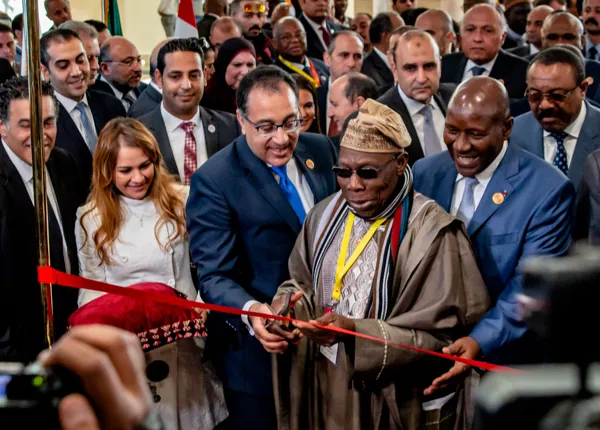
    Algeria has been selected to host the fourth Intra-African Trade Fair (IATF2025) scheduled to take place in 2025, Chief Olusegun Obasanjo, Chairman of the Advisory Council of the Intra-African Trade Fair and former President of Nigeria, has announced.

    Speaking yesterday in Cairo during the Presidential Summit of the third Intra-African Trade Fair (IATF2023), Chief Obasanjo said that the selection followed a rigorous review of bids received by the Advisory Council for the hosting of the continental event.

    “We congratulate the government and people of Algeria for winning this bid,” he said, adding, “We look forward to converging in Algiers in 2025”.

    Two immensely successful editions of the IATF have been held in Cairo, Egypt (2018) and Durban, South Africa (2021

    Afreximbank has identified intra-African trade as a critical factor for unlocking Africa’s economic potential. Although the share of intra-African trade as a percentage of total Africa trade has increased from 10 percent in 1995 to around 16 percent, it remains low compared to the levels in Europe (59 %), Asia (51%) and North America (37%).


  • GHash Mining: Lighting up Africa with cryptocurrency mining

    GHash Mining: Lighting up Africa with cryptocurrency mining

    NAIROBI, Kenya, November 14, 2023/ — GHash Mining (https://web.vistx.com) is a leading technology-driven cryptocurrency mining company with a vision to create sustainable value across the cryptocurrency industry. Diversified business covers cryptocurrency mining, mining pools, and data center operations. https://apo-opa.co/3QVBaSH

    Mini-grids will become increasingly important in bridging the energy access gap that still exists, especially in remote rural areas. In 2010, there were approximately 500 microgrid installations in sub-Saharan Africa.

    Although the number has increased significantly, there is still greater acceleration. There are currently over 3,000 installations. According to one estimate (World Bank, 2023), more than 160,000 mini-grids are reportedly needed to meet access needs.

    The International Renewable Energy Agency (IRENA), an intergovernmental organization that supports African countries, noted in its Annual Review of Renewable Energy and Jobs 2023 that “Kenya plays a significant role in the region, deploying mini-grids across Africa. A big part of it.” their transition to a sustainable energy future.

    Commercial financiers often view mini-grids as not worth the investment.

    They are not economically sustainable under the current funding model, particularly as community energy demand remains low so soon after commissioning.

    Such huge capital expenditures are the reason why the dominant model for energy development in Africa to date has been through concessional funding – donations, grants and low-cost debt.

    However, GHash Mining is changing the game by using cryptocurrency mining to help electrify the continent.

    Changed game rules:

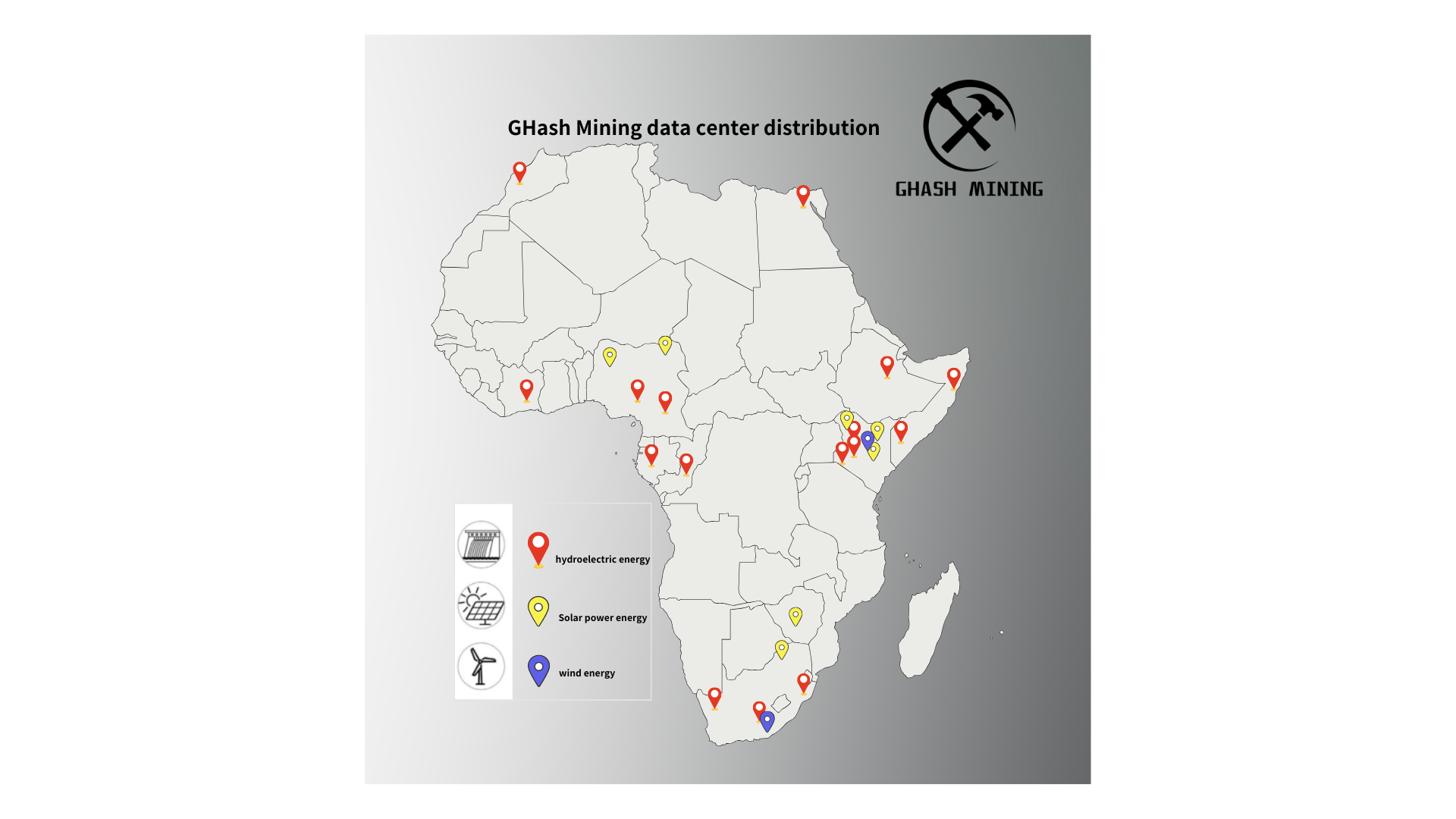
    GHash Mining has established 25 small cryptocurrency data centers across the continent to supplement mini-grids. These mini-grids are critical to delivering power to rural communities that are far from the central grid.

    The plan to build 140 small cryptocurrency data centers is expected to be completed in 2024.

    Energy developers do not have to deal with excess stranded energy based on future community needs. Financial Sustainability Collocated mini-grids and small Bitcoin data centers can see financial ROI immediately upon commissioning.

    As anchor tenants, miners provide energy developers with consistent, predictable, and paid energy needs, narrowing the gap in risk-return expectations between energy developers and financiers.

    As primary customers, Bitcoin mining data centers provide initial and ongoing power needs, turning mini-grids into profitable enterprises even during the critical initial stages.

    This new financing model justifies the large initial capital outlay of renewable energy infrastructure, while the demand unleashed by Bitcoin miners benefits households and businesses that previously lacked access to electricity.

    As anchor tenants, Bitcoin mining data centers facilitate sustainable and profitable private investment, driving electrification for hundreds of millions of households in Africa currently living in darkness.

    It’s a win-win-win situation for energy developers, local community businesses and households, and the national utility grid to which these microgrids are ultimately connected. Bitcoin mining data centers facilitate sustainable and profitable private investment needed to power hundreds of millions of households in Africa currently living in darkness.

    The development of microgrids can help provide electricity to rural communities, thereby boosting economic development and improving education and health outcomes. At the same time, cryptocurrency mining operations can generate profits for investors, which can then be reinvested back into the mini-grid to expand its coverage and scale.
    In addition:
    Affected by many factors, the “Economic Outlook for Sub-Saharan Africa” released by the International Monetary Fund (IMF) shows that the inflation rate in the region has reached “a level not seen in decades”, with more than half of the countries having inflation rates exceeding 10%. As of May 2023, Nigeria’s inflation rate reached 22.3%, and the inflation rates in Sao Tome and Principe, Egypt, and Ethiopia were 23.5%, 31%, and 32.7% respectively.
    Decentralized cryptocurrency holding and mining can effectively fight inflation. Protect residents’ wealth.
    In conclusion:
    All in all, GHash Mining is making a significant contribution to the growth of cryptocurrency mining and the spread of electricity in Africa. By leveraging cryptocurrency mining operations to fund mini-grids, GHash Mining is providing a sustainable solution to rural electrification, benefiting both investors and local communities. As Africa continues to develop, we expect GHash Mining’s approach to energy investment and green energy innovation will continue to play an important role in the continent’s development.

    Distributed by APO Group on behalf of GHash Mining.


  • African voices unite to drive cervical cancer elimination across the continent through new civil society coalition – The African Cervical Health Alliance (ACHA)

    African voices unite to drive cervical cancer elimination across the continent through new civil society coalition – The African Cervical Health Alliance (ACHA)

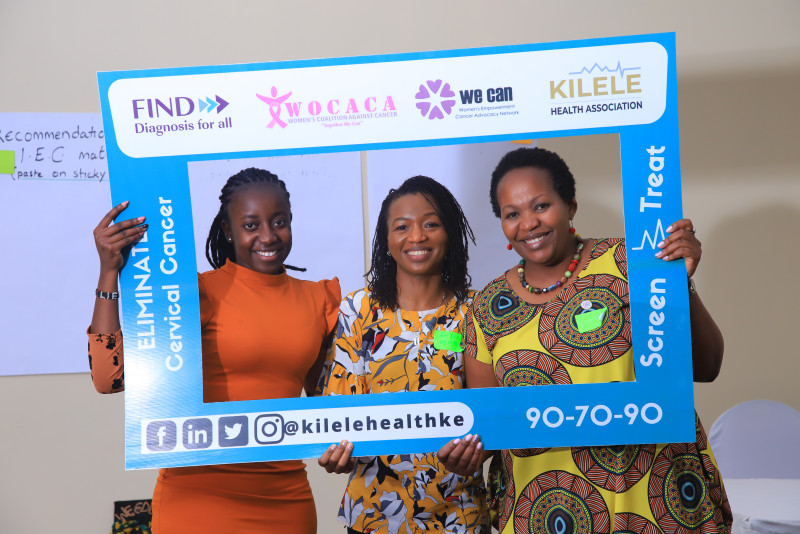
    NAIROBI, Kenya, November 15, 2023/ — The African Cervical Health Alliance (ACHA) has been launched to empower communities and increase access to prevention and control of cervical cancer in Africa by 2030 in line with global targets; the ACHA Secretariat is hosted by KILELE Health Association, with catalytic support from FIND (www.FINDdx.org).

    The launch of the African Cervical Health Alliance (ACHA) was announced today, ahead of the anniversary marking the global commitment to eliminate cervical cancer. An online event showcased the power of civil society to galvanize action in pursuit of cervical cancer elimination across the continent. The event, hosted by KILELE Health Association as ACHA Secretariat, featured speakers from the ACHA membership from African countries. These included community organizations, public health officials, policy makers, and voices from those with lived experience of the disease.

    Cervical cancer is both preventable and curable if detected early, through highly effective HPV vaccines, high-performing HPV DNA screening tests, and early treatment of precancerous lesions. But while awareness of the positive impact of vaccination and value of screening and treatment for women, their families and economies has improved, today, cervical cancer remains the one of the deadliest cancers among women in Sub-Saharan Africa – because women in these countries simply do not have access to these life-saving measures.

    The World Health Organization (WHO) and governments around the world have made a commitment that cervical cancer will be the first cancer ever in the world to be eliminated, setting “90–70–90” targets for 2030 that can put all countries on the pathway to this achievement: 90% of girls fully vaccinated with the HPV vaccine by the age of 15, 70% of women screened by the age of 35 years and then again at 45 years, and 90% of women with pre-cancer or invasive cancer treated.

    Experience from the fight against HIV/AIDS has shown that civil society organizations play a pivotal role in addressing health challenges, by advocating for policy change, raising awareness, and providing education and support to those affected. ACHA is mobilizing organizations from across the African continent to similarly unlock progress towards cervical cancer elimination, by improving access to quality healthcare, empowering women to make informed health decisions, and bringing services closer to those who need them. In collaboration with stakeholders, ACHA will leverage resources and expertise, contributing to women’s health, and protecting families and livelihoods.

    With catalytic support from FIND, ACHA is launching with a membership of 22 organizations (https://apo-opa.co/3R0l1eT) representing 15 African countries, focused on five workstreams:

    • Targeted advocacy, supported by research
    • Focused capacity building and training
    • Sustainable resource mobilization
    • Strategic community engagement and outreach
    • Tailored communications and informational materials.

    Benda N. Kithaka, Executive Director, KILELE Health Association, said: “ACHA desk reviews have shown that there is little research shaping community engagement in Africa, despite the fact that our continent is the hardest hit by cervical cancer, with the pain, suffering and deaths from this disease being the highest in the world. Our women are excited to be a significant contributor to change cervical cancer effects on the families; and we know women in African communities are ready to take up elimination. ACHA members are uniting behind the call to governments to follow through on their global commitments to 90–70–90. We encourage others to join us and make this happen.”

    Dr Angela Muriuki, Director of Women’s Health at FIND, said: “At FIND, we strongly believe that cervical cancer could be eliminated within a generation. We can only achieve this through true partnership with women and communities and creating a platform for African voices to lead the drive towards elimination in Africa. We are delighted to support the formation and strengthening of ACHA as we know empowerment of women will be key to accelerating uptake of national screening programmes, and that screening is critical so that today’s generation of women do not miss out.”

    With a rallying cry of “don’t drop the ball!” ACHA warmly encourages interested organizations to reach out to partner, join or support ACHA. Please contact the Secretariat at director@kilelehealth.org.

    Distributed by APO Group on behalf of FIND.
    Media contacts
    Benda N. Kithaka, Executive Director, KILELE Health Association
    M: +254724635680
    director@kilelehealth.org

    Sarah-Jane Loveday, Director, Communications, FIND
    M: +41 79 431 62 44
    media@finddx.org

  • Kaspersky opens its first Transparency Center in the African region

    Kaspersky opens its first Transparency Center in the African region

    KIGALI, Rwanda, November 15, 2023/ — As part of the Africa Cyber Defense Forum (ACDF), Kaspersky (www.Kaspersky.co.za) has today announced the opening of its first Transparency Center in the African region. The new center, located in Kigali, Rwanda, is opening as part of Kaspersky’s Global Transparency Initiative, established to highlight the reliability of the company’s solutions and advocate for greater transparency throughout the cybersecurity industry. The new center offers its visitors a comprehensive overview of Kaspersky’s engineering and data processing practices, and a live demonstration of the source code for its products and services.

    Internet penetration in the African region has been steadily increasing over the years: according to the World Bank (https://apo-opa.co/3QYBJuX), broadband Internet access in Africa grew from 26% in 2019 to 36% in 2022. As outlined in the African Union’s Digital Transformation Strategy (https://apo-opa.co/3ucquWR), all  people in Africa should be digitally empowered by 2030, which means that digitalisation will be enhancing, bringing both opportunities and challenges.

    The new Transparency Center in Kigali is available for Kaspersky’s partners, customers, and regulators responsible for cybersecurity. It is designed to serve the “blue piste” review option, which has gained significant popularity among Transparency Centers’ visitors since the opening of the first facility in 2018.

    It offers a general overview of Kaspersky’s engineering and data processing practices: throughout their visit, partners and customers are welcome to ask Kaspersky experts any questions related to the company’s data processing procedures and the functioning of its solutions.

    Additionally, as part of the “blue piste,” they can improve or acquire skills to assess the security of ICT products that their organisations use, learning the highlights of Kaspersky’s Cyber Capacity Building Program (https://apo-opa.co/3SKSOd5) for government organisations, academia and companies.

    Underscoring the strong nexus between transparency and the fight against cybercrime, and Kaspersky’s commitment to both causes, the new Transparency Center opening was welcomed by the African Union Mechanism for Police Cooperation (AFRIPOL):

    “The African region is currently undergoing rapid digital transformation, with Internet penetration continually growing year on year. To counter potential security risks stemming from the use of technology, it is imperative to understand what forms an effective framework to mitigate risks.

    Today, as Kaspersky announces the opening of its first Transparency Center in the African region, we appreciate the company’s openness and welcome its Global Transparency Initiative, which is exemplary for organisations in the region in terms of building digital trust.

    Kaspersky has a proven track record of collaborating with local, regional and international law enforcement agencies to combat cybercrime, sharing its technical expertise, in the spirit of transparency,” AFRIPOL’s Acting Executive Director, Ambassador Jalel Chelba, commented.

    With the opening of the facility in the region, Kaspersky will expand its network to encompass a total of 11 Transparency Centers located across Europe, Asia-Pacific, North and Latin America, the Middle East and Africa.

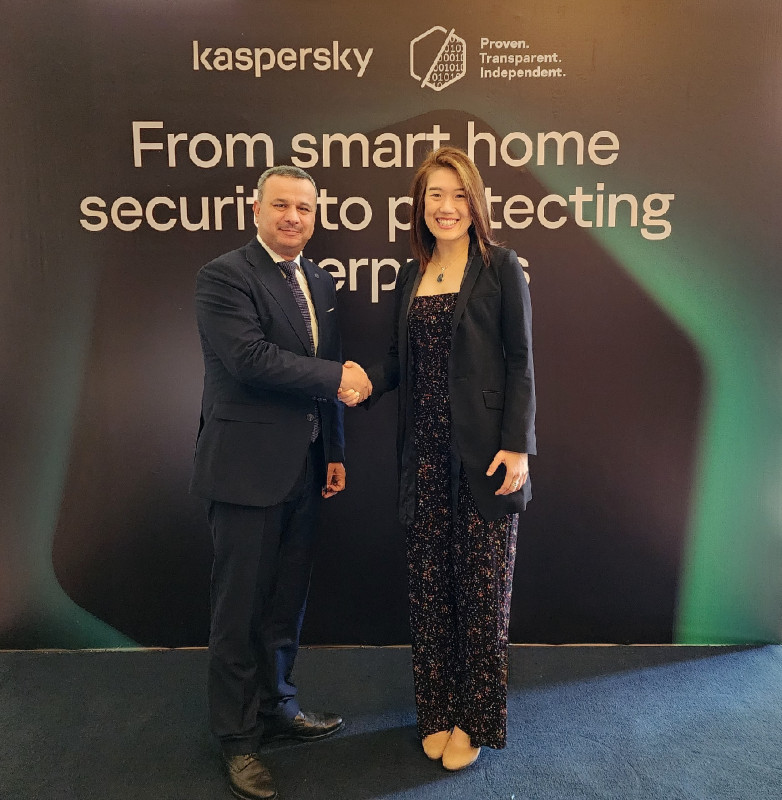
    Introducing another milestone in the Global Transparency Initiative, Genie Sugene Gan, Head of Government Affairs and Public Policy for Asia-Pacific, Japan, Middle East, Turkey and Africa regions at Kaspersky, during her keynote speech at the ACDF, noted:

    “A growing emphasis on cybersecurity within the pan-regional African agenda is piquing the interest of national authorities. However, there remains a significant gap in cyber-capacity building. By opening the Transparency Center, Kaspersky aims to address the local market needs, offering education in such critical areas as evaluating product security and establishing secure development processes. The Transparency Center opening marks a pivotal advancement and a significant milestone for both our organisation and the region, as we bring essential capacity-building capabilities and best cybersecurity practices to the region.”

    Being a dedicated advocate for enhancing transparency in the cybersecurity industry, Kaspersky launched its Global Transparency Initiative in 2017, becoming a pioneer in advancing digital trust.

    The initiative reaffirms the company’s readiness to disclose how Kaspersky works, what standards it implements, how its solutions perform and why they are trustworthy.

    Kaspersky actively involves the broader community in validating and verifying the reliability of its products, internal processes, and overall business operations. As a significant aspect of the Global Transparency Initiative, the company leads as the first cybersecurity vendor to disclose its source code for external review.

    To learn more on the Global Transparency Initiative or request a visit to a Transparency Center, please check the website (https://apo-opa.co/3MIAoG8).

    Distributed by APO Group on behalf of Kaspersky.
  • Afreximbank announces $1-billion African Film Fund

    Afreximbank announces $1-billion African Film Fund

    CAIRO, Egypt, November 10, 2023/ — The African Export-Import Bank (Afreximbank) (www.Afreximbank.com) is working on the establishment of a $1-billion African Film Fund to be launched in 2024 to support the continent’s film industry, Kanayo Awani, Executive Vice President, Intra-African Trade Bank, at Afreximbank, announced in Cairo today.

    Addressing the opening of the 2023 CANEX Summit held as part of the third Intra-African Trade Fair (IATF2023), Mrs. Awani said that the fund would oversee film financing, co-finance with large studios, finance African filmmakers and finance producers and directors of film projects across the continent.

    She noted that during CANEX WKND 2022, the Bank had increased the financing it was making available to the creative sector from US$500 million to US$1 billion and that the Bank currently had a pipeline of over US$600 million in film, music, visual arts, fashion, and sports deal.

    “The very first film we financed recently premiered at the Toronto Film Festival,” Mrs. Awani said, adding, “The Bank has several in the pipeline from Nigeria, South Africa, and Kenya, which should be on streaming platforms in 2024.”

    Acknowledging that the film and audiovisual industries in Africa accounted for US$5 billion of the continent’s GDP and employed an estimated five million people, with the potential to create over 20 million jobs and generate US$20 billion in revenues annually, Mrs. Awani noted that the sector faced several challenges, including limited access to financing and copyright infringement due to weak copyright laws, enforcement mechanisms and a lack of awareness.

    The sector was also confronted with infrastructure and technology gaps, lack of capacity and shortage of skilled professionals and limited market access and international exposure, as a result of which African creative and cultural products often struggle to gain exposure and access to international markets.

    Earlier, Boris Kodjoe, a celebrity actor of Ghanaian descent, highlighted how the creativity of Africans had influenced various aspects of modern life, including music, fashion, art, design, social consciousness, business, sports, film and TV. He said that the exploitation of black creativity by the West had had lasting effects and that, despite admiration of black excellence, Africa still faced branding challenges due to external perception fuelled by the traditional media’s depiction of poverty, famine, civil wars and migration on the continent.

    Mr. Kodjoe said that the world craved culturally specific global content and that Africa was a key player in meeting that demand. With the continent’s young population and high connectivity, studios, networks, promoters and brands were investing in solutions to reach diverse audiences. Films and TV shows with diversity performed better than others by 30 per cent and Afrobeats was taking over global airwaves. By 2030, Africa was projected to produce up to 10 per cent of global creative goods export worth roughly $200 billion or four per cent of Africa’s GDP.

    Also speaking, H.E. Albert M. Muchanga, Commissioner for Trade and Industry of the African Union Commission, said that the creative sector in Africa was rapidly growing and making a significant contribution to the inclusive growth and sustainable development of African economies.

    “I reaffirm my belief that the African creative industry has huge potential to be a source of employment and revenue to create the Africa we want – revenue from intra-African trade as well as revenue from the rest of the world.”

    Ambassador Muchanga urged African nations to convert their vast potential into plans and projects that yield tangible results, stressing the need to also invest in protecting international property rights.

    CANEX is an Afreximbank initiative to support Africa and the African Diaspora’s creative and cultural industries by providing financing and non-financing instruments to boost growth. The seven-day CANEX Summit is intended to further develop conversations and provide additional business-to-business and business-to-government opportunities. It includes a fashion show featuring a range of bold and exciting designs from across Africa and the Diaspora and a CANEX Music Factory, hosted by renowned South African producer Oskido, which will provide songwriters and beat makers with the opportunity to record their work.

    Creative Africa Nexus (CANEX) programme set up by Afreximbank seeks to facilitate the development and growth of the creative and cultural industries in Africa and the diaspora. The programme provides a range of financing and non-financing instruments and interventions aimed at supporting trade and investment in Africa’s creative sector.
    IATF2023, Africa’s largest trade and investment fair opened on 9th November and will run till 15th November 2023.

    Distributed by APO Group on behalf of Afreximbank.
    Media contact:
    Deborah Ross
    Senior PR Account Director
    BrandComms
    +44 (0) 759 3602 128
    ​deborah.ross@brandcommsgroup.com
  • President Ramkalawan addresses the First Saudi- African Summit

    President Ramkalawan addresses the First Saudi- African Summit

    10 November 2023 | Foreign Affairs

    Riyadh, Friday 10th November: Seychelles alongside other African nations participated in the first Saudi- African Summit being held in Riyad, Saudi Arabia.
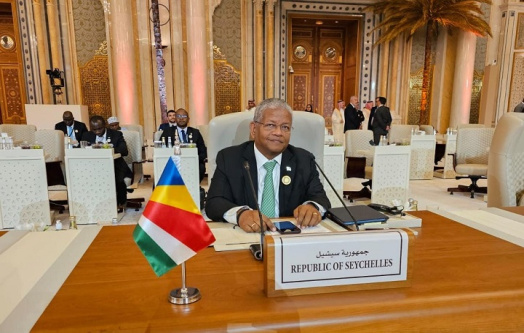
    President Wavel Ramkalawan who is currently leading the Seychelles delegation at the summit, addressed the summit during the African Heads of State speech segment.
    Delivering his statement President Ramkalawan commended His Majesty the Custodian of the Two Holy Mosques and His Royal Highness the Crown Prince of the Kingdom of Saudi Arabia for organising the First Saudi-African Summit.
    “This summit, under the theme of “Productive Partnership”, signifies a pivotal shift in the Africa-Saudi partnership. Hence, as leaders, let us embrace this opportunity, engage in meaningful dialogue, and address specific issues to reinforce the vital connections between our nations.  This is a mission that we should pursue together, as equal partners.
    The Kingdom of Saudi Arabia is a strong and trusted partner on which African countries can rely on the shaping of our respective national industries and in enhancing the investment climate by exploring together various areas of cooperation.”
    He highlighted the African Continental Free Trade Agreement, Business-to-business engagements in core sectors and the Investment and Empowerment of Women and the Youth as some of the most promising avenues for the Saudi-Africa partnership.
    “Seychelles appreciates the unfailing support of Saudi Arabia in various sectors, especially through the Saudi Fund for Development. As the Chairperson of the African Island States Climate Commission, I wish to highlight, once again, the negative effects of the climate crisis on Seychelles and other African coastal nations, which extends to food security and socio-economic challenges across the entire continent and beyond.
    The President further emphasized the need to act together as partners and to take bolder actions to address these critical matters, including the adoption of a Multidimensional Vulnerability Index (MVI), which will take into consideration the vulnerabilities of Small Island Developing States and not solely GDP per Capita as a measurement for the level of development.
    “We look to Saudi Arabia to play a broader role in smaller African countries like Seychelles, in building more resilient and productive food systems that will support food security. Furthermore, Seychelles is keen to engage with Saudi Arabia and other African States in sharing experience and know-how on the effective management of our Exclusive Economic Zone of 1.3 million square kilometres, through maritime security, research and development, and innovative policies to combat Illegal Unreported Unregulated fishing, along with addressing illicit drug trafficking.
    President Ramkalwam also spoke about the ongoing crisis in Gaza and Israel as a grave tragedy and a matter of utmost concern for all.
    “Seychelles firmly condemns all attacks on civilians in Palestine as in Israel. We call for an end to those indiscriminate attacks, an immediate cessation of hostilities, and a return to the negotiating table. We also reaffirm our support for a two-state solution, which is the only way forward to lasting peace in the region.”
    In concluding, the President called on fellow African Heads of State and Government and partners present to use the outcome of this very first Summit to maximise own capacities for a healthier and long-term productive partnership between Saudi Arabia and Africa.
    On the margins of the summit, Seychelles and Saudi Arabia also signed the General Cooperation Agreement. The signing of the General Cooperation Agreement between the Governments of Seychelles and the Kingdom of Saudi Arabia marks a significant step towards greater cooperation and connectivity between the two peoples. This agreement also acts as an umbrella agreement that will permit for an enhancement of bilateral cooperation across a diverse range of areas and sectors.
    Other members of the Seychelles delegation attending the summit included the Minister for Tourism and Foreign Affairs, Mr Sylvestre Radegonde, the Ambassador of the Embassy of Seychelles in Abu Dhabi, Amb. Gervais Moumou and Third Secretary Bilateral Affairs Division, Mr James Carpin.
    -End-

    » View all