Category: COVER

  • Louvre Abu Dhabi welcomes over 200,000 visitors in summer

    Louvre Abu Dhabi welcomes over 200,000 visitors in summer

    Louvre Abu Dhabi received more than 200,000 visitors between June and August 2023, a record peak in summer visitation since the museum’s opening in 2017, reaffirming Abu Dhabi’s position as an internationally renowned cultural hub.

    The visitor and community experience remains a key priority for the Louvre Abu Dhabi, given its status as one of the UAE’s main cultural attractions.

    The museum witnessed a surge in attendance numbers compared to previous summers, as individuals and families alike engaged with artworks, explored immersive exhibitions, and sought inspiration from the museum’s architecture.

    The emirate welcomed 2.4 million hotel guests in the first half of the year, a 34 per cent increase compared to the same period a year ago, according to the Department of Culture and Tourism – Abu Dhabi (DCT Abu Dhabi).

    Louvre Abu Dhabi’s summer offerings
    To engage the community over the summer period, Louvre Abu Dhabi opened its latest Children’s Museum exhibition Picturing the Cosmos to the public in July inspired by the human fascination with the cosmos.

    The museum hosted an interactive live call from space with Emirati astronaut Sultan Al Neyadi in August as part of the exhibition’s programming. The exhibition welcomed over 30,000 visitors in just two months.

    Louvre Abu Dhabi’s summer offerings also focused on participatory learning and engagement, as young adults took part in the Art Lab, where they collaborated with UAE-based artists in engaging workshops.

    The museum welcomed teachers and children for a free exploratory visit ahead of the new school year.

    Visitors were able to enjoy a wealth of community activities such as free yoga on International Day of Yoga, which saw yoga enthusiasts gather under the iconic museum’s dome.

    “Louvre Abu Dhabi stands as a beacon of cultural diversity and artistic expression, and we take immense pride in our role as a global platform for cross-cultural dialogue. As we continue to strive for excellence, we remain dedicated to enhancing the visitor experience, fostering a deeper connection between our guests and the rich tapestry of human creativity,” said Manuel Rabaté, director of Louvre Abu Dhabi.

    The museum unveiled its collection of new loans and acquisitions this summer. The collection is on display in the permanent galleries.

    These included new acquisitions such as Les Marionnettes by Jean-Honoré Fragonard (France, 1775 – 1778), Femme à la mandoline (Mademoiselle Léonie assise) (France, 1911) by Pablo Picasso, and more.

    Visitors were treated to the exceptional loans from Musée du Louvre, Musée national des Châteaux de Versailles et de Trianon, Musée du quai Branly – Jacques Chirac, Musée d’Orsay, Centre Pompidou – Musée national d’art moderne, Musée d’Archéologie Nationale – Saint Germain en Laye, Musée des Arts décoratifs, and the National Museum of Archaeology in Valleta, Malta.

    Upcoming offerings
    Louvre Abu Dhabi has bolstered its position as a destination that visitors can look forward to seeing by organising a diversity of events and exhibitions that target different interests and age groups, cementing its position as the first universal museum in the Arab world.

    The museum will host two new exhibitions in the coming months as part of its ongoing 2023/24 cultural season. These include Cartier, Islamic Inspiration and Modern Design, and Louvre Abu Dhabi Art Here.

    It recently opened Letters of Light to the public, which will run until January 2024. These exhibitions will be complemented by programming and activities.

    Read: Abu Dhabi to welcome more than 24 million visitors this year
    SOURCE
    GULF BUSINESS

  • Namibia’s Landscape to Shine at the Africa Hospitality Investment Forum 2024

    Namibia’s Landscape to Shine at the Africa Hospitality Investment Forum 2024

    The Africa Hotel Investment Forum (AHIF), which is the premier tourism and hotel investment conference in Africa, attracting many prominent international hotel owners, investors, financiers, management companies and their advisers, will take place on 25 – 27 June 2024, in Namibia.

    The venue will be the Mövenpick and Mercure hotels in Namibia’s capital city, Windhoek. Both properties are receiving a total makeover after they were acquired in 2021 by a fund managed by Kasada Capital Management, the leading independent real estate private equity platform dedicated to the hospitality industry in Africa. Consequently, AHIF will showcase the relaunch of both properties

    For many delegates attending AHIF next year, the conference will involve a “safari” in more ways than one. The weekend before AHIF will feature various inspection trips to see some of Namibia’s best hospitality investment projects and tourism attractions. They include spectacular desert scenery, awesome adventure sports and sensational safaris, on which it is possible to see endangered black and white rhino, antelope, cheetah, elephants, giraffes, hippos, lions, ostriches and zebras. The trips will not only be educational; they will also provide valuable networking, as participants will also include delegates from AviaDev, Africa’s premier airline route development conference, which will be scheduled at the same venue, at the end of the week before.

    In the seven-year period prior to the COVID-19 pandemic, Namibia’s tourism sector had been growing consistently. According to the country’s Ministry of Environment, Forestry and Tourism, visitor numbers grew by around 5% per annum, from just under 1.2m in 2012 to 1.6m in 2019. However, the pandemic pummelled the country’s tourism industry, with visitor arrivals in 2020 falling below 200,000. Since then, they have recovered – by 40% in 2021; and they jumped by 98.1% to 461,027 in 2022.

    Nangula Uaandja, Chairperson and Chief Executive Officer of the Namibia Investment Promotion and Development Board (NIPDB), said: “Securing the bid to host AHIF 2024 is not just a win for Namibia, but also an affirmation of our national potential. We are delighted to welcome the international hospitality investment community to explore the untapped investment potential of our tourism industry. Namibia is a strikingly beautiful country, with picturesque landscapes that are guaranteed to charm at first sight. More than that, we are a country that is committed to developing our people by attracting foreign investments that catalyse economic activity and employment creation.

    Our government is deliberate about sustaining a conducive investment climate, supported by progressive regulatory and policy frameworks, a strong legal system, seamless repatriation of profits and an independent judiciary that protects the rights of all investors, and that allows disputes, if they arise, to be settled through the courts or international arbitration”.

    Olivier Granet, Managing Partner and CEO, and David Damiba, Managing Partner, and CIO, Kasada Capital Management, said: “We are proud to be partnering with the Bench on AHIF 2024 and look forward to welcoming guests to Kasada’s newly refurbished and relaunched Mövenpick and Mercure hotels. The full refurbishment at Namibia’s leading hotel complexes and conference centre is a testament to our strategy of bringing capital and expertise to enhance the hospitality sector in key cities across Africa.”

    Matthew Weihs, Managing Director of The Bench, which organises AHIF, concluded: “We are very excited that AHIF will, for the first time, go to a SADC country next year. Investing in Africa is all about uncovering and seizing new opportunities. To do that, one needs to expand one’s horizons by going to different places, meeting new people, and exploring alternative scenarios. By scheduling AHIF and AviaDev either side of a weekend in Windhoek and laying on a selection of inspection trips for our delegates, we will be doing just that, as well as offering them unrivalled networking, which is a vital ingredient of any conference.”

  • Inaugural Board Meeting of the African Continental Free Trade Area (AfCFTA) Adjustment Fund Corporation holds in the Republic of Rwanda

    Inaugural Board Meeting of the African Continental Free Trade Area (AfCFTA) Adjustment Fund Corporation holds in the Republic of Rwanda

    KIGALI, Rwanda, October 6, 2023/ — Following the mandate by the African Union (AU) Summit of Heads of State and Government and the AfCFTA Council of Ministers responsible for Trade , Afreximbank (www.Afreximbank.com) and the AfCFTA Secretariat were mandated to establish and operationalise the AfCFTA Adjustment Fund through a General Partnership – the AfCFTA Adjustment Fund Corporation – with operations of the Fund domiciled in Rwanda.

    The Fund will support countries and private entities through financing, technical assistance, grants and compensation funding in their transition to the new trading regime and mitigate any negative impacts that may arise during this process. By providing targeted support, the Fund aims to ensure that no country is left behind and that the benefits of the AfCFTA are shared equitably and in a sustained manner across the continent.

    The inaugural board meeting of the AfCFTA Adjustment Fund Corporation held today in Kigali. The board members deliberated on key issues that will serve as a foundation for the successful operationalisation of the AfCFTA Adjustment Fund. Amongst these include the appointment of the Fund for Export Development in Africa (FEDA), the impact investment platform of African Export-Import Bank, as the Fund Manager for the Adjustment Fund.

    The AfCFTA Adjustment Fund consists of three sub-Funds namely, the Base Fund, the General Fund, and the Credit Fund. The Base Fund will utilise contributions from AfCFTA State Parties as well as grants and technical assistance to address tariff revenue losses that would result from the implementation of the AfCFTA Agreement. The General Fund will finance the development of trade enabling infrastructure while the Credit Fund will be used to mobilise commercial funding to support both the public and private sectors enabling them to adjust and take advantage of the opportunities created by the AfCFTA.

    Mr. Jean-Louis Ekra, Chairman of the Board of the AfCFTA Adjustment Fund Corporation, said: “It is important to note that the Adjustment Fund is not intended to perpetuate dependency, rather, it is designed to foster self-reliance. Its resources are aimed at assisting countries in overcoming temporary hurdles and building the foundations for long-term economic resilience. Through careful investment and strategic planning, Member States can utilise the Fund’s support to enhance their productive capacities, diversify their economies, and accelerate progress towards sustainable development goals. It gladdens my heart to be an active participant in this noble demonstration of history in the making. I enjoin all of us to seize this historic opportunity to unlock Africa’s vast potential, strengthen regional integration, and forge a brighter future for all, together.”

    H.E. Wamkele Mene, Secretary-General of the AfCFTA Secretariat, said: “This inaugural meeting of the Board of the AfCFTA Adjustment Fund heralds a commendable milestone in the successful implementation of the Agreement. In collaboration with our strategic partner Afreximbank, we are commited to provide the necessary support to State Parties and private entities through the Adjustment Fund. The Board, composed of experts and driven leaders of the continent, will carry out the necessary actions to ensure compliance with all rules and regulations.”

    Dr. George Elombi, Executive Vice president, Governance, Corporate and legal Services of Afreximbank, said: “Afreximbank welcomes the convening of the first Board meeting of the AfCFTA Adjustment Fund, which marks a significant milestone in advancing implementation of the African Continental Free Trade Agreement (AfCFTA). Given the enormous potential the AfCFTA holds for the continent, the Bank is exceptionally pleased to be a strategic partner to the AfCFTA Secretariat in establishing the Adjustment Fund. We are also pleased that our subsidiary, the Fund for Export Development in Africa (FEDA) has been appointed as the fund manager.”

    Marlene Ngoyi, Chief Executive Officer of the Fund for Export Development in Africa, said: “FEDA is honored to have the opportunity to play a role in unlocking the vast potential of the African Continental Free Trade Area (AfCFTA) agreement. This transformative agreement has the power to create a more prosperous, equitable, and sustainable future for millions of people across the continent. The appointment of FEDA as the investment manager of the AfCFTA Adjustment Fund General Fund and Credit Fund demonstrates the AfCFTA Secretariat’s, Afreximbank’s, and FEDA’s commitment to the urgent realization of this grand vision.”
    Distributed by APO Group on behalf of Afreximbank.

    For further information, please contact:
    Ms. Grace Khoza
    Principal Communications Advisor
    African Continental Free Trade Area (AfCFTA) Secretariat
    E-mail: Grace.Khoza@au-afcfta.org
    Accra, Ghana

    Ms. Elydora Matubanzila
    Communications Officer
    African Continental Free Trade Area (AfCFTA) Secretariat
    E-mail: Elydora.Matubanzila@au-afcfta.org
    Accra, Ghana

    Communication | Marketing | Advocacy Division, African Continental Free Trade Area |
    E-mail: afcftacommunications@au-afcfta.org

    To find out more, please visit our website: https://AU-AfCFTA.org

  • Unlocking the full Potential of the African Baobab

    Unlocking the full Potential of the African Baobab

    By: Mohammed A. Abu

    Professor Kenneth Fafa Egbadzor,the Lead Researcher of the Domestication of the African Baobab Project at the Ho Technical University(HTU) in Ghana’s Volta Region,who is also, a plant breeding expert, has noted that even though, research has established that there are over 300 different uses of Baobab but yet, the plant is undomesticated and underutilized.

    The African baobab he said, also referred to as, “the wooden elephant” is also included among those crops referred to as orphan, meaning that they do not receive research attention.

    Ghana, Africa cannot derive optimum benefit from plants in the wild and thus,the need for domestication of the tree crop is very important.That is what he said, underpins this “crazy ambition” of intensive research work of reducing the maturity period of the wild growing plant from fourteen (14 years) to two (2 years).

    Professor Egbadzor in an interview with your favourite, the Eco-Enviro News Africa magazine intimated that he and his team is not only passionate about domesticating the African baobab, but also, bent on advocating for its integration into mainstream agriculture (farming) and encouraging its utilization.

    All the improved crops (soy, maize, rice, cocoa etc.) varieties we have today Professor Egbadzor noted, were once wild. However, through research and farming, they have been improved and significantly, they are different from their wild parents.

    HTU in 2019 he recounted, started the baobab domestication project and the effort is already yielding appreciable results. “We have a big vision of seeing baobab being cultivated throughout Africa. Wild fruit gathering should be a thing of the past soon”. Professor Egbadzor declared.

    Yield Potential: Domesticated Versus Wild Growing Baobab

    On how the domesticated baobab would fare in terms of fruit yield per tree potential compared with the wild growing baobab he had this to say.

    “We believe that it is possible to get higher yield from the domesticated baobab than from the wild. The size and number of fruits would directly contribute to the yield.

    “We must also know that different varieties to be developed and the environment as well would also contribute to yield. So, at the moment we cannot be sure on exactly what level of yield to expect from a given variety of baobab. Time will tell”.Professor Egbadzor intimated.

    On Fruit Quality of Domesticated Baobab

    On whether the drastic reduction of the maturity period of the domesticated baobab would have any adverse effect on fruit phytochemicals and phytonutrients and with particular reference to its much touted relatively higher Vitamin C content he also had this to say.

    “Fruit quality of the domesticated baobab is not expected to be different from the wild types. However, with time, the cultivated varieties would be the best selections from the wild. So, the researchers would be targeting the best from the wild. In crop improvement, we always aim at higher quality.”

    Commercialized Farming of the Domesticated Baobab

    On commercial scale cultivation of domesticated baobab, he disclosed that some farmers in the Ho Municipality and Adaklu District have already planted the HTU baobab.
    More seedlings Prof said, would made available to farmers next year. HTU is also planting at the university. We have farmers from the Upper West region expressing interest but we are at the moment limited by fund.

    Other Wild Trees Targeted for Domestication

    Aside domesticating of the wild baobab other wild growing trees of remarkable socio-economic importance he and his team had their eyes on are Allanblackia, Locust bean and Bush mango adding that, their only limitation is funding

    International Market Potential.

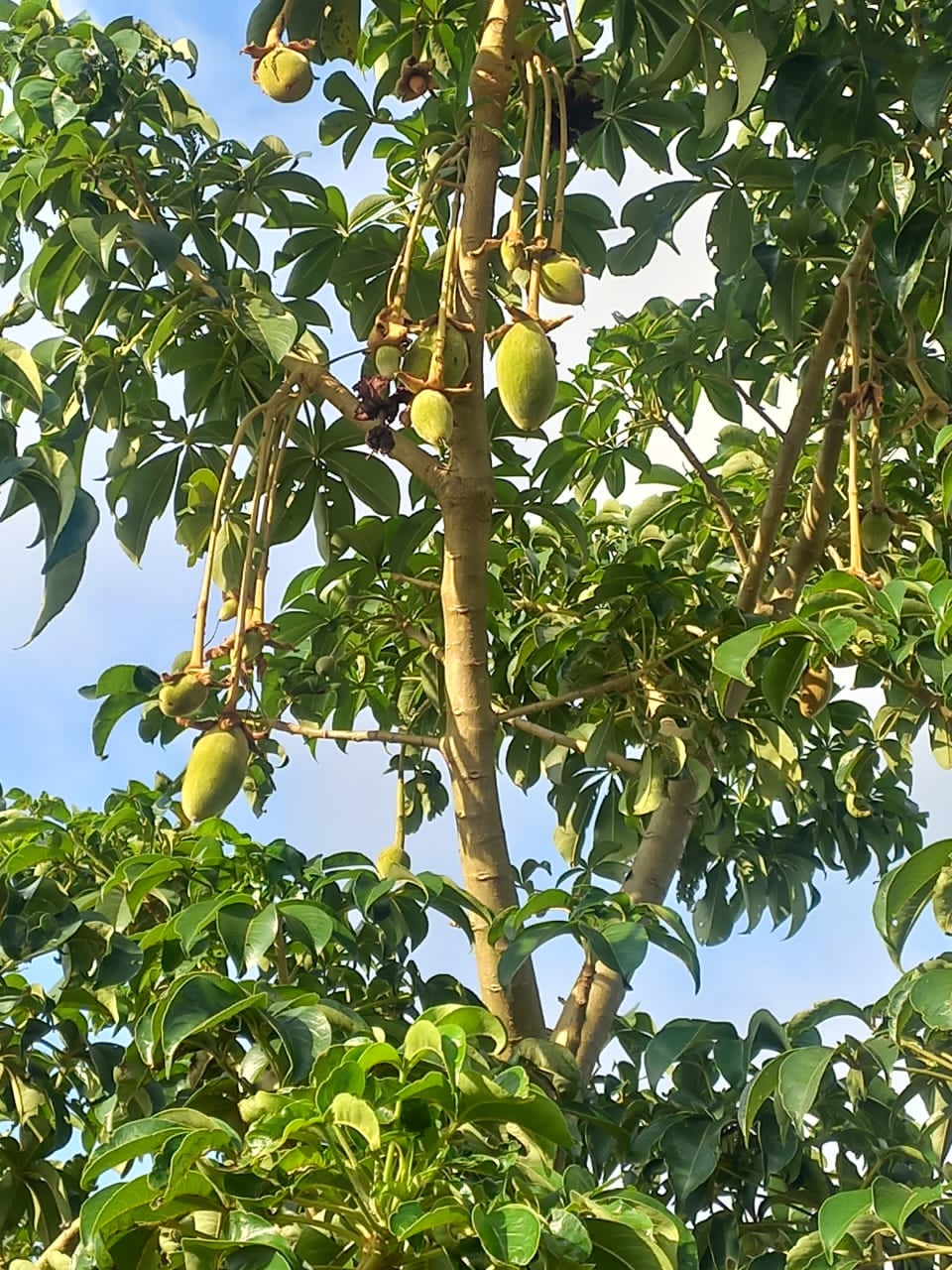
    Baobab is a multi-purpose tree; its fruit pulp, seeds, leaves, flowers, roots and bark are used locally for human consumption. In 2008, the dried pulp harvested from baobab fruit was first approved for sale in the European Union (EU); it has seen high growth since then. Baobab fruit powder is made by grinding baobab dried fruit pulp, the only authorised baobab ingredient in food/health products on the European market.

    The fruit powder contains Several health benefits have been associated with baobab powder. In Europe, it is commonly marketed as a food supplement that increases energy levels, supports immune health and improves digestive and general health.

    It is mostly sold as a fruit powder, while some companies sell baobab powder in capsules, such as the company Bao-Med (the Netherlands). Most baobab powder on the market is organic-certified, as Europe has a limited market for non-certified baobab.

    Baobab powder is used in food supplements because of its nutritional qualities. The company Aduna (United Kingdom) markets baobab powder with the claims ‘rich in vitamin C’, ‘high in fibre’ and ‘baobab is one of the most nutrient-dense foods in the world’.

    The company markets baobab as ‘the feel-good fruit’. Golden Greens also highlights the vitamin C content of baobab, as well as labelling it ‘high in fibre and antioxidants’. Many companies market their baobab powder as ‘suitable for vegans/vegetarians’, as consumers are looking for products without animal-based ingredients.

  • About Proportionality as Principles Expands in Banking

    About Proportionality as Principles Expands in Banking

    About Proportionality as Principles Expands in Banking
    CIBAFI Offers Basel Committee some Insights
    By: Mohammed A. Abu
    The Manama, Kingdom of Bahrain based General Council for Islamic Financial Institutions(CIBAFI) has formally Submitted Comments to the Switzerland based Basel Committee on Banking Supervision (BCB regarding its Consultative Document on “Revisions to the Core principles for effective banking supervision (“Core Principles”) an official statement disclosed in Manama, Thursday.

    CIBAFI noted according to the Press Release, that even though the updated “Introduction to Core Principles” improves comprehension of proportionality, banks still however, express concerns about the way proportionality is applied, particularly as the principles expand.

    Proportionality, CIBAFI also noted, needs to evolve alongside emerging trends and new banking models like Neo Banks and Fully Digital Banks. It is advisable to conduct additional research to uncover specific considerations for applying these principles in the context of these innovative banking models.
    The CIBAFI release signed by its Secretary General Abdellah Belatik said, “We remain at your disposal should you need any further clarifications”, adding, “The General Council for Islamic Banks and Financial Institutions takes this opportunity to renew to the Basel Committee on Banking Supervision (BCBS) the assurances of its highest respect and consideration”.

    CIBAFI is an international body representing Islamic financial institutions globally, who offer financial services and products complying with Islamic rules and principles (Shariah).

    CIBAFI acts as the voice of the Islamic finance industry, and our members comprise more than 130 Islamic banks and non-bank financial institutions, both large and small, from 34 jurisdictions

  • Harnessing the Combined Talents of Africa and the Caribbean for a Brighter Future

    Harnessing the Combined Talents of Africa and the Caribbean for a Brighter Future

    From December 1 & 2, 2023, the leading London-based Business consulting and investment Firm, Wealth Masters Group, is conveying African and Caribbean Private sector to discuss Business and Investment opportunities among themselves during a 2-day virtual event

    Going under the theme “find your purpose, potential, business niche and key strategies needed as African/Caribbean from topnotch entrepreneurs and business owners”,the overall idea behind this virtual summit is to build bridges of understanding and fostering meaningful partnerships, that can harness the immense potential of the combined talents of the two regions, resources, and ideas to create a brighter future for our people and generations to come.

    According to Dr. Benjamin Acheampong, Wealth Masters Group Founder and President, “Africa and the Caribbean have long been vibrant and dynamic regions, rich in culture, heritage, and human potential. Our lands have birthed leaders, visionaries, artists, and entrepreneurs who have made indelible contributions on the global stage.Today, we embrace our shared legacy and embark on a new chapter of collaboration to unlock even greater possibilities”.

    “This unprecedented unique event converges Africa and Caribbean elite business powerhouse, entrepreneurs, start-ups, corporate CEOs, executives of Pan-African Business industries, commercial organizations and financial institutions to discuss Practical Business, industrialisation, partnerships and prospects that can be leveraged to upscale economic dividends among Africans and Caribbean”. Said, Mad. Dorcas James, Summit Executive Director.

    The summit envisions the following key features:
    1. Keynote from successful African and Caribbean business leaders and Heads of States
    2. Daily summit remarks by key partners and sponsors
    3. Master Classes on business creation, growing and financing, and wealth management
    4. Workshops on ACAS focus areas towards generating projects that can be taken forward
    5. Provide a platform for professionals, entrepreneurs, and business leaders from both regions to exchange ideas, explore business opportunities, and promote cultural understanding.

    The event welcomes companies and organisations as partners or sponsors. Our platform has the profile to guarantee your company/organisation the unique exposure and spectrum you dream of Wealth Masters Group appreciates all levels of sponsorship on a first come first served basis: such as discounts packages and others.

    For more information kindly email us at info@wealthmastersgroup.com/www.acachiever.org or call us + 44 1622 809462 or visit our website at www.wealthmastersgroup.com/www.acachiever.org. Socials Media Facebook, LinkedIn and Instagram to discuss summit aspects including sponsorship packages tailored to your business objectives.

  • Africa Business Heroes Spotlight

    Africa Business Heroes Spotlight

    INVESTIV-AFRIQUE PHYTO PLUS  Join Hands

    By: Mohammed A. Abu

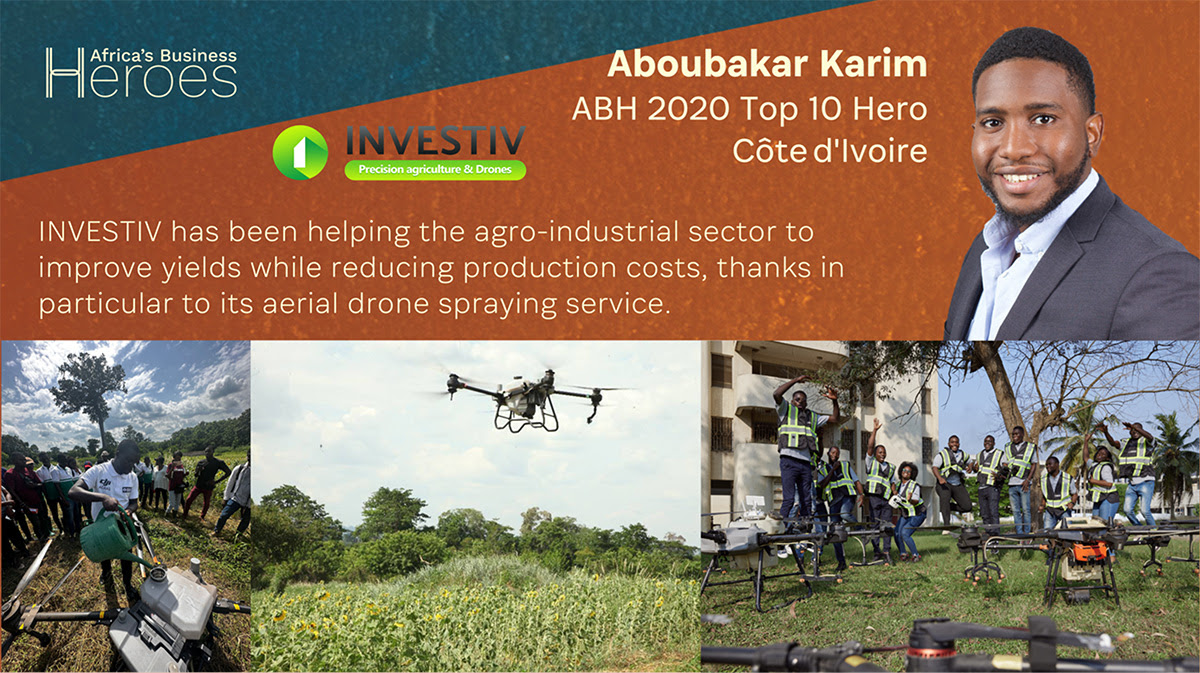
    INVESTIV, a pioneer and leader in drone technology in West Africa, recently raised $800,000 (approx. 500 million XOF) from UK impact fund AGDEVCO and RAJ GROUP Holding to set up precision agriculture service centers for rural populations.

    One of the company’s main challenges is to make its technologies available to small and medium-sized farmers for the production of food crops and perennial crops. To meet this challenge, INVESTIV, in partnership with AFRIQUE PHYTO PLUS, West Africa’s leading distributor of agricultural inputs, has developed a concept called Agrohub.

    An Agrohub is a center offering precision farming services and a range of agricultural inputs. It is set up in villages and production zones in partnership with agricultural cooperatives and has a demonstration plot of around 2 hectares.

    Precision agriculture uses information technology (IT) to ensure that crops and soil receive exactly what they need for optimum health and productivity. This also ensures profitability, sustainability and protection of the environment.

    Precision agriculture (PA) is the science of improving crop yields and assisting management decisions using high technology sensor and analysis tools.

    PA is a new concept adopted throughout the world to increase production, reduce labor time, and ensure the effective management of fertilizers and irrigation processes.

    It uses a large amount of data and information to improve the use of agricultural resources, yields, and the quality of crops (Mulla, 2013). PA is an advanced innovation and optimized field level management strategy used in agriculture that aims to improve the productivity of resources on agriculture fields.

    The Africa Business Heroes is a Jack Ma Foundation’s flagship philanthropic programme in Africa to support entrepreneurs. Its mission is showcase and grow local talent who are creating positive impact in their communities and beyond and inspire a movement of African entrepreneurship.

    Over a ten-year period, the programme will recognize 100 African entrepreneurs and provide grant funding, training programmes and broader support for the broad African entrepreneurial system.


    Africa Business Heroes Spotlight

    Africa’s Business Heroes (ABH) is the Jack Ma Founda

  • Ethiopian Delegation to AFSIC – Investing in Africa 2023

    Ethiopian Delegation to AFSIC – Investing in Africa 2023

    FSD Ethiopia is coordinating a delegation from Ethiopia to attend AFSIC 2023 and will be sponsoring the Ethiopian Investment Summit scheduled for Monday, 9th October 2023.  FSD Ethiopia is a development agency that aims to support the development of accessible, inclusive, and sustainable financial markets for economic growth with a vision to contribute to a thriving financial system that delivers real value to the broader economy and to the people of Ethiopia.

    The Ethiopian delegation includes the key financial sector actors, including the Ministry of Finance, Ethiopian Capital Market Authority, Ethiopian Investment Holdings, Ethiopian Securities Exchange, and Ethiopian Investment Commission– a truly comprehensive grouping and an exciting agenda item to look forward to.

    The Ethiopian summit is organized under the theme “Ethiopia – The New Frontier Market, Opening Doors and Creating Opportunities”.  The summit aims to provide a comprehensive overview of Ethiopia’s emerging opportunities and highlight Ethiopia’s recent economic reforms, favorable investment climate, and growing investment opportunities.

    The high-level officials in the panel will discuss significant developments strengthening Ethiopia’s financial architecture. The event will feature a road show to raise capital for the recently established Ethiopian Securities Exchange (ESX). ESX will highlight opportunities for forming strategic partnerships with financial actors in Africa and beyond. Ethiopia investment holding aims to attract investors and inform global finance practitioners of Ethiopia’s capital market and opportunities.

    The Ministry of Finance will promote its far-reaching reforms to mobilize resources for sustainable and inclusive development, key to Ethiopia’s Homegrown Economic Reform agenda. Ethiopian Investment Commission will exhibit the various investment opportunities and a favorable business environment within the country, accomplished through a comprehensive and strategic approach that highlights the unique advantages of investing in Ethiopia.

    The Ethiopian Investment Summit will be held on October 9th from 12:45 p.m. to 2 p.m. The Ethiopian Securities Exchange will launch its roadshow during the Embassy reception at the Ethiopian Embassy in London on the same evening.

    The Ethiopian country delegation to AFSIC  2023 is a unique gathering of key financial sector players. and the Ethiopian Investment Summit promises to be standing room only. Any interested investors who wish to find out more should ensure they register to attend AFSIC event@afsic.net www.afsic.net

    About the Ethiopian Delegation

     Ministry of Finance (MoF)

    The Ministry of Finance is a Ministry within the Government of Ethiopia responsible fiscal policy, public finance, and external economic cooperation. As per Article 16 of the Proclamation No.1097/2018 Definition of Powers and Duties of the Executive Organs of the Federal Democratic Republic of Ethiopia Proclamation, the Ministry of Finance is given the powers and duties (among others) to formulate economic cooperation and fiscal policies that particularly serve as a basis for taxes, and duties, mobilize, negotiate, and sign foreign development assistance and loans, establish a favorable legislative framework to promote and facilitate the implementation of PPP-financed infrastructure projects by enhancing transparency, fairness, and long-term sustainability, and prepare the Federal Government fiscal budget.

    Ethiopian Capital Market Authority (ECMA)

     The Ethiopian Capital Market Authority (ECMA) is a federal government regulatory authority with its own juridical personality, accountable to the Prime Minister of the Federal Democratic Republic of Ethiopia. It was established in 2021 by the Capital Markets Establishment Proclamation, which provides the legal foundation for the development of capital markets in Ethiopia. The ECMA is responsible for regulating the Ethiopian capital markets.

    Ethiopian Investment Holdings (EIH)

    Ethiopian Investment Holdings (EIH) is a young and dynamic holding company with a mission to create long-term value for Ethiopia. It was established in December 2021 to serve as the strategic investment arm of the Government of Ethiopia and to execute the state’s ownership of commercial assets. It upholds a philosophy of long-term value creation and is committed to transforming Ethiopia’s resources into assets that generate wealth for current and future generations.

     Ethiopian Securities Exchange (ESX) Project Office

    The Ethiopian Securities Exchange (“ESX”) is Ethiopia’s first, and only organized securities exchange. ESX is established as a public-private partnership in line with Article 31 of the Capital Market Proclamation (No.1248/2021) and is licensed by the Ethiopian Capital Market Authority (ECMA).

    ESX operates the business of a securities exchange, functions as a Self-Regulatory Organization (“SRO”), and serves as the central market organizer providing an integrated product suite covering the equities, money markets, and fixed income, segments of the capital markets.

    As the pioneer securities exchange, ESX aims to play a critical role in the development and growth of the Ethiopian capital market. ESX’s core objective is to facilitate access to capital and support effective capital allocation in a manner that supports Ethiopia’s economic growth. By developing a well-regulated and efficient capital market ecosystem, ESX will enable the mobilization of financial resources for the Government, and private sector institutions while providing investors a reliable platform to invest in a reliable and efficient environment.

    Ethiopian Investment Commission (EIC)

    The Ethiopian Investment Commission (EIC) is a government institution established in 1992 to promote private investment, primarily foreign direct investment (FDI). The EIC is an autonomous institution accountable to the country’s Investment Board, which is chaired by the Prime Minister.

    The EIC is committed to creating a conducive environment for investment in Ethiopia. It is working to improve the investment climate, streamline the investment process, and provide better services to investors. The EIC is also working to attract new investors and to expand investment into new sectors.

    FSD Ethiopia

    FSD Ethiopia is a development agency that aims to support the development of accessible, inclusive, and sustainable financial markets for economic growth.

    Established in 2021, FSD Ethiopia works on identifying the underlying factors that contribute to financial system failures, enabling market participants to address these constraints and help build a functional and effective financial sector that contributes to economic growth.

    FSD Ethiopia provides technical assistance, grants, and research insights to policymakers, regulators, and market actors to drive large-scale change in financial markets and support sustainable economic development. It works with public, private, and development partners in the financial sector to address critical system constraints to facilitate change that allows the provision of effective, transparent, stable, and inclusive financial systems. It provides tailored services to help diverse stakeholders achieve their goals and design interventions to make Ethiopia’s financial sector function effectively and inclusively.

    About AFSIC – Investing in Africa:

    AFSIC – Investing in Africa has become perhaps Africa’s most important annual investment event. The event is owned by Africa Events Limited. AFSIC is wholly focused on accelerating Africa’s economic emergence by matching investment opportunities in Africa transforming Africa’s business, trade and investment environment, growing Africa’s economy, reducing poverty, and increasing African incomes in all business sectors at a continental scale across all 54 countries in Africa.

    African Investments Limited (www.africaninvestments.co), a sister company to Africa Events Limited, operates two multi award-winning digital platforms, the AFSIC African Investments Dashboard which matches investment opportunities to our global network of institutional investors and the Africa Business Opportunities Dashboard, which matches business, trade and investment opportunities across Africa covering all business products, sectors, countries in Africa and multiple business objectives. The digital platforms won the global 2022 Salesforce Partner Innovation Award for Financial Services.


  • Property developer to issue Sh3bn Sukuk bond

    Property developer to issue Sh3bn Sukuk bond

    By CHARLES MWANIKI
    More by this Author

    Kenya is set for its first Sukuk bond after the Capital Markets Authority (CMA) approved a Sh3 billion issuance by a firm looking to use the proceeds to develop institutional houses.

    The CMA said that it has granted Linzi Finco Trust the go-ahead to float the Shariah-compliant bond, but did not give a timeline of when the issuance is expected to hit the market.

    Kenya has over the years considered issuing Islamic bonds, otherwise known as Sukuk, to help finance its budget deficit, with corporates also looking to such bonds as part of their capital-raising mix.

    Sukuk bonds, which are tradeable on a securities exchange, differ from conventional bonds by representing a beneficial ownership in the underlying asset, as opposed to a debt obligation in the case of the other bonds.

    Islamic law prohibits interest, so Sukuk bonds offer investors a share in the returns generated by an underlying

    These Islamic bonds are, therefore, suitable for financing housing, energy, healthcare, transport, water and sanitation projects.

    “Linzi Finco Trust, the Issuer of this pioneering Sukuk named Linzi Sukuk that offers an internal return of return at 11.13 percent, is set to raise Sh3 billion with the primary aim of developing 3,069 institutional housing units,” said the CMA in a statement on Wednesday.

    “This landmark Sukuk will contribute significantly to expanding the availability of affordable housing and positively impact the lives of many Kenyan citizens. This innovative financing mechanism is expected to attract both domestic and international investors seeking ethical and socially responsible investment options.”

    The path to issuance of Sukuk bonds in the Kenyan capital markets was smoothed by amendments to various laws in the Finance Act of 2017, including the Income Tax and VAT Acts to provide clarity on the taxation of Islamic banking products in the country.

    Other Acts that were amended to recognise Islamic financial products included The Stamp Duty Act, The Public Finance Management Act, the Co-operative Societies Act and the Sacco Societies Act.

    While the Treasury is yet to use a Sukuk bond in its budget financing programmes, this type of security has been considered among the options available to the country to refinance the $2 billion Eurobond that matures next June.

    A Sukuk would, for instance, allow the State to tap into the Middle Eastern financial market for funding, providing an alternative to the Eurobond and syndicated loan markets whose cost of funds has gone up for smaller markets.

    A number of African countries have dipped into the Sukuk bond market in recent years, enjoying oversubscriptions that demonstrate a demand for such issuances.

    Morocco and Nigeria issued $105 million (Sh15.4 billion) and $327 million (NA48 billion) of Sukuk securities,

    SOURCE

    BUSINESS DAILY,KENYA


  • Opportunity through adversity: Eighth annual Africa Risk-Reward Index highlights the continent’s outlook amid growing geopolitical fragmentation

    Opportunity through adversity: Eighth annual Africa Risk-Reward Index highlights the continent’s outlook amid growing geopolitical fragmentation

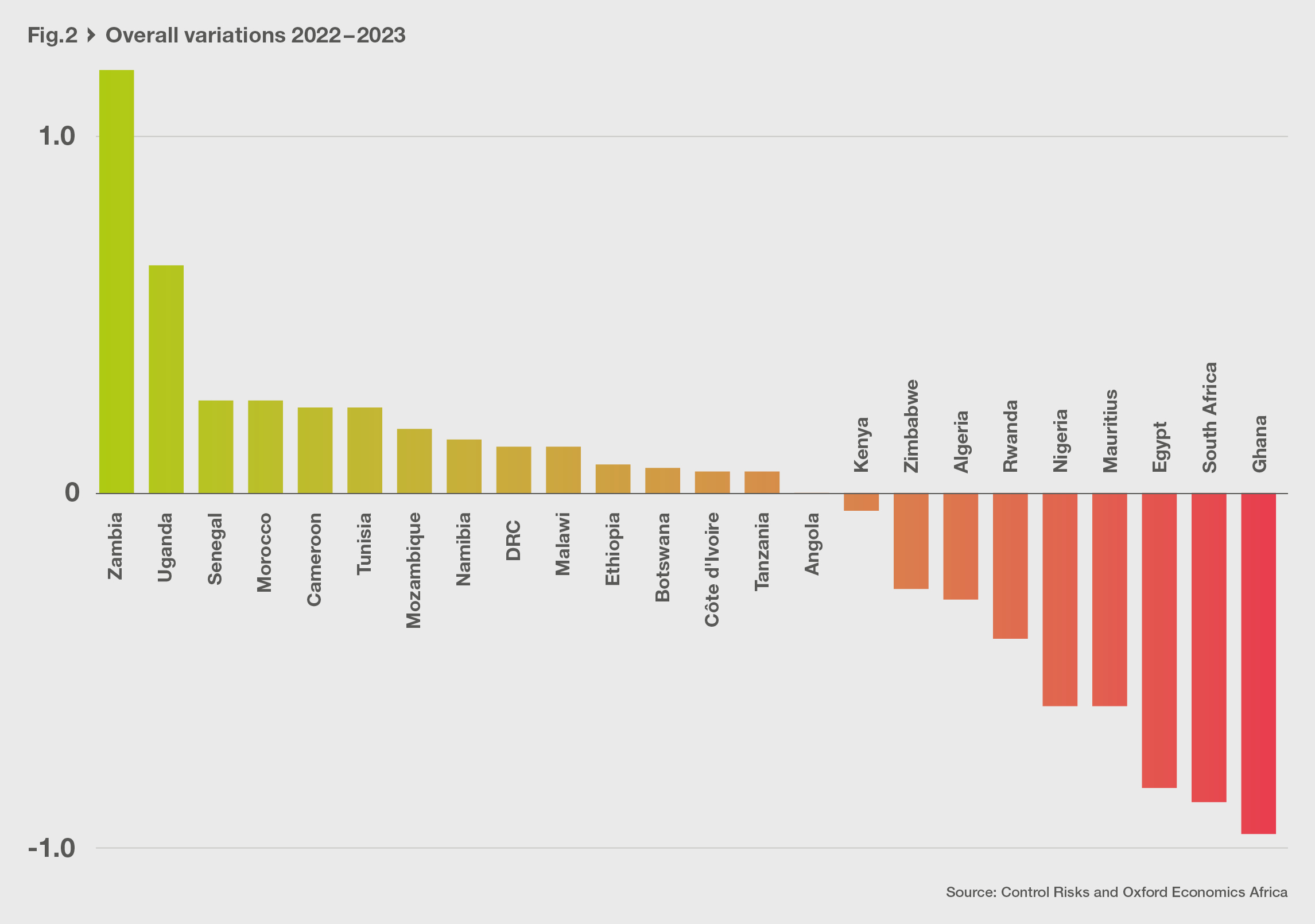
    London, 19 September, 2023: Specialist risk consultancy, Control Risks (www.controlrisks.com), and its economics consulting partner, Oxford Economics Africa (https://www.oxfordeconomics.com/), announced the launch of the eighth edition of their Africa Risk-Reward Index today, themed ‘Opportunity through adversity’.

    The Africa Risk-Reward Index is an authoritative guide for policymakers, business leaders, and investors. The report details developments in the investment landscape in major African markets and delivers a grounded, longer-term outlook of key trends shaping investment in these economies.

    The eighth edition of the Africa Risk-Reward Index is released at a time of geopolitical fragmentation and recent external shocks that will have a sustained impact on the African continent. African nations are contending with the lingering repercussions of the COVID-19 pandemic, disruptions in global supply chains due to the conflict in Ukraine, and a tightening of global financing conditions. According to Oxford Economics Africa, these factors have pushed GDP growth down from 5.4% in 2021 to 3.5% last year. Some of this weakness has persisted into this year, but Oxford Economics Africa anticipates a steady, albeit uneven, pick-up in economic activity in the next 12-18 months.

    The report examines three key themes outlined below, summarising Control Risks’ and Oxford Economics Africa’s views on Africa’s trajectory in the year ahead.

    The profits and pitfalls in polarisation

    The report’s first theme is the impact of global geopolitical fragmentation on Africa. The conflict in Ukraine has upended the geopolitical landscape: Western countries are seeking alliances on their stance against Russia, while Russia is also looking to gain support for its efforts in Ukraine. Beyond the geopolitical heavyweights, other emerging geopolitical “middle powers” are taking an interest in Africa and its rich resource potential. As jostling for influence continues, the shockwaves from the conflict have rippled out in the form of macroeconomic uncertainty and higher inflation, deep anxiety over the interconnectedness of global trade and economic systems, and a desire among global geopolitical powers to distinguish friends from foes.

    Conscious of their growing geopolitical stock, Africa’s largest economies are seeking to balance their desire for neutrality and their need for external financial support, while at the same time seeking to amplify Africa’s voice in global debates. But their attempts at non-alignment are coming under ever greater pressure.  Companies will be required to navigate the resulting regulatory complexity arising from global polarisation, including competing regulatory regimes, sanctions and export controls, and growing scrutiny on companies’ supply chains.

    African-led security interventions

    A collateral effect of the polarisation mentioned above is the upswing in African-led security interventions, which make the report’s second key theme. Global attention is split as the conflict in Ukraine continues, the US-China competition heats up, and countries in the Global North are increasingly focused on their domestic political concerns. The perceived inability of external forces to aid in bringing lasting security is leading African governments and institutions to gradually take on a greater role in responding to security crises on the continent.

    “These changes in tackling insecurity will present challenges for policymakers and businesses in Africa in the coming years. Businesses will be forced to navigate a more complex operating environment where military force, regional competition, and political and business interests are intertwined”, said Patricia Rodrigues, Associate Director at Control Risks. It will require careful monitoring of rapidly evolving security dynamics, and heightened efforts to maintain neutrality and avoid the potential reputational fallout. Operators working in conflict zones will also potentially have to navigate interactions with foreign or private military forces.

    Financing for the future

    We anticipate that increased geopolitical competition will in the longer term translate into new opportunities for African countries, as geopolitical powers seek to extend their influence through financing and investment. However, in the short term, African economies will continue to contend with challenging economic environments, and this will deter the more risk averse investors. Rising inflation and supply-chain constraints have exposed the continent’s imbalances and economic fragilities.

    “The Russia-Ukraine conflict and a tightening in global monetary conditions have unnerved international investors. This has raised concern that economic development on the continent might pause or even regress. One area where this has not been the case is financial services, and more specifically, the expansion of access to financial services through innovation,” said Jacques Nel, Head of Africa Macro at Oxford Economics Africa.

    While foreign investors have somewhat retreated to the perceived safe havens of advanced economies, home-grown African champions are emerging to fill this funding gap and are steadily consolidating their dominance in Africa’s financial services industry. The continent still has a long way to go to reach financial inclusion to the extent seen in more advanced economies. However, financial institutions from regional economic powerhouses South Africa, Egypt, Nigeria, Morocco, and Kenya are stepping in to help bridge access and inclusion divides.

    While the sector is likely to remain attractive for investors, there are still significant risks, including exposure to governance issues, fraud, cyber threats, vulnerability to terrorism financing, and growing international scrutiny of illicit financial flows.

    Methodology

    The Africa Risk-Reward Index is defined by the combination of risk and reward scores that integrate economic and political risk analysis by Control Risks and Oxford Economics Africa.

    Risk scores from each country originate from the Economic and Political Risk Evaluator (EPRE), while the reward scores incorporate medium-term economic growth forecasts, economic size, economic structure, and demographics.

    For details on the individual risk and reward definitions, please contact us at: communicationsEMEA@controlrisks.com or africa@oxfordeconomics.com

    To request a copy of the report please contact: tracy.walakira@apo-opa.com

    Issued on behalf of Control Risks and Oxford Economics Africa.

    For more information, please contact:

    Control Risks

    Claire Peddle
    Marketing Director, Middle East and Africa
    claire.peddle@controlrisks.com
    +971 50 600 5993 (Dubai)

    Oxford Economics Africa

    Shreena Patel

    Public relations and communications officer

    spatel@oxfordeconomics.com

    +44 (0) 7999379025 (London)