Category: COVER

  • “Konkombas and Dagombas Must Talk”-DCRC

    A revised 1930 Dagbon Constitution document currently subject to approval by the National House of Chiefs and onward submission to the Parliament of Ghana,has since generated misconceptions and misunderstandings relating to some part contents of the document. This has resulted into various threatening social media posts bolstered by a radio interview granted by a Konkomba chief triggering response audio recordings and messages from the side of their age-long neighbours,the Dagombas.

    The Dagbon Constitutional Review Committee(DCRC) has from the onset assured that the revised modern day version of the 1930 document equitably caters for the interest and guarantee the liberties of both Dagomba citizens and non-Dagomba citizens, of the centuries old Dagbon Kingdom.

    Non-Dagomba citizens of Dagbon include,the Konkombas,Basaris,Checkosis among others and who have together enjoyed centuries long peaceful co-existence with their Dagomba brethren.

    With particular reference to the Konkombas,they have enjoyed deep historical,nay,blood ties with their Dagomba brethren and it would rather be prudent using dialogue to resolve whatever misunderstandings that might have arisen out of the Constitution document rather than resort to violence more.

    Now read the full DCRC’s Press Release for more details

    The present rising tension between Konkombas and Dagombas is drawing the two sides to the
    brink of armed conflict. Although most people on both sides have seen the looming danger and
    fear the consequences of war, there seems to be no clear path towards constructive
    engagement so far.

    The irony is that after a war and all its horrors and unspeakable suffering,
    the two sides eventually sit down to discuss the issues over which they went to war. Why not
    avoid war by resorting to dialogue as the first option?

    In the raging social media and microphone sabre rattling, dialogue between the two sides
    seems to be viewed as condescension by one side and capitulation by the other. The fact
    however is that condescension or capitulation, as the case may be perceived, will secure the
    welfare of the Konkomba and Dagomba populations better than war.

    The issues at stake have crystalised around the Dagbon constitution which contains some
    centuries old traditions that some Konkombas view as being detrimental to the interest and
    aspirations of the people.

    That therefore provides a basis for the two sides to talk. To this end, it
    is necessary to provide some clarification on the matter as it appears that many people have not
    yet read the constitution and are not seeing things in their right context and perspective.
    The current dispute being a fall-out of the constitutional review exercise, it ought not be
    escalated to the level we are witnessing as there is a specific mechanism for dealing with the
    subject.

    When the review process was launched, it was given wide publicity and calls were made to
    individuals and groups to submit proposals for the exercise. An invitation was extended to the
    Konkomba Youth Association which responded by disassociating itself from the exercise. Some
    submissions were however received from some individual Konkombas.

    Furthermore, KOYA
    declined the invitation to attend the Constitutional Conference in November 2021 which
    scrutinised and adopted the draft prepared by the DCRC. The conference was however
    attended by some Konkombas from Sanguli. It is pertinent to also recall that the conference was
    attended by the Nakpalibor accompanied by an entourage.

    The conference coincided with the
    visit to Yendi of a government delegation led by the Hon. Minister of Defence to Yendi and this
    probably prevented the Uchabobor from attending.

    The DCRC comprises sixteen members and include the paramount chief of Saboba, the
    Uchabobor, and the paramount chief of Nakpali, the Nakpalibor. Even though it had been
    considered that these eminent chiefs had ably represented their respective jurisdictions, wider
    and direct consultations with stake holders in the areas would have added more value to the
    process.

    At a certain stage during the work of the committee, the consultants were accordingly directed
    by the DCRC to widen consultations with stakeholders who were known to harbour reservations
    or misconceptions about the committee’s work to clarify matters to them and to give them the
    opportunity to express their opinions.

    The Consultants visited the palaces of Diyali, Tolon,
    Banvim, and Gukpegu in a first round. The next round of visits started with Mion and should
    have continued to Saboba, Sanguli, Tatale and Cheriponi. It was however deemed prudent not
    to proceed there at the time KOYA was vehement in its rejection of the exercise and could have
    misconstrued the visit as a provocation.

    Some Konkomba opinion leaders indicated that such
    wider consultations would have brought to the fore much earlier the issues we are now
    confronted with today. The review exercise proceeded to the end and the draft of the
    constitution was adopted by the Dagbon Traditional Council whose membership includes the
    Uchabobor and Nakpalibor.

    It was subsequently approved by the Northern Region House of
    Chiefs and submitted to the National House of Chiefs which is yet to consider it for approval. If
    it is approved it is expected to go through the chieftaincy ministry to parliament.

    Some Konkomba stakeholders have been tracking the movement of the constitution and have
    become concerned that they may be bound by it even though they have not availed themselves
    of the opportunity offered earlier to make their views known. Be that as it may, the door is not
    shut on them .

    Instead of the ongoing expression of anger and threats of fierce resistance, a more peaceful
    approach should be resorted to. The DCRC has not been disbanded and the consultants are
    still at work.

    The concerns being expressed on social media could be formalised to include
    specific proposals and submitted to the DCRC through the consultants for consideration. This
    might pave the way for discussions, wider consultations and clarification of the expressed
    concerns and views.

    Until it reaches the end of the approval process which will take some more
    time, the constitution is still in its formative stage. Even when it its completed and gazetted, it will
    be subject to amendments after its first anniversary to take account of new developments. For
    now therefore the issue is a matter for the DCRC to try to manage.

    An appeal is therefore made
    here to Konkombas and Dagombas to de-escalate the matter and give an engagement within
    the framework of DCRC a chance. The media, social media and microphone sabre rattling by
    platform groups, youth organisations and individuals should be put on hold to allow government,
    concerned politicians, chiefs, elders, and opinion leaders to manage the situation.

    WHAT IS IN THE CONSTITUTION?
    It suffices for now to throw light on some of the immediate areas of contention pending any
    detail discussions on them if such engagement becomes possible.

    1.The constitution is a revision of the 1930 constitution. The objective is to update it by
    excluding or modifying traditions and customs that are no longer compatible with contemporary
    times and adding new concepts and practices to enhance and sustain peace, security, unity and
    development.

    2.The 1930 text stipulated Dagombas and classified all the other ethnic groups as ‘Subject
    Races’ under Dagombas. The DCRC expunged the term ‘subject races’ and provided for the
    equality of all ethnic groups.


    3.The 1930 text listed Gimba and Nafeba as distinct ethnic groups. On the advise of the
    Uchabobor, these two groups have been listed as Konkomba.

    4.The constitution contains a list of the different ethnic groups including Konkombas and does
    not consider any of them as Dagombas.

    5.In the matter of enskinment of the chiefs of Saboba, Sanguli, Nakpali and Cheriponi, the
    DCRC requested the respective traditional authorities to define the respective traditional bodies
    that select their paramount chiefs and to further define the ruling families and qualification for
    the skins. This has been done for Cheriponi, Saboba and Tatale. The paramount chiefs of these
    skins are to be selected in accordance with their respective customs by their accredited elders.
    It is the ceremonial installation or swearing in that is performed by Ndan Ya Na by mutual
    consent.

    6.t is worthy of note that the paramount chiefs of Saboba, Sanguli and Nakpali are responsible
    for the enskinment of their lower chiefs and elders. In a few cases however some chiefs under
    these paramount chiefs are still enskinned by Dagomba chiefs outside those paramountcies as
    had been the practice before the creation of the paramountcies. It is therefore not the case that
    all Konkomba or Basari chiefs are selected and enskinned by Dagomba chiefs.

    7.Currently all paramount chiefs and some divisional chiefs are members of the Dagbon
    Traditional Council. The new constitution provides for all paramountcies to eventually establish
    their own traditional councils subject to the appropriate conditions being available. That
    recognises the eventual creation of traditional councils for Cheriponi, Sanguli, Saboba and
    Tatale which will hold meetings to discuss their traditional affairs, adjudicate their traditional
    judicial matters and pass their own resolutions without the involvement of Dagombas.
    8.The name Dagbon is a geographical concept that recognises the separate existence of the
    different ethnic and cultural groups. It is therefore a multi-ethnic and multi-cultural entity based
    on peaceful coexistence.

    9.On the matter of land, the 1930 constitution described Ndan Ya Na as the alloidial owner of
    the lands encompassed in the geographical area known as Dagbon but it is clearly stated that
    the lands are held in trust for the all people living on it through the various paramount chiefs,
    divisional chiefs and village chiefs.

    This old tradition preceded colonialism by many centuries
    and had merely been captured in the 1930 constitution and carried over into the revised
    constitution.

    The respective ethnic groups who have historical roots in the lands they occupy
    are not constrained in any way by the new constitution which upholds the status quo. The new
    constitution does not seek to dispossess any group of its historical right to the land, Ndan Ya
    Na’s alloidial ownership of the lands not withstanding.

    Beyond the contested issues the constitution encompasses wider provisions governing
    security, peace, unity and development whose implementation should inure to the benefit of all
    the ethnic groups if genuine efforts are made to find common grounds that will put an end to
    disagreements and conflict.

    As the way forward, Konkombas and Basaris stakeholders are urged to engage with the DCRC
    through its consultants to discuss the issues of contention.

    The consultants are ready to
    continue the round of consultations that was truncated as mentioned above on mutually agreed
    dates and venues arranged in collaboration with Northern Region Peace Council which had
    made similar arrangements for the previous engagements in the aforementioned places.

    With the ravages of climate change, underdevelopment and the looming threat of terrorism,
    there is no worse time for conflict than now. It must be avoided at all cost in the spirit of the
    peace accord that was signed by Konkombas and Dagombas in 1995 in the wake of the the
    1994 war. Konkombas and Dagombas have no better option than living in peace with each other.

    Ambassador Ibrahim Abass
    Spokesman for DCRC Consultants
    On authority of the DCRC Chairman, Na Yaba Kuga Na Abdulai I.
    5TH JULY 2023, TAMALE

  • EEA Responds as ISSB makes Climate Risk Disclosure Mandatory for Hospitality Sector

    EEA Responds as ISSB makes Climate Risk Disclosure Mandatory for Hospitality Sector

    Story: Mohammed Abu, Accra.

    The London, UK based Energy & Environment Alliance (EEA) has lauded, the issuance of the inaugural standards, IFRSS S1 and IFRS S2 yesterday by the International Sustainability Standards Board(ISSB) while also noting that, this moment marks the beginning of a new era in which sustainability action and disclosure is no longer voluntary but now mandatory.

    IFRS S1 provides a set of disclosure requirements designed to enable companies to communicate to investors about the sustainability-related risks and opportunities they face over the short, medium and long term.

     IFRS S2sets out specific climate-related disclosures and is designed to be used with IFRS S1. Both fully incorporate the recommendations of the Task Force on Climate-related Financial Disclosures (TCFD).

    Ufi Ibrahim, CEO, EEA, in an official statement issued in London, Tuesday, notes, “The new standards which initially focus on materiality disclosure, will transform business as usual, embedding sustainability and broader ESG considerations in every aspect of running a business. S1 and S2 will come into effect in the 2024 financial year; so, that gives us just a few months to prepare the hospitality industry for adoption of the new disclosure rules.”

    The EEA, the statement disclosed, has already established a working group of industry leaders and experts to deliver meaningful guidance to EEA members and to work with the IFRS and ISSB on the development of sector specific standards.

    “It is critically important that our industry unites to provide collective and considered input to the IFRS process because the new requirements will impact all our businesses and all our asset values”, Ufi Ibrahim intimated.

    “With this formal announcement, the Alliance calls on industry leaders, investors and risk and compliance officers to support the EEA working group”, she added.

    EEA has been established to help the global hospitality industry achieve net zero carbon and ESG (environmental, social and governance) stewardship,

  • Investing in Africa Conference & Expo 2023 Gets Set

    Investing in Africa Conference & Expo 2023 Gets Set

    Now in its 10th year, AFSIC – Investing in Africa is set to host another world-class gathering of Africa-focused businesses, dealmakers and investors to discover and execute investment deals, network and share insights in London on 9-10th October 2023.

    IFC, Accion, Verdant Capital, RMB, Old Mutual, Citibank and more than 120 speakers are confirmed to present exceptional content in a highly structured, multi-stream programme which includes focused sessions on Banking, Informed Investing, Building, Fintech Innovation, Sustainable Growth, Agriculture and Power.

    The highly popular country investment summits led by in-country experts facilitate deep dives into specific African countries to explore and debate local issues and investment opportunities with interactive Q & A sessions.

    Underpinned by the Award-Winning AFSIC African Investments Dashboard, the expanded Quickfire sessions and investor networking sessions will showcase a wide range of African start-ups, growth companies and Africa-focused funds that are seeking capital, for a variety of different projects from zero emissions logistics solutions to secure payments systems to SME-target funds. Quickfire presenters benefit from a range of promotional opportunities across the group’s investor network in the lead up to AFSIC.

    British International Investment, Executives in Africa and FSD Africa head up an impressive group of loyal sponsors and partners with 27Four, Ebury, Mitco and Bank One welcomed as new sponsors for 2023. These sponsors exemplify African expertise in investment, financial services and human resources and will share key insights into the African investment ecosystem.

    The beating heart of physical events is physical networking which at AFSIC is driven by highly interactive sessions, panel debates, B2B meetings via the Event App and social functions.

    Don’t miss out on networking at the leading gathering of Africa-focused investors. Listen, learn and debate at presentations, country summits, quickfire pitch sessions, networking sessions, informal chats and social events – all making AFSIC 2023 an unmissable opportunity.

    AFSIC 2023 www.afsic.net

  • CHIC Implements Accor digital solutions across owned portfolio in DRC

    CHIC Implements Accor digital solutions across owned portfolio in DRC

    Five hotels, including Novotel Kinshasa La Gombe will integrate Accor’s innovative digital solutions including mobile solution Accor key and Opera cloud systems 

    Compagnie Hoteliere et Immobiliere du Congo (CHIC), the leading hotel owner and developer in the Democratic Republic of Congo (DRC), at  AHIF 2023 in Nairobi, Kenya, announced the implementation of Accor driven digital solutions covering five hotels of the CHIC group, opening soon under under the Novotel and Ibis Styles brands across 4 cities, bringing 660 keys to the country. 

    This implementation, according to the official statement, aims to offer a unique experience to customers, due to the deployment of Accor’s innovative digital solutions which will be the first in DRC to integrate cloud solutions with mobile keys and Opera Cloud systems.

    These solutions, it noted, will facilitate “Fast Check-in and Check-out” for guests and allow them to access their room via their smartphone offering the option to avoid visiting the Front office as well as benefit from latest guest centric tools, fully mobile with optimized management of hotel operations. The move will further assist in reducing the ecological footprint of the hotels by limiting the use of paper and magnetic cards

    “We are delighted to partner with Accor, a major player in innovation in hospitality, to offer our customers an unprecedented experience in the DRC. The decision to bring the Accor Key and other cloud-based solutions to our hotels demonstrates our commitment to invest in cutting-edge solutions that exceed the needs and expectations of travellers, staying at any of our five hotels across DRC,” says Mr. Khalil Manji, Partner – CHIC”.

    “This strategic partnership with CHIC strengthens our presence and leadership in the DRC, a key market in Africa. We are proud to collaborate with a renowned hotel group that shares our vision of augmented hospitality and our commitment to sustainable development”, We are convinced that our innovative digital solutions will add value to the hotels of the CHIC group”, says Clinton Govender, IT Director Southern Africa at Accor

    The digital key solution allows customers to use their smartphone to open the doors of ACCOR hotels. Without a physical key, they can enter their room, the meeting rooms, the elevators and other spaces. The application is compatible with Android and iOS systems and is integrated with the Accor ALL Loyalty application.

  • State Visit Maldives – President Ramkalawan holds talks and conducts visits as part of Maldives State visit

    State Visit Maldives – President Ramkalawan holds talks and conducts visits as part of Maldives State visit

    14 June 2023 | Foreign Affairs

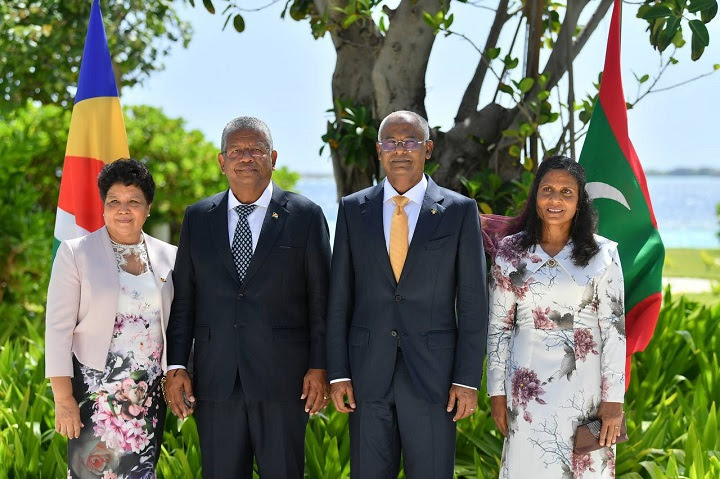
    Male, Maldives 14 June: President Ramkalawan, as part of his State visit in Maldives, held various discussions with various senior government officials and visited tourism establishments as part of his tour of the island nation.

    Amongst some of the high-level officials President Ramkalawan met with were the Vice-President of the Republic of Maldives, His Excellency Hon. Faisal Naseem, the Speaker of the Parliament of the Maldives, His Excellency Hon. Mohamed Nasheed and the Maldivian Minister for Foreign Affairs, His Excellency Hon. Abdulla Shahid.

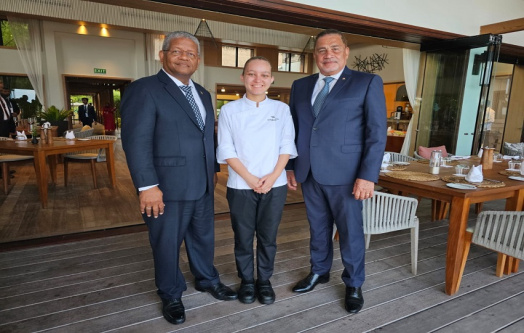
    Whilst visiting tourism establishments, the President took the opportunity to visit and interact with the two young Seychellois currently undergoing work-based training at Waldorf Astoria, Maldives; Mr. Samuel Marie and Ms. Naomi Payet. Mr Marie and Ms Payet are on the ‘Fitir’ program by Hilton Labriz Silhouette and were the two top participants from their cohorts nominated for the internship. The President and the First Lady also met with Ms Serena Mangroo a Seychelloise currently working in the Maldives for the past five years.

    The President also visited the Trans Maldivian Airways seaplane operation which is the world’s largest seaplane fleet. This was an opportunity for him to view their full operation and experience first-hand how the seaplane inter-island transfers are done in the Maldives and discuss possibilities of exchange. 

    Accompanied by the Minister for Foreign Affairs and Tourism, Mr Sylvestre Radegonde,  President Ramkalawan also toured various island resorts and held discussion on sustainable tourism practices being implemented by the Maldives. 

    Source:(State House News)

  • Hospitality Leaders discuss supply chain challenges at AHIF 2023

    How intra-African trade measures, technology and a new generation of hospitality leaders are challenging “business as usual” 

    Date: 14 June 2023

    For too many years, African hospitality leaders have worked incredibly hard to maintain operational standards when critical products are unavailable to be sourced on time due to a myriad of reasons, from changing trade restrictions, poor transport infrastructure, currency fluctuations, and supply chain breakages.

    This week leaders across the hospitality sector have descended into Nairobi city, the vibrant capital of Kenya and hub of East Africa, to join the annual African Hospitality Investment Forum (AHIF) to discuss growth opportunities in the region, and to share their learnings from the last year including developments across the trade and operational landscape. Attending is Toggle Market’s CEO, Fuad Sajdi, and VP of Africa, Abraham Muthogo Kamau, where they have been leading discussions on leveraging local and regional sourcing, and the innovative ways the sector is reducing operational costs.

    Supply chain challenges in Africa have been one of the primary obstacles for economic growth and diversification, with businesses continuing to pay inflated prices for nearly every consumable and operational product that is not locally grown or manufactured – where even then it is more profitable to export outside the continent than to cater to the regional market due to weak intra-trade regulations.

    Today there are promising signs that this status quo is changing fast.

    The African hospitality industry is in the throes of a massive transformation. The catalysts? Ground-breaking trade measures, rapidly evolving technology, and a fresh generation of visionary leaders. These forces are challenging the traditional “business as usual” mindset and reshaping the African hospitality landscape.

    The African Continental Free Trade Area (AfCFTA), the largest free trade area globally since the formation of the World Trade Organization, is set to significantly bolster intra-African trade. By reducing trade barriers, it allows a more fluid movement of goods, services, and people across borders. The ripple effect will be profound, with the hospitality sector one of the many industries reaping the benefits of this regional integration.

    Breaking with the Past

    The lessons of the Covid-19 pandemic have been harshest on the world’s largest continent which has for so long relied on suppliers in far flung countries, most heavily on goods from China, European Union (EU) countries, United States and India.

    Take for instance South Africa which remains the largest importing country in Africa at 17% of all imports in the region. Its largest import partners in 2023 were China at 21.9%, followed by United States at 8.8%, Germany at 7.3%, India 5.8% and the UAE 3.6%.[1] The next largest importing countries are Nigeria, Egypt, Morocco, Kenya and Ghana.

    The elephant in the room is that Intra-African trade still stands at only 15.2%, a poor showing when compared with intra-continental trade figures for America, Asia, and Europe, which stand at 47%, 61%, and 67%, respectively, and which should be at the head of the pan regional efforts to support trade and business. Much of this is due to multiple trade restrictions that exist in the region and between neighbouring countries for instance.

    The recent World Bank 2022 AfCFTA report[2] shows that the borders between African countries rank among the most restrictive in the world and is the main reason there is relatively little intra-African trade and investment.

    The impact of this in real terms is putting the break on the growth of regional businesses while limiting the flow of the international supply chain which in turn heavily relies on intra-African trade routes (where goods are transported across several borders by land routes) due to poor infrastructure and lack of trade and custom harmonisation.

    For locally grown African hospitality investors and operators, the supply chain challenges remain acute, and ramifications have meant consistent delays in the growing pipeline of projects, along with sometimes turbulent price fluctuations on shipping and logistics services, as well as effects of weakened domestic currencies.

    Our research across Toggle Hospitality clients in Africa has shown examples of multiple duties paid in this way to receive goods crossing several borders resulting in highly inflated pricing for essential products and equipment.

    Trade Cooperation and Collaboration

    The good news is that there are signs across all industry sectors of more joined up thinking and increased regional cooperation. For instance, amongst East African nations there has been a noticeable increase in activities across both government backed and private sector efforts through the multiple alliances that exist such as the East Africa Business Council, the East African Chamber of Commerce and Trade, and the East African Association.

    In addition, the highly lauded and anticipated rollout of the African Continental Free Trade Area (AfCFTA) agreement is geared to be the largest free trade region in the world based on the number of countries – at once connecting 1.3 billion people across 55 countries with a combined gross domestic product (GDP) valued at US$3.4 trillion and with a major potential as well to lift over 30 million people out of the poverty line.

    For this to succeed there will need to be mutual and significant policy reforms and trade facilitation measures to reduce red tape, simplify customs procedures, and make it easier for African businesses to integrate into global supply chains. The upside is a boost of income gains around $300 billion.

    The role of technology and the importance of a knowledge-based economy will increasingly be a driving force for transforming economic prosperity. The latest report from UNCTAD has warned that neglecting the high knowledge-intensive services, such as information and communications technology services and financial services, will be a key reason holding back export diversification in Africa.[3]

    A new generation of hospitality leaders in Africa making waves

    One of the most exciting outcomes of more regional integration is the rise of home-grown hotel chains that are now expanding beyond their respective national borders. In 2022, intra-African travel accounted for 40% of the total number of hotel guests in the continent, up from 34% in 2019, according to the African Development Bank. This increase is partly attributable to the easing of travel restrictions and the growth of African hotel chains.

    The United Nations World Tourism Organisation (UNWTO), forecasts 134 million visitors by 2035. These figures make it the second fastest growing region in tourism after Asia Pacific.

    This new wave of hospitality brands is being led by a dynamic generation of African leaders who understand the local markets and are at the forefront of developing more viable value-based networks and forging stronger regional partnerships. These individuals are harnessing the benefits of the AfCFTA, using innovative practices to enhance the hospitality experience with a unique African flavour that can cater better to the African consumer needs while at the same time offering global standards of service. For example, today over 80 percent of safari lodges in South Africa are managed by indigenous brands and a part of the tourism sector that generates around 70 percent of hospitality revenue. This segment is growing rapidly across the region.

    “There is a major paradigm shift taking place with progressive trade policies and cutting-edge technology. This new generation of leaders are poised to redefine the essence of hospitality in Africa. We are delighted to be participating this year at AHIF 2023 which continues year on year to help shape the African hospitality industry and spotlight investment opportunities,” said Abraham Muthogo Kamau, VP of Africa at Toggle Market.

    Technology is a driving force behind this transformation. Digitization is permeating every facet of the hospitality experience from reservation systems to room service, with growing numbers of hotels now using a form of smart-room technology or employing AI-driven services such as chatbots for customer service and offering mobile apps for reservations and in-stay services.

    The integration of technology has also enhanced efficiency and sustainability within the sector. African hotels can see up to 30% increase in energy efficiency and 25% reduction in water usage, thanks to the adoption of smart technologies.

    Although Africa only receives 5% of the regional share of worldwide tourism,[4] this number is rising after the Covid slump with 2022 seeing 47 million tourists returning to the continent after the high of 69 million in 2019. UNWTO forecasts 134 million visitors by 2035 making it the second fastest growing region in tourism after Asia Pacific. There is also robust and growing domestic tourism within Africa as increasingly middle-class families and younger travellers opt for more local and regional travel.

    The supply chain, too, has been revolutionized by both trade facilitations and technology.

    A recent survey revealed that the average lead time for supply delivery dropped by 15% in 2022. This improvement is due to more streamlined cross-border processes and the implementation of digital supply chain management systems. Moreover, the increased use of this technology has led to more resilient and responsive systems. More hotel chains can now track their supply deliveries in real-time, forecast demand more accurately, and react swiftly to changes in the market.

    The wave of change isn’t confined to the large chains alone. It’s being felt in every corner of the industry, from boutique hotels in Accra that blend modern design with traditional Ghanian culture, to eco-friendly lodges in the Maasai Mara that champion sustainable tourism.

    As intra-African trade continues to flourish and the technological landscape evolves, the African hospitality sector is preparing for an exhilarating future. This new era is being ushered in by ambitious, tech-savvy leaders who are ready to shake off the old and bring forth the new.

    Source:(The Bench)

  • Radisson Hotel Group announces seven new hotels in Africa for the first half of 2023, maintaining its growth momentum across the continent

    Radisson Hotel Group announces seven new hotels in Africa for the first half of 2023, maintaining its growth momentum across the continent

    Radisson Hotel Group continues its ambitious growth in Africa with the signing of seven new hotels, adding over 1,400 rooms to its African portfolio.  

    The new hotels expand the Group’s brands, spanning from upscale to premium luxury lifestyle with a new market entry in Gambia and the introduction of new brands in key markets with the first Radisson Collection in Nigeria and Egypt, the first Radisson RED hotel in Nigeria, and the introduction of the Radisson brand in Kenya.   
    As one of the fastest-growing hotel companies in Africa, Radisson Hotel Group plans to further strengthen its robust African presence this year beyond signings with at least seven hotel openings and over 1,400 rooms.

    These openings include the Group’s first hotel openings in Reunion Island and Ghana and expanding its resort presence in Casablanca and Saidia in Morocco as well as in South Africa, Egypt and Tunisia.   Elie Younes, Executive Vice President and Global Chief Development Officer at Radisson Hotel Group comments: “Thanks to the relevance of our brands and trust of our owners, we have a successful growth momentum in Africa thus far, this year. With the continent remaining a focus market for us, we are committed to further contribute to the African hospitality industry, providing more possibilities to our guests and employment opportunities to the local communities.’’  
    Speaking at the Africa Hotel Investment Forum in Nairobi, Ramsay Rankoussi, VP, Development, Africa & Turkey at Radisson Hotel Group said: “We are thrilled to be maintaining our growth momentum across Africa, bringing our tally of new signings for 2023 so far to seven hotels and over 1,400 rooms.
    An even better indication of our growth is the materialization of our pipeline into openings, where we have led consistently the biggest market share for the last 36 months, translating to a commendable 15 percent growth on our African portfolio, year-on-year, placing us well on track to reach our objective of 150 hotels within the next five years from 100 hotels today. Our rate of materialization and openings is a testament not only to the quality of our pipeline but also reflects our conversion strategy in repositioning existing hotels under one of our brands. We are also proud to further entrench our stance as the operator with the most extensive presence in Africa with once again a new market entry as the only hotel operator.”
      The new hotel signings include:
    Radisson Collection Resort, Marsa Alam Port Phoenice Scheduled to open in early 2025, the resort, which introduces Egypt to the Group’s premium lifestyle brand, Radisson Collection, will be situated in Port Phoenice on the Red Sea, 
    a waterfront premier integrated resort community boasting luxury residents, golf estates, water activities, retail centers, hospitals, and schools and easily  accessible from Marsa Alam International Airport (only 35 minutes’ drive away).

    The resort location makes it an excellent spot for a vacation, with venues for dining, entertainment, boutique shopping, cultural expedition, activities, and lively nightlife located all nearby. The newly built resort will comprise of 294 rooms, including 20 suites, all carefully curated with a mix of Mediterranean and Italian architecture.

    The resort will offer a lobby lounge, one all-day dining restaurant, one high-end specialty restaurant, as well as a stunning beach restaurant, and a beach bar with mesmerizing sea views. The resort will also offer a fitness center, diving center, a theatre, kids club, several pools, and direct access to the beach.
    Radisson Collection Hotel & Conference Center, Abuja The new-build, 249 room hotel will be Abuja’s first luxury hotel and will further expand the Group’s Radisson Collection portfolio in Nigeria as the country’s third Radisson Collection hotel 
    and the premium lifestyle brands debut in Abuja. The hotel will have an expansive range of rooms, from standard rooms and apartments to lofts and presidential suites. Spanning across almost 3000 square meters, the meeting spaces will consist of a dividable conference hall, five meeting rooms, a board room, as well as a pre-function area.

    Located next to the Presidential Palace in Maitama District, one of the most sought after and exclusive areas in Abuja, the hotel will be a 45-minute drive from the Nnamdi Azikiwe International Airport, the country’s second busiest airport after Lagos. In proximity to the hotel is the city’s most popular market, Wuse market, Jabai Boat Club, a water based recreational facility and family entertainment center, and Abuja National Mosque, also known as the Nigerian National Mosque, built in 1984.  
    Radisson Blu Beach Resort & Spa, Banjul The new-build, 462 room hotel currently under construction, marks the Group’s debut in Gambia as the first internationally branded hotel in the country. 
    Scheduled to open early 2025, the resort will be located in the Bijilo region in Banjul, the country’s capital city, spanning over 17 hectares with direct access to the ocean, surrounded by tranquil, picturesque landscapes.

    The resort will offer large, contemporary rooms, presidential apartments, and royal villas as well as five food and beverage outlets, including a cocktail bar, an all-day dining restaurant, a specialty restaurant, poolside restaurant and beach bar.

    Other hotel facilities will include a fitness and wellness center.  The 3,025 square meters meetings and events space with beach access, will consist of a conference hall, 12 meeting rooms, conference room, board rooms, reception, pre-function area and banquet showroom.
    Radisson Blu Hotel Abuja CBD Following the recent signing of Radisson Collection Abuja, is the announcement of the first Radisson Blu hotel in Nigeria’s capital city, the Group’s 10th hotel and 3rd Radisson Blu in Nigeria.
    The 104-room hotel, scheduled to open early-2025, will be in Abuja’s Central Business District (CBD), 45 minutes from the Nnamdi Azikiwe International Airport.  The hotel will have a stylish piano bar and an all-day dining restaurant along with fitness and wellness facilities and 245 square meters of meetings and events space.
    Radisson RED Lagos VI Further expanding the Group’s presence as its 11th hotel in Nigeria and 7th hotel in operation and under development in Lagos, is the highly anticipated debut of the bold and cutting-edge upscale Radisson RED brand in Nigeria.
    The new-build, 62 room hotel scheduled to open end-2025 will introduce the country to the renowned Radisson RED brand and its unique food and beverage concepts through its lobby bar, all day dining restaurant and rooftop bar and terrace which in true Radisson RED style will become the most coveted rooftop venue in the country. 

    Additional facilities will include a gym and pool along with 249 square meters of flexible meetings and events space, consisting of a conference room, a board room and two meeting rooms. The hotel will be located just over 30 minutes’ drive from Lagos Murtala Muhammed Airport, in Victoria Island, the main business and financial center and one of the most sought-after residential areas in Lagos, which has the highest hotel performance in West Africa due to its financial hub status and size of its economy.
    Radisson Hotel Nairobi Airport The Group’s 4th hotel in Kenya and first Radisson property in the country, is the new build, 200 room Radisson Hotel Nairobi Airport, scheduled to open mid-2027. With proximity to JK International Airport, the property will be easily accessible to tourists as well as business travelers. 
    It is also 22km from Nairobi National Park, the only national park in the world in proximity to the city. The hotel will have a lobby bar and an all-day dining restaurant as well as extensive facilities including a gym, spa, pool, retail unit and crew lounge. The meetings and events area will consist of a conference room, two meeting rooms, a board room and a business center.
    Radisson Hotel Algiers El Mouradia Marking the Group’s second hotel in the country, complementing the Radisson Hotel, La Baie d’Alger, currently under construction and bolstering the limited internationally branded hotel supply in Algiers is the country’s second Radisson hotel, scheduled to open mid-2026
    Located in the sought after El Mouradia district, known as the home of the Algerian presidency, several ministries and embassies, the 148-room hotel is also in proximity of the city center and Port of Algiers, standing as the main port of Algeria and just 15km west from Algiers International Airport.  

    With an array of food and beverage outlets, the hotel will include an all-day dining as well as a signature restaurant, a juice bar and sky bar all with flowing terraces and a coffee bar and coworking space, in true Radisson style, providing the balance between work and leisure. Further enhancing this concept is the meetings and events space which will consist of a ballroom, a conference room and 4-5 meeting rooms and the leisure facilities, comprising of a swimming pool, retail area, spa, hair salon and sport & fitness gym 
    MEDIA CONTACTS   SAADIYAH HENDRICKS, Area Director, PR & Social Media, Middle East & Africa, Radisson Hotel Group saadiyah.hendricks@radissonhotels.com   DEVELOPMENT CONTACT   RAMSAY RANKOUSSI, Vice President, Development, Africa & Turkey, Radisson Hotel Group Ramsay.rankoussi@radissonhotels.com          
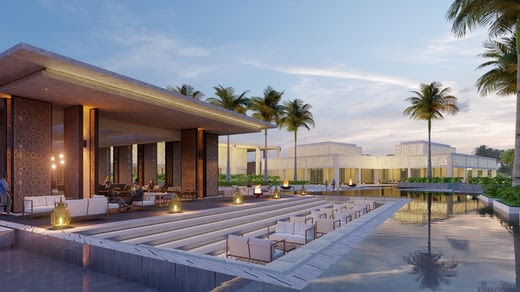
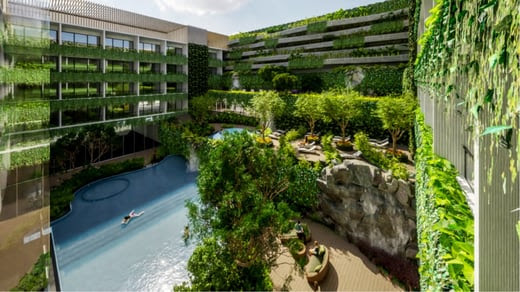
  • Radisson Hotel Group:7 New Hotel Signings in Africa in Pictures

    Radisson Hotel Group:7 New Hotel Signings in Africa in Pictures

  • CIBAFI and the Securities and Commodities Authority Successfully Launch a Joint Technical Workshop on Digital Transformation Strategy in Dubai, UAE

    CIBAFI and the Securities and Commodities Authority Successfully Launch a Joint Technical Workshop on Digital Transformation Strategy in Dubai, UAE

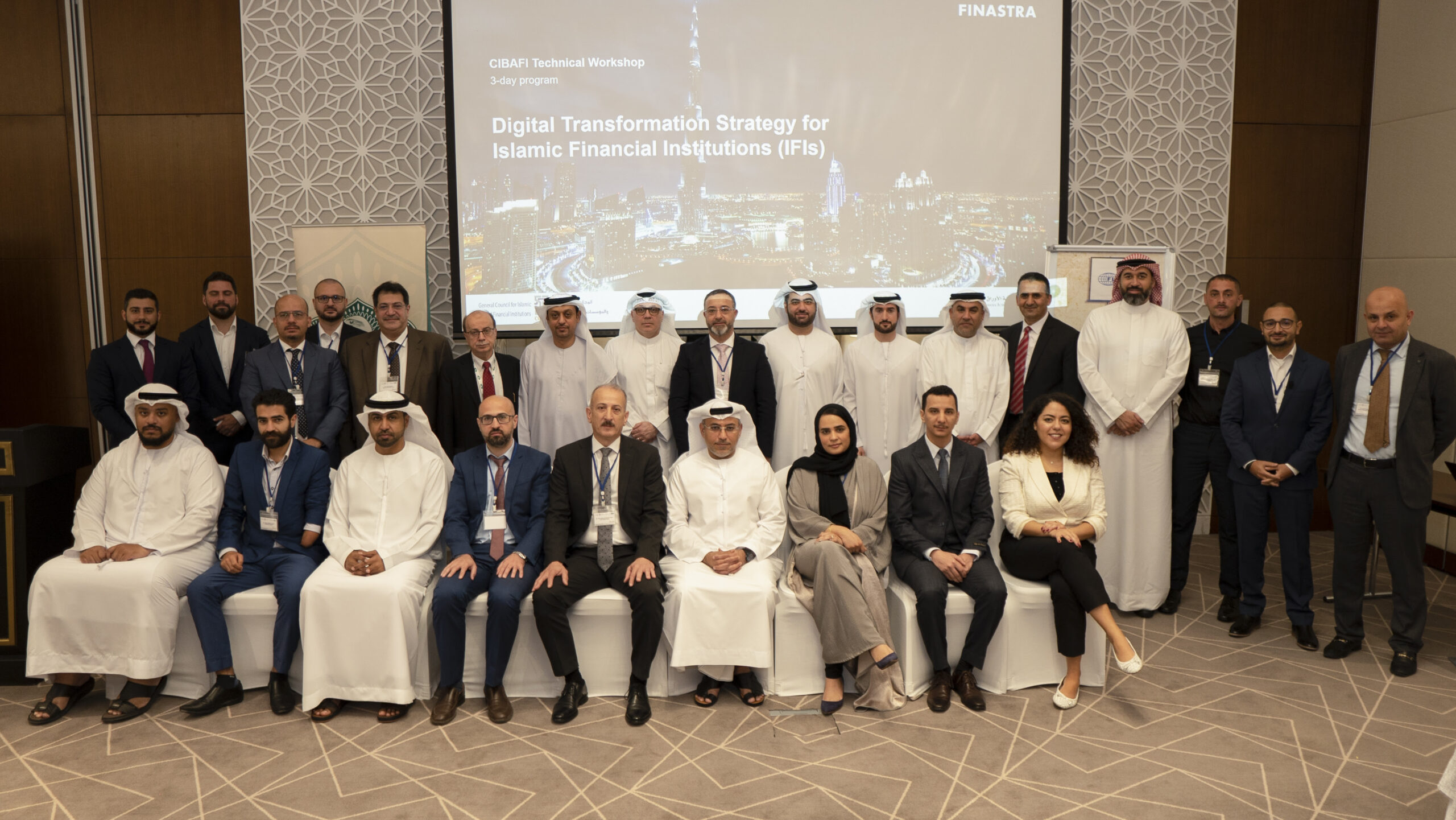
    12 – 14 June 2023, Manama, Kingdom of Bahrain, Abu Dhabi, UAE | The General Council for Islamic Banks and Financial Institutions (CIBAFI), the global umbrella of Islamic financial institutions and the Securities and Commodities Authority, have successfully launched their joint Technical Workshop today in Dubai, UAE.

    This Technical Workshop is themed: Digital Transformation Strategy for Islamic Financial Institutions (IFIs). The workshop is organised with the support of Finastra for three days.
     
    Building on the success of the first edition, which took place in Bahrain in the last quarter of 2022, CIBAFI has conducted the second edition of this workshop, incorporating new content, case studies, and practical examples.

    This joint technical workshop aims to reinforce cooperation between CIBAFI and the Securities and Commodities Authority in developing the Islamic financial services industry (IFSI).

     The two institutions have signed an MoU to seal their commitment in providing initiatives and activities aimed at addressing and enhancing understanding of emerging topics and issues in the industry.

    Commenting on the workshop, Dr. Abdelilah Belatik, Secretary General of CIBAFI said: 
    Our collaboration with the Securities and Commodities Authority is a keen manifestation of our commitment to work with industry leaders in providing the necessary support for the IFSI. We are delighted to hold the second edition of this workshop in Dubai to emphasise on the paramount importance of digital transformation for IFIs. It is very important for institutions to adapt to the changing landscape and capitalise on the opportunities of technology advancements for enhanced customer experiences and competitive advantage. We are as always, committed to continue spearheading initiatives and activities that raise awareness of the industry’s latest trends and challenges.”

    H.E. Mohammed Khalifa Al Hadari, Deputy CEO of the Securities and Commodities Authority added: “This workshop builds upon the collaboration between the Securities and Commodities Authority and CIBAFI within the framework of the MoU which was signed in 2014. The MoU highlights our commitment to enhance the growth of the IFSI and support digital capabilities in line with global best practices.Technology has become one of the most vital components in the financial sector, and digital transformation is now an urgent necessity for achieving growth and sustainability in IFIs. Through this workshop, we aim to equip participants with the knowledge, capabilities, and necessary tools to develop a successful digital transformation strategy that meets the needs of all stakeholders. This will enable them to attain leading positions regionally and internationally within the IFSI.”
     
    The workshop is attended by a number of senior representatives of Islamic banks and financial institutions, as well as Regulatory and Supervisory Authorities (RSAs). During the workshop, participants will delve into the tools necessary to develop a robust digital transformation strategy that caters to their specific needs and positions them as market leaders. They will also engage with successful case studies from the industry, enabling them to analyse and identify key pillars of success, including leadership, culture, and collaboration.
     
    CIBAFI wishes to thank its Strategic Partner, the Securities and Commodities Authority, its Knowledge Partner, Finastra, and its expert speakers for facilitating the workshop.
     
    The CIBAFI Technical Workshop is aligned with the objective of Professional Development, which aims to enhance capacity building within the Islamic financial services industry (IFSI). These programmes are practical and targeted towards the staff of Islamic banks and financial institutions, regulators, and practitioners. In addition, they aim to engage participants in the discussion on the current environment of the Islamic banking industry.  
    SOURCE:(CIBAFI)
  • State Visit of His Excellency Wavel Ramkalawan, President of the Republic of Seychelles, to the Republic Maldives, 11-14 June 2023 Joint Communiqué

    State Visit of His Excellency Wavel Ramkalawan, President of the Republic of Seychelles, to the Republic Maldives, 11-14 June 2023 Joint Communiqué

    12 June 2023 | Foreign Affairs

    1. On the invitation of His Excellency Ibrahim Mohamed Solih, President of the Republic of Maldives, His Excellency Wavel Ramkalawan, President of the Republic of Seychelles, undertook a State Visit to the Maldives from 11-14 June 2023.

    President Ramkalawan was accompanied by Her Excellency Linda Ramkalawan, First Lady of the Republic of Seychelles and a high-level delegation, including His Excellency Sylvestre Radegonde, Minister for Foreign Affairs and Tourism.

    2. President Ramkalawan was accorded a ceremonial welcome in Malé, on 12 June 2023.

    3. This is the first State Visit of a Head of State of Seychelles to the Maldives. The visit is a true reflection of the shared commitment of the two countries to take their relationship to new heights, as neighbours in the Indian Ocean, sharing similar historical, socio-economic, and cultural values and bonds.

    4. President Ibrahim Mohamed Solih and President Wavel Ramkalawan held Official Talks on 12 June 2023, in a warm, cordial, and friendly atmosphere, with both sides expressing their desire to work together towards elevating their bilateral relations to a strategic partnership.

    5. President Solih recalled his successful State Visit to the Republic of Seychelles in August 2019 and thanked President Ramkalawan and the Government of Seychelles for the warm hospitality accorded to him, First Lady Fazna Ahmed, and the accompanying delegation.

    6. His Excellency Faisal Naseem, Vice President of the Republic of Maldives, His Excellency Mohamed Nasheed, Speaker of the People’s Majlis and Former President and His Excellency Abdulla Shahid, Minister of Foreign Affairs, paid courtesy calls on His Excellency President Ramkalawan. His Excellency President Solih hosted a State Banquet in honour of His Excellency President Ramkalawan and his delegation.

    7. During the official talks, the two leaders highlighted the importance of people-to-people contacts, and the need to promote cultural exchanges and economic linkages between the two countries.

    8. In recognizing the essential role of youth in enhancing bilateral cooperation, both leaders acknowledged the need for increasing exchange of training opportunities and the fostering of camaraderie among the two peoples.

    9. As internationally acclaimed tourist destinations, both leaders agreed to broaden collaborative efforts in the field of tourism, with a view to exchanging experiences, both at the working level, as well as at the expert level, and nurturing the development of human resources by encompassing vocational training and facilitating job enrichments within the tourism sectors of the two countries.

    10. As fellow Small Island Developing States (SIDS) and active members of the Alliance of Small Island States (AOSIS), both nations reaffirmed that climate change continues to pose a significant risk to SIDS and its adverse impacts undermine the ability of all countries to achieve sustainable development. Both leaders further expressed their commitment to enhance collaboration to effectively address the detrimental effects of climate change through global mechanisms, including working together to ensure that the hard-won Loss and Damage Fund is operationalized at COP28.

    11. Recognizing the important role of the Indian Ocean for their sustainable development, both leaders agreed to collaborate closely in the areas of blue economy and marine conservation and to jointly promote blue economy initiatives at the international fora.

    12. Both leaders also reaffirmed their firm commitment to the security of the Indian Ocean Region and agreed to work closely together to enhance cooperation in the field of maritime security, counterterrorism, Illegal, Unreported and Unregulated (IUU) fishing, counter-piracy, and combatting drug trafficking, both bilaterally as well as multilaterally, especially within the context of the Indian Ocean Rim Association (IORA).

    13. Both leaders have reiterated the importance for the two countries and other Small Island Developing States (SIDS) to continue to advocate for the creation of a Multidimensional Vulnerability Index (MVI). This will underscore the need for SIDS to be assessed on the basis of their vulnerabilities instead of solely their GDP per capita.

    14. The two leaders agreed to enhance multilateral cooperation, including collaborating closely at the United Nations on issues of mutual interest such as addressing climate change, protection and promotion of human rights, the implementation of the 2030 Agenda for Sustainable Development. The two leaders also agreed to collaborate closely through other multilateral avenues such as IORA and the Organisation of African, Caribbean and Pacific States (OACPS). President Ramkalawan congratulated the Maldives on its membership to the OACPS as well as its Presidency of the 76th Session of the United Nations General Assembly for the period September 2021 to September 2022.

    15. Both leaders also expressed appreciation for the excellent cooperation between the two countries in various multilateral forums, including support for international initiatives and candidatures. President Solih thanked President Ramkalawan for the Government of Seychelles’ support for Maldives’ candidatures to the United Nations Security Council, for the term 2033-2034 and to the Economic and Social Council, for the term 2027-2029.

    16. Following the Official Talks, building on the several agreements that were concluded between the Maldives and Seychelles in 2019, during President Solih’s State Visit to Seychelles, the two leaders witnessed the exchange of the following bilateral instruments between the two countries:

    a. Agreement between the Government of the Republic of Maldives and the Government of the Republic of Seychelles on Short Stay Visa Waiver.

    b. Agreement between the Government of the Republic of Maldives and the Government of the Republic of Seychelles Concerning Air Services.

    c. Memorandum of Understanding for Youth Development Cooperation between the Ministry of Youth, Sports and Community Empowerment of the Government of the Republic of Maldives and the Ministry of Youth, Sports and Family of the Government of the Republic of Seychelles.

    d. Protocol between the Government of the Republic of Maldives and the Government of the Republic of Seychelles on the Cooperation to Combat Transnational Organised Crime and other Maritime Security and Safety Threats.

    17. His Excellency President Ramkalawan conveyed his gratitude to His Excellency President Solih and the people of Maldives for the warm welcome and gracious hospitality extended to him and the members of his delegation during their stay in the Maldives.

    SOURCE:(STATE HOUSE NEWS)