Category: COVER

  • Enhancing Quality of Service Delivery in Ghana

    Enhancing Quality of Service Delivery in Ghana

    ECG to Embark on Capacity Building for Electrical Contractors

    Report: Mohammed Abu

    The Electric Company of Ghana (ECG) is set to embark on mandatory capacity building training for all local electrical contractors in the country.

    Aimed at improving the skills and knowledge of electrical contractors so as to enhance the quality of service delivery, the training which date will soon be communicated, would cover a wide range of topics.

    They include, power overhead line construction, underground cable construction, operation and maintenance of substation equipment, ECG Construction standards, safety and health policies.

    These were contained in a Press Release issued in Accra, Thursday, by Mr. Awal Sakib Mohammed, President of the Ghana Electrical Contractors Association(GECA).

    The ECG, the release said, is very particular about ensuring that its power distribution Infrastructure, is designed to standards and poses no danger to its technical staff and contractors.

    Electrical contractors it added, therefore have to stay abreast with the latest advancement in the field and ensure they are working within the regulations and providing safe installation.

    The Press Release further added that while the leadership of the Ghana Electrical Contractors Association implores membership to prepare themselves for the program, it is also sounding a warning that, members who would exempt themselves would not be allowed to work on the ECG distribution network.


  • A Just Transition: Making Energy Poverty History with an Energy Mix Hits #1 Bestseller on Amazon

    A Just Transition: Making Energy Poverty History with an Energy Mix Hits #1 Bestseller on Amazon

    NJ Ayuk’s most recent publication, A Just Transition: Making Energy Poverty History with an Energy Mix, has debuted as a #1 bestseller on Amazon’s US store

    JOHANNESBURG, South Africa, March 9, 2023/ — Following its release on Wednesday 8 March, NJ Ayuk’s most recent publication, A Just Transition: Making Energy Poverty History with an Energy Mix, has debuted as the #1 bestselling book on Amazon’s U.S. store, a testament to its significance in the current energy transition climate. Representing an in-depth analysis of Africa’s energy sector and the threat an immediate transition to renewables poses on the continent’s ability to develop, reaching bestseller status speaks to the value the book holds.

    The release of the book follows years of research and analysis, as well as meetings with prominent stakeholders, with the end product shedding light on the sobering reality that is unfolding in Africa. The bestselling publication reaffirms what African stakeholders believe is the right way to transition to a cleaner energy future. Rather than abandon the very resources that serve as the solution to developing, industrializing and electrifying the continent, the book brings attention to a different approach: an African approach.

    By providing key insight into the disastrous impacts transitioning away from oil and gas will have on the continent, the book offers a drill-focused approach, essentially defending the continent’s right to develop and utilize its oil and gas resources. By drawing attention to the need to end resource nationalism as well as critical role large-scale oil and gas developments such as the East African Crude Oil Pipeline, Mozambique’s three sizeable Liquefied Natural Gas (LNG) developments and South Africa’s natural gas projects, to name a few, will play in alleviating energy poverty while increasing the supply of clean energy, the book makes a strong case for what Africa needs to develop and mitigate climate change.

    At a time when African countries have aligned their policies to attract more investment into upcoming oil and gas developments, world leaders continue to call for the end of oil and gas utilization. For Africa, developing oil and gas is no longer an interesting prospect, but rather, it has turned into a critical solution for developing economies. Across the continent projects continue to take off. These include Senegal and Mauritania’s Greater Tortue Ahemyim development; Nigeria’s floating LNG train; Uganda’s Lake Albert development; Namibia’s trifecta of oil discoveries and many more. If these projects were to end, what chance does the continent have to make energy poverty history?

    Rather than place oil and gas stakeholders against environmentalists, a trend which continues to be done by world leaders, the book posits a collaborative approach to addressing dual challenges of energy poverty and climate change in Africa, making clear the value of cooperation among energy players and environmentalists alike. Rather than picking sides, Ayuk takes on a new approach to the climate debate, introducing the concept of integration and cooperation above opposition.

    Additionally, the book makes clear the need for an energy mix-approach. For Africa, adopting an energy mix represents the only and best method of making energy poverty history while addressing climate change concerns. In addition to over 125 billion barrels of crude oil reserves and 620 trillion cubic feet of natural gas, Africa holds significant renewable energy potential, and energy stakeholders are already working towards capitalizing on these resources. In this area, the book identifies a particularly interesting and highly lucrative space: green hydrogen. While global markets begin to turn their attention to global hydrogen, Africa’s untapped renewable energy resources and position as a future green hydrogen hub have made it a top investment destination, however capital remains slow in this area.

    As such, the book introduces a key solution to raising the funds needed to develop this sector: oil and gas. If Africa immediately transitions away from these resources, how will the continent finance its future? The book points to this very notion, emphasizing that a Western idea of the energy transition will do more harm than good in Africa: that a rushed transition will be even more disastrous; and that relying on foreign aid, rather than developing resources, will cause long-term harm, preventing any meaningful economic progress from taking place.

    There is still time to secure your copy of A Just Transition: Making Energy Poverty History with an Energy Mix. Purchase your copy on Amazon at https://apo-opa.info/3ynv5Ev

    Distributed by APO Group on behalf of African Energy Chamber.

    SOURCE
    African Energy Chamber

  • United Arab Emirates (UAE)-Africa Partnerships to be Solidified at Invest in African Energy Dubai Edition

    United Arab Emirates (UAE)-Africa Partnerships to be Solidified at Invest in African Energy Dubai Edition

    The Dubai leg of the Invest in African Energy roadshow offers UAE investors the chance to connect with African opportunities, while African executives the chance to connect to international financial markets with Dubai as a trade center

    JOHANNESBURG, South Africa, March 9, 2023/ — The next leg of the African Energy Chamber’s (http://www.EnergyChamber.org) Invest in African Energy roadshow is drawing near, bringing with it new opportunities for UAE investors and project developers to tap into emerging energy markets in Africa. Taking place on March 30 at the Ritz-Carlton, International Financial Center in Dubai – a trade center within easy reach of major international financial capitals – the edition is set to unlock a new era of economic ties between the Middle East and Africa, propelled by unique networking opportunities and facilitated investment meetings.

    Recently, the dynamics between Middle Eastern investors and Africa have shifted dramatically, with UAE energy players in particular moving to establish deeper, longer-term and mutually beneficial commitments with African countries. For UAE stakeholders, Africa offers a wealth of opportunities whereby investing in the continent will advance goals of diversification, energy and food security as well as bilateral trade. As a region heavily dependent on oil and gas, investing in African energy markets will enable the UAE to not only advance its own development agenda but accelerate Africa’s overall socioeconomic progress, driving electrification, infrastructure development and industrialization all on the back of strengthened bilateral ties.

    Meanwhile, for Africa, the UAE has long-been an important investment partner, with the country representing the fourth-largest investor into the continent globally. Between January 2016 and July 2021 alone, the UAE invested approximately $1.2 billion into sub-Saharan Africa, and with an agenda to increase these investments multi-fold, the UAE is set to play an increasingly important role in unlocking resource monetization and development in Africa. At a time when Africa is pursuing widespread energy expansion on the back of 125 billion barrels of largely untapped oil reserves, 620 trillion cubic feet of gas and unparalleled renewable energy resources, increased UAE investment across key segments of the African energy sector will help unlock a new era of resource maximization, and by proxy, long-term and sustainable economic growth.

    On the gas front, a critical industry for both Africa and the global energy sector at large, UAE expertise across this field will help advance the continent’s gas agenda, ensuring investments translate into large-scale projects that are highly rewarding, impactful across regional economies and reap tangible benefits for local populations. By leveraging the UAE’s experience as a major oil and gas producer, Africa can unlock the full potential of its burgeoning gas sector with projects such as Mozambique’s three-fold Liquefied Natural Gas (LNG) projects; Senegal and Mauritania’s Greater Tortue Ahmeyim LNG development; the Nigeria Floating LNG project; and many more leading the way.

    However, the UAE’s role in Africa transcends direct investments, with the Emirates offering the continent the unique opportunity to tap into international markets, and specifically, financial capitals. Having been positioned as a trade center within easy reach of global markets, Dubai is well-connected to both global markets as well as emerging markets seeking investment and capital partners. As such, the Invest in African Energy Dubai edition will leverage this position to strengthen UAE-Africa connections and enable African stakeholders to tap into global financial markets.

    “The Invest in African Energy Dubai edition represents a not-to-be missed event. On the back of a series of successful roadshows that preceded it, the Dubai event will focus on the opportunities for UAE investors and project developers in Africa. Africa’s energy sector offers stakeholders a wealth of opportunities covering every segment of the energy value chain, and levering already-strong relations and economic ties established between the UAE and African countries, the Dubai event will create new opportunities for deals and bilateral connections, ensuring UAE stakeholders capitalize on Africa’s energy prospects in a way that is mutually beneficial and on a long-term basis,” states NJ Ayuk, Executive Chairman of the AEC, adding that, “If you are a UAE energy players looking at expanding your presence across the African continent, or an investors looking at reaping high returns on investment in global markets, the Invest in African Energy Dubai edition is the place to be. We look forward to seeing you all in Dubai at the end of this month.”

    The Dubai Invest in African Energy roadshow offers UAE players the chance to connect with a suite of high-level African stakeholders, providing a suitable platform where discussions can commence regarding UAE-Africa relations and new deals to be signed that will advance both the UAE and Africa’s objectives. Representing a form of prelude to the continent’s premier event for the oil and gas sector, African Energy Week (AEW) 2023, the event will kickstart discussions that will translate into tangible deals during the AEW conference. Don’t miss this important event.

    Distributed by APO Group on behalf of African Energy Chamber.

    SOURCE
    African Energy Chamber

  • Seychelles calls for the adoption of the MVI

    Seychelles calls for the adoption of the MVI

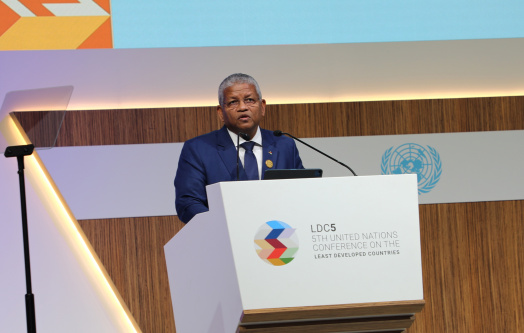
    Tuesday 07th March, Doha, Qatar: The President of the Republic of Seychelles, Mr Wavel Ramkalawan has called for the adoption of a Multidimensional Vulnerability Index (MVI) for Small Island Developing States (SIDS) and vulnerable countries to be accepted within the United Nations framework and beyond, as well as by international financial institutions.
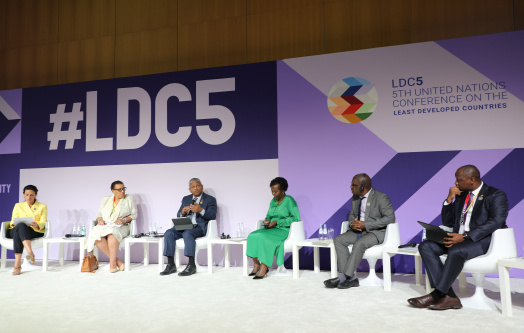
    The President was speaking this afternoon at the High-level side event under the theme “Achieving a fair and complete measurement of vulnerability: perspectives from the Small Islands Developing States (SIDS) and Least Developed Countries (LDCs) on the vulnerability index”, convened by the Organisation Internationale de la Francophonie (OIF) and the Commonwealth in the margin of the 5th United Nations Conference on the Least Developed Countries (LDC5).President Ramkalawan spoke about the vulnerabilities of the Small Island Developing States, and underscored the acute challenges affecting SIDS.

    “In such a volatile and unpredictable climate, what future lies ahead for our islands without the recognition of its vulnerabilities? It is imperative, therefore, that we usher in a new assessment architecture. One which can truly address the needs of SIDS and LDCS in a comprehensive manner. To go beyond GDP per capita as a measurement of development and access to concessionary financing for development needs. We need an index that takes into consideration the intrinsic complexities that data on income, on its own, cannot fully reveal. This demands that we identify a fairer way to measure a country’s susceptibility to external shocks. It demands a more pragmatic methodology of assessment” said the President.

    “The argument we are pushing forward is that the MVI should be universally applicable within the United Nations system and beyond, including international financial institutions. What we are saying is: no country should be penalised for making progress in its development journey. The opportunities extended, or considerations given, to some developing countries should be available to all developing countries, irrespective of income status.”

    The Head of State thanked the OIF and the Commonwealth for their continued support and commitment, one that he described as important in the advocacy and implementation of the MVI.

    “We are here to make a case for due and appropriate consideration to be given to SIDS. Both the Organisation Internationale de la Francophonie and the Commonwealth are sensitive to and supportive of our arguments. Their support and commitment are vital to own efforts towards securing the universal adoption of a MVI. Thank you to the OIF and Commonwealth for organising this event, and a special thanks to Madame Mushikiwabo and The Rt Honourable Baroness Scotland for your continued support and advocacy!”

    “Let us all continue to advocate for enduring solutions towards greater resilience for SIDS, and other developing countries,” he concluded.

    Members of the High-level panel included:
    Moderator: Mr. Patrick GUILLAUMONT, Foundation for Studies and Research on International Development (FERDI) Keynote speakers:
    • H.E. Mrs. Louise MUSHIKIWABO, Secretary-General of La Francophonie
    • The Rt. Hon. Patricia SCOTLAND, Secretary-General of the Commonwealth
    • H.E. Mr. Wavel RAMKALAWAN, President of the Republic Seychelles
    • H.E. Mrs. Chrysoula ZACHAROPOULOU, Secretary of State to the Minister for Europe and Foreign Affairs of France, in charge of Development, La Francophonie and International Partnerships
    • Hon. Mr. Lejone MPOTJOANE, Minister of Foreign Affairs and International Relations of the Kingdom of Lesotho
    • H.E. Mr. Dhoihir DHOULKAMAL, Minister of Foreign Affairs and International Cooperation, in charge of the Diaspora and Francophonie
    Source:(State House News, Seychelles)
  • African Development Bank issues AUD 50 million 15-year Kangaroo Green Bond due March 2038

    African Development Bank issues AUD 50 million 15-year Kangaroo Green Bond due March 2038

    The transaction is the Bank’s 2nd green bond issued in 2023 across all currencies
    ABIDJAN, Ivory Coast, March 8, 2023/ — The African Development Bank (http://www.AfDB.org), rated Aaa/AAA/AAA/AAA (Moody’s/S&P/Fitch/Japan Credit Rating, all stable) has successfully launched an AUD 50 million 15-year Kangaroo Green Bond due March 2038. The new issuance was arranged by RBC Capital Markets and sold to a single Japanese investor, Taiju Life Insurance Company.

    This is the African Development Bank’s sophomore green bond in the Australian dollar market since the inaugural 15-year Kangaroo green bond was issued in 2016, and marks an extension of the Bank’s existing Kangaroo curve.

    The funds raised through this green bond transaction will support the Bank’s efforts in the areas of climate change mitigation and adaptation. The bond proceeds will finance eligible green projects, including forestry conservation projects, aimed at supporting the transition to green growth in Africa in accordance with the AfDB Green Bond Framework.

    Despite renewed global efforts toward climate change evidenced by the new and ambitious climate targets established at the 27th Conference of the Parties (COP27) through the United Nations Framework Convention on Climate Change (UNFCCC), Africa requires particular attention and a more targeted response.

    Africa, with its unique biodiversity and ecosystems, including savannas, mountains, plateaus, deserts, and its variety of organisms and plants, is threatened by climate change unlike any other region. As a result, the transition to green growth in Africa has become even more important and urgent.

    Japan’s announcement of the “Africa Green Growth Initiative” to promote and attract investments into sustainable green growth in Africa, is ample evidence of its recognition of the need for this transition. The announcement was made at the 8th Tokyo International Conference on African Development (TICAD8) in August 2022.

    In order to promote sustainable development in Africa, the Bank’s Ten-Year Strategy focuses on two overarching objectives: to promote inclusive growth and to support African countries transition to green growth. The Bank has contributed to improving the lives in Africa by providing better access to water, energy and food, enabling sustainable use of natural resources, and promoting innovations, employment and economic growth.

    The transaction is the Bank’s 2nd green bond issued in 2023 across all currencies, following on from a successful SEK 1.5 billion 5-year Green Bond issued in the Swedish krone market in January.

    Bond Terms Summary:

    Issuer African Development Bank
    Rating Aaa/AAA/AAA/AAA (All Stable)
    Issue Amount AUD 50 million
    Trade Date 22 February 2023
    Settlement Date 8 March 2023
    Maturity Date 8 March 2038
    Coupon 5.000%
    ISIN AU3CB0297273
    Arranger RBC Capital Markets

    Distributed by APO Group on behalf of African Development Bank Group (AfDB).


  • Seychelles and Slovenia set to strengthen bilateral cooperation

    Seychelles and Slovenia set to strengthen bilateral cooperation

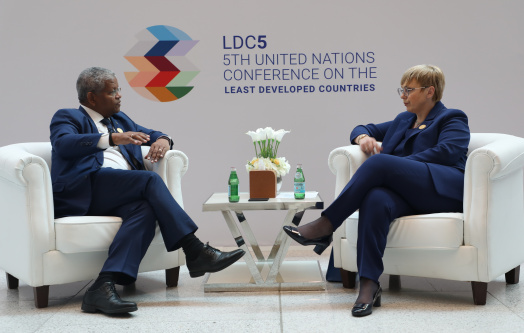
    Monday 6th March Doha, Qatar: On the margins of the 5th United Nations Conference on the Least Developed Countries being held in Doha, Qatar  President Wavel Ramkalawan held bilateral talks with the President of the Republic of Slovenia Mrs. Nataša Pirc Musar.

    Since the establishment of Diplomatic relations between Seychelles and Slovenia on 21st October 1992, collaboration between the two countries has been limited. During discussions the Heads of State agreed that there is greater scope to enhance and diversify this relationship. Both expressed the wish to strengthen the friendly ties between Slovenia and Seychelles for the mutual benefit of both nations.The two Heads of State, discussed matters of common interest such as the continuous advocacy in addressing climate change issues, education and training, exchange of expertise and capacity building as well as strengthening cooperation in the domain of tourism.

    Source:(State House News,Seychelles)


  • President Ramkalawan addresses the 5th United Nations Conference on the Least Developed Countries (LDC5) Plenary Session

    President Ramkalawan addresses the 5th United Nations Conference on the Least Developed Countries (LDC5) Plenary Session

    Sunday 5th March Doha, Qatar: The President of the Republic of Seychelles, Mr. Wavel Ramkalawan earlier this afternoon delivered his general debate statement before the 5th United Nations Conference on the Least Developed Countries (LDC5 presently being held in Doha, Qatar.

    With the participation of over 40 Heads of State and Government and several high-level officials, the LDC5 which is set to identify actions and partnerships at the highest possible level, including Heads of State and Government, to deliver on the LDC5 proposed agenda.

    During his statement, the President laid emphasis on the importance of collective approach required to attain set goals and targets. He stated that although Seychelles does not form part of the least developing countries, being present at the Conference shows that Seychelles stands united with other fellow SIDS and African countries in advocating and understanding their needs.

    “Our world has changed drastically since the 4th United Nations Conference on the Least Developed Countries and the adoption of the Istanbul Political Declaration and Programme of Action for the Least Developed Countries for the Decade 2011-2020. Since then, only three countries have graduated from LDC status. In an age where our economies, priorities and challenges are interlinked, no country should be left behind. All Governments and partners must respond decisively to address the challenges that we collectively face. Twenty per cent of LDCs are Small Island Developing States. And two-thirds of LDCs are African,” said President Ramkalawan.

    He continued, “Seychelles is not an LDC. We have graduated to the High-Income Status.  However, our presence here is a sign of solidarity, regional and global support for our fellow SIDS and Africans and a strong expression of seeking greater understanding and cooperation. No state should be punished for progress. Let not the so called “graduation” be another hurdle in meeting the needs of people and its communities”

    The President underlined the fact that LCDs and the Small Island Developing States do face similar challenges and are vulnerable to similar factors. He noted that they do have potential for rapid growth and development which can only be realised through, “equal access to resources and opportunities that lead to economic growth and stability and improve the lives of citizens”. Furthermore, President Ramkalawan explained the impact of climate change and the difficulties for the LDCs to achieve its Sustainable Development Goals.

    “Such inequality has resulted in a development imbalance, worsened by the unprecedented levels of greenhouse gas emissions, leaving our climate and ecosystems in peril. Developing countries stand to be disproportionately affected by the effects of climate change and must now face the challenges of global warming for which we share minimal responsibility. The goal of graduating from the LDC category and achieving the Sustainable Development Goals has never been more difficult in the face of such existential crises. A different set of challenges manifests itself in trying to maintain the status of “graduation” and in pursuing an upwards trajectory. Support needs to be extended in order for such countries to sustain their progress and thus ensure that traditional donor-recipient relationships are transformed into mutual partnerships,” said the Head of State.

    In advancing the support for finance, President Ramkalawan called for the support of the adoption of a Multidimensional Vulnerability Index to benefit vulnerable countries. Furthermore, he placed emphasis on the South-South cooperation to strengthen and sustain long term partnerships.

    “That is why, at every opportunity, I advocate for the global adoption of a Multidimensional Vulnerability Index. This offers a targeted approach that will not only complement but improve the efficacy of development cooperation, permitting countries in vulnerable situations to access concessional financing and address our needs. I also wish to emphasise the importance of South-South cooperation. Solidarity and unity between countries of the South will provide for stronger and enduring partnerships. And collective advocacy of our shared interests will contribute to mobilising resources, and ensure they are distributed equitably to serve our developmental needs,” he said.

    To conclude, President Ramkalawan, from the SIDS and LDC’s perspectives, expressed his hope that the Doha Programme of Action is used to its full advantage and that every country embraces progress and sustainable development so that they could all gather in the future stronger and more resilient.

    “SIDS and LDCs share similar concerns but from different perspectives. And it is imperative that we work together to mobilise maximum, effective, equitable, long-term support to lock in growth and prosperity. It is also imperative that we take ownership and primary responsibility for our respective countries and people through good governance, inclusiveness, transparency, respect for human rights, the eradication of corruption and in standing as strong advocates in defending climate change, what I call the Seychelles way, that we will embrace progress and sustainable development”

    “It is my hope that, in the not too distant future, we shall have a gathering of strong and resilient states, with poverty and under-development no longer an affliction of the many,” he concluded.

    During the LDC5 Conference in Doha, world leaders are gathered with the private sector, civil society, parliamentarians, and young people to advance new ideas, raise new pledges of support, and spur delivery on agreed commitments, through the Doha Programme of Action (DPoA).

    Whilst at the Conference the President will also engage in various high-level thematic roundtables, and a series of parallel and side events on various thematic priorities of the DPoA which are directly relevant to Seychelles.

    Source:(State House News,Seychelles)
  • Glencore ordered to pay $700 million by US judge in bribery case

    Glencore ordered to pay $700 million by US judge in bribery case

    Reports Bob Van Voris in The case, US v. Glencore, 22-cr-00297, US District Court, Southern District of New York (Manhattan).

    Glencore Plc was ordered by a federal judge in New York to pay $700 million as a criminal punishment for a global bribery scheme orchestrated by the Swiss-based commodities trading and mining giant.

    US District Judge Lorna G. Schofield on Tuesday imposed the sentence, following the terms of a plea deal with prosecutors entered when Glencore pleaded guilty in May to a single count of conspiring to violate the Foreign Corrupt Practices Act. The company must pay a fine of $428.5 million and $272.2 million in criminal forfeiture.

    The penalty, one of the largest in a foreign corruption case, is part of the $1.5 billion Glencore agreed to pay to resolve bribery and market-manipulation probes in the US, UK and Brazil. Glencore units agreed to plead guilty to a list of charges ranging from bribery and corruption in South America and Africa, to price manipulation in US fuel-oil markets.

    Glencore was guilty of “a very serious offense,” Schofield said, though he noted the company’s efforts to cooperate with the government and to beef up compliance procedures after receiving a federal grand jury subpoena in 2018.

    Prosecutors claimed Glencore paid more than $100 million in bribes to government officials in Brazil, Nigeria, the Democratic Republic of the Congo and Venezuela. They said Glencore made $315 million from the scheme.

    In addition to the fine and forfeiture, Glencore will spend five years on probation, continue with improvements to its ethics and compliance programs and employ an outside monitor for three years.

    Glencore conducted an internal investigation, eventually disciplining more than 20 people, a lawyer for the company said during the hearing Tuesday in Manhattan federal court. Glencore produced more than 1 million documents, many from outside the US, and hired a forensic accounting firm to look into suspect trading activity.

    On Monday, Schofield ruled Glencore must pay $29.6 million to the founders of a company that provided healthcare services in 11 African countries, but was forced to shut down. Crusader Health claimed it was driven out of business after Glencore bribed a public official in the Democratic Republic of the Congo to throw out a lawsuit brought by Crusader against a Glencore subsidiary.

    In September, the commodity firm was sentenced in Connecticut to pay $486 million in fines and forfeitures in a case in which Glencore admitted conspiring to manipulate oil-price benchmarks. In November, a London judge imposed a £276 million ($333 million) penalty for Glencore’s effort to bribe government officials for access to oil cargoes across Africa.

    Source: (Bloomberg News)


  • Ajman Chamber Approved “Al Damani” Car, The First Electric Car Made In The Uae, Among Its Cars

    Ajman Chamber Approved “Al Damani” Car, The First Electric Car Made In The Uae, Among Its Cars

    H.E. Abdullah Al Muwaiji, the Chairman of the Ajman Chamber of Commerce and Industry (ACCI), approved “Al Damani” car as the first electric car made in the UAE, which belongs to the “M Glory Electric Vehicle Factory” in the UAE, among the cars used in the Ajman Chamber, supporting of the national industry, promoting the UAE products, and realizing the vision of the wise leadership to achieve environmental sustainability and in line with the declaration of H.H. Sheikh Mohamed bin Zayed Al Nahyan, President of the UAE, may Allah protect him, that 2023 is the “Year of Sustainability” in the UAE.

    This approval came on the sidelines of the activities of the E7 exhibition organized by the “Royati” company at the Ajman Center for Entrepreneurship, with the participation of 77 exhibitors from companies, institutions, and entities distinguished for their creativity in various fields.

    Dr. Majida Alazazi, Chairwoman of M Glory Holding Group, provided a full explanation to H.E. Abdullah Al Muwaiji about the specifications of the “Al Damani” car and the extent to which it enjoys international specifications in terms of quality, safety, and capabilities that enhance its competitive capabilities in the local and international markets. Al Damani car makes a strong addition to the electric car market, especially in the light of the steady growth of this global market.

    H.E. Abdullah Al Muwaiji expressed his pride and happiness with this vehicle as it is the first electric vehicle made in the UAE, which reflects the level of quality and development of the local industry and its competitiveness in the local, regional, and international market. Thanks to the role of our wise leadership in providing a fertile investment environment that possesses the elements and advantages that support business development and efforts, in addition to efforts exerted to foresee the next stage of the national industry through the national strategy for industry and advanced technology and to raise the contribution of the national industrial sector to the GDP to AED 300 billion in 2031.

    He stressed that the achievements of the UAE local industry are made through deliberate plans and continuous follow-up from our wise leadership. For example, the “UAE Innovation Month” represents one of the main factors supporting the development of the UAE industry, as well as the government’s efforts to attract talented, innovative, and pioneering ideas contribute effectively to the development of the industrial sector.

    Al Muwaiji added, “The comprehensive economic partnership agreements (CEPA) concluded by the UAE with friendly countries have a major role in developing the local industry and enhancing its competitiveness abroad. These agreements also represent a supportive tool for attracting direct investments”.

    Source(Ajman Chamber News)