Category: COVER

  • Who invented jollof rice?:Senegal beats Ghana and Nigeria to the title

    Who invented jollof rice?:Senegal beats Ghana and Nigeria to the title

    Published: January 18, 2023 5.08pm SAST-Credit(The Conversation)

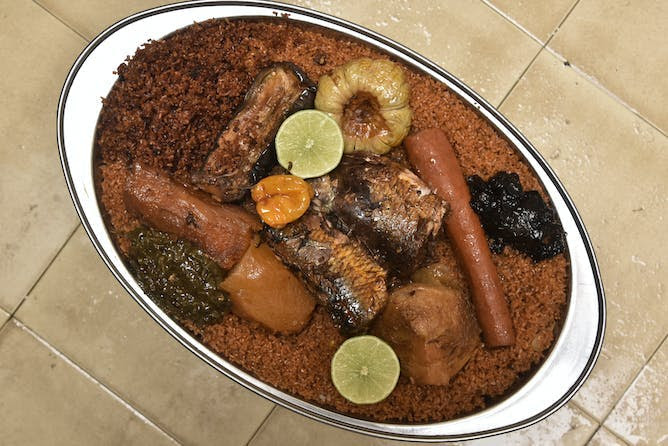
    The authorship – and therefore origins – of jollof rice (called ceebu jën in Senegal according to the Wolof spelling) is the subject of a spicy debate between West African nations. In particular, Senegalese, Nigerians and Ghanaians claim ownership. And each believes their recipe surpasses all others.

    In a bid to settle the issue we explored the subject in our book. In it we point out the “Senegality” of this dish. The word jollof refers to an ancient kingdom that was a part of Senegal between the 12th and the 13th centuries.

    More broadly, we found that the origin of the dish is linked to a particular period in history – the entrenchment of colonial rule in West Africa. Between 1860 and 1940 the French colonisers replaced existing food crops with broken rice imported from Indochina.

    In time, broken rice came to be much more prized by the Senegalese than whole rice grain.

    About us

    Our mission is to share knowledge and inform decisions.

    This was followed by what we call le ceebu jën, un patrimoine bien sénégalais – the genius of the natives, especially the Saint-Louisians who set about creating something completely new. Ceebu jën consists of rice and fish, accompanied by vegetables and sometimes tomatoes.

    As it happens in history, when an art reaches a certain fame or notoriety, its paternity becomes an object of controversy. This is what has indeed happened with jollof rice.

    Colonial legacy

    The first act of the settlers was to make all those disconnected from agricultural activities dependent on rice. This included the men and women who had come to try to make their fortune in the markets of Saint-Louis, one of the gateways to the West and, for a good period, the capital of French West Africa.

    If we add teachers, various agents of the administration and the military, we can better understand the pernicious process of rice promotion.

    Overflowing in urban centres, rice was consumed in practically all of the colony of Senegal.

    The success of the rice promotion strategy resulted in the entrenchment of an economy that became increasingly dependent on crops preferred by the colonisers. To this day efforts continue to be made to grow rice in Casamance and the Saint-Louis region.

    At the same time, the exploitation of the market garden areas of Niayes and Gandiol contributed to meeting the population’s need for vegetables.

    Another intriguing part of the history of the dish is the myth that’s developed over centuries around the role of a Senegalese cook called Penda Mbaye who is regularly attached to the name of rice with fish.

    Although no one disputes the connection between the dish and Penda Mbaye, serious information on her identity, on the place and time she lived and on the conditions in which the dish was created is cruelly lacking. This is why we have stated in our book that she left history very quickly to take her place in legend.

    Why the passion?

    To understand the importance of ceebu jën in the diet and imagination of the Senegalese, it would be wise to point out that its attractiveness can’t be reduced to its nutritional value or its intrinsic delicacy.

    This culinary art is closely linked to a know-how and a way of life. Thus, the consumption of the dish is strongly linked to the ceremonial – the aesthetics of the presentation and the service.

    A woman serving ceebu jën. Cellou/AFP via Getty Images.

    The women of Saint Louis, a port city in the northern part of Senegal, are singularly credited with remarkable know-how in this area. Their finesse and elegance is expressed in the way they dress, their speech and their gestures. All are put to good use so that the meal is a moment when they give pleasure by being pleased themselves.

    Stamp of approval

    At the end of 2021 Unesco included the Senegalese version of jollof rice – ceebu jën – on the intangible heritage of humanity list. This certification was recognition of the know-how of the Senegalese of an integral part of an intangible heritage.

    The labelling should also have a positive impact on the economy, particularly tourism, agriculture, fishing and catering. Or, as some would describe it, gastro-diplomacy.

    But to make the most of all these advantages, Senegal must pay more attention to its fishery resources and, above all, settle the recurrent question of self-sufficiency in rice production for good, in order to put an end to the scandalous perversion of feeding on what is not produced.

    Senegal, whose reputation is based more on its cultural influence and diplomacy, has every interest in capitalising on this trend. Thus, in addition to rice with fish, it will have to promote its broader gastronomic heritage to make it an additional asset for the role it intends to play in the concert of nations.

    In this spirit, Senegal’s Food Technology Institute would be given a new lease of life. This public establishment, created in 1963, was assigned the mission of research and development in food and nutrition.

    In its efforts to enhance the rich Senegalese heritage, the institute could set itself the objective of promoting all the remarkable Senegalese consumables based on millet, cowpea, bissap, ditax and (monkey bread) bouye. And to take up this challenge Senegal would be well advised to make use of all the proven expertise of researchers as well as economic players.

    This article was written with the contribution of Alpha Amadou Sy, co-author of the book Ceebu jën, un patrimoine bien Sénégalais.


  • Decarbonisation of Hospitality Industry Gets Major Boost

    ……As Studio Moren and EAA Join Hands

    9th January 2023

    Hospitality design specialist Studio Moren has announced a strategic partnership with the Energy and Environment Alliance (EEA) – an international not-for-profit coalition driving the decarbonisation of the hospitality industry – to provide expertise on sustainable architecture and interior design practices across the sector.

    The EEA’s mission is to develop the first universal sustainability standard for the hospitality industry, including the design, build and operation of buildings. Studio Moren, working in collaboration with EEA and its other partners, will utilise its substantial knowledge and experience designing effective and energy-efficient hotel and hospitality projects to help steer the ongoing development of the new BREEAM in Use Hospitality (BiUH) standard.

    Studio Moren Senior Designer and Certified Passive House Designer, Bryan Oknyansky, AIA, will sit on the EEA Technical Committee to work with the EAA and BRE Group in the development of hospitality-specific standards, metrics and methodologies, embracing all lifecycle stages of hotel or apart-hotel development, including design, construction and operations to redevelopment or decommissioning.

    As a world-renowned hotel and hospitality architect and interior designer, Studio Moren has a long-term commitment to both sustainability and the hospitality industry and shares EEA’s mission to improve sustainable outcomes in the sector. Whilst it is well understood that hospitality operations require a considerable amount of energy to ensure the comfort of guests and offer individualised experiences and services, in addition to generating a considerable amount of waste from consumables, Studio Moren believes a lot can be done to decarbonise the hospitality sector to enable sustainable growth.

    Bryan Oknyansky says: “According to U.N data, the built environment is currently responsible for about 40% of global energy-related carbon emissions. As architects and designers, we have a key role to play in driving a reduction in carbon emissions, as the greatest opportunity for impact on building performance and energy efficiency comes at the design stage.

    “Measures being more widely adopted by the hospitality industry include designing out the excess energy demands of operating buildings and recovering heat from both plant equipment and wastewater for reuse elsewhere in building services. Additionally, exploiting opportunities for circularity will lead to the use of materials and products that have lower embodied carbon through sourcing locally, recycling and reuse. We look forward to working collaboratively with the EEA and its partners to further increase the uptake of such measures, whilst also helping asset owners and managers in the hospitality industry mitigate climate risk and meet net zero targets.”

    Ufi Ibrahim, CEO & Founder, the Energy & Environment Alliance (EEA), said: “Studio Moren stands out as a hospitality focused architectural and design practice that puts sustainability at the heart of its creative philosophy. We are therefore delighted to have its input into our Technical Committee, helping to determine the most relevant and useful standards and metrics for ESG in the industry.”

    ENDS

    For media enquiries, please contact Zoe Couch:

    zoe@satellitempr.com / +44 (0)777 159 8483

    Notes to Editors

    All images © Studio Moren

    Studio Moren

    Studio Moren is an award-winning practice of 70 architecture and interior design specialists, working right across the hospitality spectrum. Over the past 30 years in business we have established a world-renowned reputation as leaders in hospitality design, based on our ability to deliver intelligent, creative and bespoke solutions which meld both developer and operator requirements. With a design-led ethos of ‘creating places people want to stay’, we have taken our hospitality experience into other sectors including resorts, serviced apartments, build-to-rent, co-living and co-working. We are passionate, commercially astute and committed to producing beautiful buildings and interiors that respond to location and context.

    About Energy & Environment Alliance (EEA)

    The Energy & Environment Alliance (EEA) is a company limited by guarantee, run by its members for the benefit of its members. A small executive team is responsible for running and growing the organisation, it is supervised and directed by an advisory board, comprised of leading figures from the hospitality industry. The EEA’s immediate priority is to achieve faster carbon reduction rates in the hospitality industry. It will help its members do so in three practical ways: first by bringing the industry together with renowned experts, regulators and specialist services, to share knowledge and implement new technologies; second, by enabling member companies to purchase their energy 100% sustainably; and third by helping members drive energy productivity levels in a highly cost-effective manner.

  • Namibia and Equatorial Guinea Youth-Focused Local Content, Gas Monetization a Boost for Intra-African Energy Growth

    Namibia and Equatorial Guinea Youth-Focused Local Content, Gas Monetization a Boost for Intra-African Energy Growth

    Following an agreement forged during the Namibian International Energy Conference in 2022, a youth training initiative launched by Namibia and Equatorial Guinea has set the tone for an ambitious local content drive that will position Namibia as a competitive hydrocarbon producer
    JOHANNESBURG, South Africa, January 4, 2023/ — Namibia, as an upcoming hydrocarbon producer, and Equatorial Guinea, as one of Africa’s top natural gas producers, have taken the lead towards positioning Africa as a globally competitive oil and gas producer, leveraging intra-African partnerships and cooperation to scale up the local workforce.

    Following sizable oil and gas discoveries made in Namibia in 2022, the two countries forged an agreement during the Namibian International Energy Conference (NIEC) 2022 that saw four Namibian engineers receive training at the Equatorial Guinea Liquefied Natural Gas (EG LNG) facility. This program has been significant, both for Namibia’s future oil and gas industry and for Africa’s energy sector at large, and the African Energy Chamber (AEC) commends both countries on this bold initiative.

    During the NIEC 2022, Hon. Tom Alweendo, Namibia’s Minister of Mines and Energy, announced the training partnership with H.E. Gabriel Mbaga Obiang Lima, Equatorial Guinea’s Minister of Mines and Hydrocarbons. Hon. Minister Alweendo visited Equatorial Guinea and worked with his counterpart to kick off the training of Namibians.

    To date, four Namibian engineers have received training at EG LNG, owned by Marathon Oil, Chevron and the Equatorial Guinean government. In addition to receiving exploration and production training at the facility, the engineers were trained at the associated Methanol Facility and the Turbo Gas Facility at the Punta Europa Complex.

    The Namibian engineers also received training on various operational matters from British independent Trident Energy, known for operational efficiency and production improvements. Trident is the operator of Block G, which includes the producing Ceiba and Okume Complex fields — made up of six oil fields in the Gulf of Guinea, in shallow and deep water in the Rio Muni basin.

    This training has not only signaled a new era of intra-African energy collaboration and partnerships but has opened up significant opportunities for Namibia to position itself as a globally competitive oil producer on the back of south-south cooperation.

    With both countries having placed local content at the center of their developmental strategies, this training initiative marks the start of a new era of hydrocarbon growth in Africa on the back of cooperation and collaboration. Long-term, Equatorial Guinea is committed to establishing itself as a regional energy hub, leveraging ambitious local content initiatives to develop a strong and competitive hydrocarbon market in-country. Similarly, Namibia, at the start of its hydrocarbon journey, has recognized the role local content will play in making energy poverty history while kick starting industrialization and economic prosperity. As such, the country has introduced proactive local content policies, with the Equatorial Guinean training initiative only furthering this agenda.

    “It is good to see energy companies in Equatorial Guinea taking the lead in the training and development of Namibian youth. EG LNG, Trident Energy, Chevron, Marathon Oil should be given huge credit, incentive and encouraged to do more. It is important for young Africans. Energy companies are our partners, and we must support them as we push for Namibian energy growth,” stated NJ Ayuk, Executive Chairman at the AEC.

    The training initiative followed Shell’s Graff-1 discovery and TotalEnergies Venus discovery made merely weeks apart in February 2022, unlocking up to four billion barrels of recoverable reserves combined. The discoveries were significant, with their associated developments set to double Namibia’s GDP by 2040. Shortly thereafter, the country took a proactive approach to get advanced training from U.S. and regional firms, with the government eager to bring these projects online as soon as possible. In this scenario, Equatorial Guinea emerged as the obvious partner, with the country hosting a suite of global energy majors and large-scale hydrocarbon developments alike.

    Owing to sizeable domestic oil and gas reserves, as well as an accelerated drive by the government to monetize regional untapped reserves, Equatorial Guinea has put in motion a series of large-scale projects such as the Punta Europa LNG Terminal – comprising Train 1, producing 3.7 million tons per annum (mtpa) of LNG, and Train 2, set to produce up to 4.4 mtpa once completed – the wider Punta Europa Gas Complex – comprising Methanol and Turbo Gas Facilities – and the Central African Pipeline System. These projects have enabled the country to export gas worldwide, with Equatorial Guinea serving as a key supplier of gas to Europe in the ongoing gas crisis. In this scenario, companies such as Marathon Oil, Sonagas, ExxonMobil and Panoro have been key, and offer Namibia unparalleled insight into developing and operating large-scale projects.

    “What Minister Alweendo and Obiang Lima have done should be commended. They have demonstrated the role that intra-African energy cooperation will play in Africa’s energy future. Equatorial Guinea, with its expertise as an oil and gas player, offers Namibia the knowledge and training that the country needs to develop a thriving domestic oil and gas industry. Through this training initiative, both countries have prioritized local content, developing the local industry and getting young people ready to lead oil and gas exploration and production. At the AEC, we are proud to see what Namibia and Equatorial Guinea are doing and want to see more African states following suit,” concluded Ayuk.

    Distributed by APO Group on behalf of African Energy Week (AEW).

    SOURCE
    African Energy Week (AEW)


  • Graduate Mentorship Coaching Programme,4th Cohort Gets Set

    Graduate Mentorship Coaching Programme,4th Cohort Gets Set

    …….As 40 Africans from 15 African Countries Enrolled!!!

    Story: Mohammed Abu

    The Africa Graduate Mentorship and Coaching Programme (AGMCP), which is facilitated by the Interconnections for Making Africa Great Empowered and Sustainable (IMAGES) Initiative, has enrolled 40 Africans from 15 countries into the mentorship and coaching programme for the 4th cohort, according to a Press Release issued in Ibadan, on Tuesday.

    “Interested organizations working on agriculture and food systems in Africa may contact us for mutually-rewarding partnership to develop the capacity of the mentees”, said, Dr Olawale Olayide the President of IMAGES while also adding, “Please join us to congratulate the mentees, and wish them a successful Fellowship Year”.

    The mentees, the Release said, are in three categories namely, Master, Doctoral and Post-doctoral, representing the five economic regions and countries of the continent.

    For the North Africa region, the release added, the beneficiary country is, Algeria, for Central Africa region, Cameroon and Democratic Republic of Congo, for Western Africa region, Benin, Ghana, Niger and Nigeria and while for Southern Africa region, Malawi, South Africa and Zimbabwe were the beneficiary countries.

    The AGMCP Fellowship Year runs from January to December. The 40 mentees will be assigned to renowned mentors, and will conduct research and capacity development training on the Sustainable African Food Systems.

  • Emirates Health Services to use metaverse technology to deliver healthcare services

    Emirates Health Services to use metaverse technology to deliver healthcare services

    The new initiative aims to promote telemedicine practices in virtual clinics and provide consultation services and medications through robotic pharmacies.

    JANUARY 1, 2023

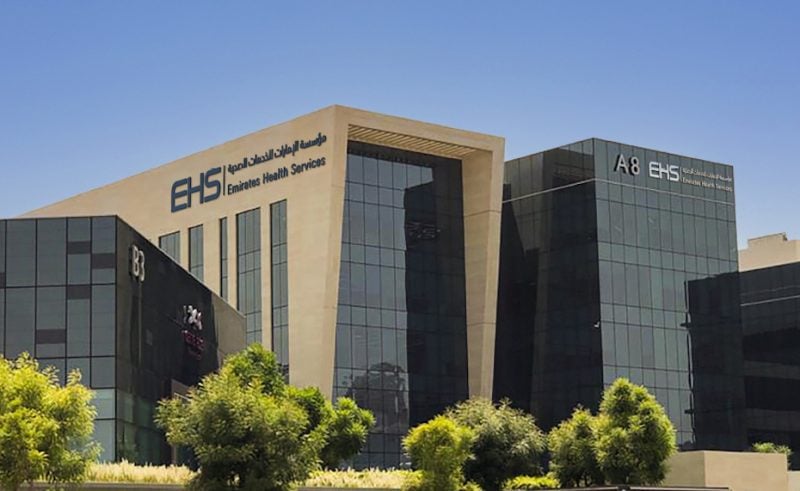
    Emirates Health Services (EHS) has launched a metaverse-based virtual telemedicine solution using 3D virtual reality technology.

    Through the project, EHS aims to deliver virtual medical consultation services supported by advanced technologies.

    This technology enables members of society to access e-services via smart devices.

    Through the new virtual channel, patients can effortlessly access psychiatric consultation services, family health promotion clinics, and customer happiness centres, according to a report mentioned on the state news agency, WAM.

    Dr Yousif Mohammed Al-Serkal, director general EHS, said it is the first global healthcare provider to apply metaverse technology to provide advanced services and promote sustainable health development goals by adopting best practices that leverage AI, IoT and Blockchain technologies.

    The new initiative aims to promote telemedicine practices in virtual clinics and provide consultation services and medications through robotic pharmacies.

    The project will provide psychiatric consultation services for different age groups in addition to accessing the Customer Happiness Centre and family-centred health promotion services.

    The metaverse provides a 3D interactive space that allows customers to engage with healthcare professionals through a secure link using their devices equipped with a camera, microphone, and speakers. This way, patients need not purchase equipment such as headphones or controllers. Doctors can assess conditions, discuss treatment plans, and provide treatment and other clinical services.

    Credit(Gulf Business)

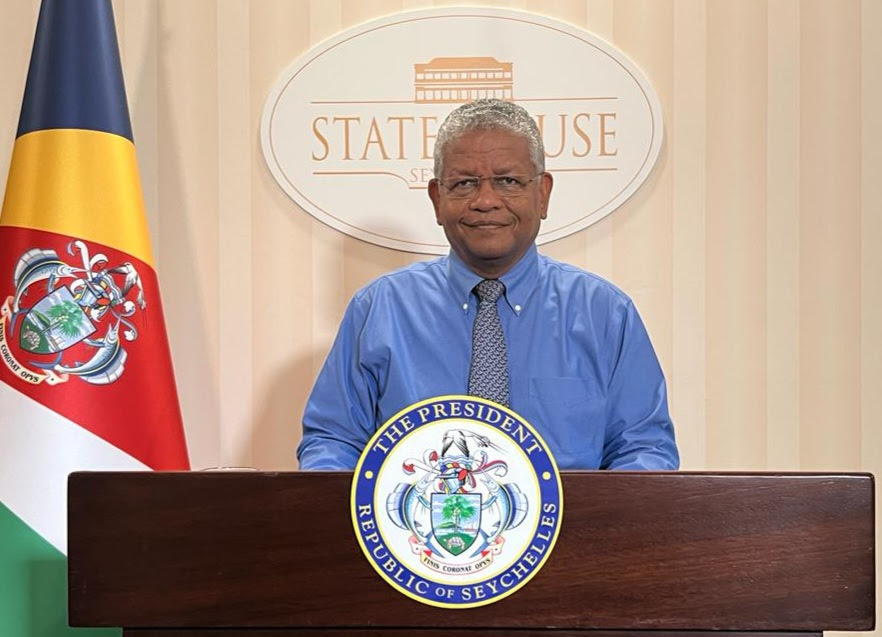
  • New Year Message 2023 by the President of the Republic of Seychelles, Mr Wavel Ramkalawan

    New Year Message 2023 by the President of the Republic of Seychelles, Mr Wavel Ramkalawan

    31 December 2022 |

    Seychellois sisters and brothers,

    Like the song says ‘a year ends and another begins.’ The year 2022 has already passed into history. Each of us will note certain dates with joy, pain, sadness, a feeling of accomplishment as well as missed opportunity. 2022 is a book already written and 2023 offers us this new page on which to write another year of our personal story, the story of our country and the story of the world.

    Allow me in the first place to use that very important little word, but which sometimes comes out of the mouths of humans with great difficulty – thank you.

    I wish first and above all to thank Almighty God for protecting our nation and our country.
    I say thank you to all who have taken our country to heart and given all their energy to make it progress. I say thank you to the public sector which has served our people with devotion and the private sector, which has created wealth for our nation and people to enjoy.  Thank you to all Seychellois and foreign workers who have permitted our country to continue on its march to prosperity. To everyone in voluntary and community organisations working hard to raise the standards of morality, spiritual and mental strength, the Seychellois nation expresses its gratitude and extends all of its encouragement for you to continue doing so.

    Thanks also go to all the youth who have done well in their studies and brought pride to themselves as well as their parents and to their teachers. To our athletes and sportspersons who have hoisted our flag to its highest and brought joy amongst our people, I say thank you.

    Thanks also go to our retirees who have contributed towards bringing us to where we stand today, and who continue to reflect and encourage us who are younger along this life’s journey.

    My special thoughts at this time also go to all of our families who have gone through misfortune and who are still walking with eyes filled with the tears of separation. I say to you ‘Courage and strength in each step you take. We will walk in solidarity with you and give you our shoulders to lean on in your difficult moments.’

    Brothers and sisters, my wish is that this new year will bring new and positive energy, fresh inspiration and new strength for us to advance even further ahead. It is we, each individual, who will write on each and every page of this new year, from 1 January to 31 December. The majority of things will be in our hands, but there will also be also chapters which will be written for us, and outside of our control.  And so, I ask that we do as well as is possible with all that is within our control. Let us not only think of ourselves, but move away from that spirit of self-centeredness and at all times, think of others and do that little thing which you should.

    I invite all Seychellois and all workers to reflect on that little extra something which I can do to bring relief to a brother, a sister, and make a compatriot progress. Often it is not big things that brings us frustration but the little things. The student who lacks one point to pass and the person who misses a bus by one minute is frustrated. And so it is the little things which we need to do in order to improve our own personal lives and the lives of our people.

    I invite you to make a resolution that we will give importance to doing little things. A long journey starts with a small step, the construction of a large building commences with a first brick, writing starts off with a small letter ‘A’ and counting commences with a little number ‘0’ (zero). Attach ourselves to those little things and we will accomplish major transformation where we are.
    If we make those little gestures, like saying ‘good morning’, our community will be more fraternal, a small ‘thank you’ raises morale, a little smile makes friendship grow, a little help to one who is weak brings relief, and a moment taken to listen to someone can save a life. Reflect also that somehing negative, however tiny, can also destroy lives, just like a matchstick can spark a major fire, a tiny lie cause a major argument.

    For our civil servants, working in government, I invite you to reflect on those small things which during 2022 made people frustrated :  that little call that you did not make, the letter you did not reply to, that piece of paper you kept in your drawer, the offensive tone you replied to a client with, that postponing to tomorrow what you could do today,  that little word you did not say to someone to help them. Let us change this and let us bring our people out of pointless frustration and know joy on their faces.

    What I have said applies for all workers of course, whether you are in the public or private sector. Deliver a good service in all that you do. And perhaps, – why not ? – whilst you are doing your work, put yourself in the place of the client you are serving.   Would you be happy with the tone that you replied to him with ? Would you be happy with the language used in that letter you wrote ? If you would not be happy, don’t make another unhappy.  Serve others as you would be happy to be served.

    I have no doubt that we can do this for our country. That, in 2023, each one of us can do better and render the best service to our people and in doing this, raise our country to the highest.  I ask that each one of us reflect deeply on those two little remarks that I have made.  Let us stop making our neighbour live in anger and frustration. Why should I throw my waste out in public and dirty my country ? Do I need to blast my music out loud to the detriment of my neighbour ?  Why do I need to sell poisonous drugs to Seychellois children ?  Why do I need to be akward and make others angry ?  Please, let us change those poor mindsets and truly live as brothers and sisters in this blessed land, Seychelles.

    Yes, like Ton Joe sings for us, ‘Seychelles is our blessed country.’ And so I invite all of us to become more patriotic. Let us love our country even more. Consider her like our mother, forever grateful that when we strengthen our country and put ourselves at her service, she returns so much more to us. The higher we raise country, the more we, Seychellois, as a nation, will rise. Encourage each other, show more love for your community, adhere to the law and walk in solidarity with each other. Take a brother’s, a sister’s misfortune as our own misfortune and this will allow us to have and live in more love.  Take care of your neighbour and he will take care of you too.

    I dedicate once again all of my strength in lifting our beautiful country Seychelles. I give all of my energy to work for all of Seychelles’ children and to make us progress as far as is possible. Let us continue to along this route together for the love of our beautiful country, Seychelles.

    Let our God shower our beautiful country with his blessings and his love. We are one people, one nation who is living in the world’s most beautiful country. May God bless you and your family.

    Happy New Year 2023.

    Thank you


  • Independents Energy Companies are Raring to Go in Africa in 2023 with Sustainable Energy Development (By NJ Ayuk)

    Independents Energy Companies are Raring to Go in Africa in 2023 with Sustainable Energy Development (By NJ Ayuk)


    OPINION PIECE

    They’re bringing private capital, experience, and know-how to the continent
    JOHANNESBURG, South Africa, December 26, 2022/ — By NJ Ayuk, Executive Chairman, African Energy Chamber

    In late 2019, Africa Oil Corp. President and CEO Keith Hill told Petroleum Economist that, given Africa’s unproven oil and gas basins, the continent was probably “the greatest frontier,” with outstanding opportunities for exploration, production, and development companies, including independents.

    Three years later, Hill remains bullish about Africa, and Canada-headquartered Africa Oil Corp. is driving oil and gas exploration here. The company is part of a growing trend we’re seeing: independent oil and gas companies that recognize the tremendous promise of our underexplored continent and are finding ways to thrive here — and make a positive impact.

    I’m extremely optimistic about independents like Africa Oil Corp and BW Energy, which are building on their successful track records in exploration and production, and Perenco, which is building Africa’s natural gas industry. I’m encouraged by the efforts of Trident Energy, which is finding ways to bolster production in mature fields, and by Eco Atlantic, which has been convincing investors not to turn their backs on our continent. Companies like these are exactly what Africa needs. They’re bringing private capital, experience, and know-how to the continent. They are accelerating resource monetization and maximization for the good of Africa. And, honestly, I can’t wait to see what they do in 2023.

    Putting Natural Gas to Work for Africa

    As David Christianson so eloquently put it in a recent blog for Trade Law Centre (tralac), a South Africa-based think tank, “Africa’s gas future is floating offshore.” Floating liquified natural gas (FLNG) units are an ideal way to capitalize on Africa’s abundant natural gas resources. They can be deployed rapidly and more affordably than onshore LNG trains, creating a practical pathway to gas monetization. London-headquartered independent, Perenco, which has operated in Cameroon for nearly 30 years, is capitalizing on these opportunities.

    Not only did Perenco establish an FLNG plant in Cameroon, it made history there. The Hilli Episeyo FLNG, which began commercial operations in March 2018, is the world’s second-ever FLNG plant to enter operation and the first in the world to operate from a converted LNG tanker. The plant, moored off the coast of Kribi, is the property of Norwegian Golar. Not only does the project have global significance, but it also involves local entities. Perenco partnered with Cameroon’s Société Nationale des Hydrocarbures (National Hydrocarbons Company) to launch the project. The Hilli Episeyo is designed to produce 2.4 million metric tonnes per annum (MMTPA) of LNG and has 125,000 cubic meters of storage capacity. Natural gas for the plant is sourced from Perenco’s Sanaga and Ebome gas fields.

    What’s more, Perenco is growing its upstream activity in the continent. Earlier this year, it signed a deal with oil and gas company New Age Ltd. to buy its stake and take over the operatorship of the Etinde gas field, which is in shallow water in the Rio del Rey Basin offshore Cameroon. In July, Perenco acquired Anglo-Swiss multinational Glencore’s entities in North Africa, The acquisition includes PetroChad Mangara, which operates the Mangara, Badila, and Krim oilfields in Chad’s Doba Basin. And in November, the company announced it had discovered oil in the Tchibeli North East pre-salt Vandji exploration prospect offshore Congo, describing it as a potential “play opener.”

    Each of these activities and successes represents potential for greater energy security, economic growth, and based on Perenco’s track record, more good jobs for Africans.

    Perenco is a strong example of an independent that has successfully developed strategies for Africa’s unique challenges, needs, and opportunities. And, it’s not alone.

    Breathing New Life Into Maturing Fields

    Look at British independent Trident Energy, which is introducing a new era of operational efficiency and production improvements in Equatorial Guinea.

    Trident’s business strategy calls for acquiring mid-life producing assets around the globe, particularly oil and gas fields lacking attention and investment, re-developing them, increasing production, and unlocking reserves. In Africa, where we’re seeing production declines occur in legacy assets throughout the continent, this approach is tremendously valuable.

    In Equatorial Guinea, Trident is the operator of Block G, which includes the producing Ceiba and Okume Complex fields — made up of six oil fields in the Gulf of Guinea, in shallow and deep water in the Rio Muni basin –  with a 40.375% working interest. The company also holds a 40% stake in Block S, W & EG-21.

    In May of this year, the Ministry of Mines and Hydrocarbons of Equatorial Guinea and Trident’s joint venture partners for Block G, Kosmos Energy, Panoro Energy, and GEPetrol, agreed to extend the Production Sharing Contract (PSC) for the block through 2040, giving Trident more time to unlock the block’s full potential.

    Trident has earned the respect of both the government and the companies it works with. Trident credits those strong working relationships with the company’s commitment to be an active, visible member of the communities where it operates.

    Foreign project leaders and their families relocate in-country, as the company fulfils its role as a major contributor to the local economy and community. Most importantly building local capacity and improving local content has been a key strategy for the company’s leadership.

    Trident also is known for offering local residents high-quality jobs and respectful treatment; for creating empowering skill development, healthcare, and education programs in host communities; and for implementing best practices to protect the environment.

    Trident Energy’s upgrades at Okume Field, which have been underway this year, call for converting 15 gas lift wells to electrical submersible pumps (ESPs), which are more affordable to operate and maintain.

    To prepare for the conversion, the company has been working on a $57 million upgrade at Okume’s central processing facilities. Trident Energy’s team in Equatorial Guinea has managed every aspect of the project including supply chain, logistics, and coordination. Approximately 55% of the services (in-value) were provided by local contractors; 32% of services were provided by regional contractors; and only 13% were provided by international contractors.

    Projects that boost production in declining assets, like the Okume upgrades, are extremely important for both Equatorial Guinea and the continent at large. We hope more companies follow Trident’s lead.

    Setting the Stage for Success

    The African Energy Chamber also has been impressed with Norwegian independent BW Energy, which has been very strategic in its approach to gas exploration and production in Namibia.

    BW, which also has a strong presence in Gabon, targets proven offshore oil and gas reservoirs and minimizes risk with phased developments. By operating in sites with existing production facilities, the company reduces time to first oil and keeps cash flow in check, the company website explains.

    In 2017, the company acquired a 56% stake in the Kudu gas field in the northern Orange sub-basin, approximately 130 kilometers off the southwest coast of Namibia. Several years later, BW increased its interest in the gas project to 95%.

    The Kudu field is believed to hold at least 1.3 trillion cubic feet (tcf) of gas, but the site has remained undeveloped since ChevronTexaco first discovered gas there in 1974. The field has had a long string of operators, but as Pan-African research agency Hawilti put it, factors ranging from the inability to agree on a gas price to delays in getting governmental support projects have kept the project in limbo. The site’s isolated location, and lack of infrastructure to transport gas, have not helped matters.

    But, with BW in the driver’s seat, I believe that chapter is now closed. As announced during African Energy Week in Cape Town, BW is pursuing a revised development plan for Kudu that includes using a repurposed semisubmersible drilling rig as a floating production unit (FPU), which will allow it to move gas onshore for domestic energy generation. BW purchased the rig it needs for this effort earlier this year.

    BW’s efforts could have far-reaching effects on day-to-day life in Namibia. Currently, the country relies on electricity imports to meet its domestic needs. BW’s work at Kudu will help provide the gas Namibia means to reliably deliver electricity to its people, drive industrial growth, create jobs, and position Namibia as a regional energy hub.
    Overcoming Hurdles, Modeling Determination
    Another independent modeling what can be achieved in Africa is Toronto-headquartered Eco Atlantic. It has been overcoming the challenges of raising capital in an era when companies are being pressured not to begin new oil and gas projects on our continent.

    In April, Eco Atlantic raised approximately $25.5 million to cover drilling expenses on the Gazania-1 well, on Block 2B offshore South Africa, although the company announced that its evaluation well did not show evidence of commercial hydrocarbons. That’s not stopping the company from moving forward in Africa. Along with its partners, Africa Energy Corp, Panoro 2B Limited (a subsidiary of Panoro Energy ASA), and Crown Energy AB, Eco Atlantic is planning additional exploration drilling, including a two-well campaign on Block 3B/4B offshore South Africa, set to begin in 2023, and at least one well on the Orinduik Block offshore Guyana.

    “While it is naturally disappointing not having made a commercial discovery, the Gazania-1 well was only the first of four wells we have planned for the next 18-24 months across our wider portfolio,” Eco Atlantic co-founder and CEO Gil Holzman said.

    Tenacity is a required trait for all companies in this industry. Eco Atlantic’s ongoing commitment to exploring South Africa’s offshore basins is commendable.

    As recently as Dec. 19, the company announced its subsidiary, Azinam Limited, had acquired another 6.25% participating interest in Block 3B/4B offshore South Africa. Eco Atlantic also received regulatory approval for the acquisition. Now Eco Atlantic will hold an increased participating interest of 26.25% in Block 3B/4B, with Africa Oil Corp., the block’s operator, and Cape Town-based upstream company, Ricocure.

    Big Finds, Big Ambitions
    As for Africa Oil Corp., one of its strengths is the respect it has earned in the sector and among government leaders. The company has been involved in such major finds as the 2022 Venus light oil discovery made with Total Energies offshore Namibia (through subsidiary Impact Oil & Gas Limited).

    Since then, the company has kept its focus on continued exploration operations. It has producing and development assets in deep-water offshore Nigeria, development assets in Kenya, and a portfolio of exploration assets in Guyana, Kenya, Namibia, Nigeria, South Africa, and the Senegal Guinea Bissau Joint Development Zone (AGC).

    The companies’ successes in East Africa are particularly exciting. Exploration in Kenya within the last decade has opened two new basins that extend into southern Somalia. Keith recently told Energy, Oil & Gas magazine that the basins cover an area the size of the North Sea.

    And in Puntland, the company is confident that it found an oilfield through drilling on the Shabeel well.

    Hill said he remembers when most companies believed opportunities in East Africa were limited.

    “At most oil and gas conferences today the universal opinion is that East Africa now represents one of the hottest oil and gas exploration areas anywhere in the world,” he said. “Africa Oil Corp’s forward thinking approach meant that it was able to get in and secure all the acreage it wanted before this region really took off. What that means is that today you are looking at an organization that boasts the best onshore acreage position of any company now present in East Africa.”

    Well done.

    Earlier this year, I said Africa will not achieve the energy future it wants, including making energy poverty history, without the presence of independents. Today, that truth is clearer than ever. Yes, majors and national oil companies still have an important part to play in Africa’s energy industry, but the independent companies at work here are giving us every reason to be optimistic about Africa’s future.

    Distributed by APO Group on behalf of African Energy Week (AEW).

    SOURCE
    African Energy Week (AEW)


  • Hydroelectric power plant in Hatta,UAE, is 58% complete: DEWA

    Hydroelectric power plant in Hatta,UAE, is 58% complete: DEWA

    The power plant will have a production capacity of 250 MW, a storage capacity of 1,500 Mwh, and a life span of up to 80 years once completed

    Dubai Electricity and Water Authority (DEWA) has announced that the pumped-storage hydroelectric power plant site, which it is building in Hatta, is 58 per cent complete.

    The power plant will have a production capacity of 250 MW, a storage capacity of 1,500 Mwh, and a life span of up to 80 years once completed.

    It is the first station of its kind in the GCC, with investments of up to Dhs1.421bn. The project is planned for completion in Q4 2024.

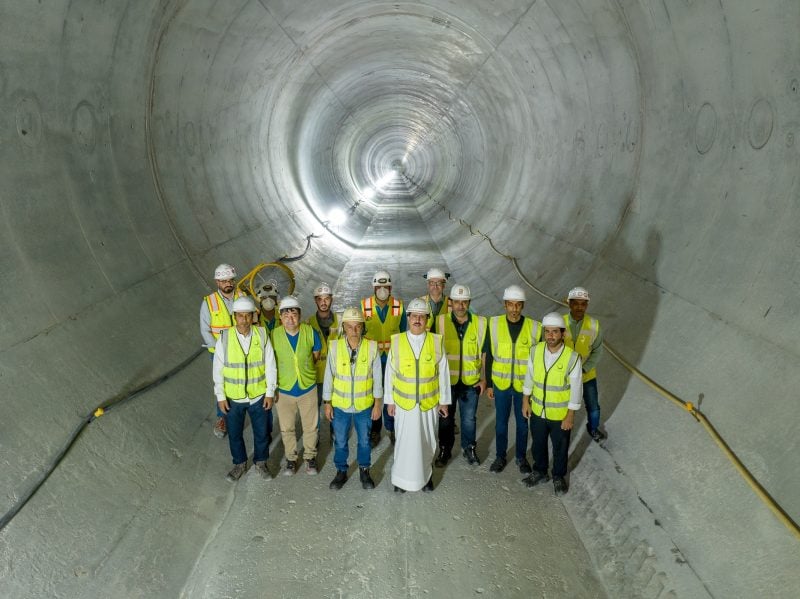
    Saeed Mohammed Al Tayer, MD and CEO of Dubai Electricity and Water Authority (DEWA), recently visited and inspected the construction site at the hydroelectric power plant, where he was briefed about the progress of the project.

    The visit also included the inspection of the power generators site and the upper dam, where the water intake in the Hatta Dam connected to the power generators has been completed.

    Construction of the 72-metre main roller compacted concrete wall of the upper dam has also been completed.

    Al Tayer also inspected the work progress of the water tunnel, which is 1.2 kilometres long and connects the two dams. The concrete lining of the water tunnel is complete.

    Al Tayer said the plant in Hatta is part of DEWA’s efforts to achieve the Dubai Clean Energy Strategy 2050 and the Dubai Net Zero Carbon Emissions Strategy 2050 to provide 100 per cent of Dubai’s total power production capacity from clean energy sources by 2050.

    The project supports the comprehensive plan to develop Hatta and meet its social, economic, developmental, and environmental needs, in addition to providing innovative job opportunities for citizens in Hatta.

    The hydroelectric power plant will be an energy storage facility with a turnaround efficiency of 78.9 per cent that utilises the water stored in the upper dam, which is converted to kinetic energy during the flow of water through the 1.2-kilometre subterranean tunnel.

    This kinetic energy rotates the turbines and converts mechanical energy to electrical energy which is sent to DEWA’s grid within 90 seconds in response to demand. To store energy, clean energy generated at the Mohammed bin Rashid Al Maktoum Solar Park will be used to pump the water through this tunnel back to the upper dam by converting the electrical power to kinetic energy making the whole project 100 per cent renewable.

    In recent news, DEWA also reported a net profit of Dhs6.47bn for the first nine months of the year, recording near parity with its full-year net profit for 2021.

    Credit(Gulf Business)


  • Africa’s free trade area offers promise for cities – but only if there’s investment

    Africa’s free trade area offers promise for cities – but only if there’s investment

    Published: July 25, 2022 3.57pm SAST

    The African Continental Free Trade Area came into operation on 1 January 2021. This is a considerable achievement. The free trade area is now the world’s single largest market for goods and services, when measured by number of countries, after the World Trade Organisation. It is also the largest in terms of geographic area and population size.

    If implemented as foreseen by the agreement, the free trade area will unlock significant growth for the African continent. The World Bank has estimated that by 2035, trade between African countries could expand by 81%, boosting output by US$450 billion, raising wages by 10%, particularly benefiting women, and lifting 30 million people out of extreme poverty.

    These expectations, based on research into the links between trade and economic growth, have generated excitement and political impetus around getting the free trade area working.

    Less well understood, however, is the fact that for the agreement to fulfil its promises, the continent’s cities are key. They are hubs for production and consumption, and will become significantly more so. But their current set-up, lacking the necessary infrastructure and services, means most of Africa’s cities are not yet ready to benefit from and support the free trade area. This will require substantially greater investments in the continent’s cities.

    This link between urbanisation and trade is analysed in the United Nations Economic Commission for Africa’s recently launched publication, Cities: Gateways for Africa‘s Regional Economic Integration.

    What cities bring to the party

    The importance of cities in unlocking the benefits of the free trade area is premised on three well established advantages of the economic density that cities can provide.

    Firstly, firms, which are the primary vehicles for producing goods for export, prefer to be in cities. There, they are closer to a larger pool of labour and to each other. This proximity enables them to specialise but still have access to inputs for their production processes from other firms. They can also learn from each other, which spurs innovation.

    Secondly, cities are the physical locations from which most trade takes place. Cities provide the main transport links, including road junctions, ports and airports.

    Think of the Port of Mombasa, which serves not only Kenya, but also Burundi, the Democratic Republic of Congo, Ethiopia, Rwanda, Somalia, South Sudan, Tanzania and Uganda. It is also difficult to think of a major city that is not served by an airport.

    Cities also provide their own internal markets. Rapid urbanisation, with an estimated 900 million people set to enter African cities in the next 30 years, creates a large upcoming consumer pool. This is the third advantage of density.

    Particularly in the African context, it is not only the number of consumers that will make the difference. As evidence shows, when people move to cities, their diets change as well. For example, there is a greater demand for goods with higher value addition, such as refined grains and processed foods. This is an opportunity for Africa’s farmers to gain, too, as this value addition will fetch a higher price.

    Not yet fit for purpose

    Substantial investments in infrastructure are needed for cities to be able to unlock the benefits of the free trade area.

    Most notable is the paucity of paved roads. Currently only an estimated 800,000km out of 2.8 million km of the continent’s roads are paved. This statistic is critical because an estimated 80%-90% of African trade takes place by road. This raises the costs of African trade. For example, while it costs about US$2,000 to ship a container from China to the port in Beira, Mozambique, it costs more than double that amount, namely US$5000, to move it 500km further inland to Malawi.

    This lack of infrastructure is a hindrance in cities too. In particular, according to the UN Economic Commission for Africa report, the cities that should drive the largest portion of trade and reap relatively larger benefits from the free trade agreement’s provisions are small to medium size ones, especially those located close to borders.

    These are also the cities that have had comparatively less investment to date. Without basic infrastructure, they will not attract firms – the drivers of production, value addition and export.

    Whatever happens in implementing the free trade area, rapid urbanisation will continue across Africa. Consumption preferences of the continent’s population will shift. If African firms can’t meet these demands, imports from other regions of the world will do so.

    Under this scenario, other countries will disproportionately gain from Africa’s new urban consumer population.

    Investing in cities

    The current political support for the free trade agreement is significant, with all but one African country having signed the deal and 43 countries already having ratified it. Harnessing the combined effect of trade and urbanisation could positively transform the African continent’s economy.

    This will require not only the signing of policies but their implementation.

    To date, only Egypt, Ghana and South Africa have readjusted their national regimes to implement the customs rules under the agreement. Well-managed urbanisation is still not a primary policy focus in many countries. The result is that populations are settling in cities quicker than planning and investments are happening. Rather than benefiting from well-managed density, major African cities are characterised by the proliferation of slums and congestion. On top of this, substandard infrastructure is deterring large firms.

    Each of these challenges has its own host of policy reforms, programmes and actions that need to be taken. But to unleash the combined benefits of trade and urbanisation, it will be important to build on the political momentum that the free trade agreement has set in motion. This will ensure that national legislation is centred on the agreement’s impacts on cities, and on the needs of cities.

    Similarly, in planning for urbanisation, particularly intermediary and border towns, investments should focus on unleashing their comparative advantages in relation to the free trade agreement.

    Credit(“The Conversation”)


  • “Minnesota 2027 Expo bid gets Strong Support”-Basil Ajuo

    “Minnesota 2027 Expo bid gets Strong Support”-Basil Ajuo

    Recent efforts made in Washington by the Minnesota Africa’s Alliance(MAU) board members and leaders to garner support for Minnesota’s bid to host World Expo 2027, has yielded positive results.

    This was disclosed in a official statement  by Basil Ajuo, President and CEO of MAU who stated, “In our conversations with Heads of State, Foreign Ministers, Ambassadors, and other high-ranking officials we found strong support for Minnesota’s bid. A number of these supporters are now lobbying other countries on our behalf.”

    “Our lobby week began with a briefing for African Diaspora and Consular Corp leaders from Chicago, with a focus on ensuring Expo 2027 benefits the entire Midwest region. In Washington, we’ve met with leaders from Kenya, Democratic Republic of Congo, Cameroon, Liberia, Somalia, Ivory Coast, Ghana, Togo, Zambia, Guinea, Uganda, Sierra Leone, Rwanda, Chad, Tanzania, Nigeria, Senegal, Angola, Malawi, and the United Arab Emirates.

    “Our goal is an Africa-wide consensus in support of Expo Minnesota’s bid to create a powerful engine for economic advancement for both the African Diaspora living in Minnesota and for the continent.”

    “MAU has been lobbying government and business leaders during UN sessions in New York, in Paris during the General Assembly gatherings of the Expo coordination body, and in national capitals including Ghana, Cameroon, Tanzania, and Kenya where MAU has organized “Expo and Trade Promotion” delegations.

    “Until now, we have primarily been meeting with senior government officials in Paris, New York, Chicago, Minnesota, and in their embassies in Washington DC. Having nearly all African Heads of State in the United States at the same time has been an unprecedented opportunity to make our case for Expo 2027” Mr. Ajuo disclosed.

    The US Africa Summit, he intimated, has inspired African Diaspora leaders to become more united than ever before,” adding, “and we will build on this profound legacy by listening, learning and building new partnerships that would benefit the continent.”

    MAU Mr. Ajuo pledged, will continue leading trade delegations to African countries to promote our vision of and commitment to two-way trade and investment between the US and Africa. We see the enormous opportunities that an Expo will create for small, medium, and large firms in Africa and in the United States.