Category: ECONOMY

  • President Ramkalawan attends official opening of G77 and China Summit in Cuba

    President Ramkalawan attends official opening of G77 and China Summit in Cuba

    16 September 2023 | Foreign Affairs

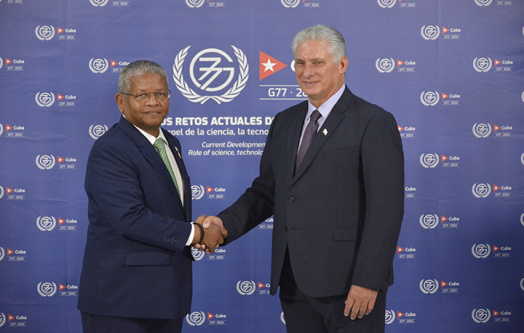
    Havana, Cuba 15 September 2023: The President of the Republic of Seychelles, Mr Wavel Ramkalawan joined fellow leaders of the Group 77 and China Summit of Heads of State and Government currently taking place in Havana Cuba. The two-day summit is taking place under the- guided theme “Current Development Challenges: The Role of Science, Technology and Innovation. ”

    The official opening ceremony was held on Friday morning (15th September), where President Ramkalawan was formally welcomed at the International Conference venue by the President of Cuba, President Miguel Diaz-Canel Bermúdez.

    During the opening ceremony President Diaz-Canel Bermúdez, welcomed and expressed appreciation to world leaders of the various G77 plus China members states for responding to the call of the summit and for their presence in Cuba. The Secretary General of the United Nations, Mr António Guterres took the floor before the G77 and China Heads of State and Government Summit was officially declared open.

    The ceremony was followed by the delivery of statements by Heads of State and Government during the General Debate session. The President was accompanied at the official opening ceremony by the Minister for Foreign Affairs and Tourism, Mr Sylvestre Radegonde.

    SOURCE

    STATEHOUSE NEWS

    » View all


  • EDITORIAL COMMENT

    EDITORIAL COMMENT

    To issue international sovereign bonds, financial markets require countries to have a credit rating from at least one or more of the three leading international credit rating agencies (CRAs) namely, Fitch, Moody’s and Standard & Poor’s (S&P).

    This constitutes a minimum requirement for capital market borrowing by market regulators, as adherence to international best practices of information disclosure and to reach out to a wider base of potential investors.

    The Financial and economic cost implications for Africa emanating from subjective credit ratings by international rating agencies(CRAs) has since left some African capital market players grumbling and dissatisfied as alluded to in various independent research study findings.

    The UNDP study report and policy brief on “Lowering cost of borrowing the role of Rating Agencies” has therefore come to make a yet most compelling case and sufficient justification for Africa to take her destiny into her own hands.

    On the back of this UNDP report came the African ministers, development actors and research institutes meeting on 14 April in Washington DC, on the margins of the 2023 World Bank/IMF Spring Meetings, to discuss the impact of credit ratings on the cost of development finance in Africa.

    At this meeting, organized by the United Nations Development Programme (UNDP), the Africa Growth Initiative at the Brookings Institution and AfriCatalyst, they raised the need to review international financing systems and particularly the determination of sovereign credit ratings for African countries, where data is often missing or of poor quality.

    The event was centered around a new study by UNDP which shows that African countries could save up to US$ 74.5 billion if credit ratings were based on less subjective assessments. This, in turn, would enable them to repay the principal of their domestic and foreign debt and free up funds for investments in human capital and infrastructure development.

    If we want to bring about change, we need to change the game, H.E. Oulimata Sarr, Minister of Economy, Planning and Cooperation, Republic of Senegal emphasized during the meeting in Washington.

    Subjective credit ratings, the Minister underscored, increase the cost of servicing debt, and put cash-strapped countries in a difficult position, having to choose between repaying debt and feeding their population.

    Furthermore, he noted, non-objective credit ratings also reduce the amount of investment that countries receive, as they are perceived to be riskier than they really are.

    “These negative impacts can occur even if the inaccurate credit ratings are not due to conscious bias, but rather to inadequate data and/or methodologies that are too subjective”.

    To issue international sovereign bonds, financial markets require countries to have a credit rating from at least one or more of the three leading international credit rating agencies (CRAs) – Fitch, Moody’s and Standard & Poor’s (S&P) – as a minimum requirement for capital market borrowing by market regulators, as adherence to international best practices of information disclosure and to reach out to a wider base of potential investors

    What Other Independent Studies say about CRAs

    It is worthy of note that it is not only the UNDP that has issues with subjective ratings by IRAs. In a review article on the study titled, “International credit rating agencies in Africa: Perceptions, trends and challenges” authored by Misheck Mutize, University of Cape Coast, Ghana and McBride Peter Nkhalamba African Peer Review Mechanism,

    Criticisms of CRAs by Researchers 

    In a quest to either improve or maintain favorable SCRs, governments subject themselves to the fiscal and monetary policy recommendations by the three international CRAs (Armstrong, 2016).

    Victims of CRAs downgrading

    South Africa

    Armstrong (2016) argues that a government that crafts an economic policy that contradicts the recommendations of the three international CRAs consequently suffers the loss of being downgraded. For instance, South Africa is facing a high threat of sovereign downgrade partly because of the land expropriation bill (IMF, 2018).

    Kenya

    Kenya facing downgrade by Moody’s following its delay to implement value added tax (VAT) on fuel products and proposal to remove petroleum tax (Irungu and Alushula, 2018). S&P warned South Africa against its R500 million stimulus package aimed at cushioning the economic impact of corona virus, citing that it will result in rising public debt.

    Barta and Johnston (2017) adds that there is an absence of sound economic logic behind CRA’s discouraging certain economic policies in emerging economies, which suggests that SCRs may be prone to being used as punitive measures against states that contradict western interests.

    Restrictive CRAs Policy Recommendations

    Policy recommendations by rating agencies are restrictive and forbid fiscal stimuli through government spending and tax relief, which usually align with emerging economies to increase consumer demand, encourage private investment, create jobs and stimulate economic growth.

    However, in contrast, extreme forms of these expansionary policies highly denounced in emerging economies are permitted and left unquestioned in the European and American setting under the banner of monetary easing and/or bailouts

    Despite the long-term economic potential in African countries, the credit rating methodologies over-emphasize the political risk in the rating criteria (Ahern and Painter, 2016).

    These circumstances have taken away the economic freedom of credit rated Africa governments and their sovereignty to freely craft their preferred long-term economic policies without threats of sovereign downgrades

    It is therefore against this background that, we of the Eco-Enviro News Africa magazine, wish to emphatically state that the decision of the AU to put in place a local African rating agency is appropriate and long than due but better late than never.

    It is our hope that the establishment of the African rating agency would bring sanity into the African capital market landscape and provide a level playing ground.

    Africa’s Ballooning Debt Overhung

    As a percentage of GDP, Africa’s share of external debt has risen from approximately 19% in 2010 to nearly 29% in 2022. Simultaneously, its external debt as a share of exports has risen from 74.5% to 140% over the same period.

    In 2022, public debt in Africa reached USD 1.8 trillion. While this is a fraction of the overall outstanding debt of developing countries, Africa’s debt has increased by 183% since 2010, a rate roughly four times higher than its growth rate of GDP in dollar terms.

    With Africa’s public debt now a cog in the wheel of the development of the continent, the need diversify mode of funding has become more imperative than ever before.

    Serious consideration ought to be given to alternative modes of development funding with relatively lower cost and also ensure investments in projects of strategic economic importance which has good returns on investments and can pay for itself.

    Alternative non interest based modes of funding as bridge financing, sovereign sukuk or zero interest Islamic bonds, public banking, etc. are worth considering.

    Mohammed A.Abu
  • African Union plans to launch its own credit ratings agency

    African Union plans to launch its own credit ratings agency

    FINANCIAL SERVICES

    African Union plans to launch its own credit ratings agency

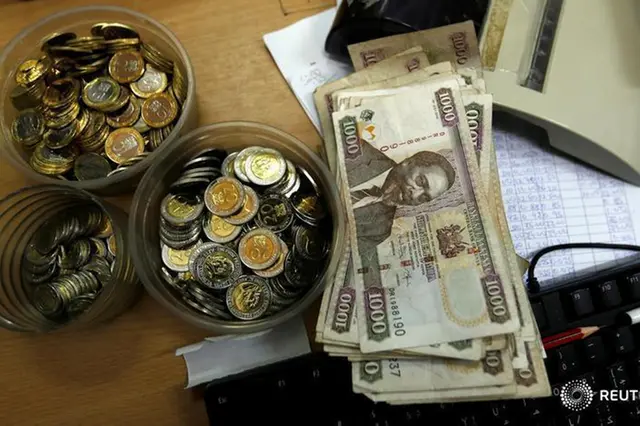
    Kenya shilling coins and notes are pictured inside a cashier’s booth at a forex exchange bureau in Kenya’s capital Nairobi, April 20, 2016. REUTERS/Thomas Mukoya
    Reuters Images

    The agency, which would craft its own assessment of the risks in lending to African countries

    Libby George, Reuters News

    September 12, 2023

    ECONOMYAFRICAFINANCIAL SERVICES

    The African Union plans to launch a new African credit rating agency next year to address the group’s concerns that ratings given to countries on the continent are unfair, an official told Reuters.

    The agency, which would craft its own assessment of the risks in lending to African countries, would be based on the continent, said Misheck Mutize, lead expert for country support on rating agencies with the African Union.

    It will also add context to the information investors consider when deciding whether to buy African bonds or lend privately to countries.

    “We already have quite a huge interest in the private sector to support the implementation of this,” Mutize said, adding they are targeting a launch in 2024.

    The AU, and leaders of member nations from Ghana to Senegal to Zambia, allege that the “big three” ratings agencies – Moody’s, Fitch and S&P Global Ratings – do not fairly assess the risk of lending to African countries, and say they are quicker to downgrade them during crises such as the COVID-19 pandemic.

    All three ratings agencies have denied bias and say their ratings follow the same formula across continents.

    Moody’s and S&P Global Ratings did not immediately respond to a request for comment. Ravi Bhatia, S&P’s lead analyst for sovereign ratings, told Reuters recently that the agency applies the same criteria consistently all regions.

    A Fitch Ratings spokesperson said all sovereign rating decisions use “globally consistent and publicly available criteria” and that all rating drivers were clearly identified.

    OUTSTANDING BONDS

    Broadly speaking, credit ratings are designed to gauge a borrower’s risk of default, and factor in the terms on which banks and others will lend to them. More than a dozen African countries have outstanding international bonds.

    A United Nations Development Programme study in April showed that African countries could save up to $74.5 billion if credit ratings were based on less subjective assessments, citing “idiosyncrasies” in the frequency of ratings actions for African countries as an example.

    Mutize said the new agency was a push to change the narrative.

    “Our goal has not been to replace the big three…we need them to support access to international capital. Our view has been to widen diversity of opinions,” he said.

    “We know the big three follow the opinion of other smaller ratings agencies. They’ve acknowledged that other smaller ratings agencies have got an edge in understanding domestic dynamics.”

    AU finance ministers passed a resolution over the summer to endorse the plan for the new agency, an effort spearheaded by the African Peer Review Mechanism (APRM), a branch of the AU formed last year to improve governance across the continent. The full AU executive council is expected to adopt the same resolution in February.

    The agency would be self funded and private-sector driven with AU oversight, Mutize said.

    “Investors have been quite positive. They want to see what will be the output of this,” he added. “Any investor will pay attention to anything that brings them information.”

    (Reporting By Libby George, additional reporting by Marc Jones, editing by Christina Fincher and Ed Osmond)

    SOURCE

    ZAWYA.COM

  • Islamic Banking Kicks Off In Uganda As BoU Issues 1st License To Salaam Bank Ltd

    Islamic Banking Kicks Off In Uganda As BoU Issues 1st License To Salaam Bank Ltd

    By Frank Kamuntu

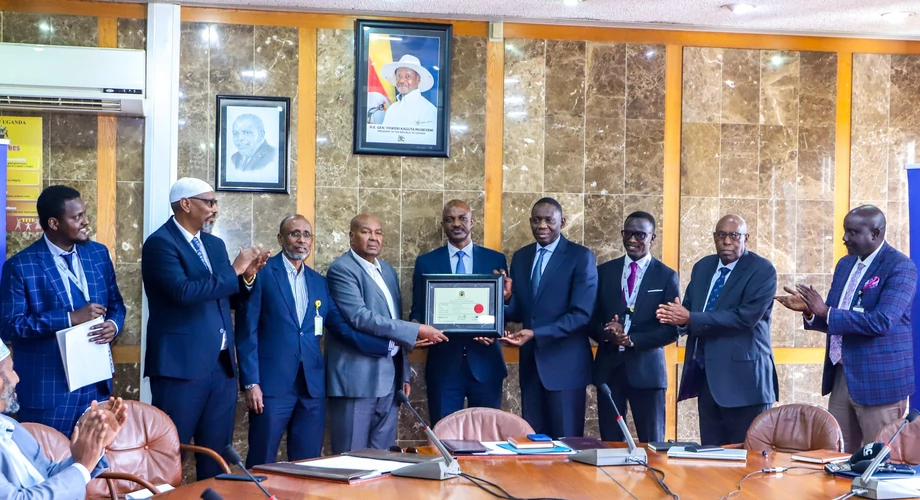
    Uganda’s central bank has issued its first Islamic banking license since the country passed legislation to accommodate Shariah-compliant finance activities in June.

    The license went to Salaam Bank Ltd., a unit of Djibouti-based Salaam African Bank, the Bank of Uganda said in a statement Friday.

    The adoption of Islamic finance, which doesn’t allow the charging of interest, could unlock significant growth in East Africa’s third-biggest economy by attracting customers who have avoided traditional lenders on religious grounds.

    Shariah-compliant assets are among the world’s fastest-growing financial instruments and are forecast to reach $3 trillion worldwide in the next decade, from about $2.1 trillion at the end of 2016.

    “We believe that Islamic banking has the potential to make a significant contribution to the development of Uganda’s financial sector,” the central bank’s Deputy Governor Michael Atingi-Ego said in the statement.

    Salaam African Bank entered the Ugandan market last year through the acquisition of Top Finance Bank Ltd. — part of a broader strategy to expand in East Africa.

    The Ugandan parliament authorized Islamic banking in the country in June.

    CREDIT(SWIFT DAILY NEWS) 

  • BRICS: CONSIDERATIONS AND IMPLICATIONS OF A SINGLE BRICS CURRENCY

    BRICS: CONSIDERATIONS AND IMPLICATIONS OF A SINGLE BRICS CURRENCY

    By Franco Macchiavelli

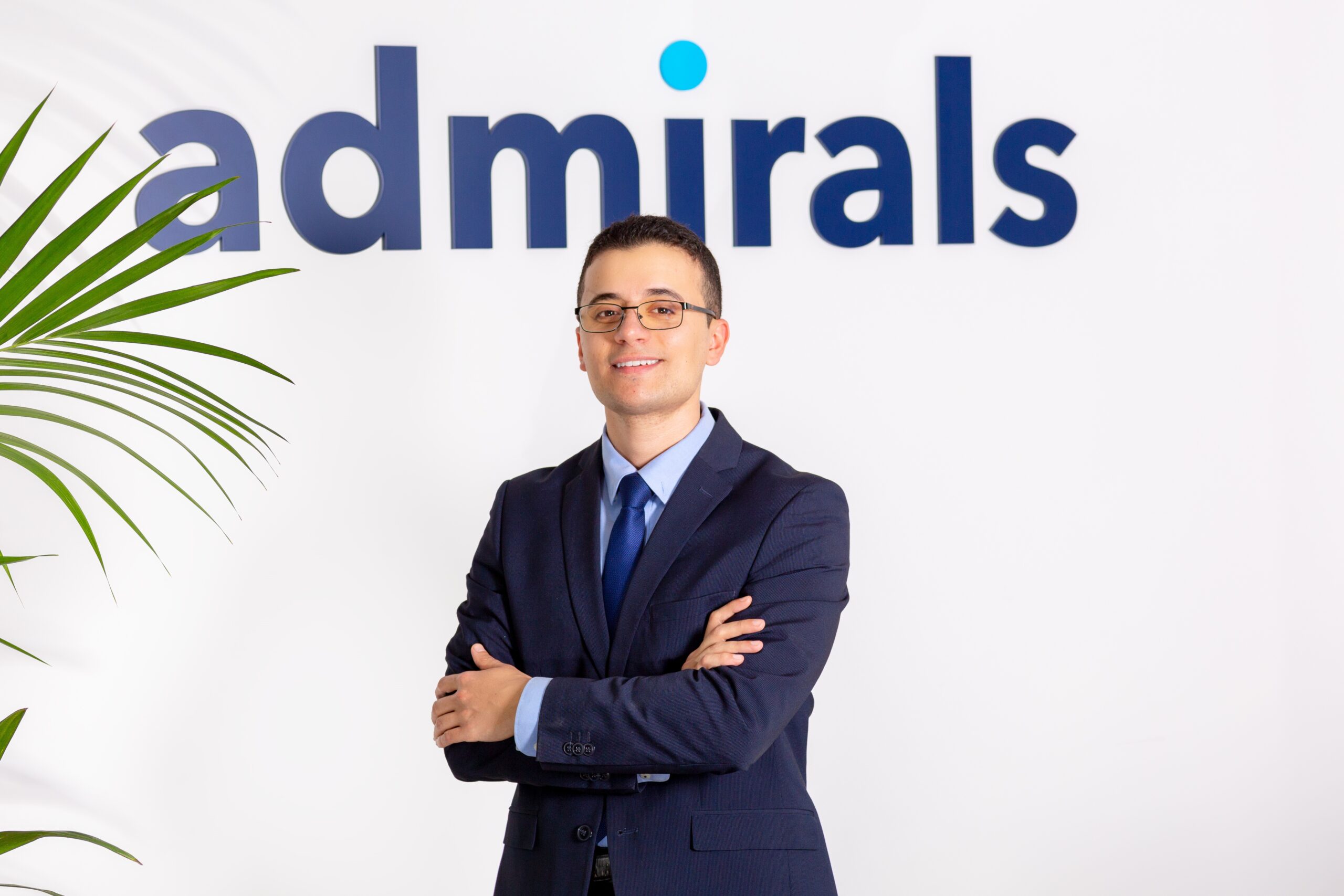
    Market Analyst at Admirals and Certified European Financial Advisor (EFA) (Nr 35591)

    5 September 2023

    The 15th BRICS Summit, hosted by South Africa in Johannesburg from 22 to 24 August, culminated in the widely anticipated announcement of a soon-to-be expanded BRICS bloc, with the admission of six new member countries to this economic grouping as from January 2024.

    In the build-up to this year’s BRICS Summit there has also been some speculation that the grouping might discuss the issuance of a joint currency to compete with the dollar as the reserve currency with world hegemony.

    However, this issue was not addressed during the event. South Africa’s representative stated that such an approach was never considered, and India’s foreign minister also dismissed the possibility.

    Data from the IMF’s 2023 World Economic Outlook shows that together, these five economies – Brazil, Russia, India, China, and South Africa – account for roughly 40 per cent of the world’s population and 20 per cent of global trade flows. Despite the logic behind the idea to introduce a new currency in place of the dollar, the truth is that this would be rather complicated to implement – at least in the short to medium term.

    If the idea were to come to fruition, there would be two main approaches:

    1. Create a new central bank that would issue a single currency to replace the national currencies of each of the five countries (Brazil’s real, Russia’s rouble, India’s rupee, China’s yuan and South Africa’s rand). However, this would require these countries to give up their monetary sovereignty, which would limit their ability to manage the value of their own currency according to their economic needs. To understand this better, if Brazil wanted to depreciate its currency to improve its exports, but the other countries did not agree, Brazil would not be able to make this decision unilaterally. Therefore, we are talking about an important risk in the management of each country and the different factors that affect its growth and economic and monetary management.
    2. 2. A different scenario would be to adopt the currency of one of the member countries as the BRICS’ own currency, such as China’s yuan. However, this would also present major challenges, as the remaining countries would again lose their monetary sovereignty, this time to China, which could limit their ability to make independent economic decisions. If for example China wanted to implement a rate cut to boost domestic economic growth, the remaining BRICS nations would be affected collaterally without having been able to influence China’s decision, also affecting the other economies that might not be experiencing the same characteristics and conditions as China.

    In short, both paths are complicated to pursue and present significant obstacles for member countries.

    What is certain, however, is that these countries aim to reduce their dependence on the dollar in the future. Currently, when the BRICS sell their products to the rest of the world, they receive payments in dollars and accumulate these dollar-denominated reserves. However, fluctuations in the value of the dollar over the years have posed a significant depreciation risk for these countries.

    Most of the BRICS have been accumulating dollar reserves for years, and with the effect of inflation, these have been affected because they have mostly not imported goods, but accumulated reserves.

    What would happen if instead of accumulating dollar reserves, they accumulated reserves in another currency through trade among the members themselves?

    This brings to mind the recent case of trade between Russia and India:

    India has been buying oil from Russia at a significant discount to the price in the West. However, these purchases have been paid for in rupees. So, if we talk in terms of trade, Russia sells oil to India and receives payment in rupees, but collaterally faces a significant currency risk, i.e., that rupees depreciate over time even more than the dollar.

    Moreover, rupees are only accepted in India and do not have the global hegemony to buy any asset across the world, which complicates the management of its international reserves, unlike the dollar, which is accepted globally in the purchase and sale of any good, asset or service.

    Ultimately, despite the search for alternatives to the dollar, replacing it with a new currency poses considerable challenges for the BRICS, and makes it unlikely to manifest itself in the near future due to the complexity of its implementation.

    Naturally the addition of six additional nations – Argentina, Egypt, Ethiopia, Iran, Saudi Arabia, and the United Arab Emirates will multiply the complexities significantly.

    It will be interesting to see what impact the BRICS expansion will have on the global economy and geo-politics but for now the dollar will continue to be the dominant trading currency.

    Disclaimer: The views expressed in this article reflect those of the writer and does not represent the official view of the Eco-Enviro News Africa,magazine.


  • Afreximbank signs MOU with UAE Trade Center to promote TRADAR Club

    Afreximbank signs MOU with UAE Trade Center to promote TRADAR Club

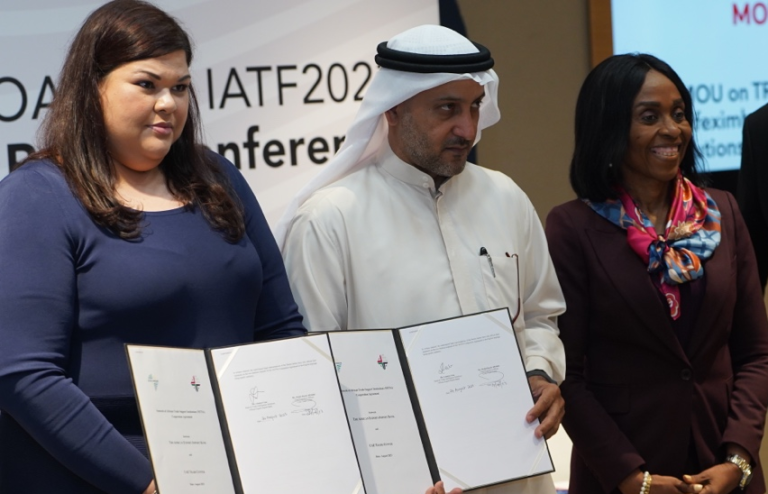
    Cairo, 1 Sep. 2023: – The African Export-Import Bank (Afreximbank) signed an MOU with the United Arab Emirates (UAE) Trade Center, to promote the TRADAR Club solution in the market.

    The Cooperation Agreement, signed between Afreximbank and the UAE Trade Center on the sidelines of the Intra-African Trade Fair (IATF2023) Press Conference and B2B Meetings in Dubai United Arab Emirates (UAE), provides for the two institutions to commence harmonisation of their efforts in various areas of collaboration to support the TRADAR Club objectives.

    The agreement was signed by Ms. Lizanne Case, Head of Trade Intelligence Solutions on behalf of Afreximbank, while Mr. Walid Hareb AlFalahi, Chief Executive of the UAE Trade Center signed for his organisation.

    The Afreximbank TRADAR Club, launched recently as a prestigious member-driven network, empowers international businesses and executives to transform trade and investments in Africa through trusted trade intelligence and advisory services. It delivers innovative digital tools and networking opportunities, helping its members to discover new markets; grow their businesses; save time; access dedicated expert support; post and respond to new business opportunities; network; meet business/trading partners; and more.

    To propagate the solution in the market, Afreximbank is establishing strong relationships with a wide variety of partners. Under the terms of the cooperation agreement with the UAE Trade Center, the two institutions will collaborate in such areas as inter-institutional cooperation; provision of business-oriented information to facilitate trade and investment; business matchmaking; grants; technical assistance; and capacity building, among others.

    The agreement is expected to facilitate greater interaction by allowing for the sharing of ideas and discussion of common problems for the purpose of improving relationships and cooperation among members.

    TRADAR Club will serve as an information pool assisting the exchange of reliable trade information, trade policies, customer databases, research reports, expert analysis, directories of African investment information, rules and regulations, general updates on statistics, business data and investment incentives, among others. TRADAR Club members will also be invited to trade and investment missions and exhibitions.

    SOURCE

    AFREXIMBANK  WEBSITE

  • Afreximbank and China Development Bank sign US$400-million loan to support Africa SMEs

    Afreximbank and China Development Bank sign US$400-million loan to support Africa SMEs

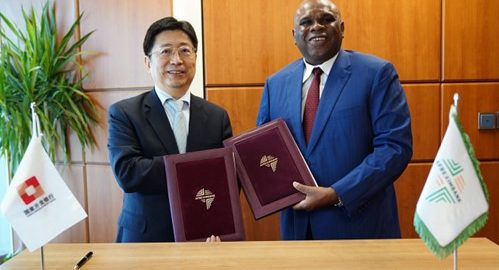
    Cairo, 28 Aug. 2023: – The China Development Bank (CDB) today in Cairo signed a development-focused agreement to provide the African Export-Import Bank (Afreximbank) with a US$400-million term loan facility to support the financing of small and medium-sized enterprises (SMEs) across Africa.

    The agreement, signed by Mr. Tan Jiong, President of CDB, and Prof. Benedict Oramah, President and Chairman of the Board of Directors of Afreximbank, at the Afreximbank Headquarters in Cairo, provides for Afreximbank to deploy the facility to support African SMEs involved in extra- and intra-African trade and those engaged in the productive sectors in Afreximbank Member States. According to the agreement, the facility, which has a seven-year tenor, will be deployed either directly to eligible African SMEs that meet Afreximbank’s requirements or indirectly through local financial intermediaries.

    Speaking after the signing, Prof. Oramah pointed out that African SMEs continue to struggle to access adequate and affordable financing for growing their businesses and said that the CDB facility would help increase the level of financing available to them.

    He added that since Afreximbank was receiving the facility as medium to long-term funding at relatively affordable pricing, the Bank would transfer the financial advantage in pricing and tenor to the end beneficiaries.

    “This facility further strengthens the strategic partnership we have developed with the China Development Bank over the last six years, which has seen CDB make three previous interventions in support of our work at Afreximbank,” continued President Oramah. “It will also enable our two institutions achieve our respective mandates and developmental outcomes, which include job creation, increased economic activity and increased extra-African trade with China.”

    – ENDS –

    SOURCE

    Afreximbank Website

    :

  • SGI Dubai 2023 set to bolster African printing industry to experience unprecedented growth

    SGI Dubai 2023 set to bolster African printing industry to experience unprecedented growth

    Printing and signage industry in Africa set to flourish as the largest B2B show in Middle East & Africa, SGI Dubai 2023, unveils ground-breaking innovations
    DUBAI, United Arab Emirates, August 25, 2023/ — SGI Dubai (www.SignMiddleEast.com), the leading global showcase for cutting-edge printing and signage solutions, is gearing up to revolutionize the African industry landscape. Set to be held at the prestigious Dubai World Trade Centre from 18th to 20th September, the 26th edition of SGI Dubai (https://apo-opa.info/3OTZ6n8) promises to be a game-changer for African stakeholders. Industry experts, visionaries, and trendsetters from around the world will converge to unveil the latest innovations that will propel the African printing industry into an era of unrivaled growth and prosperity. Register now to witness the transformation of the African printing industry at SGI Dubai 2023: https://apo-opa.info/3OTZ6n8

     Download document: https://apo-opa.info/44qMJog

    Abdul Rahman Falaknaz, Chairman of IEC, expressed his anticipation, “African economies are poised to become a powerhouse of opportunities on the global stage. The demand for cutting-edge printing and signage products and services is destined to soar across the continent, fueled by the remarkable growth of its commercial printing industry. The innovations unveiled at SGI Dubai 2023 will be the catalyst that ignites an extraordinary transformation in the African printing sector. This exhibition is not just a platform for business-to-business interactions; it is an ecosystem of innovation and knowledge, connecting brilliant minds from diverse vertical sectors.”

    With the African printing industry projected to reach a staggering value of US$235.3 million by the end of 2031, the timing couldn’t be more perfect. The continent boasts approximately 2,000 commercial printing companies, with a majority comprising small, medium, and micro enterprises (SMMEs). An additional 1,000 companies cater to pre-press and post-press services, showcasing the rapid expansion of this thriving sector.

    SGI Dubai 2023 (https://apo-opa.info/3E9GESy) will showcase an array of industries, with special emphasis on digital display technologies, labeling, metal cutting & engraving, spare parts & consumables, software, paper, and ground-breaking technologies such as 3D printing and artificial intelligence. The show will serve as an unparalleled opportunity for African sign-makers, print and production manufacturers, media agencies, car wrapping industry, real-estate developers, hospitality and tourism industries, architects, and brand consultants to explore limitless possibilities and elevate their businesses to new heights.

    Mr. Falaknaz emphasized the show’s significance for the African continent, “The growth strategy for African stakeholders must begin now. SGI Dubai (https://apo-opa.info/3E9GESy) presents not only an exceptional platform for sourcing top-of-the-line machines with the latest technology but also fosters meaningful connections among industry professionals. We’ve witnessed a steady surge in the number of African trade visitors year after year, representing key nations such as Kenya, Nigeria, Uganda, Cameroon, South Africa, Sudan, Ghana, Namibia, Tanzania, Egypt, and Libya, among others. The proximity of our show to Africa makes it highly accessible for business owners to engage directly with exhibitors and manufacturers of top brands, securing the most competitive rates.”

    During the previous edition, SGI Dubai (https://apo-opa.info/3E9GESy) welcomed over 300 global exhibitors from 30+ countries and registered thousands of trade visitors from 100+ countries worldwide. The influence of SGI Dubai extends beyond the Middle East, making it a pivotal event for Africa’s growth trajectory.

    Mr. Falaknaz concluded, “SGI Dubai (https://apo-opa.info/3E9GESy) is more than just a trade show; it is an invaluable opportunity for African visitors to conduct market research and make well-informed business decisions. As the show’s influence continues to expand across the African continent, the growing number of visitors is a testament to the benefits it offers all stakeholders involved. SGI Dubai 2023 is set to redefine the future of the African printing and signage sector, unlocking unprecedented opportunities for growth and prosperity.”
    Distributed by APO Group on behalf of SGI Dubai.
    SOURCE
    SGI Dubai
  • Investing in Black-Owned Businesses is Investing in the Future

    Investing in Black-Owned Businesses is Investing in the Future

        By promoting investments in Black-owned businesses, the Global Black Impact Summit will unleash a wave of economic equality and societal transformation, heralding a new era of diversity and inclusion in the business world
    DUBAI, United Arab Emirates, August 18, 2023/ — As the world increasingly acknowledges the importance of fostering diversity, equity and inclusion, the Black Impact Foundation’s Global Black Impact Summit (GBIS) (https://GlobalBlackImpact.com/) – which is organized by Energy Capital & Power (https://EnergyCapitalPower.com/) – emerges as a beacon of change.

    With an unyielding focus on economic growth, wealth disparities and generating opportunities for Black communities, investing in Black-owned businesses takes the spotlight as a powerful catalyst for societal advancement.

    By magnifying the significance of investing in Black-owned businesses, GBIS will reshape the business landscape into one that embraces inclusivity, advances communities, and drives sustainable economic progress.

    Anticipate a multitude of exciting offerings at the GBIS: Championing Growth – The summit rallies entrepreneurs, investors, and leaders to promote economic growth, wealth equality, and opportunities for Black communities.Powerful Catalyst – Investing in Black-owned businesses takes center stage as a driver for societal advancement and sustainable economic progress.

    Global Venue – GBIS takes place in Dubai, from November 30 to December 1, offering a prime platform for global engagement and networking.Resourceful Collaboration – Hosted by the esteemed Black Impact Foundation (BIF) and organized by Energy Capital & Power, GBIS connects stakeholders for impactful collaborations.Informative Sessions – Through panel discussions, workshops, and presentations,

    GBIS equips Black individuals and companies with valuable insights on financial markets, investment strategies, profitability, and business management.Brand Showcasing – GBIS provides Black-owned businesses unique opportunities to promote and showcase their brands to a global audience, boosting brand awareness.Networking Hub – Unparalleled networking opportunities abound, from cocktail receptions to investor-led lunches, fostering connections across the global economy.Investor-Entrepreneur Confluence –

    The event not only provides a platform where leaders and innovators can meet but facilitates opportunities for dialogue and deals. GBIS is committed to shed a spotlight on investing in the global Black community, and through the event’s global focus, will ensure entrepreneurs have access to both resources and capital.Encouraging Insights

    Participants gain valuable knowledge and tools to drive meaningful change and realize the immense potential within Black-owned businesses.Advancing Diversity and Inclusion.

    Together, attendees promote diversity, inclusion, and prosperity for all, leading the way in a vital global conversation. Collectively, participants champion the values of diversity, inclusion, and shared prosperity, taking a leading role in a crucial global dialogue.

    Together, we can drive meaningful change, promote diversity and inclusion, and create a prosperous future for all. Don’t miss this chance to be at the forefront of this important global conversation.

    To secure your participation at this important, high-level event, register now at www.GlobalBlackImpact.com. Distributed by APO Group on behalf of Energy Capital & Power.
    SOURCE
    Energy Capital & Power
  • Stears Announced as Lead Sponsor of AFSIC – Investing in Africa 2023

    Empowering Africa-Focused Investments with Data-Driven Insights

    LONDON,United Kingdom,July 25,2023Stears, one of the world’s leading providers of African data and insights, has been announced as the Lead Sponsor of AFSIC – Investing in Africa 2023. AFSIC 2023, Africa’s Investment Event, which will be held in London on the 9th and 10th October 2023, is the meeting place for focused networking, discussions and executing African investment deals. It has for the past ten years delivered year on year growth as well as success for African companies seeking funding and companies wanting to grow globally.

    Stears’ sponsorship of AFSIC – Investing in Africa 2023 reflects its commitment to promoting investment opportunities in Africa, driving capital inflows and increasing the ease of doing business for investors. The conference allows attendees to discover new investment opportunities, forge valuable business partnerships, and exchange critical insights on the African market.

    “We are thrilled to be the lead sponsor of AFSIC – Investing in Africa 2023”, stated Preston Ideh, CEO of Stears. “Stears is committed to fostering an environment where African investors can thrive. Our sponsorship of AFSIC aligns perfectly with our mission to provide reliable and actionable intelligence to global decision-makers interested in Africa. Through this partnership, we aim to enable more quick, accurate decisions for both financial and operational opportunities on the continent.”

    Stears’ deep expertise with African data and AFSIC’s prestigious platform will create an environment where Africa-focused conversations and connections can flourish. The conference will provide a unique opportunity for investors to learn about the latest trends in the African market and network with leading industry figures.

    Stears join a growing group of prestigious sponsors who are supporting AFSIC 2023 as they celebrate their tenth anniversary and the commitment of so many underlines the importance of AFSIC’s continued focus on driving investment into Africa.  Country-focused investment summits, high level networking, investor meetings and industry relevant content are just some of the sessions that AFSIC 2023 will deliver, once again supported by many of Africa’s most important investors, Prosper Africa, a wide range of Development Finance Institutions, and leading African corporate executives.

    For more information visit our website www.afsic.net.

    About Stears:

    For global organisations investing in African markets, Stears is the data and insights provider that enables quick, accurate decisions for financial and operational opportunities. Stears customers access raw data from various sources, trend data for a wide range of data sets, and constantly updated analysis by researchers. Unlike other providers, Stears goes beyond just data to provide insights and context based on knowledge of local markets and delivers it all in an easy-to-use interface usable by anyone.

    About AFSIC – Investing in Africa:

    AFSIC – Investing in Africa has become perhaps Africa’s most important annual investment event. The event is owned by Africa Events Limited. AFSIC is wholly focused on accelerating Africa’s economic emergence by matching investment opportunities in Africa transforming Africa’s business, trade and investment environment, growing Africa’s economy, reducing poverty, and increasing African incomes in all business sectors at a continental scale across all 54 countries in Africa.

    African Investments Limited (www.africaninvestments.co), a sister company to Africa Events Limited, operates two multi award-winning digital platforms, the AFSIC African Investments Dashboard which matches investment opportunities to our global network of institutional investors and the Africa Business Opportunities Dashboard, which matches business, trade and investment opportunities across Africa covering all business products, sectors, countries in Africa and multiple business objectives. The digital platforms won the global 2022 Salesforce Partner Innovation Award for Financial Services.

    Resources:

    www.afsic.net

    www.africaninvestments.co