Category: ECONOMY

  • COP28 UAE kicks off, as global climate action takes centre stage

    COP28 UAE kicks off, as global climate action takes centre stage

    Leaders must deliver in Dubai – the message is clear, said UN Climate Change executive secretary Simon Stiell on the eve of COP28

    The United Nations Climate Change Conference COP28 opens today, with a strong call to speed up collective climate action.

    The conference takes place in the hottest year ever recorded in human history

    COP28 will run from November 30 to December 12 at Expo City Dubai, offers a global platform to agree on climate commitments and curb the worst impacts of climate change, according to a statement released by United Nations Climate Change.

    This year’s COP marks the conclusion of the global stocktake, the first assessment of global progress in implementing the 2015 Paris Agreement.

    The global stocktake lists actions on how to speed up emissions cuts, build resilience to climate impacts, and provide the support and finance needed for the transformation. It will be a catalyst in meeting the Paris Agreement’s goals, as nations prepare to submit revised national climate action plans by 2025.

    The world is not on track to limiting temperature rise to 1.5°C by the end of this century. while countries are developing plans for a net-zero future, and the shift to clean energy is gathering speed, the transition is nowhere near fast enough yet to limit warming within the current ambitions, the UN Climate Change said.

    report recently published by UN Climate Change shows that national climate action plans (known as nationally determined contributions, or NDCs) would collectively lower greenhouse gas emissions to 2 per cent below 2019 levels by 2030, while the science is clear that a 43 per cent reduction is needed.

    In a message shared on the eve of the event, UN Climate Change Executive Secretary Simon Stiell said: “It’s great that over 160 world leaders are coming, but COP28 cannot be just a photo-op.  Leaders must deliver in Dubai – the message is clear.

    “They must agree to triple renewable energy this decade, and double energy efficiency. Developing nations – who did least to cause the crisis – have been starved of climate justice and resilience for too long. Last year’s COP in Egypt delivered an historic Loss & Damage Fund.  This year’s cop in the UAE must put meat on the bone of this fund. That means putting real money on the table.  Table scraps won’t cut it. More broadly – COP28 in Dubai must show that finance is the great climate enabler. It needs to flow to developing in countries in torrents, not trickles, to boost climate resilience right now.”

    Climate finance is the key to transformation

    Climate finance stands at the heart of this transformation. Replenishing the Green Climate Fund, doubling financial resources for adaptation and operationalising the loss and damage fund are key to keeping 1.5°C within reach while leaving no one behind.

    “The reality is that without much more finance flowing to developing countries, a renewables revolution will remain a mirage in the desert. COP28 must turn it into a reality,” Stiell added.

    Progress on climate finance at COP28 will be crucial to build trust in other negotiation areas and to lay the groundwork for an even more ambitious ‘New Collective Quantified Goal’ for climate finance, which must be in place next year. It will also set the stage for a just and inclusive transition to renewable energy and the phasing out of fossil fuels, United Nations Climate Change said in a statement.

    In the face of rising conflicts and tensions worldwide, Stiell emphasised the need for collaborative efforts to combat climate change, an area in which nations can work together effectively to ensure a sustainable future both for people and the planet.

    “We don’t have any time to waste. We need to take urgent action now to reduce emissions. At COP28, every country and every company will be held to account, guided by the north star of keeping 1.5°C within reach,” said COP28 President Dr Sultan Al Jaber.

    “All parties should be prepared to deliver a high ambition decision in response to the global stocktake that reduces emissions while protecting people, lives and livelihoods,” Al Jaber added.

    Egyptian Minister of Foreign Affairs and COP27 President Sameh Shoukry said: “We need to start delivering on climate justice and provide the needed tools that we already agreed upon in Sharm el-Sheikh for funding loss and damage, including the establishment of a fund. One of the major outcomes that have to come out of COP28 is for the fund to be fully operationalised and funded.”

    High-level COP28 events

    The World Climate Action Summit (WCAS), hosted by UAE President Sheikh Mohamed bin Zayed Al Nahyan, President of the UAE, will convene Heads of State or Government on December 1-2 , when the first part of the COP28 high-level segment will also take place.

    A resumed high-level segment will take place on December 9-10.

    The COP28 Presidency will hold open consultations on thematic areas, inviting inputs from the broad mix of stakeholders attending the conference. Consult the COP28 UAE Thematic Program

    SOURCE

    Culf Business
  • Global Milestone: CIBAFI Announces, in conjunction with COP28, Adoption of Islamic Sustainability Roadmap in Collaboration with IFSB and AAOIFI

    Global Milestone: CIBAFI Announces, in conjunction with COP28, Adoption of Islamic Sustainability Roadmap in Collaboration with IFSB and AAOIFI

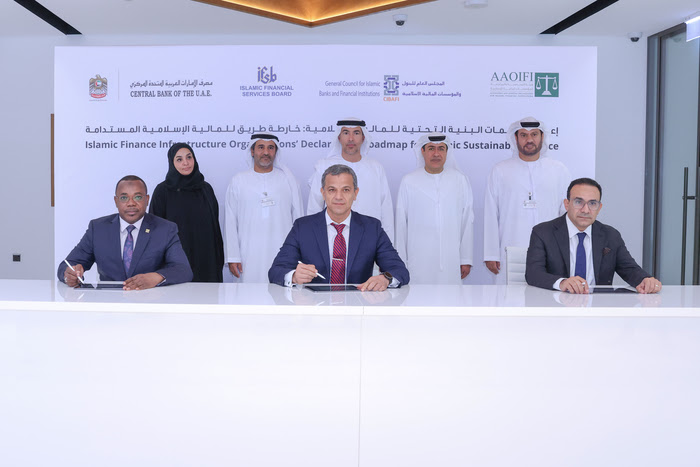
    30th November 2023, Abu Dhabi, UAE | The General Council for Islamic Banks and Financial Institutions (CIBAFI), the global body of Islamic finance, is delighted to announce the adoption of a comprehensive roadmap for Islamic Sustainability. This roadmap was developed in collaboration with the Islamic Financial Services Board (IFSB) and the Accounting and Auditing Organization for Islamic Financial Institutions (AAOIFI), with coordination from the Central Bank of the UAE. The adoption ceremony took place at the headquarters of Central Bank of the UAE.

    In alignment with COP28, this roadmap underscores CIBAFI’s commitment, alongside other key infrastructure organizations, to enhance the role of the Islamic financial services industry in promoting sustainability and addressing global climate-related risks. The roadmap comprises initiatives and projects by these three organizations aimed at guiding the industry towards sustainable development.

    Dr. Abdelilah Belatik, Secretary General of CIBAFI, emphasized the importance of this initiative, stating, “Our commitment to sustainability has been ongoing for several years. This initiative, announced in conjunction with COP28 in the UAE, marks a significant step in normalising the role of Islamic finance in promoting sustainability. This collaboration would not have been possible without the coordination and support from the Central Bank of the UAE.”

    The signing of the declaration by the secretaries general of the three organizations was witnessed by H.E Khaled Mohamed Balama, Governor of the Central Bank of the UAE, and senior officials from COP28.

    H.E. Khaled Mohamed Balama, Governor of the CBUAE, said: “This declaration issued by the Islamic Finance Infrastructure Organisations tends to foster Islamic sustainable finance globally, as it sets clear roadmap and objectives to support Islamic finance industry to integrate further sustainability considerations in their businesses and activities.  The CBUAE is pleased to have supported in the success of these discussions as part of its commitment to promoting sustainability and in keeping with the UAE’s vision of becoming an Islamic finance hub.”

    The Islamic Finance Infrastructure Organizations’ Declaration on the Roadmap for Islamic Sustainable Finance is a landmark, fostering collaboration among key players. This empowers the Islamic finance industry to contribute significantly to global sustainability goals.

    SOURCE

    CIBAFI

  • Natural Gas Is Key to a Just African Energy Transition (By NJ Ayuk)

    Natural Gas Is Key to a Just African Energy Transition (By NJ Ayuk)

    SANDTON, South Africa, November 29, 2023/ — By NJ Ayuk, Executive Chairman, African Energy Chamber (www.EnergyChamber.org).

    It would be an understatement to say Tanzania’s Songo Songo gas field has been good for the country and its citizens. Since 2004, the project’s output has been put to work to benefit the Tanzanian economy, its domestic energy supply, energy costs, employment numbers, and the environment.

    With wells and a processing plant on Songo Songo Island, the public/private effort puts domestic needs first, using output to fuel the Ubungo gas-to-power operation as well as a major cement company and a village electrification program. Excess gas is sold to industrial customers across a range of industries.

    Songo Songo production now generates about 45% of Tanzania’s electricity, reducing the need for higher-priced imported fuel. Another important benefit? When the country’s supply of hydroelectric energy wanes because of droughts, gas-to-electric generation can be counted on to fill the gap.

    The development has directly created 190 jobs and made 113,809 more jobs possible.

    It is also significantly decreasing carbon emissions (at the Tanzania Portland Cement Company alone, CO2 emissions have been reduced by about 80,000 tons per year) and is providing a cleaner energy source at Dar es Salaam power plants by replacing diesel and heavy fuel oil (HFO).

    This project is just one example of what natural gas can do to boost African economies, workforces, energy supplies, and the health of both the environment and residents.

    Because of its great potential for replicating success stories like this across the continent, I remain convinced that natural gas is the key to a prosperous future and a just energy transition for Africa.

    As leaders from around the globe gather for COP28—and discussions turn to zero-emissions goals and renewable energy, I would like to respectfully point out that natural gas is clean energy. We must not, in our zeal to achieve our climate goals, dismiss the tremendous good that gas can deliver.

    Natural Gas and Gas Products are Clean, Assist Emissions Targets

    We’ve already seen natural gas’ positive impact on other regions of the globe. In America, for instance, natural gas is used more than any other fuel for generating both residential and industrial power, as feedstock to produce petrochemicals and fertilizers, and as a fuel of choice for generating electrical power. The U.S. uses roughly one-third of the natural gas produced globally, and demand for it there is growing.

    There are good reasons for this, beginning with the fact that natural gas is the cleanest fossil fuel. It emits 50% to 60% less carbon dioxide than coal when burned and emits up to 30% less CO2 than crude oil.

    If natural gas is a good option for wealthy countries like America, why shouldn’t developing nations reap the same benefits?

    Gas can provide readily available, clean energy for sub-Saharan African countries while their renewable energy infrastructure and technology are “catching up” to that of wealthy, highly industrialized nations. And when supplies from renewable sources like solar and wind are intermittent (as on cloudy days and when the air is still), gas can fill the gap.

    Natural Gas is Needed Domestically to Address Energy Poverty

    Wealthy countries should not be attempting to set deadlines for Africa’s transition to renewables, but that is happening. Organizations from the World Bank to the European Investment Bank are pressuring Africa to quickly phase out fossil fuels. Even African lobbyists from Kenya are calling for a 30-year phase-out.

    African governments and energy industry stakeholders must push back.

    Investors who know Africa understand the hardships that accompany the electricity deprivation that more than two-thirds, or over 620 million, sub-Saharan Africans live with. These investors should stay the course rather than distancing themselves from African fossil fuels.

    As I stated in my 2019 book, “Billions at Play: The Future of African Energy and Doing Deals,” lack of electricity is much more than inconvenient. It deprives people of modern healthcare and exposes them to toxins in their homes from primitive fuels. It prevents progress across economic segments from business to industry to education.

    The picture is a dire one and is expected to get worse due to projected population growth. Residents need electricity now, and fossil fuels can give it to them much more quickly, while green energy continues to evolve and become more prevalent.

    Natural gas has a critical part to play in the energy mix needed for the continent to meet its current and growing energy needsLet’s make eliminating energy poverty a higher priority than adherence to an arbitrary, one-size-fits-all transition calendar.

    Natural Gas Monetization Can Finance Energy Transitions

    A just energy transition for Africa requires using our oil and gas resources as part of the process. The transition to renewables has begun, and there is more to come. In the meantime, however, Africa needs gas-to-electricity production and the monetization of its oil and gas resources.  Capital from these resources can progressively fund the infrastructure and development needed to transition to renewables.

    Reaching energy transition goals will require a major influx of investment capital into African economies. As one example, for Nigeria to reach the goals of its Energy Transition Plan (ETP) it will require about USD410 billion by 2060.

    Overall, Africa has no shortage of natural gas reserves. A recent investment platform statistic totals them at 800 trillion cubic feet, distributed among nearly half of all African nations.

    What is urgently needed are strategies to attract investment, enabling this gas to be removed from its underground and undersea reservoirs, transported, and stored. Local content will always play an important part in this process.

    Creativity is also needed to provide solutions for inadequate production, transport, and storage infrastructure such as building downsized, modular LNG plants and using compressed natural gas (CNG) that shrinks methane to less than 1% of its normal volume for transport and storage.

    In closing, I’ll repeat a vital point: Natural gas is increasingly in demand globally. This presents an opportunity that Africa should take advantage of now. We must monetize our natural gas resources for the good of our economies, the health of our residents, and to grow green energy initiatives at a pace that is good for Africa. This is the message I’ll be sharing during COP28 and well into the future.

    Distributed by APO Group on behalf of African Energy Chamber.

    SOURCE
    African Energy Chamber

  • About African  Continental  Sustainable  Built  Environment  Industry Summit-ACEACFMS 2023

    About African Continental Sustainable Built Environment Industry Summit-ACEACFMS 2023

    ACCRA, Ghana, November 29, 2023/- As the day for the largest international Summit for the building, construction and real estate industry maiden event in Ghana, the African Continental Sustainable Built Environment Industry Summit (ACEACFMS 2023), draws closer, confirmations are coming in from both in-person and virtual participants within Ghana, Africa, Canada, Australia & New Zealand among others

    West African Sub-region

    Some of the high profile in-person participants from the West African sub-region who have confirmed their participation are, Engr Dr. Modasiru Bola (Principal Partner Prolarank Nigeria Limited currently, the National Secretary General of the Nigeria Institution of Highway and Transportation Engineers and Engr Essono Alain, Training Consultant, the National Civil Engineers Association of Cameroon.

    Outside Africa

    Confirmations for virtual participation has already been received from Canada, Australia & New Zealand as well as South Africa.

    Being organized as collaborative effort between the Africa Continental Engineering & Construction Network (ACECN) and GM Bamboo Eco-City Ltd, the expects a total participant score of thousand (1000+), about 500 Ghanaian and foreign in-person participants and 200 virtual and 300 virtual international participants with particular reference to those from Angola, Cameroon, Congo-Brazzaville, Cote D’Ivoire, Kenya, Liberia, Nigeria, Rwanda, Sierra Leone, South Africa, The Gambia and Togo.

    Aims & Objectives

    By far, it is the singular and most impactful Sustainability Summit that brings together all sector players across the African continent to discuss industry best practices, contemporary innovations and technologies that have the potential of influencing decision making for a resilient African Engineering, Construction and Real Estate Industry and by extension, creating a high-level business networking opportunity for all stakeholders both locally and across the globe.

    The objective is to set the stage for the transitioning of the conventional built environment to a sustainable built environment whilst creating opportunity for high-end business networking to foster synergy and high-level business partnerships/collaborations for corporate growth and for the African continental prosperity at large.

    Who to Attend

    Influential building contractors, road contractors, professional practicing civil engineers, electrical engineers, surveyors, planners, architects, project managers, real estate developers, building and construction material/equipment suppliers, glaziers and fabricators.

    Also included are, interior deco professionals/companies, roofing companies/technicians, transport & logistics companies, facility management institutions/professionals, construction project financiers, investors, project insurance institutions, artisans among others.

    Being held for the first time under the theme: INTEGRATING SUSTAINABLE BUILT ENVIRONMENT FOR SOCIO-ECONOMIC TRANSFORMATION THROUGH THE USE OF DIGITAL TWIN TECHNOLOGIES, the organizers plan to make it a most bespoke annual industry event.

     Benefits to be derived by Participants

    The event seeks to create an enabling business environment and opportunity for participants to land big contracts, seal potential partnership deals, boost sales, build strong network with the most influential industry players, get signed on to top-rated projects/contractors/professionals across the African continent and beyond has finally come.

    “You have the opportunity to interact with and do business with our principal sponsors and consultants among few are, GM-Bamboo Eco-City Ltd, Rockville Construction Ltd, B5 Plus Group, Aya Fabrications & Engineering Ltd, Premier Steel Ltd, Neuce Paints Ltd, Primus Group, the McDan Group, Eris Properties, Ezojam Ltd, etc.,” said,Sir Daniels Kontie, President to ACECN.

    African Continental Sustainable Built Environment Summit Partners

    The event Partners include, the Ghana Institution of Engineering and Technology (IET-GH), the Ghana Institution of Surveyors (GhIS), the Ghana Institution of Architects (GhIA), the Association of Building and Civil Engineering Contractors of Ghana (ABCECG), the Ghana Institution of Planners (GhIP), the Association of Road Contractors, Ghana, (ASROC), among several others.

    African Continental Sustainable Built Environment Summit Principal Sponsors/Partners

    The Principal Sponsors and partners of the event include, Premier Steel Ltd, Youngi Design Consult Ltd, McDan Group, Aya Toptech & Fabrication Ltd, Bamboo Eco-City, Berock Construction Ltd, G-IBF Ltd, among several others.

    Event Opening

    Chief Guest of Honour: H.E. JOHN DRAMANI MAHAMA, FORMER PRESIDENT OF THE REPUBLIC OF GHANA;

    Guest of Honour/Main Keynote Speaker: ING. MRS. CARLIEN BOU-CHEDID, Earthquake and Structural Engineer; Former President of Ghana Institution of Engineering (GhIE) and Immediate Past President of Federation of African Engineering Organizations

     Guest of Honour/Keynote Speaker: DASEBRE KWESI EWUSI VII, the Paramount Chief of Abeadze Traditional Area, Central Region of Ghana Past Member of Council of State, Former Vice President National House of Chiefs, Former President Central Region House of Chiefs;

     Guest of Honour/Keynote Speaker: DR. DANIEL MCKORLEY Executive Chairman of McDan Group of Companies

    Host Opening Remarks and Individual Introductory Messages to One Another The host will welcome the participants to the African Continental Sustainable Built Environment Industry Summit. The host will facilitate the individual introductions and offer an overview of the summit objectives and upcoming agenda for the day.

    You are Sustainable Built Environment Industry by MR. DANIEL KONTIE, President and CEO, African Continental Engineering & Construction Network, The Organizers of the Built Environment Sustainability Summit. The Organizer of the Built Environment Sustainability Summit will explain the significance of the summit and the strategic networking and knowledge dissemination campaigns that guide our work.

    Plenary Sessions

    Main Keynote Address Integrating Sustainable Built Environment Industry for Socio-economic Transformation Through the use of Digital Twin Technologies by ING. MRS. CARLIEN BOU-CHEDID, Earthquake and Structural Engineer; Former President of Ghana Institution of Engineering (GhIE) and Immediate Past President of Federation of African Engineering Organizations

    Keynote Talk I

    Providing Sustainable Logistics and Supply Chain Management Services for Socio-Economic Transformation of the Sustainable Built Environment Industry DR. DANIEL MCKORLEY Executive Chairman of McDan Group of Companies

    Keynote Talk III Land Dispute Resolution Sustainable Land Acquisition for Sustainable Infrastructure Development in the face of Climate Crisis DAASEBRE KWEBU EWUSI VII, The Paramount Chief of Abeadze Traditional Area in the Central Region, Past Member of Council of State, Former Vice President National House of Chiefs, Former President Central Region House of Chiefs

    Technical Sessions Workshops Oral Presentations

    Refocusing Ghana’s EARTHQUAKE Preparedness and Response for Socio-Economic Transformation Through the use of Digital Twin Technologies ING. MRS. CARLIEN BOU-CHEDID, Earthquake and Structural Engineer

    Refocusing Ghana’s FLOOD Preparedness and Response for Socio-Economic Transformation Through the use of Digital Twin Technologies PROF. DIVINE AHADZIE, Head of Centre for Settlement Studies, Kwame Nkrumah University of Science and Technology

    Transforming the Built Environment through the use of Sustainable Materials – BAMBOO PRODUCTS AND LESSER-KNOWN & LESSER-USED TIMBER SPECIES – based on the Digital Twin Technologies by ING. PROF. EMMANUEL APPIAH-KUBI

    African Continental Sustainable Built Environment Industry Excellence Awards Ceremony

    The categories of the event awards ceremony component include the following: Excellence in Technology & Innovation Award 2. Excellence in Environmental Sustainability and Green Financing Award 3. Emerging Green Business Award 4. Excellence in Professional Service Award and 5. Supreme Business Excellence Award

    Date: 14th  December,2023

    Time: 9.00-5.00 pm

    Venue:De-Icon Conference Centre,East Legon,Accra

    Note to Editors

    AFRICA CONTINENTAL ENGINEERING & CONSTRUCTION NETWORK (ACECN)

    Since its establishment five years ago, ACECN has been at the forefront of the construction and engineering industry in the region, undertaking diverse projects of varying scales and complexities.

    Media Contact: Mr. Daniel Kontie; Phone no.: 0209032280; E-mail: info@acecnltd.com, d.kontie@acecnltd.com;

    Website: http://www.acecnltd.com/

     GM BAMBOO ECO-CITY LTD. is a fully integrated Urban Farm Eco-City design, investment, development and management Limited Liability Company based in Ghana.

     Media Contact: Engr. Samuel Worwui; Phone no.: 0509160497; E-mail: Samuel.worwui@gmail.com, info@bambooecocity.com; Website: www.bambooecocity.com

    Event registration link:   https://forms.gle/KTRCNVY2Lppssf9o9


  • Uganda To Borrow Ksh.23 Billion From China After World Bank Halts Funding

    Uganda To Borrow Ksh.23 Billion From China After World Bank Halts Funding

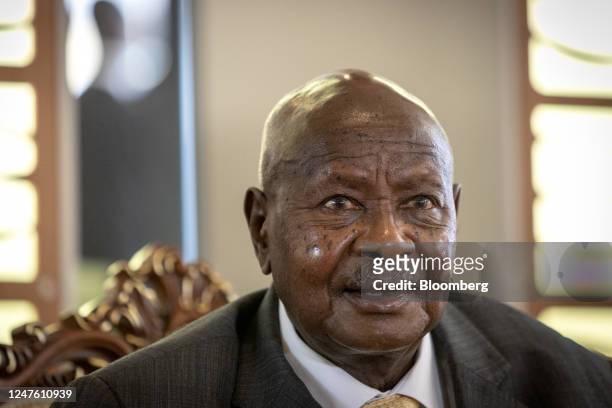
    Uganda is preparing to borrow $150 million (Ksh.23 billion) from China’s Export-Import Bank (Exim) to help expand its internet infrastructure, the finance ministry said on Monday.The move underscores the East African country’s increasing reliance for credit on Chinese lenders after the World Bank halted all new lending to Uganda earlier this year in protest at a new anti-homosexuality law.

    A junior finance minister and the minister for information asked lawmakers on Monday to authorise the debt, the finance ministry wrote on X, the social media platform.

    The money, the ministry said, is “to finance the supply, installation, commissioning and support of the national data transmission backbone infrastructure.”

    Uganda is in negotiations with Chinese export credit agency SINOSURE and Exim Bank for a loan to finance the construction of a pipeline to help Uganda export its crude oil to international markets.

    The World Bank, traditionally Uganda’s biggest development lender, halted loans to Uganda after President Yoweri Museveni signed the Anti-Homosexuality Act which hands out tough sentences including death for a range of homosexual activities.

    SOURCE

    Citizen Digital News

    Photo:Getty Images,Credit Bloomberg

  • United States (U.S.) and African Development Bank Collaborate to Accelerate Africa’s Digital Transformation

    United States (U.S.) and African Development Bank Collaborate to Accelerate Africa’s Digital Transformation

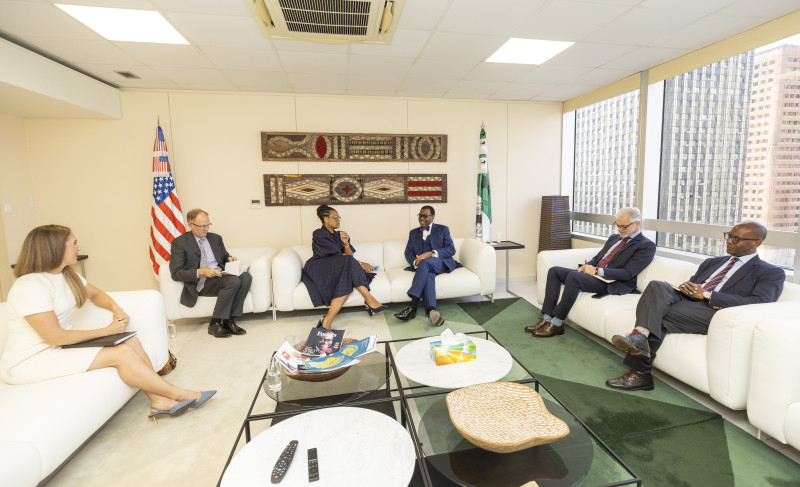
    CAPE TOWN, South Africa, November 28, 2023/ — The U.S. Commercial Service and the African Development Bank (www.AfDB.org) have announced a new strategic collaboration in a move to drive digital transformation across Africa.

    Unveiled on the sidelines of the Africa Tech Festival held in Cape Town, South Africa, this collaboration paves the way for a series of dialogues on how U.S. digital innovation can support development goals across Africa.

    The discussions will focus on key themes such as embracing new technologies, improving internet access, enhancing skills, and creating a regulatory environment conducive to innovation.

    Both parties will explore how African governments can collaborate with American technology firms to grow their economies and how U.S. businesses can tap into new opportunities in Africa’s emerging markets.

    Ashley Ndir, senior U.S. Commercial Liaison to the African Development Bank, emphasized, “We are at a turning point in Africa’s technological advancement. By bridging insights from the U.S. private sector with Africa’s vibrant markets, we aim to drive innovation and economic growth. This partnership is a testament to that mission.”

    Head of ICT Operations Nicholas Williams from the African Development Bank said, “Africa has made significant investments in pivotal infrastructure and policy enhancements to create an innovative digital economy.

    As Africa’s premier development finance institution, the African Development Bank will help push Africa’s digital boundaries even further by forging strategic relations, building on historical investments and, more importantly, tapping into the energy of our young population, who are digital natives. We value the insights that the U.S. private sector may bring.”

    The initiative builds on the African Development Bank’s $2 billion investment in digital infrastructure, which includes regional and national broadband development, creating favourable policy environments for private sector investments, scaling digital skills, and nurturing innovative enterprises.

    The Bank’s efforts have reduced the cost of internet access, enhanced digital literacy, and fostered a conducive business and policy environment. It will also benefit from the U.S. Commercial Service’s experience in fostering international trade.
    This collaboration promises to champion the digital transformation in Africa, aiming for a future where technology empowers growth and prosperity.
    With this partnership, both the U.S. Commercial Service and the African Development Bank reaffirm their commitment to not only elevate digital capabilities in Africa but also to ensure that the continent’s potential is fully realized in the digital era.
    Distributed by APO Group on behalf of African Development Bank Group (AfDB).

    Media contact: 
    Communication and External Relations Department
    media@afdb.org

  • About Promoting a Just Circular and Blue Economy Transition in Africa

    About Promoting a Just Circular and Blue Economy Transition in Africa

    Mohammed A. Abu

    The Chief Executive Officer(CEO) of South Africa based Sustainable Seas Trust(SST), Janine Osborne has declared that, her organization’s work will focus on strengthening existing multi-lateral partnerships (specifically with the Abidjan and Nairobi conventions, and WIOMSA) to promote a just transition for Africa to a circular and blue economy through supporting its African partners’ response to the incipient global plastics treaty.

    “While securing multiple funding sources beyond this generous grant remains a priority, SST is truly grateful to the Norwegian government for their continued partnership and support of our ambitious vision” she stated.

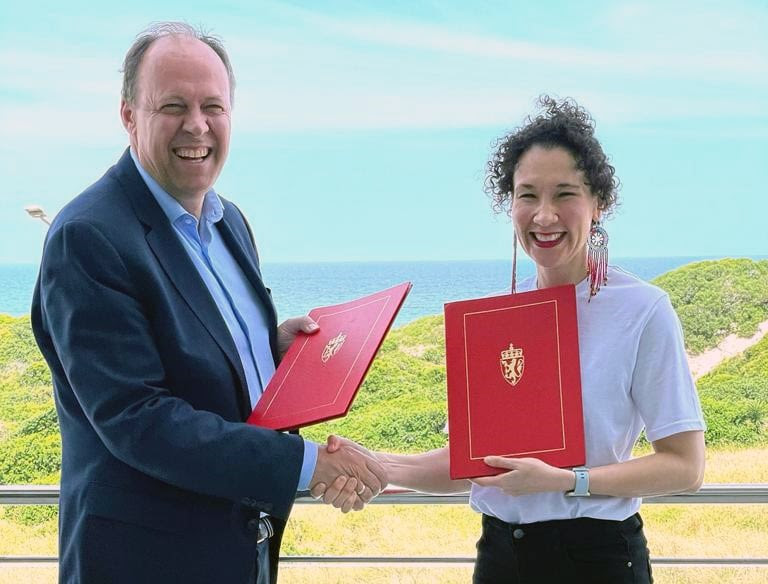
    Janine Osborne made the observations following a formal grant signing ceremony between her organization and the Norwegian Ambassador to South Africa who signed on behalf of his home government.

    The signing ceremony was followed by a field trip during which SST accompanied the Norwegian Embassy delegation and the Ambassador to the Motherwell Community and Enviro-Hub, which SST has supported over the last few years.

    Janine Osborne further intimated, “It’s a great local example of the community work we support and the significant change that is possible through meaningful partnerships”. Adding “Together, we’ll sustain Africa’s seas”.

    Sustainable Seas Trust(SST), is a science-based organization working to protect Africa’s seas and communities for the benefit of all who live on the continent

    The organization works towards uplifting and sustaining solutions that will enable the blue economy. Through education, research and targeted action, as well as partnerships it endeavors to curb the risk of marine pollution through integrating waste management principles into value chains

    To realize the goal of a sustainable blue economy for Africa, the organization believes there is the need to first start on land.

  • Islamic Development Bank Institute Joins Forces with Nigerian Exchange Limited to Boost Islamic Capital Markets in Nigeria

    Islamic Development Bank Institute Joins Forces with Nigerian Exchange Limited to Boost Islamic Capital Markets in Nigeria

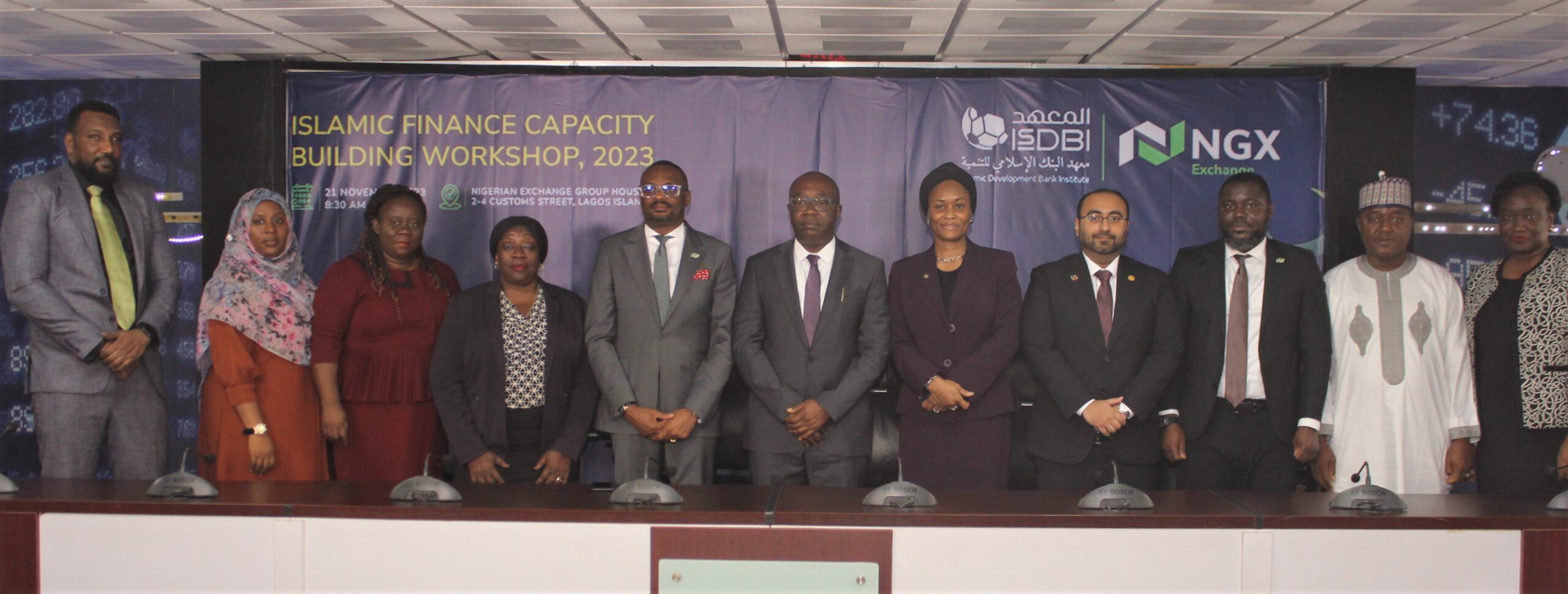
    LAGOS, Nigeria, November 28, 2023/ — The Islamic Development Bank Institute (IsDB Institute) (https://IsDBInstitute.org) joined forces with the Nigerian Exchange Limited (NGX) to deliver an influential Islamic capital markets capacity-building workshop in Lagos, Nigeria.

    Organized under the theme “Economic Growth and Business Development Opportunities through the Islamic Capital Markets”, the workshop aimed to contribute to deepening the Nigerian capital markets through the listings and issuances of Islamic financial instruments.

    The workshop was held on 21 November 2023 and attracted 90 participants from across the Nigerian economic and financial sector. These included the Securities and Exchange Commission, National Pension Commission, Debt Management Office, Lagos State Government, NGX staff, and pension fund administrators. Others were senior representatives from law firms, banks, investment banks, fund managers, leasing and asset management companies, and heads of leading corporate and financial industry associations.

    The program commenced with keynote speeches by Mr. Jude Chiemeka (Executive Director, Capital Markets at the NGX), Mr. Dayo Obisan (Executive Commissioner, Operations at the Securities and Exchange Commission), and Dr. Sami Al-Suwailem (Acting Director General, IsDB Institute).

    The keynote messages celebrated this important partnership between the IsDBI and the NGX, and highlighted the prominent role that Islamic financial products and services can play in supporting Nigeria’s economic development, including through Sukuk for infrastructure projects, as well as providing liquidity to the corporate sector through equity and fund listings.

    The rest of the day featured six interactive and tailored capacity building sessions providing practical knowledge to the participants on Islamic capital markets regulations, products, and services. The sessions included discussions on contemporary issues and practices of Islamic finance in different jurisdictions and enriching the participants’ learning experience with real example case studies and success stories from around the world.

    The last session featured an open dialogue between the participants and the IsDBI trainers on practical measures needed to utilize Islamic capital markets to support inclusive economic growth and sustainable business practices in Nigeria. The overall program and its sessions were organized and delivered by two Senior Islamic Finance Specialists at IsDBI: Mr. Syed Faiq Najeeb and Dr. Abozer Mohamed.

    A closed-door workshop was also held on 22 November 2023 at the NGX Group House as a roundtable with the two IsDBI trainers and the NGX management and staff, focusing on building the prerequisite enabling environment at the NGX for boosting Islamic capital markets activity.

    Overall, this partnership between the IsDBI and the NGX opens doors for a longer-term strategic relationship between both institutions to further develop and deepen the Islamic capital markets in Nigeria.

    Distributed by APO Group on behalf of Islamic Development Bank Institute (IsDBI).
    Media contact:
    Habeeb Idris Pindiga
    Associate Manager, Knowledge Horizons
    hpindiga@isdb.org
  • Honouring African Women’s Rights Advocacy Excellence

    Honouring African Women’s Rights Advocacy Excellence

    Story: Mohammed A. Abu

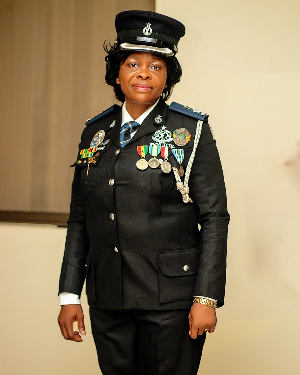
    Chief Superintendent, Dr. Sarah Aba Afari, has been awarded  in South Africa by the country’s women organization,the Leading Women of Africa(LIWA) in the category, “Women’s Rights Advocate” during their, “LIWA Future is Female Male Champions Award” ceremony as part of the Africa Partnership for Growth(APG) Symposium and Exhibition event,that was held ,from 16th-18th November, in Johannesburg,South Africa.

    Your favorite, the Eco-Enviro News Africa caught up with her for her special message to Ghana, Africa’s girls with particular reference to female students and women in general.

    The Ghana, Africa’s first uniformed female PhD holder, said, “girls and women have inborn abilities to aspire to any level of life”.adding,“Girls must dream and have bigger dreams of becoming leaders who would think outside the box.”

    “Leaders with self-respect, self-resilience, and power to shake off the limiting gender and stereotypes. Girls are the majority, therefore, must be disciplined in their thoughts and behavior to build their capacity for tomorrow” Dr. Sarah.Aba Afari, intimated.

    Earlier in October this year, she was honored with two honorary doctorates at a grand ceremony in Ghana.

    That was in recognition of her outstanding leadership achievements and the exceptional quality she has consistently demonstrated in her role as Chief of Police.

    The honorary degrees conferred upon her,Citi News last reported,were, an Honorary Doctorate Degree in Ministry (DMin Honoris Causa) and a Doctorate Degree in Christian Education (DCEd Honoris Causa), both from Holy Spirit Bible University in the USA.

    Dr. Aba Afari’s remarkable career it also reported,has also included collaborations with the UN and significant contributions to major investigations involving the US Embassy and more.


  • Accounting and Financial Professionals Must Lead Africa’s Transition to Sustainable Development

    Accounting and Financial Professionals Must Lead Africa’s Transition to Sustainable Development

    OHANNESBURG, South Africa, November 27, 2023/ — Accountants must be fit to lead Africa’s inclusive sustainable growth and economic recovery ensuring the continent’s place in the global arena, says ACCA, (The Association of Chartered Certified Accountants) (www.ACCAGlobal.com) as it readies for its annual conference held for the first time in South Africa.

    Hundreds of accounting professionals from across Africa are expected to gather at the Sandton Convention Centre, Johannesburg, for the fourth Africa Members Convention (AMC 2023) from December 6-8.

    Themed Empowering Finance Professionals for Sustainable Development in Africa the conference will develop earlier conversations on innovative technologies, integrated thinking for sustainable business practice, international sustainability reporting to drive accountability, developing trade competencies towards supporting intra-Africa trade and enabling members develop careers toward building a better world.

    “The accountancy profession has a fundamental role to play in the transformation of Africa’s economy, as outlined in Africa’s Agenda 2063 – The Africa We Want – which prioritises inclusive social and economic development, continental and regional integration, democratic governance and peace and security amongst other issues, “ said  Jamil Ampomah ACCA Director Africa, responsible for implementing ACCA’s strategy in the region and managing ACCA’s relationships with key African stakeholders – governments, regulators, policy makers, employers, international agencies and regional organisations.

    Several African governments have issued policies toward meeting their sustainability commitments underpinned by environmental, social and governance (ESG) considerations. Their adoption indicates the increasing importance of the sustainability agenda in both the private and public sector in Africa.

    The conference will look at sustainability from many angles including financing sustainable development programmes, ethics and professionalism; technology and AI; support of developmental policy, corporate social responsibility and developing accounting career for the future.

    The programme line-up brings together senior commercial and government financial professionals, from across the globe, including the World Bank’s International Bank for Reconstruction and Development,  and South Africa’s Deputy Auditor General.

    Jane Ohadike, Regional Head of Public Affairs for ACCA – Africa, responsible for setting the strategy for public sector and  governments across the region said: “Accountancy and finance professionals are important agents of change and we have identified seven priority areas in which accounting professional have a role. There are building resilient economies, developing the talent of tomorrow, driving sustainable business, advancing standards and regulation, transforming the public sector, supporting entrepreneurial growth and strengthening ethics and trust.

    “I really want to encourage accounting and financial professionals to attend the 2023 ACCA Conference to share their expertise and thinking while also using this platform to network and make strategic business connections.

    Registration is now open and more information can be found online at Africa Members Convention (https://apo-opa.co/47suIsj).

    Distributed by APO Group on behalf of Association of Chartered Certified Accountants (ACCA).

    For media enquiries, contact:
    ACCA News Room
    E: newsroom@accaglobal.co