Category: Energy

  • As Conference of the Parties (COP28) Wraps Up, We Must Remember, Aid to Africa Is (Still!) Not the Answer (By NJ Ayuk)

    As Conference of the Parties (COP28) Wraps Up, We Must Remember, Aid to Africa Is (Still!) Not the Answer (By NJ Ayuk)

    JOHANNESBURG, South Africa, December 10, 2023/ — By NJ Ayuk, Executive Chairman, African Energy Chamber (www.EnergyChamber.org).

    There was an era when Africa and Western pop music were closely linked.

    Western entertainers spearheaded a number of internationally renowned events to raise awareness about the plight of starving Africans and generate funds for famine relief.

    In December 1984, the supergroup Band Aid sang about feeding the world, asking “Do They Know it’s Christmas?” Within a year, the group had raised over USD9 million.

    Three months later, USA for Africa released “We Are the World” and banked USD44.5 million after one year for its African humanitarian fund. Then on a hot July day in 1985, the worldwide concert event Live Aid raised more than USD150 million for famine relief in Africa.

    These are just a handful of grand and noble gestures intended to lift Africa out of poverty. And these famous events arguably raised both awareness and funds. Unfortunately, the efforts — and others like them — fall far short of making any real socioeconomic change. In fact, some argue that injecting monetary aid into Africa, time and time again, has actually done more harm than good.

    I acknowledge that stance may sound ungrateful. At first blush, many might counter that starving people have no agenda. Destitute parents still need to feed their children. Turning a blind eye to their plight is inhumane.

    Let me explain why the African Energy Chamber (AEC) continues to push for free-market solutions rather than good-will handouts.

    History of ‘Help’

    Even aid genuinely given to help Africa tends to do more harm than good.

    Since 1960, more than USD2.6 trillion has been pumped into Africa in the form of aid. From 1970 and 1998, when aid was at its peak, poverty actually rose alarmingly — from 11% to 66% — due in large part to this massive influx of foreign aid that counteracted its intended good.

    Aid decreased long-term economic growth by fueling systemic corruption, in which powerful aid recipients funneled foreign funds into a personal stash instead of public investment. Many leaders realized that they no longer needed to invest in social programs for their constituents because of the revenues from foreign donors.

    Large inflows of aid also caused higher inflation, hindering African nations’ international competitiveness in exporting. That resulted in diminishing the manufacturing sector – which is critical in helping developing economies grow — across the continent. And well-intentioned Westerners who saw the economic shrink just kept pouring more and more money at “the problem” — leading to a vicious cycle that furthered corruption and economic decline.

    But here’s the kicker: The World Bank has admitted that 75% of the agricultural projects it implemented to help Africa failed. So why do they and other aid providers continue to fund these failing efforts?

    Examples of Failure

    Across the continent, we see example after example of failed aid projects, with agricultural projects routinely providing little or no benefit to African farmers.

    In Mali, the U.S. Agency for International Development (AID) injected USD10 million into “Operation Mils Mopti” to increase grain production. The government imposed “official” prices on the grain, which forced farmers to sell their crops at these below-market rates and resulted in grain production falling by 80%.

    AID also spent USD4 million to help livestock producers grow the number of cattle in the Bakel region from 11,200 to 25,000 — but ultimately only succeeded in increasing it by 882 head. Another USD7 million was injected into the Sodespt region, but that investment managed to sell only 263 cattle and failed to sell any goats or sheep.

    Then we see example after example of Westerners wastefully “helping” without any understanding of the local situation. Norwegian aid agencies built a fish-freezing plant to improve employment in northern Kenya — a region where the local people traditionally do not fish because of their semi-nomadic pastoralist lifestyle. Couple the lack of fishing experience with the unfortunate reality that the plant required more power than was available in the entire region, and the result was that the brand-new processing plant sat idle.

    The World Bank financed a USD10+ million expansion of Tanzania’s cashew-processing capabilities, which resulted in 11 factories with the capacity to process three times as many cashews as the country was growing on a yearly basis.

    The plants were too efficient for the available workforce and cost so much to run that it was cheaper to process the raw nuts in India. Half the plants were inoperable, and the other half only ran at about 20% capacity.

    I’m not saying that we Africans are ungrateful for the outpouring of heartfelt care. The compassion of the West is certainly real. However, the outcome of said compassion is the concern: The more foreign aid African governments receive, the worse they perform.

    As long as the aid keeps flowing, government leaders and their employees who administer development programs may prosper while the rest of the citizenry continues to suffer the effects of a mismanaged economy.

    Questionable Benefits

    We also must acknowledge that, in far too many cases, aid has also been given to African nations and communities in attempts to manipulate and control.

    “While hungry faces are used on posters and in media reports to sell the virtues of foreign aid, it is the hungry who rarely see any of the funds,” James Peron, executive director of the Institute for Liberal Values in Johannesburg, South Africa, lamented in a piece for the Foundation for Economic Education.

    “Poverty may be used to justify the programs, but the aid is almost always given in the form of government-to-government transfers. And once the aid is in the hands of the state it is used for purposes conducive to the ruling regime’s own purposes.”

    And now we witness the international community talking about aid for African countries as a substitute for our oil and gas activities. Western environmentalists argue that Africa should keep all of its petroleum resources in the ground to prevent further climate change.

    In exchange for that sacrifice, African nations would be compensated and inject that money into other opportunities like developing their sustainable energy technologies.

    I’ve said it before, and I’ll say it again: What a horrible idea!

    I‘m offended by foreign stakeholders feeling that providing humanitarian assistance gives them the right to influence our domestic decisions. With Africa poised to participate in the worldwide energy transition, my fear is that international donors will feel justified to dictate Africa’s policy regarding the lengths to which, and speed with which, our energy transition occurs. This would be a huge step backward in our energy, economic, and even individual independence.

    Aid packages to incentivize giving up our oil and gas operations will be detrimental to Africans. Because let’s be honest: History has shown that this assistance could never replace the oil and gas industry’s ability to create jobs and business opportunities, grow local capacity, open the door to technology sharing, facilitate economic growth, and alleviate energy poverty.

    Instead of continuing a pattern that clearly does more harm than good, why aren’t African nations encouraged to leverage the wealth of resources at our feet?

    During the final few days of COP28 — and beyond — the AEC is determined to make a case for African nations harnessing their oil and gas solutions to help themselves. We will not be bullied, or manipulated with aid, into a path that is not in our best interests.

    Use What We Have!

    One reason why the AEC is an outspoken advocate for Africa’s oil and gas industry is because it represents more than big revenue for African governments. It is a free-market solution that creates pathways for Africans to help themselves. And, ultimately, empowering Africans is our number one goal.

    We endorse an energy mix approach that allows Africa to use and sell our own hydrocarbon reserves to alleviate energy poverty, while at the same time moving toward a future in which renewable energy sources power the continent.

    The energy mix method can help more people more quickly because it takes a practical, people-first approach to helping those who have traditionally been left behind by the energy sector, while moving us toward greener energy sources.

    Natural gas, in particular, can transform African lives and communities. Its potential benefits range from eradicating energy poverty to allowing Africans to develop skills for good jobs to creating hope for our youth.

    Ramping up gas production to help alleviate the lack of access to electricity will create thousands of new employment opportunities in Africa. In addition, the new sources of energy can be exported to Western countries to replace Russian energy.

    Then, as Europe transitions to sustainable energy, a larger portion of Africa’s natural gas can power domestic needs. By the time other countries complete their transitions to carbon-neutral sources, Africa will have a much more expansive and reliable grid system, which will allow for an easier transition.

    And before we argue about the evils of hydrocarbons, let me point out that, although it might seem counterintuitive, it is possible for Africa to make use of its abundant fossil fuels while moving toward a future sustained by renewable energy sources.

    In fact, I believe that African nations must do everything they can to ensure that these two things work in tandem. Considering that 600 million people on the continent have no access to electricity and 900 million people lack access to clean cooking technologies, it’s impossible — if not altogether inhumane — to discuss climate change without looking at energy poverty.

    As I recently wrote in an article published by Medium, we cannot transition from the dark to the dark. We must deliver energy to the people of Africa and then worry about transitioning to environmentally friendly alternatives, just like we have everywhere else in the world.

    This has been our platform at COP28, and we will continue to stand by it in 2024 and beyond.

    Distributed by APO Group on behalf of African Energy Chamber.

    SOURCE
    African Energy Chamber

    Distributed by APO Group
    PS: Opinions expressed in Opinion Pieces  represents that of the authors and doesn’t necessarily  represent the official Opinion of the Eco-Enviro-News Africa magazine.


  • South Africa: African Development Bank approves $1 billion guarantee from the United Kingdom to support SA’s Just Energy Transition

    South Africa: African Development Bank approves $1 billion guarantee from the United Kingdom to support SA’s Just Energy Transition

    ABIDJAN, Ivory Coast, December 10, 2023/ — The Board of Directors of the African Development Bank Group (www.AfDB.org) has approved a $1 billion guarantee program in collaboration with the UK Foreign Commonwealth and Development Office (FCDO), which will allow the Bank to increase its lending capacity in support of South Africa’s Just Energy Transition (JET).

    Developed in close collaboration with the government of the Republic of South Africa, the program will support projects aligned with South Africa’s JET investment plan, such as transmission and grid-balancing storage, renewable energy generation, energy efficiency, rehabilitation of municipal electricity delivery, green hydrogen, new electric vehicles. It also includes projects addressing the “just” dimension, notably in the Province of Mpumalanga, in the north-eastern part of the country, bordering Swaziland and Mozambique.

    The approval, coming during COP28, where ramping-up climate finance is an issue, is timely and topical. African Development Bank Vice President for Power, Energy, Climate and Green Growth, Dr. Kevin Kariuki observed: “this is another innovative operation that reaffirms AfDB’s leadership in crafting financial solutions to increase access to climate finance for Africa’s low carbon development and net zero ambitions.”

    Melinda Bohannon, Foreign Commonwealth and Development Office Director General of Humanitarian and Development stated,” FCDO remains committed to the Just Energy Transition Partnership with South Africa, which supports green growth and jobs, improves energy security, and helps South Africa achieve its carbon reduction ambitions as set out in its National Determined Contribution.

    This guarantee will unlock funds for projects within the remit of South Africa’s recently released Just Energy Transition implementation plan. This comes alongside the recently significantly increased grant offer from the International Partners Group, and we are using some of those grants to help develop an investment project pipeline”.

    Mmakgoshi Lekhethe, Deputy-Director General for Asset and Liability Management in South Africa’s National Treasury commented, “We are pleased with the approval by the AfDB Board of the guarantee framework that will increase South Africa’s access to funding from the Bank by $1 billion.

    This marks an important partnership between our government, the UK and AfDB to enhance our ability to implement South Africa’s just energy transition in a way that is just and socially responsible.

    We look forward to working closely with the AfDB on the preparation and financing of a pipeline of programs and projects under our just transition priority areas, including those identified in the JET Implementation Plan. As a development bank with vast experience in just transition in the continent, the AfDB is an ideal partner for us on this important initiative”.

    Max Ndiaye, Director of Syndications, Co-financing and Client Solutions, noted previous collaboration between the Bank and FCDO, and applauded this transaction as further demonstration of the Bank’s continued efforts to heed the G20 recommendations on capital adequacy that call for increased collaboration and additional shareholder support for the balance sheet optimization of MDBs.

    “By enabling the Bank to increase its lending capacity, this landmark guarantee agreement will greatly support South Africa’s Just Energy Transition,” noted African Development Bank Director General for Southern Africa, Leila Mokaddem. “The African Development Bank remains committed to accompanying South Africa on this important journey,” she added.

    Distributed by APO Group on behalf of African Development Bank Group (AfDB).

    Link to Images: https://apo-opa.co/4afJ94I

    Contact:
    Amba Mpoke-Bigg
    Communication and External Relations Department
    email: media@afdb.org

    Technical contact:
    Max Ndiaye
    Director of Syndications
    Co-financing and Client Solutions

  •   African Countries Should Reject Anti-Fossil Fuel Policies at COP 28

      African Countries Should Reject Anti-Fossil Fuel Policies at COP 28

    The Executive Chairman of the South Africa based Africa Energy Chamber,N.J.Ayuk  has taken a swipe at the climate agenda describing it as hypocritical, biased, unjust and that it also poses a direct threat towards Africa’s development, and countries should remain resilient in their efforts to defend their right to utilize oil and gas.

    “With COP 28 set to conclude in the coming days, a COP where African countries fiercely defended the role oil and gas plays across the continent,it has become clear that developed nations seem committed to phasing out fossil fuels, advocating for an anti-fossil fuel energy transition that does not take into account the needs of the developing world”,the Chamber intimates.

    If endorsed,this approach,it warns, would cause detrimental impacts on Africa’s economies, and the African Energy Chamber (AEC) strongly urges African countries to reject any and all anti-fossil fuel policy that may arise.

    Earlier this week, Haitham Al Ghais, Secretary General of the Organization of Petroleum Exporting Countries (OPEC), issued a similar remark, urging member countries to reject any agreements that target fossil fuels during the climate negotiations.

    Advocating for focus to be placed on reducing emissions rather than reducing energy, Al Ghais noted that, “It seems that the undue and disproportionate pressure against fossil fuels may reach a tipping point with irreversible consequences, as the draft decision still contains options on fossil fuels phase out.”

    “Phasing out fossil fuels and opting for a ‘western approach’ to the energy transition is simply not an option for Africa.The continent has not only contributed the least to global greenhouse gas emissions – less than 2% – but faces the worst impacts from climate change, owing largely to the actions taken by developed countries for centuries” it argues.

    For decades, Africa’s oil and gas resources have been extracted and exported for the benefit of wealthy nations, while the continent has been left with inadequate resources to meet its growing demand.

    Wealthy nations have not only used these resources to develop but have positioned themselves as financially and infrastructurally ready to transition away from fossil fuels. Now, Africa is trying to take the same path, and is being directed to abandon an approach taken by those that went before it.

    With oil and gas, Africa is seizing control of its energy future. By directing substantial investments towards these resources, the continent will not only be able to bolster industrialization, alleviate energy poverty and join the world in its development, but strengthen its capacity to deal with climate change.

    By phasing out fossil fuels, Africa will not only reduce its inconsequential emissions, but essential phase out energy in almost its entirety. Remember, the main sources of energy in Africa are oil (42%), gas (28%) and coal (22%). If Africa were to phase out these resources, it would be transitioning from dawn to darkness.

    As Al Ghais put it, “What we will continue to advocate for is reducing emissions, not choosing energy sources. The world requires major investments in all energies, including hydrocarbons, all technologies, and an understanding of the energy needs of all peoples. Energy transitions must be just, fair and inclusive.”

    “Last year, I wrote that I was going to COP 27 because I believe that if Africa is not on the table, it will be on the menu. It is unfortunate that a year on, we have seen little to no progress by western nations to take into account the developmental needs of Africa. A year on, we are faced with the same threat: developed nations telling the world to abandon fossil fuels, thereby abandoning any chances of economic growth.

    Africa cannot afford to adopt the western-centric energy transition. Doing so would eliminate any chance of making energy poverty history, of industrializing economies and improving the lives of millions of people,” stated NJ Ayuk, Executive Chairman of the AEC.

    Africa and the developed world are at vastly different stages of their development. Why then, is the continent required to follow the same approach to transitioning?

    Why is the continent being told to abandon any chance of lighting its economies? Why do the wealthy nations of the world continue to choose politically-driven agendas over Africa? Phasing out fossil fuels might reduce emissions but it will surely send Africa into irrevocable economic decline.

    “The green agenda promoted by the wealthy nations continues to ignore how instrumental oil and gas is in Africa. Climate panic and fear mongering continues to be alive and well, and Africa should remain strong in its commitment to utilizing oil and gas for the betterment of its people,” concluded Ayuk.

  • Nigeria Launches Long Term Low Emission Development Strategy At COP28

    Nigeria Launches Long Term Low Emission Development Strategy At COP28

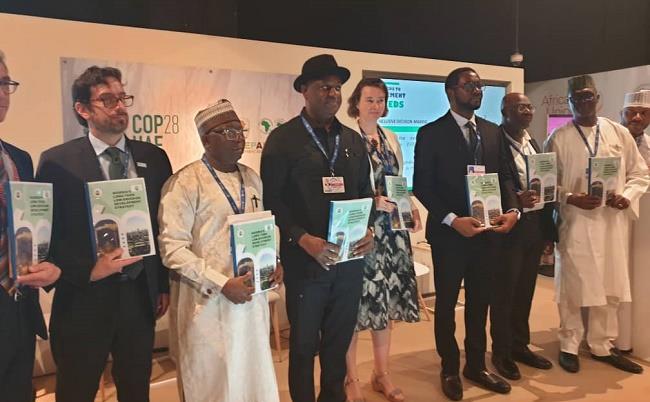
    Nigeria has achieved what looks like another major milestone in her effort to achieve a net zero carbon economy by 2060 by launching its Long-Term Low Emission Development Strategy on Friday, December 1, 2023, at COP28 in Dubai, UAE.

    The event, which was graced by dignitaries and delegates from different countries around the world, was held at the African Pavilion in the Blue Zone and was moderated by Professor Chukwumerije Okereke, Director of the Centre for Climate Change and Development, AEFUNAI, and Dr Eugene Itua, Executive Director of the Natural Eco Capital, the organisation that coordinated and led the development of the LT-LEDS, which was started under the supervision of the Department of Climate Change, Federal Ministry of the Environment, and concluded under the auspices of the National Council on Climate Change (NCCC).

    Director General of the NCCC, Dr Salisu Dahiru, who was temporarily represented by Ms Halima- Bwa-Bari, stated that Nigeria was proud to launch the LT-LEDS, which is guaranteed to support sustainable development and climate resilient economy for the nation.

    Minister for Aviation and Aerospace, Festus Keyamo (SAN), who represented the Minister for Environment, Balarabe Abbas Lawal, said that the LTS was an important milestone in Nigeria’s effort to implement the country’s net-zero pledge made at COP26 in Glasgow. He said that Nigeria was committed to pursue the transition from a fossil fuel dependent economy to a low carbon future in keeping with the global trend and the Paris Agreement and urged international development partners to support the implementation of the LT-LEDS.

    Global Director of the NDC Partnership, Mr. Pablo Vieria, said that Nigeria should be very proud of accomplishment. He stated that by developing the LTS, Nigeria is joining a distinguished group of countries that are exhibiting leadership in developing a clear strategy to decarbonise their economies in response to global climate change. He urged the country to take the next step in adopting the LT-LEDS and pledged the NDC Partnership’s cooperation in this regard.

    Head Climate and Nature at the French Development Agency (AFD), Ms Mathide Bord-Laurans, congratulated Nigeria on launching the LT-LEDS. She said that AFD was delighted to have provided support to the Centre for Climate Change and Development, Alex Ekwueme Federal University under the Nigeria Deep Decarbonisation Project (DDP), which enabled the Centre to lead the creation of scenarios and the modelling work that went into the development of the LT-LEDS. She pledged that the Bank would stand firmly by Nigeria and support investments that are geared towards the implementation of the LT-LEDS.

    Mr. Richard Baron, Executive Director of the 2050 Pathways Platform, expressed his joy at having assisted Nigeria in the design of the LT-LEDS and the precursor document, the Long-Term Vision (LTV 2050) which was also developed by Natural Eco Capital for Nigeria and submitted to the UNFCCC in 2021, served as the initial first step to the LT-LEDS.

    He stated that the LT-LEDS was developed in collaboration with a wide spectrum of stakeholders, making it a truly national document of which Nigeria could be proud.

    He expressed his delight that the modelling work for the LT-LEDS was done by Nigerian academics at the CCCD-AEFUNAI, led by Professor Chukwumerije Okereke, and praised the collaboration between the Nigeria Deep Decarbonisation Project, the 2050 Pathways, the National Council on Climate Change, and Natural Eco Capital, with Dr Eugene Itua as the National Coordinator, which resulted in the creation of a high-quality document.

    In his closing remarks, the Director General of the NCCC, who had now arrived at the event in person, stated that while the launch of the LT-LEDS was a significant milestone, he would like to see all hands on deck to ensure that the document does not sit on the shelf but that the many projects identified in the documents are translated into practical investment. He stated that the two important next steps are the creation of an LT-LEDS Implementation Plan and the mobilisation of capital from domestic and internal sources to implement the LT-LEDS.

    Miss Chioma Amudi, Desk Officer at the NCCC, noted that translating the LT-LEDS into investments would require finance, effective stakeholder engagement, and adequate institutions, among other key factors.

    Terseer Ugbor, Deputy Chairman, House Committee on Environment of the Federal House of Representatives, pledged the support of the national parliament in implementing the LT-LEDS.

    By Gboyega Olurufemi, Senior Climate Change Analyst and Fellow at the Centre for Climate Change and Development, Alex Ekwueme Federal University, Ndufu-Alike, Nigeria

    First published in environewsnigeria.com

  • Natural Gas Is Key to a Just African Energy Transition (By NJ Ayuk)

    Natural Gas Is Key to a Just African Energy Transition (By NJ Ayuk)

    SANDTON, South Africa, November 29, 2023/ — By NJ Ayuk, Executive Chairman, African Energy Chamber (www.EnergyChamber.org).

    It would be an understatement to say Tanzania’s Songo Songo gas field has been good for the country and its citizens. Since 2004, the project’s output has been put to work to benefit the Tanzanian economy, its domestic energy supply, energy costs, employment numbers, and the environment.

    With wells and a processing plant on Songo Songo Island, the public/private effort puts domestic needs first, using output to fuel the Ubungo gas-to-power operation as well as a major cement company and a village electrification program. Excess gas is sold to industrial customers across a range of industries.

    Songo Songo production now generates about 45% of Tanzania’s electricity, reducing the need for higher-priced imported fuel. Another important benefit? When the country’s supply of hydroelectric energy wanes because of droughts, gas-to-electric generation can be counted on to fill the gap.

    The development has directly created 190 jobs and made 113,809 more jobs possible.

    It is also significantly decreasing carbon emissions (at the Tanzania Portland Cement Company alone, CO2 emissions have been reduced by about 80,000 tons per year) and is providing a cleaner energy source at Dar es Salaam power plants by replacing diesel and heavy fuel oil (HFO).

    This project is just one example of what natural gas can do to boost African economies, workforces, energy supplies, and the health of both the environment and residents.

    Because of its great potential for replicating success stories like this across the continent, I remain convinced that natural gas is the key to a prosperous future and a just energy transition for Africa.

    As leaders from around the globe gather for COP28—and discussions turn to zero-emissions goals and renewable energy, I would like to respectfully point out that natural gas is clean energy. We must not, in our zeal to achieve our climate goals, dismiss the tremendous good that gas can deliver.

    Natural Gas and Gas Products are Clean, Assist Emissions Targets

    We’ve already seen natural gas’ positive impact on other regions of the globe. In America, for instance, natural gas is used more than any other fuel for generating both residential and industrial power, as feedstock to produce petrochemicals and fertilizers, and as a fuel of choice for generating electrical power. The U.S. uses roughly one-third of the natural gas produced globally, and demand for it there is growing.

    There are good reasons for this, beginning with the fact that natural gas is the cleanest fossil fuel. It emits 50% to 60% less carbon dioxide than coal when burned and emits up to 30% less CO2 than crude oil.

    If natural gas is a good option for wealthy countries like America, why shouldn’t developing nations reap the same benefits?

    Gas can provide readily available, clean energy for sub-Saharan African countries while their renewable energy infrastructure and technology are “catching up” to that of wealthy, highly industrialized nations. And when supplies from renewable sources like solar and wind are intermittent (as on cloudy days and when the air is still), gas can fill the gap.

    Natural Gas is Needed Domestically to Address Energy Poverty

    Wealthy countries should not be attempting to set deadlines for Africa’s transition to renewables, but that is happening. Organizations from the World Bank to the European Investment Bank are pressuring Africa to quickly phase out fossil fuels. Even African lobbyists from Kenya are calling for a 30-year phase-out.

    African governments and energy industry stakeholders must push back.

    Investors who know Africa understand the hardships that accompany the electricity deprivation that more than two-thirds, or over 620 million, sub-Saharan Africans live with. These investors should stay the course rather than distancing themselves from African fossil fuels.

    As I stated in my 2019 book, “Billions at Play: The Future of African Energy and Doing Deals,” lack of electricity is much more than inconvenient. It deprives people of modern healthcare and exposes them to toxins in their homes from primitive fuels. It prevents progress across economic segments from business to industry to education.

    The picture is a dire one and is expected to get worse due to projected population growth. Residents need electricity now, and fossil fuels can give it to them much more quickly, while green energy continues to evolve and become more prevalent.

    Natural gas has a critical part to play in the energy mix needed for the continent to meet its current and growing energy needsLet’s make eliminating energy poverty a higher priority than adherence to an arbitrary, one-size-fits-all transition calendar.

    Natural Gas Monetization Can Finance Energy Transitions

    A just energy transition for Africa requires using our oil and gas resources as part of the process. The transition to renewables has begun, and there is more to come. In the meantime, however, Africa needs gas-to-electricity production and the monetization of its oil and gas resources.  Capital from these resources can progressively fund the infrastructure and development needed to transition to renewables.

    Reaching energy transition goals will require a major influx of investment capital into African economies. As one example, for Nigeria to reach the goals of its Energy Transition Plan (ETP) it will require about USD410 billion by 2060.

    Overall, Africa has no shortage of natural gas reserves. A recent investment platform statistic totals them at 800 trillion cubic feet, distributed among nearly half of all African nations.

    What is urgently needed are strategies to attract investment, enabling this gas to be removed from its underground and undersea reservoirs, transported, and stored. Local content will always play an important part in this process.

    Creativity is also needed to provide solutions for inadequate production, transport, and storage infrastructure such as building downsized, modular LNG plants and using compressed natural gas (CNG) that shrinks methane to less than 1% of its normal volume for transport and storage.

    In closing, I’ll repeat a vital point: Natural gas is increasingly in demand globally. This presents an opportunity that Africa should take advantage of now. We must monetize our natural gas resources for the good of our economies, the health of our residents, and to grow green energy initiatives at a pace that is good for Africa. This is the message I’ll be sharing during COP28 and well into the future.

    Distributed by APO Group on behalf of African Energy Chamber.

    SOURCE
    African Energy Chamber

  • About African  Continental  Sustainable  Built  Environment  Industry Summit-ACEACFMS 2023

    About African Continental Sustainable Built Environment Industry Summit-ACEACFMS 2023

    ACCRA, Ghana, November 29, 2023/- As the day for the largest international Summit for the building, construction and real estate industry maiden event in Ghana, the African Continental Sustainable Built Environment Industry Summit (ACEACFMS 2023), draws closer, confirmations are coming in from both in-person and virtual participants within Ghana, Africa, Canada, Australia & New Zealand among others

    West African Sub-region

    Some of the high profile in-person participants from the West African sub-region who have confirmed their participation are, Engr Dr. Modasiru Bola (Principal Partner Prolarank Nigeria Limited currently, the National Secretary General of the Nigeria Institution of Highway and Transportation Engineers and Engr Essono Alain, Training Consultant, the National Civil Engineers Association of Cameroon.

    Outside Africa

    Confirmations for virtual participation has already been received from Canada, Australia & New Zealand as well as South Africa.

    Being organized as collaborative effort between the Africa Continental Engineering & Construction Network (ACECN) and GM Bamboo Eco-City Ltd, the expects a total participant score of thousand (1000+), about 500 Ghanaian and foreign in-person participants and 200 virtual and 300 virtual international participants with particular reference to those from Angola, Cameroon, Congo-Brazzaville, Cote D’Ivoire, Kenya, Liberia, Nigeria, Rwanda, Sierra Leone, South Africa, The Gambia and Togo.

    Aims & Objectives

    By far, it is the singular and most impactful Sustainability Summit that brings together all sector players across the African continent to discuss industry best practices, contemporary innovations and technologies that have the potential of influencing decision making for a resilient African Engineering, Construction and Real Estate Industry and by extension, creating a high-level business networking opportunity for all stakeholders both locally and across the globe.

    The objective is to set the stage for the transitioning of the conventional built environment to a sustainable built environment whilst creating opportunity for high-end business networking to foster synergy and high-level business partnerships/collaborations for corporate growth and for the African continental prosperity at large.

    Who to Attend

    Influential building contractors, road contractors, professional practicing civil engineers, electrical engineers, surveyors, planners, architects, project managers, real estate developers, building and construction material/equipment suppliers, glaziers and fabricators.

    Also included are, interior deco professionals/companies, roofing companies/technicians, transport & logistics companies, facility management institutions/professionals, construction project financiers, investors, project insurance institutions, artisans among others.

    Being held for the first time under the theme: INTEGRATING SUSTAINABLE BUILT ENVIRONMENT FOR SOCIO-ECONOMIC TRANSFORMATION THROUGH THE USE OF DIGITAL TWIN TECHNOLOGIES, the organizers plan to make it a most bespoke annual industry event.

     Benefits to be derived by Participants

    The event seeks to create an enabling business environment and opportunity for participants to land big contracts, seal potential partnership deals, boost sales, build strong network with the most influential industry players, get signed on to top-rated projects/contractors/professionals across the African continent and beyond has finally come.

    “You have the opportunity to interact with and do business with our principal sponsors and consultants among few are, GM-Bamboo Eco-City Ltd, Rockville Construction Ltd, B5 Plus Group, Aya Fabrications & Engineering Ltd, Premier Steel Ltd, Neuce Paints Ltd, Primus Group, the McDan Group, Eris Properties, Ezojam Ltd, etc.,” said,Sir Daniels Kontie, President to ACECN.

    African Continental Sustainable Built Environment Summit Partners

    The event Partners include, the Ghana Institution of Engineering and Technology (IET-GH), the Ghana Institution of Surveyors (GhIS), the Ghana Institution of Architects (GhIA), the Association of Building and Civil Engineering Contractors of Ghana (ABCECG), the Ghana Institution of Planners (GhIP), the Association of Road Contractors, Ghana, (ASROC), among several others.

    African Continental Sustainable Built Environment Summit Principal Sponsors/Partners

    The Principal Sponsors and partners of the event include, Premier Steel Ltd, Youngi Design Consult Ltd, McDan Group, Aya Toptech & Fabrication Ltd, Bamboo Eco-City, Berock Construction Ltd, G-IBF Ltd, among several others.

    Event Opening

    Chief Guest of Honour: H.E. JOHN DRAMANI MAHAMA, FORMER PRESIDENT OF THE REPUBLIC OF GHANA;

    Guest of Honour/Main Keynote Speaker: ING. MRS. CARLIEN BOU-CHEDID, Earthquake and Structural Engineer; Former President of Ghana Institution of Engineering (GhIE) and Immediate Past President of Federation of African Engineering Organizations

     Guest of Honour/Keynote Speaker: DASEBRE KWESI EWUSI VII, the Paramount Chief of Abeadze Traditional Area, Central Region of Ghana Past Member of Council of State, Former Vice President National House of Chiefs, Former President Central Region House of Chiefs;

     Guest of Honour/Keynote Speaker: DR. DANIEL MCKORLEY Executive Chairman of McDan Group of Companies

    Host Opening Remarks and Individual Introductory Messages to One Another The host will welcome the participants to the African Continental Sustainable Built Environment Industry Summit. The host will facilitate the individual introductions and offer an overview of the summit objectives and upcoming agenda for the day.

    You are Sustainable Built Environment Industry by MR. DANIEL KONTIE, President and CEO, African Continental Engineering & Construction Network, The Organizers of the Built Environment Sustainability Summit. The Organizer of the Built Environment Sustainability Summit will explain the significance of the summit and the strategic networking and knowledge dissemination campaigns that guide our work.

    Plenary Sessions

    Main Keynote Address Integrating Sustainable Built Environment Industry for Socio-economic Transformation Through the use of Digital Twin Technologies by ING. MRS. CARLIEN BOU-CHEDID, Earthquake and Structural Engineer; Former President of Ghana Institution of Engineering (GhIE) and Immediate Past President of Federation of African Engineering Organizations

    Keynote Talk I

    Providing Sustainable Logistics and Supply Chain Management Services for Socio-Economic Transformation of the Sustainable Built Environment Industry DR. DANIEL MCKORLEY Executive Chairman of McDan Group of Companies

    Keynote Talk III Land Dispute Resolution Sustainable Land Acquisition for Sustainable Infrastructure Development in the face of Climate Crisis DAASEBRE KWEBU EWUSI VII, The Paramount Chief of Abeadze Traditional Area in the Central Region, Past Member of Council of State, Former Vice President National House of Chiefs, Former President Central Region House of Chiefs

    Technical Sessions Workshops Oral Presentations

    Refocusing Ghana’s EARTHQUAKE Preparedness and Response for Socio-Economic Transformation Through the use of Digital Twin Technologies ING. MRS. CARLIEN BOU-CHEDID, Earthquake and Structural Engineer

    Refocusing Ghana’s FLOOD Preparedness and Response for Socio-Economic Transformation Through the use of Digital Twin Technologies PROF. DIVINE AHADZIE, Head of Centre for Settlement Studies, Kwame Nkrumah University of Science and Technology

    Transforming the Built Environment through the use of Sustainable Materials – BAMBOO PRODUCTS AND LESSER-KNOWN & LESSER-USED TIMBER SPECIES – based on the Digital Twin Technologies by ING. PROF. EMMANUEL APPIAH-KUBI

    African Continental Sustainable Built Environment Industry Excellence Awards Ceremony

    The categories of the event awards ceremony component include the following: Excellence in Technology & Innovation Award 2. Excellence in Environmental Sustainability and Green Financing Award 3. Emerging Green Business Award 4. Excellence in Professional Service Award and 5. Supreme Business Excellence Award

    Date: 14th  December,2023

    Time: 9.00-5.00 pm

    Venue:De-Icon Conference Centre,East Legon,Accra

    Note to Editors

    AFRICA CONTINENTAL ENGINEERING & CONSTRUCTION NETWORK (ACECN)

    Since its establishment five years ago, ACECN has been at the forefront of the construction and engineering industry in the region, undertaking diverse projects of varying scales and complexities.

    Media Contact: Mr. Daniel Kontie; Phone no.: 0209032280; E-mail: info@acecnltd.com, d.kontie@acecnltd.com;

    Website: http://www.acecnltd.com/

     GM BAMBOO ECO-CITY LTD. is a fully integrated Urban Farm Eco-City design, investment, development and management Limited Liability Company based in Ghana.

     Media Contact: Engr. Samuel Worwui; Phone no.: 0509160497; E-mail: Samuel.worwui@gmail.com, info@bambooecocity.com; Website: www.bambooecocity.com

    Event registration link:   https://forms.gle/KTRCNVY2Lppssf9o9


  • From COP27 to COP28 – key factors for Africa ahead of the 2023 United Nations Climate Change Conference

    From COP27 to COP28 – key factors for Africa ahead of the 2023 United Nations Climate Change Conference

    Opinion Piece By:Tshepo Ntsane, Sustainable Finance Transactor at Rand Merchant Bank 

    The Conference of the Parties (COP) to the United Nations Framework Convention on Climate Change (UNFCCC) represents an important international forum for countries to gather to discuss and address global climate change issues. However, to date these conferences have tended to be high level and process based, and COP 27 was no exception. – negotiations took place and some of the highlights included the historic establishment of the loss and damage fund which was seen as setting a precedent for climate justice.

    However, agreements on other matters such as phasing out of fossil fuels and setting peaking periods for emissions were not achieved. For African countries in particular, COP 28 marks an important pivot point around funding, just transition and the Nairobi Declaration. There will be a push for realisations on commitments made, and innovative funding mechanisms to drive accelerated climate action now and beyond.

    Making good on promises

    During previous COPs significant commitment were made by developed countries around funding and financial support to help developing nations transition. COP27 saw a funding announcement of about $105 million by eight donor governments to support countries facing the worst effects of climate change, including Senegal, The Gambia, Sao Tome and Principe.

    The pledge adds new funding to the Least Developed Countries Fund (LDCF) and Special Climate Change Fund (SCCF), augmenting the $413 million pledged by 12 other donor countries at COP26.

    However, while numerous promises have been made, no concrete action has yet been taken. Of the commitments made at COP15 to provide $100 billion a year to developing countries for climate action, only a quarter – has been achieved. In addition, one of the main concerns raised with the financing is the fact that a large proportion are structured as loans, thereby imposing a debt burden on already debt-stressed developing countries.

    Other issues include transparency of the agreements and timelines for the funding. For many African countries to move forward, these challenges need to be addressed. This will likely be a topic of focus at COP28, as countries in the region look to achieve their own targets for carbon and emissions reduction.

    Not just about transition

    For many developing countries in Africa still heavily reliant on fossil fuels, the issue of transition is not limited to cleaner, environmentally friendly sources of fuel. Entire communities are often built around fossil fuels, such as in South Africa where, in the Mpumalanga province, entire local economies are dependent on the mining of coal.

    When coal-based fuels are phased out and coal mines closed, the impact on people in the coal value chain, including these vulnerable communities and economies that are built around coal mines, will be significant.

    A just transition also involves the reskilling and upskilling of people reliant on coal for their livelihood to ensure they remain productive members of society who contribute to the economy. The timing and funding of skills development initiatives are still up for debate.

    Funding the commitments

    Climate resilience is something all countries are looking to implement, but countries in Africa have unique challenges as well as unique resources and strengths that we need to play to. During COP27 the concept of carbon credit markets and carbon offset schemes emerged, which would allow companies to buy carbon credits to offset their own emissions.

    This would not only open up a potential market for carbon offset projects and investment opportunities for developing countries, it would also help to channel resources into projects that deliver real benefits.

    However, once again the issue of transition reaches beyond transition to transforming African economies. This starts with access to clean energy. The Nairobi Declaration proposes new financing mechanisms to help countries in Africa unlock funding for transition and promote sustainable use of resources to help the region contribute toward global decarbonisation.

    One of the declarations from the Climate Summit in Kenya included a call for developed countries to honour their commitment to provide $100 billion in annual climate finance, as promised 14 years ago at the Copenhagen conference. Furthermore, it included proposals for new debt relief and restructuring interventions and instruments such as extension of sovereign debt tenor and inclusion of a 10-year grace period.

    COP28 will need to see developed countries make good on their funding commitments, while Africa moves forward with an aligned strategy to ensure just transition without leaving anybody behind.

    Distributed by APO Group on behalf of Rand Merchant Bank.

    SOURCE
    Rand Merchant Bank

  • Seismic Development Integral to Africa’s Energy Future, African Energy Chamber (AEC) Underscores during Houston Working Visit

    Seismic Development Integral to Africa’s Energy Future, African Energy Chamber (AEC) Underscores during Houston Working Visit

    JOHANNESBURG, South Africa, November 2, 2023/ — Accurate and up-to-date seismic data is the cornerstone of a thriving oil and gas industry. In Africa, geoscience companies take on a pivotal role, driving the success and efficiency of oil and gas projects by equipping countries and corporations with the precise tools needed to locate hydrocarbon deposits. Without the vital contributions of geoscience firms, Africa would be unable to fully unleash the vast potential of its oil and gas resources.

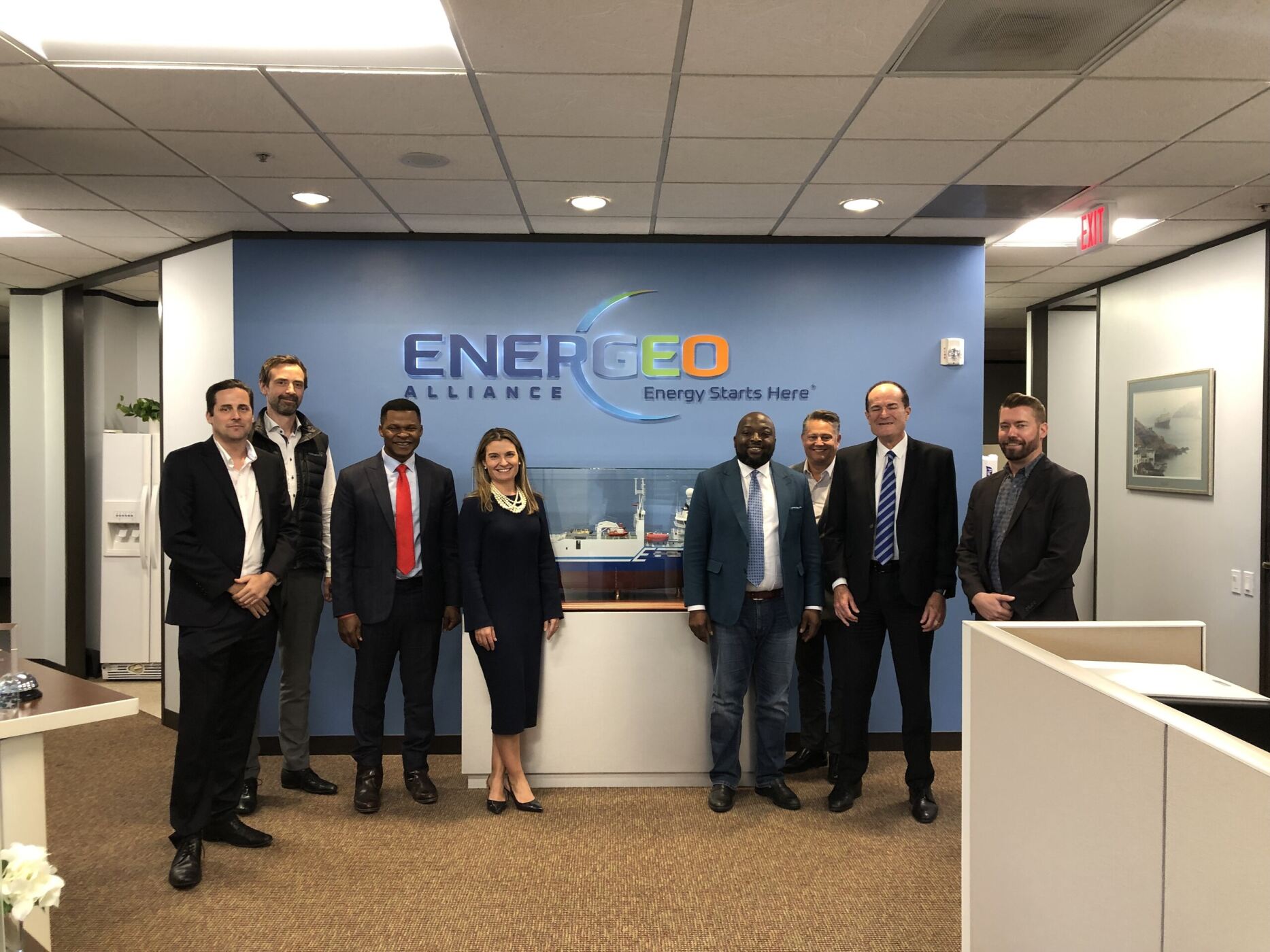
    The African Energy Chamber’s (AEC) working visit to Houston – currently underway – led by Executive Chairman NJ Ayuk, is promoting this very role, engaging with a suite of oil, gas and geoscience companies on the impact they have in Africa’s energy sector. Underpinning the visit is the belief that partnerships between geoscience companies and African governments are quintessential for the success of the burgeoning industry, and that opportunities for geoscience companies in Africa are just unfolding.

    During the visit, the AEC will meet with EnerGeo Alliance, a global trade association for the geoscience industry operating under the motto that, ‘Energy Starts Here.’ EnerGeo Alliance has long-been an important partner for Africa’s oil and gas sector, demonstrating time and time again a commitment to the continent’s hydrocarbon future. The meeting will unpack how geoscience companies, with the support of EnerGeo Alliance, can contribute to the success of Africa’s oil and gas sector. In addition, the meeting will focus on seismic development, and how African governments can support the activities of geoscience companies in untapped acreage.

    Holding up to 125 billion barrels of proven crude oil reserves and 620 trillion cubic feet (tcf) of natural gas, Africa is just beginning to understand the full scope of its oil and gas resources. Countries such as Nigeria, for example, with 200 tcf of proven gas resources, likely hold as much as 600 tcf. At the same time, countries such as Ivory Coast, the Democratic Republic of the Congo, Zimbabwe, Kenya and many more are yet to reveal their oil and gas reserves. Geoscience companies are the key for advancing exploration efforts, providing comprehensive understanding of Africa’s onshore and offshore hydrocarbon plays, and partnerships are what will underpin the very success of African oil and gas.

    Despite the central role geoscience companies have and continue to play in Africa, companies continue to face challenges, with environmental groups blocking both onshore and offshore operations. In South Africa, for example, energy companies continue to experience disruptions, with lobbyist organizations preventing the exploration of the Orange Basin – an area in which sizeable finds have been made on the Namibian side. At the same time, South Africa is in the midst of an energy crisis, and domestic oil and gas would prove a lifeline to the economy. As such, the geoscience community needs to be given the full support of Government, or untapped oil and gas resources will remain in the ground.

    The same can be said continent-wide, and the AEC working visit will underscore the need for stronger collaboration. Topics of discussion will include issues faced by the geoscience community such as strong partnerships; streamlined license approvals; and clear regulation. Additionally, with capacity building representing the very essence of energy and economic development, the meeting will highlight the imperative for training and skills development programs between government and National Oil Companies, as well as how scholarships, programs and mentorship can strengthen the geoscience industry.

    “The geoscience community will have a catalyzing role to play in Africa for many years to come. Africa’s oil and gas potential is only starting to be understood. Through seismic surveys, we can not only understand what lies beneath the continent’s ground and waters, but we can fast-track decision making to monetize resources. We see the seismic community continue to grow, with mergers such as between Norway’s TGS and Petroleum Geo-Services. This sends the right kind of message that the seismic community is committed to growth, and Africa should stand ready to welcome partners,” states Ayuk.

    During this year’s edition of the African Energy Week (AEW) conference in Cape Town, the role geoscience companies play in growing the African oil and gas market was a prominent point of discussion. Various panel discussions, technical presentations and forums drew attention to the need for further collaboration between geoscience players and African governments. The event also featured the inaugural African Farmout Forum, a platform created for striking deals through in-depth understanding of Africa’s upstream plays. However, there is still a lot more to be done, and both AEW and the AEC stand ready to support the growth and contribution of the global geoscience community.

    Distributed by APO Group on behalf of African Energy Chamber.

    SOURCE
    African Energy Chamber

  • Guyana Deserves to Develop its Oil and Gas, and so does Africa

    Guyana Deserves to Develop its Oil and Gas, and so does Africa

    JOHANNESBURG, South Africa, November 2, 2023/ — At a time when both African and Caribbean nations are making great strides towards developing recently discovered oil and gas reserves, countries whose development was driven by hydrocarbons are accelerating efforts to transition to a renewable energy future.
    This transition has seen wealthy nations establish a ‘green agenda,’ one which does not take into consideration Africa’s economic needs. The African Energy Chamber (www.EnergyChamber.org), therefore, strongly calls for an end to the demonization of oil and gas, encouraging African and Caribbean nations to collaborate towards a common and fair energy agenda.

    Africa and Guyana are just starting to uncover the true potential of their oil and gas resources. More than 30 discoveries were made in Guyana since 2015, with one block alone – operated by ExxonMobil – expected to hold as much as 11 billion barrels of oil. The same can be said for countries in Africa such as Namibia, with five major discoveries since 2022; Mozambique, with its major gas projects; Angola, Nigeria, Equatorial Guinea and many more.

    The green agenda fails to recognize the substantial potential resources such as natural gas – abundant in both Africa and the Caribbean – offer. Africa, for its part, holds over 600 trillion cubic feet (tcf) of natural gas reserves, and yet continues to be told to leave these resources in the ground.

    Unfortunately, climate panic and fear mongering are alive and well, and for some reason, Africa is public enemy number one. A continent that emits a negligible amount of carbon dioxide – at most, 3% of the world’s total emissions – is being disproportionately pegged as a threat to the planet by developed nations.

    In particular, the West is vilifying Africa’s energy industry because it is based on fossil fuels, even though the proportion of renewables is growing.  There’s no question that much of this anti-African oil and gas sentiment is based in fear of climate change, which is intertwined with the sheer terror that a fossil fuel boom in Africa, Guyana, Trinidad and Tobago, Suriname and other Caribbean nations could be devastating to the world at large.

    For countries such as Mozambique, with 100 tcf of proven reserves; Nigeria, with 200 tcf of proven reserves; Angola, with 10 tcf of proven, and many others, leaving gas in the ground is simply not an option. With significantly fewer emissions than resources such as coal, gas stands to play a catalyzing role in Africa.

    Through gas, the continent can bring economies to life, unlocking a prosperous future in the form of job creation, business opportunities, capacity building and monetization. Despite this potential, the green agenda advocates for an immediate transition, thereby ignoring the sustainable, logical and realistic solution gas provides. In this scenario, both Africa and Guyana are proposing an alternative agenda, one in which gas is developed to meet the current needs and future demand of nations. Through gas, countries will be strategically positioned to finance the transition to renewables.

    “Demonizing the oil and gas industry must stop. We see it constantly, in the media, in policy and investment decisions, and in calls for Africa to leave our fossil fuels in the ground. We see it with lawsuits to stop the financing of projects such as Mozambique Liquefied Natural Gas or lawsuits to prevent Shell from even carrying out a seismic survey,” stated NJ Ayuk, Executive Chairman of the AEC. “Actions like these, even as Western leaders have pushed OPEC to produce oil and are pushing European nations to increase their own production and escalate coal use, are not fair, and they’re not helpful.”

    Africa is on a mission to make energy poverty history by 2030 and this can only be achieved through oil and gas. Currently, over 600 million people are without access to electricity while over 900 million are without access to clean cooking solutions. The wealthy nations green agenda does not consider how much Africa needs natural gas to bring electricity to the growing number of Africans and Caribbeans living without it.

    They do not understand that we, as Africans, are focused on growing Africa’s energy mix to include fossil fuels and renewables, instead of insisting on an all or nothing approach to our energy transition. Africa’s energy and economic future hinges on an integrated, not separated, energy mix.

    As such, countries are calling for a new discussion to take place at COP28 in Dubai, one in which both Africa and the Caribbeans voices are not only heard but a part of. During the African Energy Week 2023 conference this October, African leaders emphasized the critical need to adopt an Africa-centric and just energy transition, one that heavily incorporates oil and gas. Global leaders, financial institutions and project developers should comply with this agenda, putting a continent’s needs before the world’s problems.

    “I also would respectfully ask financial institutions to resume financing for African oil and gas projects and stop attempting to block projects like the East African Crude Oil Pipeline or Mozambique’s LNG projects,” Ayuk concluded.

    Distributed by APO Group on behalf of African Energy Chamber.

    SOURCE
    African Energy Chamber

  • Agility Warehouses in Cote d’Ivoire are First in West Africa to Earn International Finance Corp (IFC) ‘Green Building’ Excellence in Design for Greater Efficiencies (EDGE) Advanced Status

    Agility Warehouses in Cote d’Ivoire are First in West Africa to Earn International Finance Corp (IFC) ‘Green Building’ Excellence in Design for Greater Efficiencies (EDGE) Advanced Status

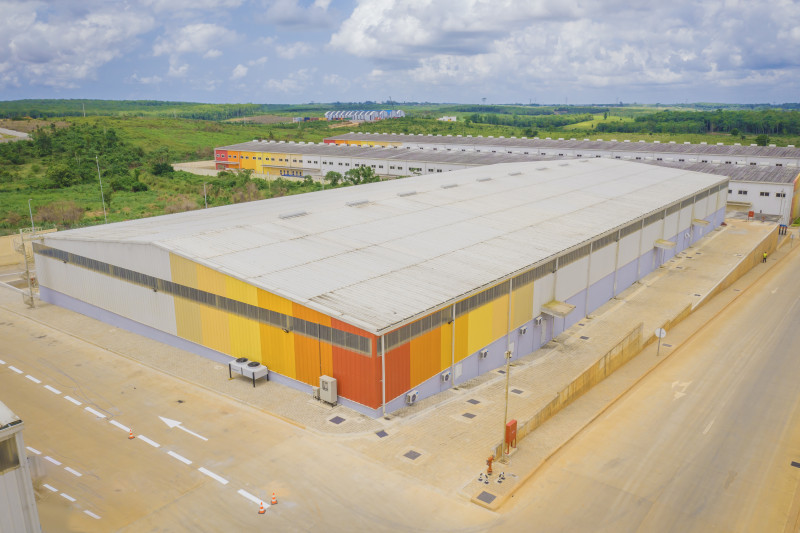
    ABIDJAN, Ivory Coast, November 1, 2023/ — Agility (www.Agility.com), a supply chain services, infrastructure and innovation company, announced that the warehouses at its Agility Logistics Park in Abidjan are the first in Cote d’Ivoire and West Africa to receive EDGE Advanced certification as green buildings.

    EDGE (Excellence in Design for Greater Efficiencies) is the global standard for energy-efficient buildings, a certification system overseen by the International Finance Corp. (IFC), an arm of the World Bank. Basic EDGE certification requires a minimum projected reduction of 20% energy use, water use and “embodied energy” in materials when benchmarked against a standard local building.

    Agility received EDGE (https://EDGEBuildings.com) Advanced certification for the current 27,000 SQM of warehousing at its Abidjan park. EDGE Advanced buildings are “zero-carbon ready” structures that are at least 40% more energy efficient than others in the market.

    The EDGE Advanced warehouses in Agility’s Abidjan park provide energy savings ranging from 57% to 74%; water savings ranging from 53% to 57%;  and construction materials containing 63% to 69% less embedded carbon. Energy efficiency was enhanced through reduced window-to-wall ratios, insulated roofing and exterior walls, and special lighting.

    Water use was lowered through use of bathroom and kitchenette plumbing systems that conserve water. Roofing, slab, exterior wall materials, and window glazing materials lowered the amount of embedded carbon.

    “Agility is determined to lead the way in Africa with the development of modern, energy-efficient warehouse parks to meet the growing demand across the Continent. Agility warehouses are used for storage, distribution, packing, processing and light manufacturing.

    We want to help multinationals meet international standards and be able to scale to meet the burgeoning African market demand. The provision of quality infrastructure improves efficiency, reduces costs and enables growth, generating jobs and prosperity,” said Geoffrey White, CEO of Agility Africa.

    Agility Logistics Parks (https://apo-opa.info/40A9zK9) are secure, connected, 24/7 complexes with Grade A and Grade B, international-standard warehouses designed with advanced engineering and sustainability features, and sites for data center campuses.

    Elsewhere in Africa, Agility Logistics Parks has a 160,000 SQM facility in Accra, Ghana; a 320,000 SQM park in Maputo, Mozambique; a 270,000 SQM park in Lagos, Nigeria; as well as the 270,000 SQM Yanmu East logistics park in Cairo, Egypt, part of a joint venture with Hassan Allam Utilities.

    The Abidjan facility is the second Agility warehouse to receive EDGE Advanced certification. In 2022, a warehouse at the Agility Logistics Park in Riyadh, Saudi Arabia was the first warehousing facility in the Middle East and North Africa to receive EDGE Advanced certification.

    Tenants at Agility Logistics Parks include international and local businesses in the retail, consumer goods, technology, automotive, energy and e-commerce sectors.

    White said: “Agility warehouse parks provide a simple foundation for supporting efficient, competitive businesses in Africa. The ready-built Agility warehouses permit local companies to grow and develop, and reduce time-to-market for new companies coming to Africa. The growing network of Agility warehouse parks are aligned with the significant opportunities being created by the AfCFTA to improve and expand trade both regionally and internationally.”

    Distributed by APO Group on behalf of Agility.