| Katuiscia Laurence Ewane is a General Field Engineer at SLB |
| JOHANNESBURG, South Africa, August 24, 2023/ — While the energy sector has been a largely male-dominated industry, women are gradually taking on a more central role in driving innovative project developments. Individuals such as Katuiscia Laurence Ewane, General Field Engineer at SLB, play an instrumental part in driving the successful development of the industry. Ewane has a vision that Africa not only adopts but creates technology. Ewane is featured on the African Energy Chamber’s (www.EnergyChamber.org) list of 25 Under 40 Energy Women Rising Stars. Please share a brief overview of your journey in the energy industry that led to your current role? What are some key achievements or milestones that you are particularly proud of? I have always had an interest in STEM-related fields and that is what led me to attend Ecole Nationale Supérieure Polytechnique, where I graduated with a Master’s in Industrial Engineering. As a young graduate, I was intrigued by the energy sector and knew very little from the outside; but was all too familiar with the challenges I faced with energy in my day-to-day life. So, when I got the opportunity to work at SLB, I seized the chance! And so, my adventure in the energy sector began. I spent five years between the field and training centers getting a critical understanding of how this sector operates. Some of the achievements I am most proud of are: Pioneering research in SLB on a new approach for the integration of Drilling Fluids and Cementing fluids. This will help eliminate waste, optimize operations, and deliver services more sustainably.Completing a complex cementing operation on Mt Cameroon at 4000m of altitude.Community service under SLB Excellence in Educational Development (SEED) program where I helped deliver a well for a community and created a reading club in a public primary school. Finally, I am most proud the ladies I was able to mentor through SLBs connect women platform. I believe that people are a great investment and that whoever gives back receives more. The energy industry is known for its complexities. What were some significant challenges you faced along the way, and how did you navigate through them to achieve your goals? The first challenge I encountered was culture. The energy sector is a melting pot of cultures (nationalities and company culture) and ideas, but all of them must help achieve a common goal: to deliver energy. To navigate this, I learnt more about how different energy companies I worked with operate and the culture of the different nationalities I worked with. Also, asking questions and repeating myself helped to avoid miscommunications. The second challenge is change. The energy sector is dynamic, and plans change a lot, but this is not an excuse to waste time. You must value people’s time. The key is to always plan and if the plan fails always have a contingency in place that has been agreed with all the key stakeholders. What advice would you give to young females aspiring to excel in the energy sector? Are there any specific strategies or mindsets that helped you overcome obstacles and reach your current position? As a female, I did not have the same perspective as most of my peers and that negatively impacted my self-confidence. Over time, some strategies that have helped me manage this are: Knowing my worth! I am just as good if not better.I bring in a unique perspective and that matters.Work and Network! Both go hand in hand.Do not self-sabotage.It’s okay to ask for help. No one knows it all! A career in energy can be demanding. Could you describe a typical day in your life? Demanding it is, but just as rewarding! The Fluids Engineer’s workday starts the day before with planning for the next day. Top of the morning, I wake up, pray, and do a 10-minute workout. I then consult daily reports and get in touch with the teams on/offshore to get the full picture of the status of operations. Following this, I engage in my daily operations meetings and client engagements. This is the most critical part of my day as communication with the client is key. We agree on what are our outstanding tasks, what task is urgent, and what to expect in the coming days. I must also attend all my internal meetings and distribute tasks to my teams. After this, I can finally start designing cement jobs. I must make myself available and reachable in case any teammate runs into a bottle neck, or a critical decision needs to be made that will affect service delivery. Sometimes, emergencies arise, I need to be flexible and have contingency plans in place. If I can’t find a solution right away, I take a 5-minute break to refresh, it always helps! The day always ends by reconnecting with family and friends to refuel and start all over the next day. Looking ahead, what changes or advancements do you hope to see in the energy sector, and how do you envision your role in shaping that future? The first area where I want to see change is the image of the energy sector. Many still believe it’s a man’s world, but things have changed: I hope to lead the way in showing young women out there, that this is a very dynamic sector, and that their input is much needed. As I grow in my career, my goal is to make room for women and influence other decision makers to open doors for women in this sector. The second area where I want to see advancement is in the adoption of technology. I want to see Africa adopt technology and create technology. A transition to cleaner sources of energy is only possible though technology adoption. As a young African, I believe this is critical in the creation of the future we want to see for ourselves and for the generations to come. This starts from changing mindsets. My plan is to pioneer these conversations, and to keep pushing till we see change. Distributed by APO Group on behalf of African Energy Chamber. SOURCE African Energy Chamber |
Category: Interview Story
-
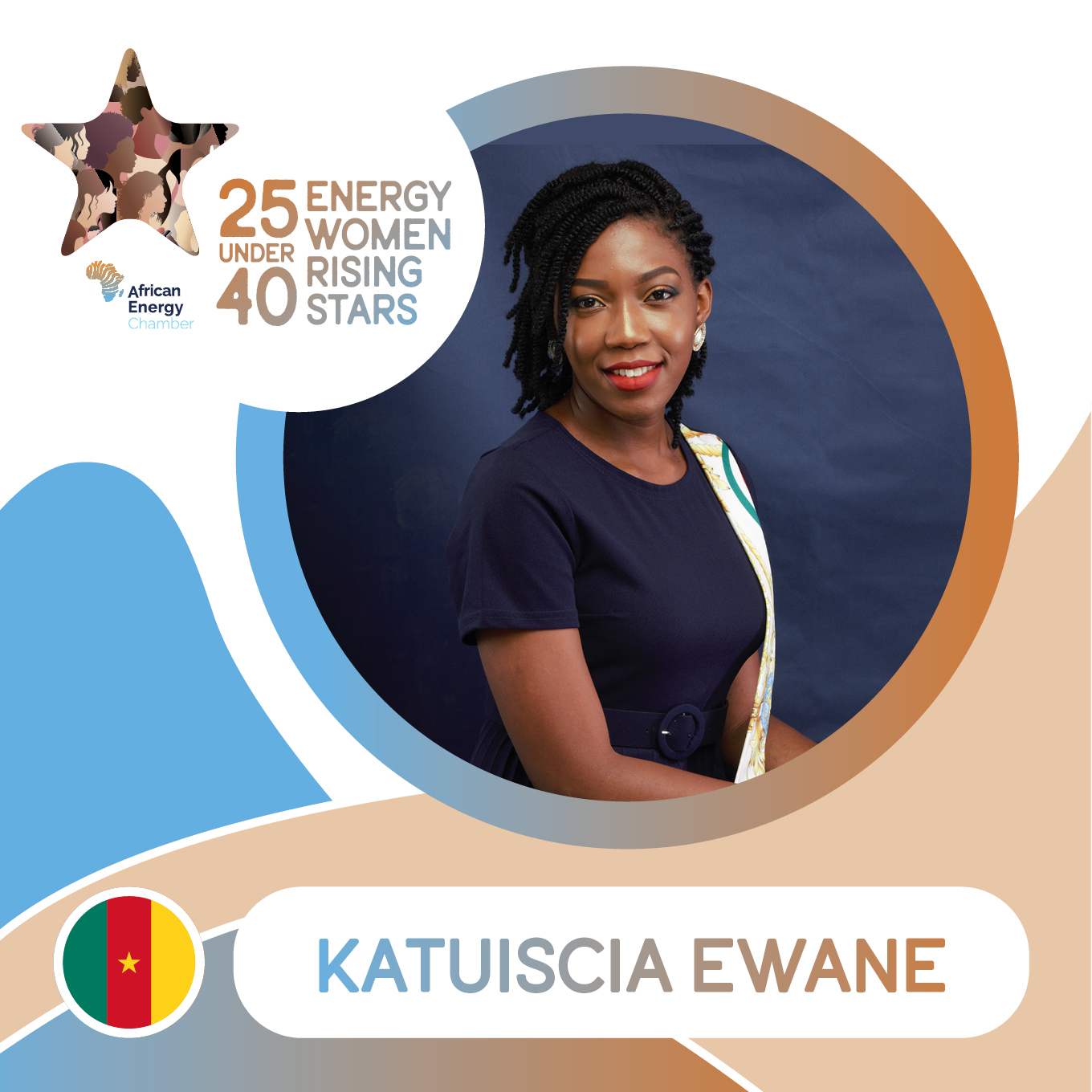
I Want to See Africa Adopt Technology and Create Technology, Says Katuiscia Laurence Ewane
-
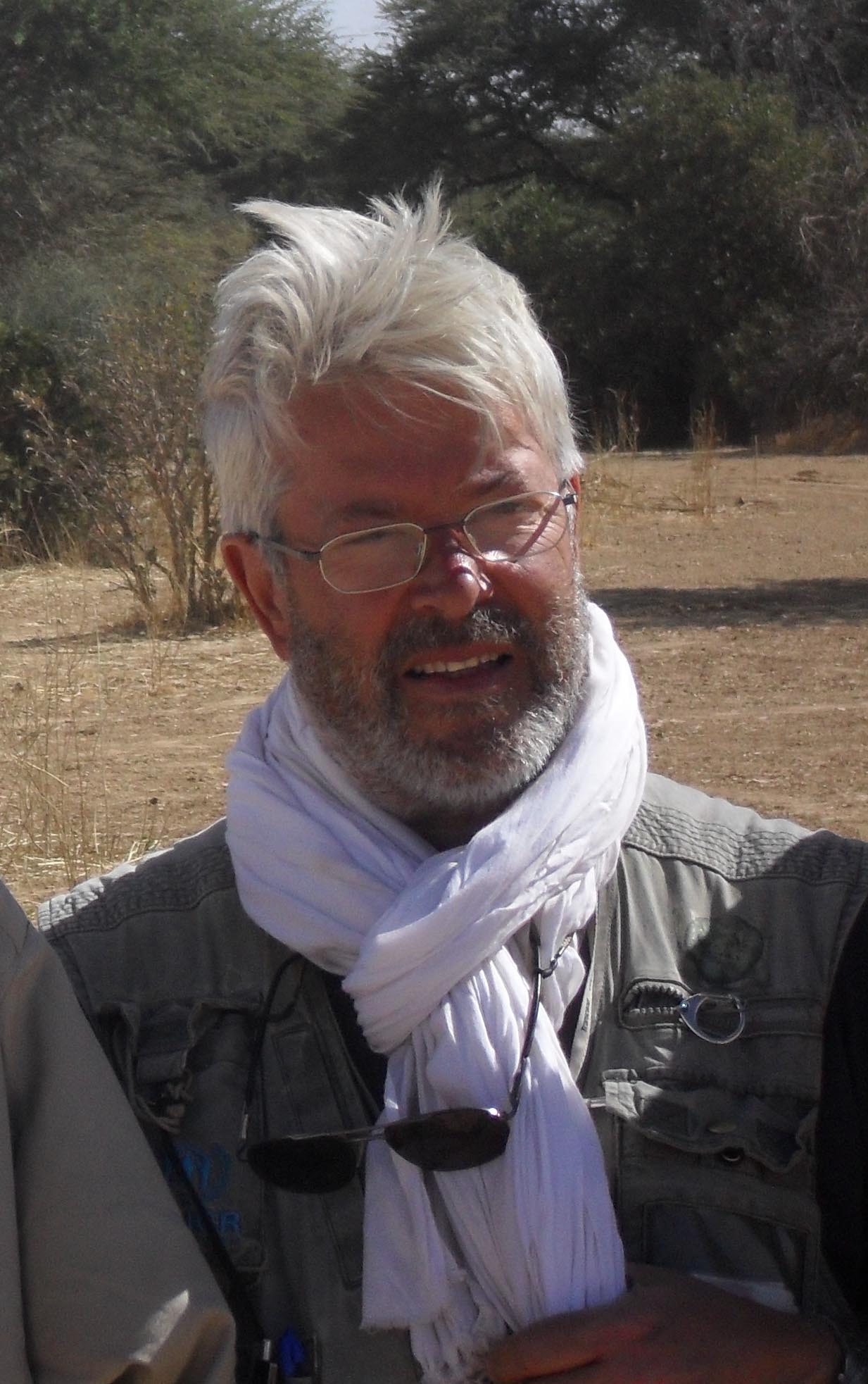
Using Science to Cope with Climate Change Impact Challenges
WATEX system set to fish out Africa’s hidden Groundwater Goodies
…. As RTI Exploration Drives the “Water for Peace” Paradigm
Story: Mohammed Abu
In March this year, the Representative of Public Affairs and Congress of the US Millennium Challenge Corporation(MCC) publicly announced that the French company RTI Exploration, after two years of research, had identified, from an innovative technology, about 50 billion m3 of available groundwater, with an annual recharge estimated at 2 billion m3.
This, historic discovery represents a volume of water almost ten times greater than that of Lake Chad, the country’s largest source of surface water after the Niger River. This revolutionary discovery makes Niger the most groundwater-rich country in the Sahel region.
This abundant groundwater resource discovered in Niger will increase its irrigation capacity on an area of more than 2 million hectares of arable land covering these aquifer systems, nearly a third of the size of Lake Michigan (57,750 km2).
This means that smallholder farmers will be better able to feed their families and sell their surplus crops. This allows them to improve their living conditions and livelihoods and build resilience to climate change.
“This study to map underground aquifers is the first of its kind in Niger. We are amazed by the results of the study, as the available groundwater makes Niger the most groundwater-rich country in the Sahel,” said Diafarou Moumouni Ali, the Supervisor of this activity for MCA-Niger.
Adamou Hassane, a hydrologist who participated in the study, added that “these results motivate us for the next steps which will be to decide on the use of these aquifers to increase crop yields for the benefit of all Nigeriens-
Backround
The initiative is within the context of the MCC’s $442.6 million Niger compact program aimed at addressing two major constraints to economic growth and investment in Niger: lack of access to water for productive uses and physical access and institutional barriers to trade.
Niger is said to be highly vulnerable to the changing climate and regularly experiences extremes: floods give way to extended droughts, with a backdrop of low and unpredictable rainfalls. This results in unproductive agricultural lands and is causing widespread food insecurity across the country.
According to the World Food Programme, more than 4.4 million Nigeriens– almost 20 percent of the population– are food insecure and nearly half of children under age 5 suffer from acute malnutrition
The Context
In partnership with the Government of Niger, the MCC compact is increasing rural incomes by improving the sustainable productive use of natural resources for agricultural production and improving trade and market access for agricultural products. The compact has the potential to benefit approximately 3.9 million people.
For more insights, your favorite, Eco-Enviro News Africa, magazine got the man behind the scientific research driven innovative technological solutions to unearthing the hidden ground water aquifer goodies of countries worldwide with the most recent, being in Niger desert making her the most groundwater rich country in the Sahel region, Dr. Alain Gachet, Founder/ CEO, RTI Explorations.
The WATEX® System, an algorithm combining spatial, geophysical, geological and climatic data, was invented, tested worldwide and implemented by the team of Dr. Alain Gachet, who is also a former explorer of Elf Aquitaine and founder in 1999 of RTI Exploration.
Now read on for the details of our exclusive Interview with Dr. Gachet
1.EENA: Courtesy RTI’s three years painstaking research and hard work in the Niger desert, the country is today crowned as the most groundwater rich country in the Sahel region of Africa. What was the motivating factor behind the project and could you share this most exciting moment with our readers?
AG The motivating factor is to prove that there are solutions to alleviate the consequences of Climate change and create prosperity in a country badly struck by drought and threatened by food insecurity.
Our WATEX system invented by RTI Exploration allowed us reveal the invisible and quantify new groundwater resources by billions of cubic meters from shallow depths (ranging from 5 to 60 meters) to deeper depths (from 60 m to 500 meters) with almost 2 million hectares of arable soils not cultivated today: people could not imagine that such huge groundwater quantities were lying under their homes, ready for use and to change their lives.
Beside the surprise and excitement of such discoveries, is to experiment the power of science combined to brain, thanks to the financial support of the US Government. That is the way to save millions of persons and change the destiny of a whole country and more than that, restore hope to the new generation of farmers and herders.
If little water brings war and conflicts around wells, a lot of water can bring peace through prosperity. That is the ultimate goal of my company expressed through my next book: WATER AND PEACE
2.EENA: Is Niger the first African country to ever benefit from the exploits of RTI, or other countries preceded her and what were the statistics?
No, Niger is a part of our exploration field spreading from Afghanistan to South America with a drilling success rate reaching 98% based on 2700+ wells since the Darfour crisis in Chad and Sudan in 2004.
3.EENA: After Niger which other African country or countries are on RTI’s list to benefit from its game changer technology?
AGI am not allowed yet to answer to such a strategic question
4.EENA: What was the motivating factor behind your switchover from mineral exploration to water exploration as a globally reputed mineral exploration geologist ?
AG I learnt a lot of geosciences and I made lots of discoveries during my 20 years of oil exploration, and a lot more in diamonds and gold exploration worldwide. But I understood since the Darfur crisis in early 2004, that we were driving to hell with the Climate Change which would spread like a fireball far beyond Sudan and Chad very soon, because ultimately, you don’t eat gold and diamonds and you don’t drink oil. My straight answer was to find this invisible water using my former exploration tools combined with a new generation of satellites to bring quick and efficient responses to what appeared aa a new challenge for humanity.
5.EENA: Could you compare and contrast the socio-ecological cost associated with the two exploration divides vis-à-vis the on-going discourse on sustainable development?
AG We are aware of the impact of mining activities on the environment with human and social associated costs.
Nevertheless, any civilization needs and minerals and I remain an Engineer using science to cope with any challenge. We can produce commodities in a cleaner way: bringing water to the mining sites will offer new sustainable benefits for the environment such as reforestations, soils remediation using bacteria and fungi (mycorrhization).
People call me Dr. Gachet but I am not the doctor of humans, but doctor of the Earth, finding the invisible water to heal and clean the wounds inflicted by humanity to the Earth: ESG commitment remains of our ultimate goal.
EENA: Thank you very much for your time
-

Nigerian Industry,Trade and Investment Minister Urges Incoming Investors
……..As Global Investors Storm Abu Dhabi on Sunday
Story: Mohammed Abu
Ahead of the opening of the Annual Investment Forum (AIM Global 2023), in the UAE’s, capital of Abu Dhabi next week, H.E. Amb. Mariam Yalwaji Katagum, Minister of State Industry, Trade and Investment, Nigeria, urges incoming investors to align themselves with the Ministry’s overall policy thrusts.
The Ministry’s policy thrusts the Minister said, was informed by three thematic areas of focus namely, Domestication of production of key commodities through our Backward Integration Program (BIP); Driving the growth of Micro, Small and Medium Enterprises (MSMEs), especially through access to finance and markets; and Cultivating Foreign Direct Investments (FDI) particularly through improving the Ease of Doing Business in Nigeria.
Investors who are seeking to come into the country she said, were assured of the protection and promotion of their investments, as the Federal Government of Nigeria is tirelessly working to improve the ease of market entry and doing business processes through the signing of the new Companies and Allied Matters Act (CAMA) and the yearly revision of the Finance Act.
“Like I always mention, whenever I have the opportunity, Nigeria is the best place to invest in Africa and we look forward to welcoming all of you”, the Minister added.
She was speaking in an exclusive interview with your favourite, Eco-Enviro-News Africa on what are her expectations, what are the benefits her country has made through their participation in the previous editions of the event so far among other things.
Now read on for the rest of what H.E. had to tell your favourite,Eco-Enviro-News Africa magazine
First of all, let me thank you for providing this space, through which to share my perspectives.
Q1. As one of the high-level Africa region VIPs participating in AIM Global 2023, what are your expectations so far as your participation in the event is concerned?
My expectations so far, include the following:
- Establish contacts and network in key industries of the AfCFTA and Investors. As the Minister of State, Industry, Trade, and Investment in Nigeria, this platform will provide me the veritable opportunity to connect and network with like-minded individuals and potential investors from various sectors and industries.
- On Investment opportunities: I hope to showcase Nigeria’s investment opportunities to the world for potential investors to explore and identify investment opportunities in Nigeria, as well as learn about investment opportunities in other emerging markets and sectors, to attract more Foreign Direct Investments (FDIs) for my country, Nigeria.
- On knowledge sharing and capacity building: I am confident that from the sessions and workshops on various topics related to investment, innovation, and entrepreneurship, these meetings and sessions will assist me to gain more insights and knowledge on global trends, best practices, and emerging technologies that can help drive economic growth and development in Nigeria.
- On brand visibility: My participation at this high-level meeting will further help enhance the visibility and reputation of Nigeria as a prime investment destination, as well as showcase the country’s potential and investment opportunities to the global business community.
- While on partnerships and collaboration: I hope the meeting provides a platform for fostering partnerships and collaborations between governments, businesses, and other key stakeholders and as the Minister, I hope to explore and establish partnerships and collaborations, sign Memorandums of Understanding (MoUs) if possible, with other countries and organizations that can help drive economic growth and development in Nigeria.
Q2. Among West African Countries Nigeria is noted for her passionate participation during a number of major Arab Gulf region hosted events including AIM Global. Would you like to talk about the benefits Nigeria, West Africa region stand to benefit from participating in it?
Yes, I agree with you that Nigeria is passionate in participating in major Arab Gulf hosted events such as AIM Global, because the Federal Government of Nigeria looks forward to every opportunity to strengthen her economic ties, promote investment opportunities, enhance diplomatic relations and learn from the experiences of the other emerging nations. Nigeria believes that events such as this will further bring about significant economic and social benefits for the region.
Notable benefits for both Nigeria and the West Africa region include:
- Increased investment opportunities: By participating in the event, Nigeria and West Africa can attract more investments from the Gulf region, which can help drive economic growth and development.
- Enhanced trade relations: Participating in AIM Global can help to enhance trade relations between Nigeria, West Africa, and the Gulf region. By showcasing Nigeria’s potential and investment opportunities, we can attract more Gulf-based companies to invest in Nigeria and also expand our exports to the Gulf region.
- Knowledge sharing and capacity building: By participating in the Conference Sessions, Nigeria and West Africa can gain insights and knowledge on global trends, best practices, and emerging technologies that can help drive economic growth and development.
- Partnerships and collaborations: By participating in the event, Nigeria and West Africa can explore and establish partnerships and collaborations with Gulf-based companies and organizations that can help drive economic growth and development in the region, as well as showcase the region’s potential and investment opportunities to the global business community.
Nigeria has an emerging Halal Market. We are therefore looking for partnerships in this regard.
Q3. For how long has Nigeria been participating during AIM Global events and what has been the positive impact if any, in terms of Nigeria bound FDI inflows, UAE-Nigeria cross border trade and tourism?
Nigeria has been participating in the Annual Investment Meeting (AIM) for several years. To the best of my knowledge, the event has provided a platform for Nigeria to showcase its investment opportunities and attract Foreign Direct Investment (FDI) from around the world, including the UAE and other Arab Gulf countries.
However, while it is difficult to measure the exact impact of Nigeria’s participation in AIM Global on FDI inflows, Nigeria-UAE cross-border trade, and tourism, there have been some positive developments in recent years.
For example, according to the UNCTAD, FDI inflows from UAE to Nigeria amounted to $1.3billion in 2020, which represents significant increase. The UAE is currently the third–largest source of FDI for Nigeria. This suggests that there has been an increase in trade relations between the two countries, which could be attributed, in part, to Nigeria’s participation in events like AIM Global.
In terms of FDI, Nigeria has been working to attract more foreign investors in recent years, and events like AIM Global provide a platform for showcasing Nigeria’s potential and investment opportunities. According to the United Nations Conference on Trade and Development (UNCTAD), FDI inflows to Nigeria increased by 13% in 2019, reaching $3.3 billion, which suggests that Nigeria is making progress in attracting more foreign investments.
As for tourism, it is also difficult to measure the exact impact of Nigeria’s participation in AIM Global. However, it is worth noting that the UAE is a popular tourist destination for Nigerians, and events like AIM Global could help to promote tourism and cultural exchange between the two countries.
Overall, Nigeria’s participation in AIM Global and other similar events provides an opportunity for the country to showcase its investment opportunities and attract more foreign investment, enhance trade relations with other countries, and promote cultural exchange and tourism.
Q4.Lack of direct shipping lines between the Arab Gulf region and West African sub-region has since been identified as a major factor militating against meaningful import and export trade between the two regions. What is your take on that and your advice on how best to mitigate the problem?
The issue of direct shipping lines between West Africa and the Arab Gulf region has been a challenge that has made it more difficult and costly to transport goods between the two regions.
I believe this can be resolved through a combination of policy measures, technology integration and infrastructural development that supports direct shipping especially in West Africa. Collaboration between Government and the private sector and partnership with international originations such as World Bank, IMF and UNCTAD can provide technical assistance and funding to support direct shipping to increase trade between the two regions. This will help to facilitate trade and reduce the cost and time required to transport goods between the two regions.
In addition to establishing direct shipping lines, it is also important to enhance the capacity of existing port infrastructure in both regions to handle larger volumes of cargo and increase efficiency. This will require investments in modern technology, equipment, and personnel training to Improve the speed and efficiency of cargo handling and processing.
In summary, the establishment of direct shipping lines between the Arab Gulf region and the West African sub-region, combined with investments in port infrastructure, and the removal of other trade barriers will go a long way in promoting meaningful import and export trade and enhancing economic growth and development in both regions.
As the Minister of Industry, Trade, and Investment, I am committed to exploring and implementing measures that will enhance trade relations between Nigeria and other West African countries and the Gulf region.
Q5. The UAE has since been rated as second after China in terms of quantum of FDI inflows into Africa region. In the same view, the UAE authorities have also expressed interest in seeing investment inflows from Africa to the UAE in the spirit of enhancing more beneficial win-win relations. What is the cross-border investment status between Nigeria and UAE as of now?
Overall, the cross- border investment relationship between Nigeria and the UAE appears to be improving with both countries seeking to deepen economic ties and explore new investment opportunities. For example, the UAE has invested heavily in Nigeria’s energy sector, with major investments in oil exploration and production, power generation and renewable energy and real estate. On the other hand, Nigerian investors have been increasingly exploring investment opportunities in the UAE, particularly in real estate and hospitality.
Q6. One will not be far from right to say that; AIM Global is set to offer a suitable platform for seeking investor buy-in to the all-important Africa Continental Free Trade Area (AfCFTA) agenda of the AU, what is your take on this?
As Minister of State, Industry, Trade and Investment,I believe that leveraging the AIM Global platform to seek investor buy-in to the AfCFTA agenda of the AU, is an excellent idea.
The AfCFTA is a game changer for the African continent, as it creates a single market for goods and services, with free movement of people and capital and promotes intra African trade. It is a unique opportunity to promote industrialization, economic diversification and job creation in Africa.
Therefore, leveraging on this platform would help to showcase the enormous investment opportunities that the AfCFTA presents to investors from around the world. This will not only attract FDI but, also build partnerships and collaborations with international investors and African businesses, leading to the transfer of technology, skills and knowledge. It will also address the misconceptions and concerns that investors may have about doing business in Africa.
In summary, I support using the AIM platform to promote the AfCFTA agenda and believe that it will help to unlock the full potential of the AfCFTA and promote economic growth and development in Africa.
Closing statement:
I want to thank all the participants, speakers, exhibitors and sponsors who have made the AIM a success. Your contributions and insights have been invaluable and I hope that this event has been a valuable platform for us to achieve our goals. Let us continue to work together to build a brighter future for all. Thank you.