Category: Mining/Oil & Gas

  • Nigeria Partners with Chinese Investors on Two New Lithium Processing Plants

    Nigeria is making bold moves to transform its mining sector by launching two major lithium processing plants this year, with significant backing from Chinese investors.

    According to the country’s mining minister, a $600 million facility near the Kaduna-Niger border will be commissioned this quarter, with another, a $200 million refinery near the nation’s capital, nearing completion.

    Alake also stated that there are two other plants under construction in Nasarawa, with completion expected before the third quarter. These projects aim to shift Nigeria away from raw mineral exports and toward domestic value creation, including job growth and tech development.

    The move also aligns with broader reforms targeting local processing, the formalization of artisanal mining, and increased investor participation.

    SOURCE

    Africca.com/Reuters

  • Ghana Drives Small-Scale Gold Mining (ASGM) Growth, Sustainable Mining with Global Partnerships

    Ghana Drives Small-Scale Gold Mining (ASGM) Growth, Sustainable Mining with Global Partnerships

    ACCRA, Ghana, March 26, 2025/ — Ghana is strengthening its collaboration with international partners to enhance (https://apo-opa.co/4kYCvVX) its small-scale gold mining (ASGM) sector and the broader gold value chain for socioeconomic development.
    The Ashanti Green Initiative, led by Oheneba Kwaku Duah, Prince of Ghana’s Ashanti Kingdom, is spearheading the inaugural Mining in Motion Summit in partnership with the World Bank and the World Gold Council.
    Scheduled for June 2-4, 2025 in Accra, the summit brings together stakeholders from Ghana’s ASGM sector, major mining players and global investors to discuss best practices for further empowering the ASGM industry.
    In 2024 alone, ASGM contributed $5 billion in export revenue and employed over one million people, underscoring its significance in Ghana’s mining landscape and economy.

    Global Partnerships and ASGM Growth 

    Ghana is also implementing (https://apo-opa.co/3QLQQXV) the Ghana Landscape Restoration and Small-Scale Mining Project, in partnership with the World Bank, to formalize the ASGM sector through the empowerment of District Mining Committees. Given the sector’s potential for job creation, the project plays a crucial role in advancing Ghana’s employment and economic growth agenda.

    Additionally, Ghana is leveraging expertise and financing from global partners to enhance local value addition.
    The country’s Central Bank and India’s Rosy Royal Minerals have been operating the Royal Ghana Gold Refinery (https://apo-opa.co/4c2ec58) since its launch in August 2024.
    The facility presents a transformative opportunity for the ASGM industry, enabling greater contributions to GDP growth through value-added gold products. In November 2024, the Minerals Income Investment Fund of Ghana partnered with South Africa’s Mintek to boost the technical expertise of local miners.

    Global Cooperation on Industrial Mining 

    Ghana’s industrial mining sector is also witnessing significant international cooperation, with new projects set to expand production. Cardinal Resources is set to boost Ghana’s gold output by 358,000 ounces with the launch of the Namdini Mine in mid-2025, while Newmont’s Ahafo North Project will add another 325,000 ounces in the second half of the year.Meanwhile, Canadian mining firm Asante Gold is preparing to select a contractor for its Bibiani Mine Expansion Project in Q3 2025.

    The UAE, which accounted for 40% of Ghana’s gold exports in 2024, continues to play a significant role in the sector’s expansion. UAE-based Emiral Resources Limited, the majority shareholder in Asante Gold, is investing in new mines and the modernization of existing facilities in Ghana through Asante Gold’s $525 million expansion strategy.

    Amid increasing global partnerships in Ghana’s mining sector, Mining in Motion 2025 seeks to expand these collaborations, providing a platform for deal signings and strategic partnerships to promote responsible and sustainable gold mining.

    The event will feature high-level panel discussions and exhibitions from key decision-makers, including Otumfuo Osei Tutu II, King of the Ashanti Kingdom; H.E. John Dramani Mahama, President of Ghana; and representatives from the United Nations, African Union and ECOWAS, highlighting lucrative investment opportunities in Ghana’s burgeoning gold mining sector.

    Stay informed about the latest advancements, network with industry leaders, and engage in critical discussions on key issues impacting ASGM and medium- to large-scale mining in Ghana. Secure your spot at the Mining in Motion 2025 Summit by visiting www.MininginMotionSummit.com.

    For sponsorship opportunities or delegate participation, contact Sales@ashantigreeninitiative.org
    Distributed by APO Group on behalf of Energy Capital & Power.

    SOURCE

    Energy Capital & Power

  • Gloom as oil price drops; more uncertainty looms-By Emeka Eke Editor-in-chief, GlobalFocus Media

    Gloom as oil price drops; more uncertainty looms-By Emeka Eke Editor-in-chief, GlobalFocus Media

    Crude Oil future continues to fluctuate even as President Donald Trump looks set to impose higher levies on two of the United States’ biggest suppliers; Canada and Mexico!

    With China gearing up for countermeasures if the United States implements its planned threat to increase tariffs on Chinese imports, the battle for superiority and dominance is only just getting started!

    As the US relies majorly on oil imports from Canada and Mexico for its refineries, the potential tariffs may have a complex effect on crude prices which by extension, may affect some oil-dependent economies including in Africa.

    Attempts to broker an end to the Russia-Ukraine war added a different twist to the market last Friday, after Trump’s highly anticipated meeting with Ukrainian President Volodymyr Zelenskiy ended with a tense exchange! The two leaders failed to sign a deal that was set to make the US a major partner in extracting Ukraine’s oil and gas, as well as rare earth minerals.

  • Top Reasons to Invest in Ghana’s Mining Industry

    Top Reasons to Invest in Ghana’s Mining Industry

    ACCRA, Ghana, March 4, 2025/ — Ghana’s mining industry stands as a key driver of economic growth – with GDP projections reaching 1.5% by 2025 (https://apo-opa.co/4klB6s7) – fueled by expanding opportunities within the sector.
    A stable political and business environment, coupled with the discovery of new mineral reserves and a well-established mining ecosystem, Ghana is an attractive investment destination for global mining institutions.

    The upcoming Mining in Motion Summit, taking place in Accra on June 2 – 4 will further highlight lucrative investment opportunities, connecting Ghanaian stakeholders with international financiers and technology providers to enhance collaboration across the mining value chain.

    Rich Mineral Resources 

    Ghana leads Africa in gold production and ranks 6th globally. In 2024 alone, artisanal miners contributed over $5 billion in foreign exchange earnings, underscoring the vast potential of Ghana’s gold sector. Ongoing industrial-scale projects like Goldstone’s Homase Mine Expansion, Cardinal Namdini Mine and Newmont’s Ahafo North Project continue to expand investment opportunities in the gold industry.

    In addition to gold, Ghana is the world’s 4th-largest manganese producer, presenting attractive prospects for investors seeking exposure to high-value minerals.

    The country’s untapped reserves of lithium, iron ore and bauxite also offer substantial growth potential as the demand for these minerals expand owing to the energy transition.

    Strong, Investor-Friendly Regulatory Framework 

    Ghana introduced incentives including as tax breaks, customs duty exemptions and foreign ownership rights, attracting significant foreign direct investment. For example, Atlantic Lithium secured $6.7 million to accelerate the Ewoyaa Lithium Project, while Asante Gold committed $525 million to expand its Bibiani and Chirano Mines.

    Policies such as the Green Minerals Policy (2023) streamline entry for critical mineral investors, while the Equipment Tracking Regulations (2020) simplify equipment procurement and transportation processes for mining projects.

    Skilled Workforce Availability 

    Ghana’s mining history has fostered a highly skilled workforce, making it easier for international investors to recruit trained personnel for their operations.

    Partnerships with global institutions, including the World Bank, have led to initiatives like the Ghana Landscape Restoration and Small-Scale Mining Project, which equips miners with modern, sustainable practices.

    Additionally, programs focused on apprenticeship, mentorship and capacity-building continue to enhance the local workforce. AngloGold Ashanti graduated 1,010 apprentices in October 2023 and added 140 more in February 2024, supporting Ghana’s local content development.

    Infrastructure Readiness 

    Ghana’s infrastructure readiness further strengthens its appeal as a mining investment hub. Recent developments include the inauguration of the Royal Ghana Gold Refinery in Accra in August 2024, which allows for local gold processing, streamlining operations and boosting export revenues through the sale of refined gold.

    The Ministry of Lands and Natural Resources in collaboration with testing laboratories company Intertek launched a new testing laboratory (https://apo-opa.co/3FeePMx) in Tarkwa, in 2023.

    The laboratory offers faster mineral sample analysis for over 500 exploration projects and 23 large-scale operations. Furthermore, the continuous modernization of the Tema and Takoradi ports has improved export logistics, ensuring that Ghana’s minerals reach international markets efficiently.

    Amid these investor-friendly conditions established by Ghana, Mining in Motion will further unveil burgeoning and lucrative opportunities within the West African nation’s mining sector. The summit will serve as a platform to connect stakeholders, foster partnerships, and facilitate deal signings that drive growth and investment.

    Stay informed about the latest advancements, network with industry leaders, and engage in critical discussions on key issues impacting ASGM and medium to large scale mining in Ghana. Secure your spot at the Mining in Motion 2025 Summit by visiting www.MininginMotionSummit.com. For sponsorship opportunities or delegate participation, contact Sales@ashantigreeninitiative.org

    Distributed by APO Group on behalf of Energy Capital & Power.

    SOURCE

    Energy Capital & Power

  • Ghana’s Mining in Motion Summit Gains Support from Key Leaders

    Ghana’s Mining in Motion Summit Gains Support from Key Leaders

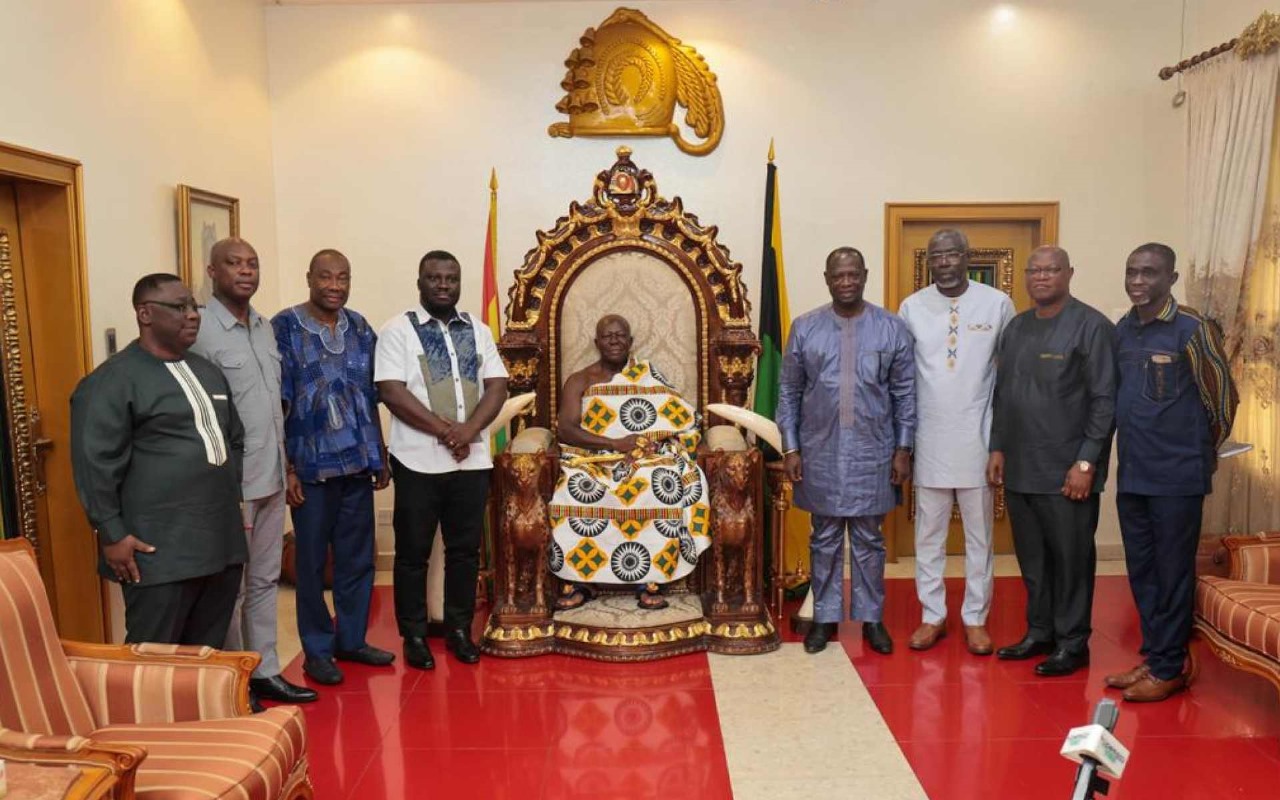
    Otumfuo Osei Tutu II, King of the Ashanti Kingdom; Hon. Emmanuel Armah Kofi Buah, Minister of Lands and Natural Resources of Ghana; and Oheneba Kwaku Duah, the son of Otumfuo Osei Tutu II and Managing Director of the Ashanti Green Initiative recently met to discuss the upcoming Mining in Motion Summit in Ghana.

    They explored the summit’s potential to improve the artisanal and small-scale gold mining (ASGM) sector in Ghana and the role of government, international partners and major mining firms in accelerating the sector’s growth. Hon. Kofi Buah endorsed the event, emphasizing its significance in connecting small-scale miners with technology providers, financiers, regulatory bodies and global industry stakeholders to improve their operations and impact.

    Organized by the Ashanti Green Initiative along with the World Bank, the World Gold Council and other international partners, Mining in Motion will take place from June 2 – 4 in Accra.

    The summit is held under the theme Sustainable Mining & Local Growth – Leveraging Resources for Global Impact, uniting key decision-makers, including H.E. John Dramani Mahama, President of the Republic of Ghana, as well as representatives from public and private sector mining institutions from South Africa, the Republic of Guinea, the African Union, ECOWAS and the United Nations.

    The three-day event will highlight the role of traditional authorities in shaping artisanal and small-scale mining practices, emphasizing the sector’s contribution to employment and economic growth. In 2024 alone, Ghana’s artisanal miners generated $5 billion in foreign exchange earnings through gold exports. Providing direct employment for over one million Ghanaians and accounting for 35% of domestic gold output, the sector has the potential to significantly shape socioeconomic development in the west African country.

    As Ghana’s mining sector increasingly supports sustainable development, the Mining in Motion Summit will highlight best practices for integrating ASGM into the global financial system. Representatives from prominent international financing organizations will share their insights.

    In a significant move to boost earnings for small-scale miners, Ghana has announced plans to establish a Gold Board. This new entity will simplify the process of purchasing gold from small-scale miners, providing them with easier access to global markets.

    With Samuel Adu Gyamfi, who was appointed Acting Managing Director of Precious Minerals Marketing Company last month and tasked with setting up the Ghana Gold Board, playing a pivotal role in shaping the summit, Mining in Motion is set to have a sizable impact on the growth of Ghana’s gold sector.

    Through a series of high-level panel discussions, deal signings, project showcases and exclusive networking, Mining in Motion serves as the ideal platform to connect Ghanaian miners with regional counterparts and global investors for forge industry-changing partnerships.

    Stay informed about the latest advancements, network with industry leaders, and engage in critical discussions on key issues impacting ASGM and medium to large scale mining in Ghana. Secure your spot at the Mining in Motion 2025 Summit by visiting https://MiningInMotionSummit.com/. For sponsorship opportunities or delegate participation, contact sales@ashantigreeninitiative.org.

    Distributed by APO Group on behalf of Energy Capital & Power.

    SOURCE

    Energy Capital & Power

  • Maximizing Gold Mining Benefits and the GoldBod Idea in Ghana

    Maximizing Gold Mining Benefits and the GoldBod Idea in Ghana

    Interview Story: By Mohammed A.Abu

    Hari Iyer, Chief Executive Officer(CEO) and Managing Director(MD) of the Sakthi Tading Group, a prominent international gold trade industry player, has noted that, a strict eco-friendly or sustainable mining regime is crucial for Ghana to address the significant socio-ecological costs of gold mining, such as deforestation, water pollution, and soil degradation.

    By adopting sustainable practices, Mr. Iyer intimates, Ghana can protect the environment, ensure long-term economic sustainability, and improve community welfare.

    A focus on responsible mining he contends, will enhance global competitiveness, attract ethical market demand, and reduce illegal mining, adding, “The GoldBod initiative, along with stronger government regulations, can help transition the sector to a more sustainable model, balancing economic growth with ecological preservation for the benefit of future generations”.

    He was speaking in an exclusive interview with your favourite, the Economic & Environmental Africa News, magazine for his expert thoughts relating to Ghana’s government’s recent move to put in place a Ghana GoldBod.

    Regarding the initiative, he notes that GoldBod Ghana appears to be an important player in the evolution of the gold mining and trading sector in Ghana, especially given the complex challenges faced by the country in terms of artisanal mining, environmental impact, and illegal gold trading.

    Mr. Hari provided some insights on the potential significance of GoldBod Ghana as follows:

    1. Ethical Sourcing Leadership

    GoldBod Ghana has the opportunity to lead by example in promoting ethical gold sourcing. As global demand for responsible and traceable gold rises, especially from environmentally conscious buyers and investors, GoldBod could position itself as a pioneer in making Ghana’s gold sector more transparent. Their commitment to traceability, likely through innovative technologies like blockchain, can strengthen the integrity of the entire supply chain, making it more appealing to international markets that prioritize ethical sourcing.

    1. Addressing the Artisanal Mining Crisis

    Artisanal small-scale mining (ASM) is a significant part of Ghana’s gold production but often operates in unsafe, inefficient, and environmentally damaging conditions. GoldBod’s potential to provide structured support to the ASM sector, offering better mining practices, health and safety training, and access to improved equipment, could be transformative. This could lead to a reduction in the harmful effects of illegal mining (Galamsey), such as deforestation, mercury pollution, and unsafe working environments. Their involvement could directly improve the livelihoods of thousands of small-scale miners.

    1. Facilitating Sustainable Mining Practices

    Sustainability is a growing concern in the mining industry, and GoldBod Ghana’s potential to implement environmentally friendly and socially responsible practices is crucial. By introducing eco-friendly mining techniques, such as alternative mercury-free extraction methods and promoting reforestation initiatives, GoldBod can mitigate the environmental damage often associated with gold mining. This could improve the long-term viability of gold mining in Ghana and enhance the country’s reputation in global markets.

    1. Strengthening Governance and Compliance

    GoldBod’s commitment to adhering to international standards and regulations will play a vital role in strengthening governance within Ghana’s gold industry. With proper compliance and transparency mechanisms in place, GoldBod can help address systemic challenges like smuggling, corruption, and unregulated gold trade, ensuring that Ghana’s mining revenues are appropriately taxed and channeled into national development.

    1. Economic and Social Impact

    GoldBod’s focus on sustainable mining practices has the potential to contribute significantly to the economic development of local communities in gold mining regions. Beyond economic growth, their engagement in social initiatives like healthcare, education, and community infrastructure can improve the living conditions of miners and their families. As a result, GoldBod can enhance the social license to operate, which is crucial for the long-term success of mining companies in regions where mining is a central economic activity.

    1. International Partnerships and Investments

    GoldBod Ghana has the potential to attract international investments and forge partnerships with global organizations and companies that prioritize responsible sourcing. This could help them access advanced technologies, financial resources, and expertise needed to modernize the sector. Such collaborations could also enhance Ghana’s position in the global gold market, opening new export opportunities and enhancing trade relationships.

    1. Risk Mitigation in Gold Trading

    The volatility of the gold market, with fluctuating prices and risks associated with illegal trade and geopolitical instability, poses a challenge for gold trading companies. GoldBod’s adoption of cutting-edge technologies and adherence to legal and ethical standards could act as a hedge against these risks, offering stability and trustworthiness to both local and international stakeholders.

    1. Potential Challenges

    While GoldBod Ghana’s approach seems promising, challenges remain in terms of overcoming entrenched practices within the informal mining sector, securing buy-in from local miners, and navigating the complexities of Ghana’s regulatory environment. Additionally, competing with illicit gold trade operations might prove difficult, as illegal mining can often be more financially attractive in the short term.

    Investment Opportunities GoldBod Offer Sakthi Trading

    On what business Prospects the GoldBod idea has for the Sakthi Trading Group in Ghana, he responded thus,” For Sakthi Trading Group, the establishment of Ghana’s GoldBod offers several promising investment opportunities within the mining and production management value chain”:

    1. Gold Mining & Extraction Investments

    Sakthi Trading Group could invest in gold extraction operations, either through direct involvement or by partnering with licensed small-scale miners. As GoldBod becomes the sole buyer of gold from legal miners, there’s a guaranteed market for the mined gold, which reduces risk and ensures steady revenue streams.

    1. Gold Refining & Value Addition

    GoldBod’s focus on refining and value addition presents an opportunity for Sakthi Trading Group to invest in refining infrastructure or establish partnerships with refining operations. They could integrate these activities into their supply chain, adding value to raw gold and enhancing profitability through higher-grade gold products for both local and international markets.

    1. Gold Export & Marketing

    With GoldBod serving as the sole exporter of gold from the legal small-scale sector, Sakthi Trading Group could tap into international markets by partnering with GoldBod for the export of refined gold. This also allows the group to leverage global demand for responsibly sourced gold, enhancing its position in international markets and contributing to Ghana’s foreign exchange accumulation.

    1. Gold Assaying & Quality Control

    Given that GoldBod will be the sole assayer of gold, Sakthi Trading Group could invest in or collaborate with assaying facilities to support gold testing and certification processes. Establishing a presence in the assaying segment of the supply chain provides an opportunity for Sakthi to ensure that their gold meets international standards, fostering trust and marketability.

    1. Supply Chain and Logistics

    As the GoldBod framework establishes a structured system for sourcing, refining, and exporting gold, Sakthi Trading Group can invest in the supply chain infrastructure, including logistics and transportation. With GoldBod centralizing the process, the group could play a key role in ensuring efficient movement of gold from mining sites to refineries and international markets.

    1. Local Economic Growth and Stabilization

    Sakthi Trading Group’s involvement in the GoldBod framework also allows it to contribute to the economic stabilization of Ghana. As the GoldBod aims to reduce gold smuggling and stabilize the local currency, Sakthi can benefit from an improved business environment and increased stability in the gold sector, making it a more attractive long-term investment.

    1. Technological Integration

    There is an opportunity to invest in technology that enhances the mining, refining, and marketing processes. GoldBod’s push for more transparent, efficient, and legal operations opens the door for Sakthi Trading Group to integrate advanced technologies such as blockchain for traceability, AI for market forecasting, or automation in refining processes.

    Through strategic investments in mining operations, refining, logistics, and technology, Sakthi Trading Group could capitalize on the GoldBod initiative to expand its footprint in Ghana’s gold sector. By aligning with the government’s vision of formalizing and improving the gold value chain, Sakthi can enhance profitability while contributing to the economic growth and stability of Ghana.

    Role and Responsibilities to Sakthi Trading Group

    On what is the exact role he plays as the CEO/MD of the group for the past 08 yrs, Mr.Iyer  said his roles are the following:

    Strategic Leadership: identifies growth opportunities, and ensures compliance with global gold trading standards.

    Business operations and Risk management:  oversees gold procurement, logistics, and sales, manages supply chain relationships, and implements risk management strategies for market and security risks.

    Financial Oversight: manage financial health, secure funding, and oversees hedging strategies to mitigate price volatility risks.

    Regulatory: Ensure AML and KYC compliance, upholds ethical sourcing, and engages with regulators.

    Brand: builds partnerships, explores new markets, and strengthens brand reputation in the gold industry.

    Technology: leverages blockchain, AI, and digital transformation to enhance transparency, efficiency, and customer engagement.

    Team leadership: leads the executive team, fosters corporate culture, engages stakeholders, and drives talent development.

    Flashback-Global Gold Dore Forum, Accra,2017

    Sakthi Trading Group was the title sponsor of the first ever Global Gold Dore Forum, held in Accra in January 2017. As CEO/MD of Sakthi Trading Group, I emphasized the importance of transparency and responsible conduct in the gold market.

    • “Sakthi Trading Group firmly believes that responsible business is the only sustainable business.”
    • We seek to understand various initiatives led by both government and non-government entities in Africa and aim to contribute to solutions wherever possible.

    Commitment to Collaboration and Partnerships

    Sakthi Trading Group is dedicated to working with organizations that share its values and adhere to regulations. Through strategic collaborations, the group strives to promote responsible gold sourcing and support a more sustainable future.

    Supporting Artisanal Small-Scale Gold Mining Sector Reform

    Flashback-Global Dore Forum,Accra-2017

    At the Global Gold Dore Forum conference,held in Accra in 2017,Sakthi Trading Group was not only a Lead Sponsor,but also expressed its commitment to participating in the reform of Ghana’s artisanal small-scale gold mining sector. This initiative reinforces the company’s dedication to ethical gold sourcing and industry sustainability.

    The position of Sakthi Trading Group is the beginning of a privately-owned investment holding company for the group- IDM Global Holdings (Hong Kong) Limited focusing on investments in to international mining, production management and full mining services companies based in West and East Africa.



  • Wa Gold Project, Upper West Region, Ghana gets a Booster

    Wa Gold Project, Upper West Region, Ghana gets a Booster

    Report: Mohammed A.Abu

    A quite impressive mineralisation encountered at the Kpali Gold Prospect  under the Wa Gold Project announced recently by Castle Minerals comes as a further boost to the Upper West Region’s image as an emerging gold province

    The project with multiple prospects is the single largest commercial gold concession in the entire Northern sector that promises to offer a maiden  commercial mining operation in the region.

    Castle Executive Chairman, Stephen Stone, commented “The Kpali Gold Prospect is developing into a robust discovery and is a strong indicator that we may be dealing with a new West African gold mining camp in Ghana’s emerging northern region.

    “The latest intercepts include some very decent widths and grades at shallow depths with good continuity which can have considerable positive impacts should mining be considered.

    “We have intersected a very impressive 12m at 8.29g/t Au from 25m, including 6m at 11.60g/t Au from 31m and a peak 1m intercept of 20.43g/t Au at 36m in a ‘hangingwall’ lode, and also 4m at 4.16g/t Au from 95m in a lower ‘footwall’ lode. Apart from these standout results, very strong mineralisation has been encountered within most holes drilled, implying that with additional drilling we may be able to delineate a decent high value deposit.

    “We are very keen to get back drilling and to extend the Kpali Gold Prospect discovery as well as to follow-up historical drilling at the nearby Bundi discovery, 4km north. There are also several other enticing prospects in the broader Kpali Gold Project area.

    “These drilling results follow excellent recent results from four holes at the Kandia Prospect, a second and separate gold discovery associated with a relatively underexplored 16km prospective contact between Birimian metasediments and a granite intrusion.

    “Recent intercepts at Kandia included 7m at 3.36g/t Au from 149m within 24m at 1.78g/t Au from 139m and 5m at 3.49g/t Au from 82m within 11m at 2.26g/t Au from 79m.

    “These deposits lie in a classic setting for major gold deposits in West Africa and in particular northern Ghana which hosts the Cardinal Resources 5.1Moz gold Namdini deposit and the Azumah Resources 2.8Moz gold Black Volta Gold Project.

    “The latter’s high-grade Julie deposit is immediately along strike from Kandia. West Africa is where big gold discoveries can be and are still being made. With the gold price now at a level I could only dream of when starting my career, it’s the perfect time to be exploring Castle’s two new discoveries in the very stable, safe and mining friendly jurisdiction of Ghana

    “Castle Minerals Limited (“Castle” or the “Company”) advises that a recently completed eight-hole, 1,106m RC drill programme at its Kpali Gold Prospect in Ghana’s Upper West Region (“Project”, “Kpali”) has intersected mineralisation in all holes including 12m at 8.29g/t Au from 25m including 6m at 11.60g/t Au from 31m and a peak 1m intercept of 20.43g/t Au at 36m in an interpreted ‘hangingwall’ lode and then 4m at 4.16g/t Au from 95m in a lower “footwall” lode (24KPRC010).

    “Additional intercepts included 7m at 2.23g/t Au from 35m(24KPRC011) including 11m at 2.24g/t Au from 50m, 5m at 3.6g/t Au from 78m (24KPRC012), 9m at 4.81g/t Au from 107m (24KPRC015) and 3m at 3.08g/t Au from 78m (KPRC017).

    “These results confirm the Kpali Gold Prospect, just one of several prospects within the broader Kpali Gold Project, as a robust discovery in a completely new district within Ghana’s emerging Northern Region exploration frontier.

    “With several other high conviction prospects yet to be evaluated in the area, including the nearby Bundi, Kpali East, Wa South East and Wa South West prospects, there appears to be present all the hallmarks of a new West African mining camp and the possibility of a considerable gold endowment.

    “The Kpali Gold Prospect lies within a mineralised corridor associated with a 30m to 50m wide zone of structural deformation immediately west of a granite intrusion.

    “Three drilling programmes have identified near-surface, shallow plunging high-grade lode-style mineralisation to a depth of at least 100m. Multiple, closely-spaced mineralised lodes have been identified over at least 650m strike.

    “Overall, the geological setting at the broader Kpali Gold Project is of typically structurally-controlled, orogenic style mineralisation within Birimian terrane. This is a similar setting as that hosting several worldclass gold mining operations in Ghana and West Africa generally. Orebodies with these characteristics can often extend to considerable depth.

    “This latest drilling programme focused specifically on extending zones of high-grade, lode-based mineralisation that appears to plunge to the north. Better intercepts (>1g/t Au, max 2m internal dilution) from the eight holes completed included: • 12m at 8.29g/t Au from 25m (24KPRC010) incl. • 6m at 11.60g/t Au from 31m and • a peak 1m intercept value of 20.43g/t Au at 36m and • 4m at 4.16g/t Au from 95m among others

    “These latest results enhance the confidence obtained from the two prior programmes which included 4m at 3.66g/t Au from 26m, 3m at 5.20g/t Au from 125m, 28m at 2.26g/t Au from 81m including 5m at 8.41g/t, 10m at 2.01g/t Au, 5m at 4.53g/t Au, 11m at 1.86 g/t Au from 143m and 3m at 5.20g/t Au from 125m

    “Northern Ghana and the Kpali Gold Project A compelling driver for exploring Northern Ghana’s Kpali Gold Project is its advantageous location at the convergence of two major greenstone belts (Bole-Bolgatanga and Wa-Lawra/Boromo) and three regional-scale structures.

    “These are all associated with gold deposits. This supports the thesis that the region provides a large and prospective “search base” for the discovery of a major new West African mining camp. Northern Ghana has more recently seen two of West Africa’s better discoveries and success stories.

    “The 5.1Moz Namdini gold deposit, discovered by Cardinal Resources Limited prior to its takeover by Shandong Gold Limited in 2020, has just been commissioned and lies on the same Bole-Bolgatanga Birimian greenstone belt as Castle’s Kandia discovery.

    The Azumah Resources Limited owned 2.8Moz Black Volta Gold Project (“BVGP”) is earmarked for development in 2025. A majority of this gold was discovered by Castle’s Executive Chairman, Stephen Stone, under his former stewardship of Azumah. Castle’s Kandia mineralised trend is immediately along strike of the BVGP’s high-grade Julie deposit.

    The discovery of mineralisation at the Kpali Gold Project’s Kpali, Bundi, Kpali East, Wa South East and Wa South West prospects are essentially “blind” discoveries in that the bedrock hosting mineralisation is largely obscured by extensive but generally shallow soils and alluvium.

    This explains the lack of artisanal mining activity which often leads explorers into a new area. Castle’s structured and systematic approach to exploration in this environment is proving highly effective across its extensive tenure.

    What’s next at Kpali?

    The enormous encouragement from this latest drilling campaign at the Kpali Gold Prospect, and the presence of several other high conviction targets within the Kpali Gold Project, the announcement continues, reinforces Castle’s belief that one or more material discoveries could be made.

    “Once the information provided by this latest round of drilling has been fully processed, integrated with existing data and fully interpreted, a follow-up drilling campaign will be designed and implemented.

    “Kandia and other Wa Gold Project prospects The Company’s Wa Gold Project comprises extensive tenure prospective for gold within Ghana’s Upper West Region. As well as the Kpali Gold Project and the Kandia Project, there are many other targets worthy of investigation on a prioritised basis.

    “Recent intercepts at Kandia included 7m at 3.36g/t Au from 149m within 24m at 1.78g/t Au from 139m and 5m at 3.49g/t Au from 82m within 11m at 2.26g/t Au from 79m (refer ASX release 28 Jan 2025 ‘Excellent Gold Intercepts from Drilling at Kandia Prospect’).

    West Africa is one of the world’s premier regions to be exploring for gold, delivering an enviable fifteen discoveries of over two million ounces each since 2012. Ghana’s northern region is now considered one of the best areas to find more of these. Ghana is rated one of Africa’s most preferred jurisdictions for exploration and mining.

    It is Africa’s number one gold producer at over 5Moz in 2024 and is the sixth largest gold producer in the world. It is host to several massive deposits operated by Tier-One companies such as Newmont, AngloGold-Ashanti and Zijin, which recently paid Newmont US$1 billion for its Akyem mine


  • African Mining Week (AMW) to Showcase Africa’s Rising Investment Potential in the Mining Sector

    African Mining Week (AMW) to Showcase Africa’s Rising Investment Potential in the Mining Sector

    International investments in Africa’s mining sector are surging as global demand for both traditional and emerging minerals continues to grow. For example, Australian mining firms saw their asset value in Africa reach $60 billion in 2024, while Canadian firms’ assets climbed to $37 billion.
    China also launched an ambitious $50 billion, three-year investment strategy targeting increased stakes in Africa’s most lucrative opportunities including in the mining sector.
    This was contained in a recent official statement issued by Energy Capital Power

    The upcoming African Mining Week Summit, scheduled for October 1 – 3 in Cape Town, the statement disclosed,will highlight profitable opportunities within Africa’s mining industry and reinforce the continent’s attractiveness as an investment destination for global mining financiers.

    Untapped Mineral Deposits

    Africa’s vast, untapped mineral resources present potential for new investments. The continent holds 30% of the world’s critical minerals (https://apo-opa.co/3ClkUGd) essential for the energy transition, including the largest global reserves of cobalt (in the Democratic Republic of Congo) and over 80% of the world’s platinum group metals in South Africa. The continent accounts for more than 44% of global diamond production, while its share of the gold market continues to grow, with markets such as Ghana, Mali and Zimbabwe ramping up production.

    Supportive Policies and Investor-Friendly Terms

    African governments are enhancing the investment climate within the mining industry by enacting new policies and modernizing fiscal terms to streamline processes and reduce delays in project rollouts. Zambia, for instance, introduced a New Mining Tax Regime in 2023, improving transparency and reducing tax evasion, as the country targets a copper production target of three million tons by 2032.

    Mali has also experienced increased investment flows following its 2023 Mining Code, with global players such as HummingGold, B2Gold and Ganfeng committing to new lithium and gold projects. Malawi has also taken steps to attract investments by launching its Mining Regulatory Authority in October 2024, supported by the Mines and Minerals Act of 2023.

    Improved Mining and Export Infrastructure

    African nations are enhancing cooperation with global partners to improve mining production and mineral transportation infrastructure. For example, investment firm Africa Finance Corporation has announced that the Zambia-Lobito Railway project will commence (https://apo-opa.co/3Q0RcJL) construction in early 2026, to facilitate the efficient and cost-effective transportation of critical minerals from East and Southern Africa to global markets.

    Upgrades to the Tanzania-Zambia Railway (https://apo-opa.co/3PXFeAE) and South Africa’s modernization of ports through freight operator, Transnet, are further enhancing the region’s mining investment prospects.

    Rich Mining History

    Africa’s established history as a global mining hub has fostered the development of key infrastructure and a skilled workforce that international mining firms rely on to meet global mineral demand. Mining remains a cornerstone of many African economies, attracting both traditional and emerging players keen to expand their operations and leverage the continent’s resources. With its rich deposits and ongoing improvements in policy and infrastructure, Africa maintains its position as a key investment destination for the global mining industry.

    African Mining Week will serve as a premier platform for exploring the full spectrum of mining opportunities across Africa. The event is held alongside the African Energy Week: Invest in African Energy 2025 conference (https://apo-opa.co/4htJMdI) from October 1 -3. in Cape Town. Sponsors, exhibitors and delegates can learn more by contacting sales@energycapitalpower.com

    Distributed by APO Group on behalf of Energy Capital & Power.

    SOURCE

    Energy Capital & Power

  • Namibia’s Cabinet Approves Upstream Local Content Policy, Marking a Turning Point for the Industry

    JOHANNESBURG, South Africa, December 4, 2024/ — In a strategic move for the industry, Namibia’s cabinet has approved the National Upstream Local Content Policy. The progressive policy is set to play a crucial role in reducing the nation’s dependency on foreign expertise by focusing on the development of local capacity.
    Aimed at strengthening economic sovereignty and empowering Namibians within the country’s oil and gas industry, the policy marks a turning point for the country as it targets first oil production by 2029.

    The African Energy Chamber (AEC) – serving as the voice of the African energy sector – commends the Namibian government’s proactive stance on local content and its dedication to empowering local communities while maintaining a welcoming environment for foreign investment. It is clear that the policy is designed to balance the interests of local stakeholders with the needs of international oil companies, a model that other African nations can look to for guidance.

    Namibia is preparing to start oil production from the Venus and Graff discoveries by 2029, with the Mopane field potentially bringing this production timeline much closer. Since 2022, the country has made a string of major discoveries in the Orange Basin. These include Graff-1X, Venus-1X, Jonker-1X, Lesedi-1X and Mopane-1X, among others.

    International energy companies including TotalEnergies, Shell and Galp Energias are leading the charge, with Galp recently spudding the Mopane-1A well as part of a four-well appraisal campaign. Work is ongoing to finalize timelines for Final Investment Decision (FID) and production, with FID for Venus-1X and Graff-1X is expected by the end of 2024, reinforcing the country’s growing oil potential.

    With this recent surge, the government has recognized the urgency of maximizing the involvement of local businesses, labor and resources in the nation’s oil and gas sector. The National Upstream Petroleum Local Content Policy aims to create a globally competitive supply chain while promoting sustainable development, energy independence and technological expertise within the country.

    This policy addresses the unique challenges faced by Namibia’s upstream petroleum sector, which is capital-intensive, technologically driven and reliant on high-risk investments over long periods. Traditionally, such a sector tends to have a low level of local employment and a heavy reliance on imported goods and services.

    To counteract this, the policy is designed to ensure that Namibian businesses and workers are fully integrated into the petroleum value chain, from exploration and production to service delivery and technology provision.

    One of the key features of the policy is its alignment with Namibia’s broader development frameworks, such as the National Development Plan, the Harambee Prosperity Plan and Vision 2030. These strategies underscore the goal of an industrialized economy driven by Namibians, where local expertise and resources play a central role.

    Through this policy, Namibia aims to encourage the participation of local companies in procurement, manufacturing and service provision, ultimately ensuring that the benefits of the country’s oil and gas wealth remain within its borders.

    As part of the initiative, oil operators will be required to submit detailed ‘Local Content Plans’ when applying for exploration and production licenses. These plans will outline the operators’ commitments to hiring local labor, engaging local businesses for goods and services and investing in the training and development of Namibian workers.

    The Ministry of Mines and Energy will oversee compliance and enforcement, ensuring that the policy’s objectives are met and that Namibian participation in the oil and gas industry is maximized.

    The policy also emphasizes the importance of a stable and transparent regulatory environment, which will provide clarity to investors and operators while fostering an atmosphere of trust and cooperation. By ensuring that local content requirements are clear and enforceable, the policy aims to attract responsible investment that benefits both the oil companies and the Namibian people.

    “With first oil production set to begin by 2029 and discoveries already exceeding 11 billion barrels, the implementation of this policy is essential,” says NJ Ayuk, Executive Chairman of the AEC. “It’s a powerful example for the rest of Africa of how to leverage oil and gas discoveries to fuel long-term development, job creation and economic growth.

    As the policy moves towards implementation, the focus on local content, job creation and economic diversification is a testament to Namibia’s vision of becoming a key player in Africa’s energy sector, with its people at the heart of this transformation.”
    Distributed by APO Group on behalf of African Energy Chamber.

    SOURCE

    African Energy Chamber

  • African Petroleum Producers Organization (APPO) Executive Retreat Explores Africa’s Oil & Gas (O&G) Future in the Age of the Energy Transition

    African Petroleum Producers Organization (APPO) Executive Retreat Explores Africa’s Oil & Gas (O&G) Future in the Age of the Energy Transition

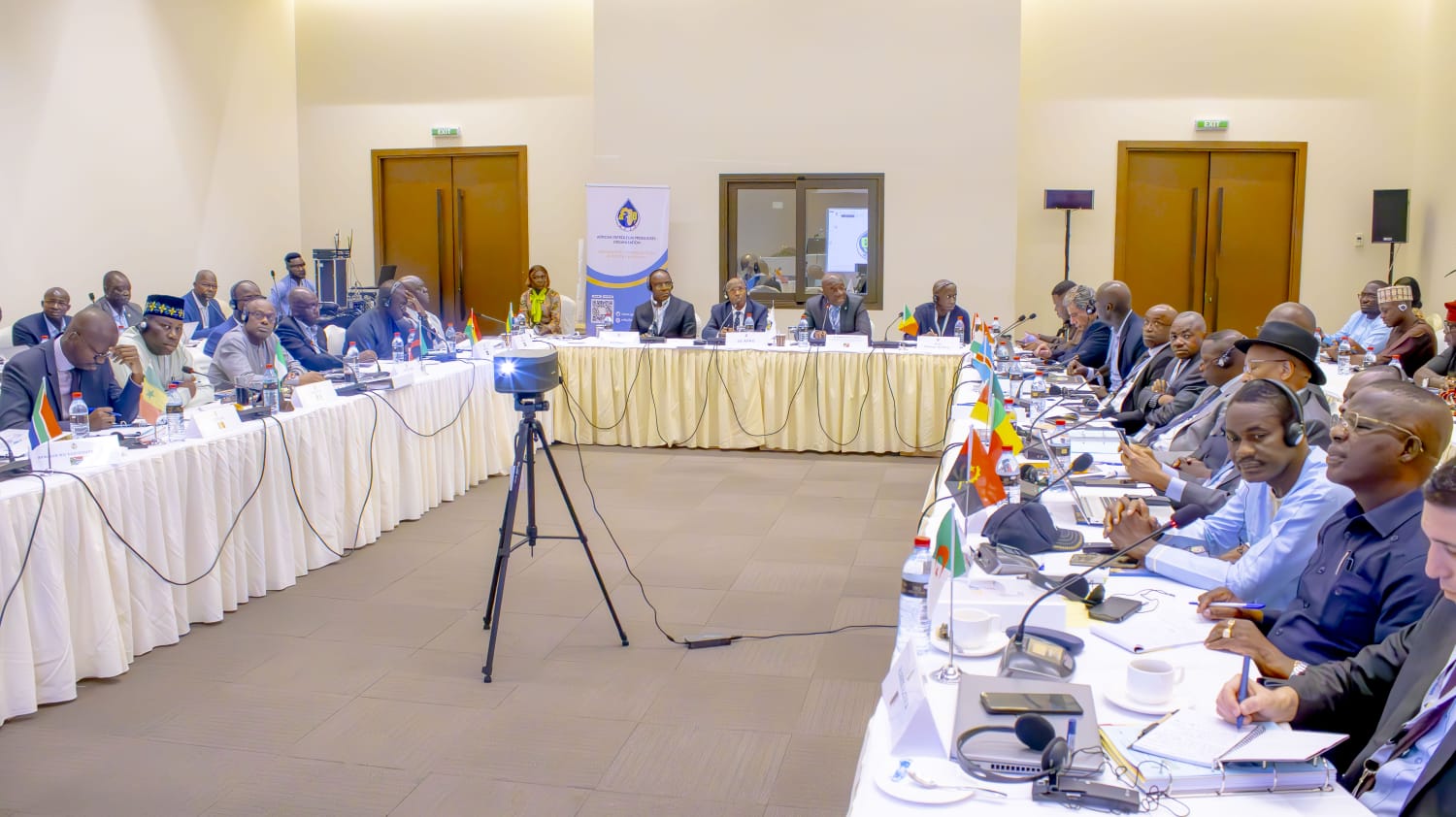
    JOHANNESBURG, South Africa, July 11, 2024/ — African intergovernmental organization the African Petroleum Producers Organization (APPO) held an executive retreat to discuss the future of the African oil and gas sector amidst the ongoing energy transition on July 8-9.
    The retreat was in preparation for the opening ceremony of APPO’s 18th Executive Board Meeting which will be held today, Thursday June 11, where the Republic of the Congo’s Minister of Hydrocarbons Bruno Jean Itoua and APPO’s Alternate President will give an opening address.

    During the retreat, APPO member nations discussed strategies for embracing the energy transition, including leveraging centers of excellence, seminars and training programs to combat gas flaring, improve local content and promote research and development.

    Former Nigerian Minister of Petroleum Resources Emmanual Ibikaichuku; Chief Academic Officer of Maarifa Education Olubayi Olubayi; and Executive Chairman of the African Energy Chamber (AEC) NJ Ayuk led thought-provoking conversations on African petroleum development and sustainable energy during the meeting.

    Building on its long-standing role in Africa’s oil and gas industry, APPO has been instrumental in pioneering financial solutions for the sector. APPO has played an integral part in Africa’s oil and gas industry since its establishment in 1987.

    The organization – alongside pan-African financial institution the African Export-Import Bank (Afreximbank) -established the newly formed African Energy Bank (AEB) – an institution that will provide finance for African oil and gas projects.
    The organization recently announced that the banks headquarters will be situated in Abuja Nigeria, a decision that followed a meticulous review process. The goal of establishing the AEB was to support oil and gas projects that have been struggling with financing due to the ongoing energy transition as global financers shift investment towards alternative energy sources.
    The establishment of the AEB will also support Africa’s energy security by ensuring a reliable supply of energy from both traditional and renewable sources, contributing to a more diversified African energy sector.

    Continuing its collaborative efforts, APPO has strengthened its alliance with the AEC to further bolster Africa’s energy landscape.

    APPO continues to work hand-in-hand with the AEC, supporting existing initiatives and driving new ones forward. In January, APPO and the AEC signed a MoU in the Republic of the Congo to enhance Africa’s energy security and support local content development.
    This collaboration seeks to target African companies in the oil, gas and broader energy sector and encourage them to undertake larger projects. The collaboration further aims to stimulate technology-focused investments and partnerships across the industry, address obstacles and create an enabling environment for investors through the utilization of private sector potential and intra-African energy commerce.

    Moreover, APPO has also established a strong partnership with the Organization of the Petroleum Exporting Countries (OPEC). The collaboration between these two organizations aim to advance African oil and gas projects though shared expertise, coordinated efforts in market stabilization and investment opportunities.

    Recently, OPEC held the OPEC-Africa Energy Dialogue, in which APPO attended. The third High-Level Meeting of this dialogue emphasized the importance of cooperation between OPEC, APPO and the African Union Commission to cultivate a sustainable intra-African oil and gas industry. This partnership demonstrates APPO’s commitment to engaging in collaborative action to address Africa’s energy needs as well as advancing sustainable development on the continent.

    “APPO been a steadfast advocate for the continent’s oil and gas industry. Through its strategic initiatives and partnerships, such as the collaboration with Afreximbank to establish the AEB, APPO is not only addressing the financing challenges faced by the sector but also ensuring Africa’s energy security.

    By prioritizing traditional energy sources, APPO aims to support the continued development of oil and gas projects while simultaneously facilitating a balanced energy transition in Africa,” states NJ Ayuk.

    With major oil and gas projects underway in Africa –  such as the Greater Tortue Ahmeyim, Mozambique LNG, Uganda’s Lake Albert Development, Senegal’s Sangomar Field Development and others – APPO stands ready to support these initiatives by ensuring access to necessary financing.

    Additionally, the organization aims to facilitate technology-driven solutions while promoting practices that align with the continent’s energy transition goals.
    Distributed by APO Group on behalf of African Energy Week (AEW).

    SOURCE
    African Energy Week (AEW)