Blog

  • Accounting and Financial Professionals Must Lead Africa’s Transition to Sustainable Development

    Accounting and Financial Professionals Must Lead Africa’s Transition to Sustainable Development

    OHANNESBURG, South Africa, November 27, 2023/ — Accountants must be fit to lead Africa’s inclusive sustainable growth and economic recovery ensuring the continent’s place in the global arena, says ACCA, (The Association of Chartered Certified Accountants) (www.ACCAGlobal.com) as it readies for its annual conference held for the first time in South Africa.

    Hundreds of accounting professionals from across Africa are expected to gather at the Sandton Convention Centre, Johannesburg, for the fourth Africa Members Convention (AMC 2023) from December 6-8.

    Themed Empowering Finance Professionals for Sustainable Development in Africa the conference will develop earlier conversations on innovative technologies, integrated thinking for sustainable business practice, international sustainability reporting to drive accountability, developing trade competencies towards supporting intra-Africa trade and enabling members develop careers toward building a better world.

    “The accountancy profession has a fundamental role to play in the transformation of Africa’s economy, as outlined in Africa’s Agenda 2063 – The Africa We Want – which prioritises inclusive social and economic development, continental and regional integration, democratic governance and peace and security amongst other issues, “ said  Jamil Ampomah ACCA Director Africa, responsible for implementing ACCA’s strategy in the region and managing ACCA’s relationships with key African stakeholders – governments, regulators, policy makers, employers, international agencies and regional organisations.

    Several African governments have issued policies toward meeting their sustainability commitments underpinned by environmental, social and governance (ESG) considerations. Their adoption indicates the increasing importance of the sustainability agenda in both the private and public sector in Africa.

    The conference will look at sustainability from many angles including financing sustainable development programmes, ethics and professionalism; technology and AI; support of developmental policy, corporate social responsibility and developing accounting career for the future.

    The programme line-up brings together senior commercial and government financial professionals, from across the globe, including the World Bank’s International Bank for Reconstruction and Development,  and South Africa’s Deputy Auditor General.

    Jane Ohadike, Regional Head of Public Affairs for ACCA – Africa, responsible for setting the strategy for public sector and  governments across the region said: “Accountancy and finance professionals are important agents of change and we have identified seven priority areas in which accounting professional have a role. There are building resilient economies, developing the talent of tomorrow, driving sustainable business, advancing standards and regulation, transforming the public sector, supporting entrepreneurial growth and strengthening ethics and trust.

    “I really want to encourage accounting and financial professionals to attend the 2023 ACCA Conference to share their expertise and thinking while also using this platform to network and make strategic business connections.

    Registration is now open and more information can be found online at Africa Members Convention (https://apo-opa.co/47suIsj).

    Distributed by APO Group on behalf of Association of Chartered Certified Accountants (ACCA).

    For media enquiries, contact:
    ACCA News Room
    E: newsroom@accaglobal.co
  • Islamic Development Bank Institute Delivers High-Level Islamic Finance Executive Program Sessions

    Islamic Development Bank Institute Delivers High-Level Islamic Finance Executive Program Sessions

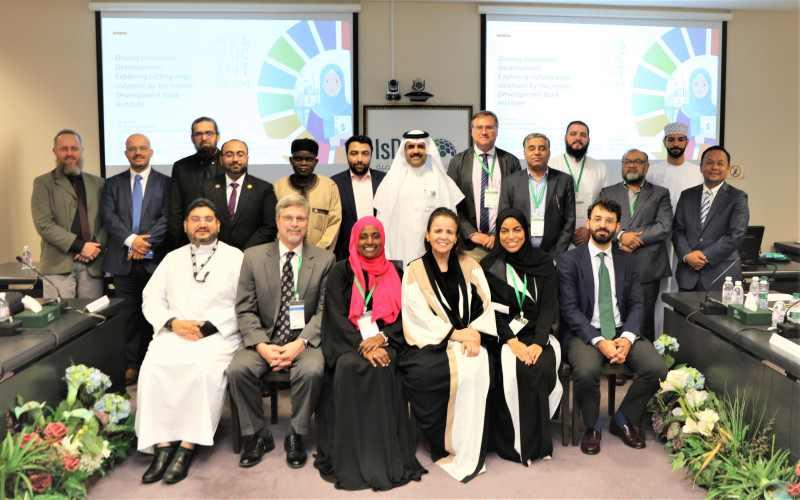
    JEDDAH, Kingdom of Saudi Arabia, November 26, 2023/ — The Islamic Development Bank Institute (IsDBI) (www.IsDBInstitute.org) successfully coordinated and delivered high-level knowledge-sharing sessions under the theme ‘Islamic finance and socioeconomic development’ on 14 November 2023. The sessions were part of the 6th edition of the Saudi-Spanish Center for Islamic Economics and Finance (SCIEF) Islamic Finance Executive Program.

    IsDBI collaborated with King Abdulaziz University (KSA) and I.E. Business School (Spain) to organize and support the executive program, held from 13-16 November in Jeddah, Saudi Arabia.

    During Day 2 of the program, the Institute hosted two technical sessions and one roundtable delivered by the senior leadership and professional staff of the IsDB Group, with 15 participants attending.

    Mr. Amer Bukvic, Acting Director General for Global Practices and Partnerships, IsDB, delivered the first technical session in which he engaged with the participants on the topic of “Development and Humanitarian Efforts by the IsDB and other Multilateral Development Banks”.  This was followed by another interactive session on the “IsDB Group and Its Smart Operational Paradigm”, delivered by Dr. Muhammad Jameel Yusha’u, Acting Director for the Communications and Outreach Department, IsDB.

    The final spotlight of the event was a highly engaging roundtable session on the topic “Driving Innovative Development: Exploring cutting-edge Solutions by the Islamic Development Bank Institute”, moderated by Dr. Mohammed Alyami, Director of Development Effectiveness Office, ICD. He was supported by three panelists: Dr. Sami Al-Suwailem, Acting Director General, IsDBI, Dr. Hilal Houssain, Associate Manager, Knowledge Solutions, IsDBI, and Dr. Hylmun Izhar, Senior Economist, IsDBI.

    Overall, the full day involved extensive discussions between the speakers and the panelists on the role of Islamic finance in addressing modern-day challenges and how the IsDB Group is playing its role in supporting the socioeconomic development of its member countries and Muslim communities in the non-member countries.

    From the IsDB Institute, the program was technically coordinated by Mr. Syed Faiq Najeeb, Senior Islamic Finance Specialist, with the guidance of Mr. Yahya Rehman, Associate Manager, Knowledge Leaders, IsDBI.

    Distributed by APO Group on behalf of Islamic Development Bank Institute (IsDBI).

    Media contact:
    Habeeb Idris Pindiga
    Associate Manager, Knowledge Horizons
    hpindiga@isdb.org

    SOURCE
    Islamic Development Bank Institute (IsDBI)

  • About Acceleration of Africa’s Reconstruction & Development

    About Acceleration of Africa’s Reconstruction & Development

    ………. As Summit Session Holds  Via Zoom   

    Story: Mohammed A. Abu

    Amidst the geopolitical tensions and fragmentations, emerging new alliances and the evolutionary process the global financial infrastructure is currently going through, Dr. Alexander Chisango, President of the World Economic Congress has called on Africans to look inwardly in finding solutions to the continent’s myriad of development challenges rather than  banging  too much hope on others elsewhere.

    Dr. Chisango who was speaking during a zoom meeting on Thursday on the topic, “Discussion: Acceleration of Africa’s Reconstruction”, noted that, what was more crucial for Africans to do, was to well package, rebrand and market themselves as a people who respect themselves and people who deserve respect and honour.

    Hosted by the World Economic Congress in Partnership with El-Ecojay Developments Group & African Partner Agencies for Reconstruction within the context of a weekly series of Africa Reconstruction & Development Summit Sessions, the event brought together high profile participants from across the continent.

    Touching on the nagging issue of being aligned to the West or East, Brinks, or G20 and so on, Dr. Chisango noted that, Africa need to be circumspect on the matter bearing in mind what best suits Africa’s own economic interest eventually.

    The issue of regional blocs’ alienation he noted, was one that isn’t of common knowledge to many Africans including traditional rulers, local government authorities, among others. That being the case, it could eventually be a “We and them” affair as in the time past.

    Africans Dr. Chisango said, should strive to become what they are uniquely as a people rather than having to be referenced to as belonging to either here or there.

    Touching on the celebration and fun fair that has come to be associated with some natural resources discoveries in Africa with particular reference to oil, he observed that, it is not merely the discovery that matter but to what extent has the exploitation of the resources impacted the lives of the people meaningfully is what is most important.

    He lamented how Africans in resource rich countries would grow old and die without feeling any direct meaningful benefit of their country’s natural resources endowment in their lifetime.

    Dr. Chisango noted that there was the need to draw lessons from the exploits of others elsewhere as it relates to natural resource impact so as to be guided by them and avoid making mistakes of the past . Discussions on natural resources impact results and issue of sustainability, he said was crucial.

    In discussing Africa’s development challenges and efforts there was the need to interrogate how, where, why did an endeavor fail, what has become better after the coup in Mali, Burkina Faso and what has become worse do matter.

    Planning and vision Dr. Chisango emphasized, was very crucial and minus which people perish adding that, the is the need to trend “who we are, where we must be and what we want to become”.

    The zoom meetings on the reconstruction of Africa Dr. Chisango disclosed, would be in series and would entail clusters.

    Various participants made contributions bordering on the relevance of finding solutions to the Africa’s development challenges, the new wave of African youth consciousness and their contributions towards changing the Africa narrative, the need for inter relationship between politics and economics, among others.


  • Qatar announces Israel-Hamas truce-for-hostages deal that would pause Gaza fighting, bring more aid

    Qatar announces Israel-Hamas truce-for-hostages deal that would pause Gaza fighting, bring more aid

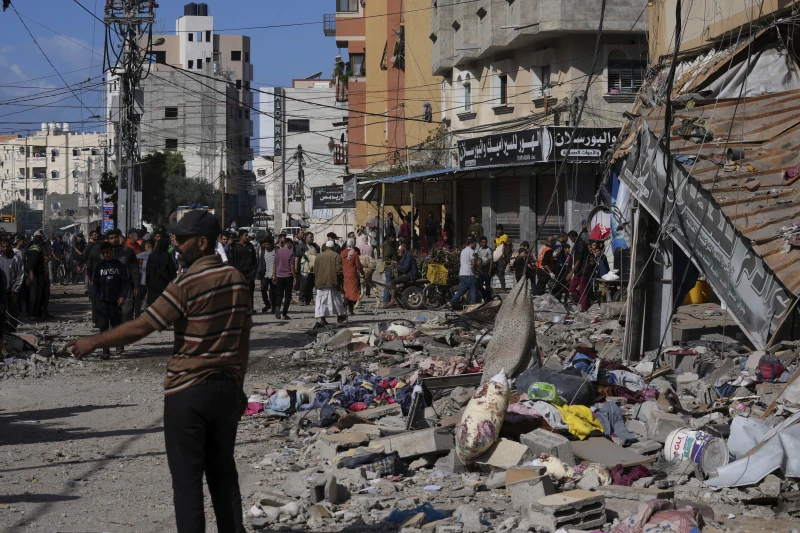
    JERUSALEM (AP) — Qatar on Wednesday announced a truce-for-hostages deal between Israel and Hamas that would bring a four-day halt in fighting in a devastating six-week war, win freedom for dozens of hostages held in the Gaza Strip, and also lead to the release of dozens of Palestinian prisoners.

    Qatar’s Foreign Ministry said it would announce within a day when the clock will start ticking on the truce, during which 50 hostages will be released in stages in exchange for what Hamas said would be 150 Palestinians prisoners held by Israel. Those freed by both sides will be women and children.

    Humanitarian aid to besieged Gaza would also increase.

    The announcement came hours after Israel’s Cabinet approved the deal. It capped weeks of indirect Qatari-led negotiations between Israel and Hamas, an Islamic militant group that has ruled Gaza for 16 years. The United States and Egypt were also involved in stop-and-go talks to free some of the roughly 240 hostages held by Hamas and other militants in Gaza.

    Hostage releases will begin roughly 24 hours after the deal is approved by all parties, said a senior White House official who spoke on condition of anonymity to discuss the sensitive matters.

  • African Development Bank, African Guarantee Fund Kick Off Affirmative Finance Action for Women in Africa (AFAWA) Finance Series in Kenya to Unlock Financing for Women-Led Enterprises

    African Development Bank, African Guarantee Fund Kick Off Affirmative Finance Action for Women in Africa (AFAWA) Finance Series in Kenya to Unlock Financing for Women-Led Enterprises

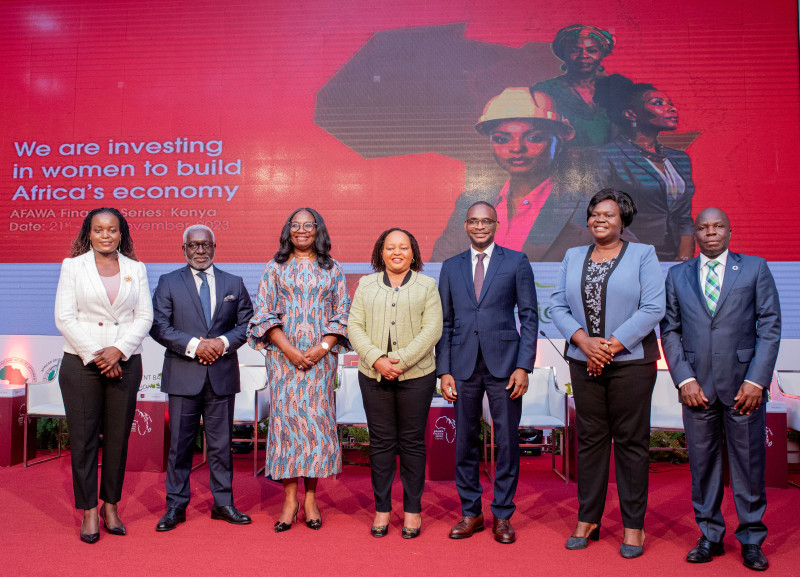
    NAIROBI, Kenya, November 22, 2023/ — The African Development Bank (www.AfDB.org) through its Affirmative Finance Action for Women in Africa (AFAWA) initiative, in partnership with African Guarantee Fund (AGF) and in collaboration with the Office of the President’s Advisor on Women’s Rights, have inaugurated the 6th edition of the AFAWA Finance Series in Nairobi, Kenya.

    This 3-day event themed “Enhancing Financial Inclusion for Women”, running between 21-23 November, 2023, is a pivotal initiative aiming to revolutionise the financial landscape and foster an enabling environment for women entrepreneurs, facilitating their growth and contribution to the continent’s economic development.

    The AFAWA initiative seeks to increase women’s access to finance in the continent by bridging the $42 billion financing gap for women-led and owned small and medium enterprises.

    Since its inception just over two years ago, the AFAWA initiative has already approved $1.2 billion in funding for women-led enterprises in 32 countries across Africa with a goal to mobilise $5 billion in financing for African women-led businesses by 2026.

    “Financial products need to be tailored to women’s unique lived experiences, needs and aspirations from the start not later when at scale,” said Her Excellency Governor Ann Waiguru, Chair of the Council of Governors in Kenya and the chief speaker at the Finance Series Kenya opening ceremony.

    “Financial institutions face a major challenge in understanding and responding to the unique needs of the women entrepreneurs. We need innovative approaches to improve women’s creditworthiness as traditional collateral requirements only serve to reinforce gender inequalities,” she added.

    The AFAWA Finance Series will emphasise the tangible benefits of gender financing for women-led small and medium enterprises, financial institutions, the Kenyan Government and policymakers. The opening conference will be followed by a 2-day training to sensitize lending institutions on gender smart investing.

    “Kenyan women are known for their resilience and tenacity,” Harriette Chiggai, Women’s Rights Advisor to the Office of the President of the Republic of Kenya told reporters, when detailing table banking, grants and other Government programs targeting women entrepreneurs.

    “The AFAWA Finance Series is an acknowledgement of our commitment to creating an environment where Kenyan women can access essential financial tools for enterprise and development,” Chiggai added.

    The Series explores ways to enhance regulatory frameworks that can boost access to finance for women-led small and medium enterprises. The event will also build understanding of AFAWA’s Guarantee for Growth (G4G) mechanism as implemented by the AGF.

    “Too many women entrepreneurs across the continent are denied opportunities to grow their businesses. We’re here today to help challenge common misperceptions and emphasize that there’s business to be had in offering financial services to women-led enterprises.

    AFAWA understands the challenges women face and the initiative is addressing them head on,” said Marie-Laure Akin-Olugbade, Vice President for Regional Development, Integration and Business Delivery at African Development Bank Group.

    Research shows women are better at repaying loans than men, and typically reinvest up to 90% of their income in the education, health and nutrition of their families and communities.

    “The question we are addressing is how to support women and increase their productivity to fully participate in the GDP of the African economy,” said AGF Group CEO, Jules Ngankam. “Through the AFAWA G4G program we are derisking financial institutions that on-lend to women-led SMEs increasing their appetite for this target market,” he added.

    Previous AFAWA Finance Series have been held in Tanzania, the Democratic Republic of the Congo, Ghana, Angola and Nigeria..

    Representing AFAWA’s donor nations at the Kenya launch were His Excellency H.E. Roberto Natali, Ambassador of Italy to Kenya and Her Excellency Caroline Vicini, Ambassador of Sweden to Kenya.

    Distributed by APO Group on behalf of African Development Bank Group (AfDB).

    For further information, please contact:
    Alphonso Van Marsh
    Principal Digital Content and Events Officer African Development Bank
    Email: media@afdb.org
    www.AfDB.org/en

    Diana Aluga
    Group Communications & Public Relations Officer
    African Guarantee Fund
    Cell: +254 732 148 000,
    Email: info.communications@agf.africa
    https://AfricanGuaranteeFund.com

    Emily Njagi
    Scarlet Digital Limited
    Cell: +254 722 615524
    Email: emily@scarletdigital.co.ke

    Hilda Mwangi
    Scarlet Digital Limited
    Cell: +254 718 611543
    Email: hilda.mwangi@scarletdigital.co.ke

    SOURCE
    African Development Bank Group (AfDB)

  • From COP27 to COP28 – key factors for Africa ahead of the 2023 United Nations Climate Change Conference

    From COP27 to COP28 – key factors for Africa ahead of the 2023 United Nations Climate Change Conference

    Opinion Piece By:Tshepo Ntsane, Sustainable Finance Transactor at Rand Merchant Bank 

    The Conference of the Parties (COP) to the United Nations Framework Convention on Climate Change (UNFCCC) represents an important international forum for countries to gather to discuss and address global climate change issues. However, to date these conferences have tended to be high level and process based, and COP 27 was no exception. – negotiations took place and some of the highlights included the historic establishment of the loss and damage fund which was seen as setting a precedent for climate justice.

    However, agreements on other matters such as phasing out of fossil fuels and setting peaking periods for emissions were not achieved. For African countries in particular, COP 28 marks an important pivot point around funding, just transition and the Nairobi Declaration. There will be a push for realisations on commitments made, and innovative funding mechanisms to drive accelerated climate action now and beyond.

    Making good on promises

    During previous COPs significant commitment were made by developed countries around funding and financial support to help developing nations transition. COP27 saw a funding announcement of about $105 million by eight donor governments to support countries facing the worst effects of climate change, including Senegal, The Gambia, Sao Tome and Principe.

    The pledge adds new funding to the Least Developed Countries Fund (LDCF) and Special Climate Change Fund (SCCF), augmenting the $413 million pledged by 12 other donor countries at COP26.

    However, while numerous promises have been made, no concrete action has yet been taken. Of the commitments made at COP15 to provide $100 billion a year to developing countries for climate action, only a quarter – has been achieved. In addition, one of the main concerns raised with the financing is the fact that a large proportion are structured as loans, thereby imposing a debt burden on already debt-stressed developing countries.

    Other issues include transparency of the agreements and timelines for the funding. For many African countries to move forward, these challenges need to be addressed. This will likely be a topic of focus at COP28, as countries in the region look to achieve their own targets for carbon and emissions reduction.

    Not just about transition

    For many developing countries in Africa still heavily reliant on fossil fuels, the issue of transition is not limited to cleaner, environmentally friendly sources of fuel. Entire communities are often built around fossil fuels, such as in South Africa where, in the Mpumalanga province, entire local economies are dependent on the mining of coal.

    When coal-based fuels are phased out and coal mines closed, the impact on people in the coal value chain, including these vulnerable communities and economies that are built around coal mines, will be significant.

    A just transition also involves the reskilling and upskilling of people reliant on coal for their livelihood to ensure they remain productive members of society who contribute to the economy. The timing and funding of skills development initiatives are still up for debate.

    Funding the commitments

    Climate resilience is something all countries are looking to implement, but countries in Africa have unique challenges as well as unique resources and strengths that we need to play to. During COP27 the concept of carbon credit markets and carbon offset schemes emerged, which would allow companies to buy carbon credits to offset their own emissions.

    This would not only open up a potential market for carbon offset projects and investment opportunities for developing countries, it would also help to channel resources into projects that deliver real benefits.

    However, once again the issue of transition reaches beyond transition to transforming African economies. This starts with access to clean energy. The Nairobi Declaration proposes new financing mechanisms to help countries in Africa unlock funding for transition and promote sustainable use of resources to help the region contribute toward global decarbonisation.

    One of the declarations from the Climate Summit in Kenya included a call for developed countries to honour their commitment to provide $100 billion in annual climate finance, as promised 14 years ago at the Copenhagen conference. Furthermore, it included proposals for new debt relief and restructuring interventions and instruments such as extension of sovereign debt tenor and inclusion of a 10-year grace period.

    COP28 will need to see developed countries make good on their funding commitments, while Africa moves forward with an aligned strategy to ensure just transition without leaving anybody behind.

    Distributed by APO Group on behalf of Rand Merchant Bank.

    SOURCE
    Rand Merchant Bank

  • The President attends the official opening of the fisheries week

    The President attends the official opening of the fisheries week

    22 November 2023 | Fisheries

    President Wavel Ramkalawan was the guest of honour at the official opening of the fisheries week, which coincided with World Fisheries Day, November 21. The ceremony took place yesterday morning at the Seychelles Maritime Academy (SMA), Providence. The theme for World Fisheries Day 2023 is – Treasures of our Ocean Slogan – Harmony beneath the waves, sustainability in our hands, which resonates with the mandate and vision of all those in the fisheries sector.

    In his opening address, the Minister for Fisheries and the Blue Economy, Mr. Jean-François Ferrari expressed hope that this week brings opportunities for careers in the fisheries sector, “Throughout this Fisheries Week, we will be sailing on a journey that encompasses various activities aimed at fostering a deeper understanding of the details involved in sustaining our fisheries. The Fisheries Careers Week is an opportunity for us to highlight the diverse and rewarding career paths within the fisheries sector. It serves as an inspiration for you, the young minds of Seychelles, encouraging each and everyone to consider the vast possibilities that lie beneath the surface of our seas,” he said.

    He also announced the launching of a new programme on fish processing that would show the different products that can be done using only resources from the sea. This will be in close collaboration between the Seychelles Fishing Authority and SMA. He commended those who have already embarked on a business in that sector and encouraged others to join as well.

    During his address, the Minister also announced the opening of a new facility for the fishermen to store their equipment in Grand Anse Praslin. “This facility shows the commitment of the Government towards sustainable practices and responsible fishing”.
    In his remark, the Director for the Seychelles Maritime Academy, Captain Anura Herath said that the academy stands as a beacon of collaboration with the Ministry for Fisheries and the Blue Economy, Seychelles Fishing Authority, and other stakeholders. He noted that it also shows the passion of the students for learning and safeguarding our ocean. He noted that this event is a reminder of the collective responsibility that everyone has in preserving our ocean and for sustainable practices as well as finding innovative solutions. He thanked everyone who has helped to make this day a success and commended the students of the academy for their interest and commitment.

    The ceremony was also highlighted by prize giving for the winners of the art competition organized by the SMA, the logo competition by the Department of Fisheries, and the revealing of the new logo.

    The President then toured an exhibition organized by the Seychelles Maritime Academy, the Ministry of Fisheries and the Blue Economy, the Seychelles Fishing Authority, and other valuable partners that displayed a variety of products and services as well as career opportunities available in the fisheries sector.

    Also present at the ceremony were the Minister for Education, Dr Justin Valentin, Chief Executive Officer of the Fisheries Authority, Dr Jan Robinson, and other distinguished guests.

    SOURCE

    Statehouse News Alert

  • Africa’s youth are more educated, less employed, and less politically engaged than their elders, Afrobarometer study shows

    Africa’s youth are more educated, less employed, and less politically engaged than their elders, Afrobarometer study shows

    ACCRA, Ghana, November 20, 2023/ — Africa’s youth are more educated than their elders but are also more likely to be unemployed, according to Afrobarometer’s (https://www.Afrobarometer.org/) latest Pan-Africa Profile (https://apo-opa.co/46mmAb9).

    The study also shows that African youth are considerably less engaged than their elders in civic and political activities that could spur change, including voting in elections. One encouraging trend is a steady increase in young people’s contact with local leaders.

    Across 39 African countries surveyed in 2021/2023, unemployment is the top policy priority that 18- to 35-year-olds want their governments to address, followed by economic management. On both issues, overwhelming majorities in most countries see their government as failing. Compared to older generations, young people are less trustful of government institutions and leaders and more likely to view them as corrupt.

    Even so, young Africans are just as committed as their elders to democracy and opposed to non-democratic alternatives, including military rule, as their elders. But the youth are particularly dissatisfied with the way democracy works in their countries, and in the event that elected leaders abuse their power, they are more likely than their elders to countenance military intervention.

    Key findings

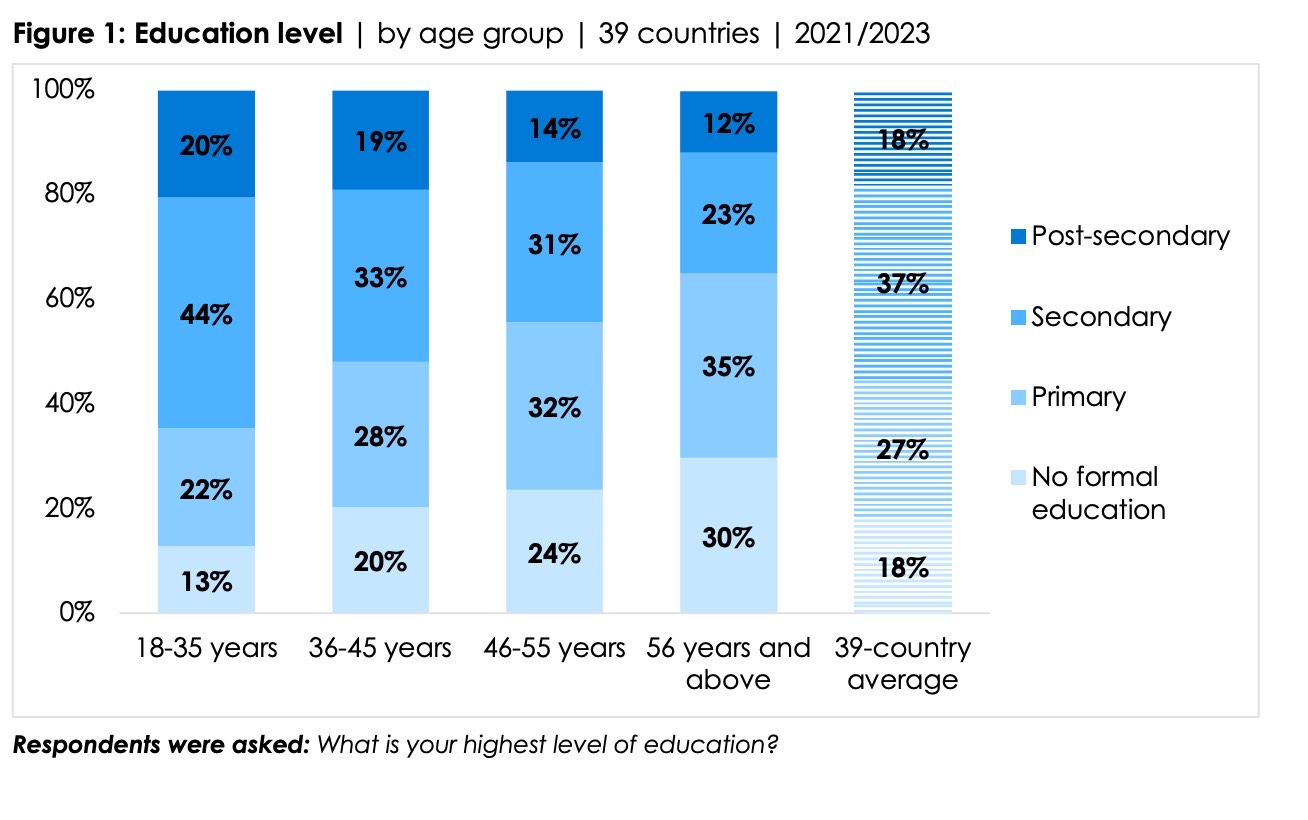
    • Almost two-thirds (64%) of youth (aged 18-35) have had at least some secondary school education, compared to 35% of citizens aged 56 and older (Figure 1).
      • But youth are considerably more likely than their elders to be out of work and looking for a job.
    • Unemployment tops the list of the most important problems that African youth want their government to address (cited by 37%), followed by management of the economy (30%) and health (26%) (Figure 2).
      • On average across 39 countries, only two in 10 youth (19%) say their government is performing well on job creation.
    • Like their elders, young Africans support democracy (64%) and reject such authoritarian alternatives as one-man rule (80%), one-party rule (78%), and military rule (65%) (Figure 3).
    • However, six in 10 (60%) are dissatisfied with the way democracy works in their country.
    • Youth are also more willing than their elders to tolerate a military takeover of the government if elected leaders abuse their power (56% among those aged 18-35 vs. 47% among those aged 56 and above) (Figure 4).
    • Youth are less likely than older citizens to vote in elections (63% vs. 84%), identify with a political party (37% vs. 45%), attend a community meeting (43% vs. 54%), and join others to raise an issue (39% vs. 45%) (Figure 5).
    • But while low, rates of young people’s contact with traditional leaders, local government councillors, political party officials, and members of Parliament have increased since 2014/2015.
    Distributed by APO Group on behalf of Afrobarometer.
    For more information, please contact:
    Josephine Appiah-Nyamekye Sanny
    Afrobarometer communications and knowledge manager
    Email: jappiah@afrobarometer.org
    Telephone: +233240933
  • Unleashing the Power of Partnerships to Transform Healthcare in Africa

    Unleashing the Power of Partnerships to Transform Healthcare in Africa

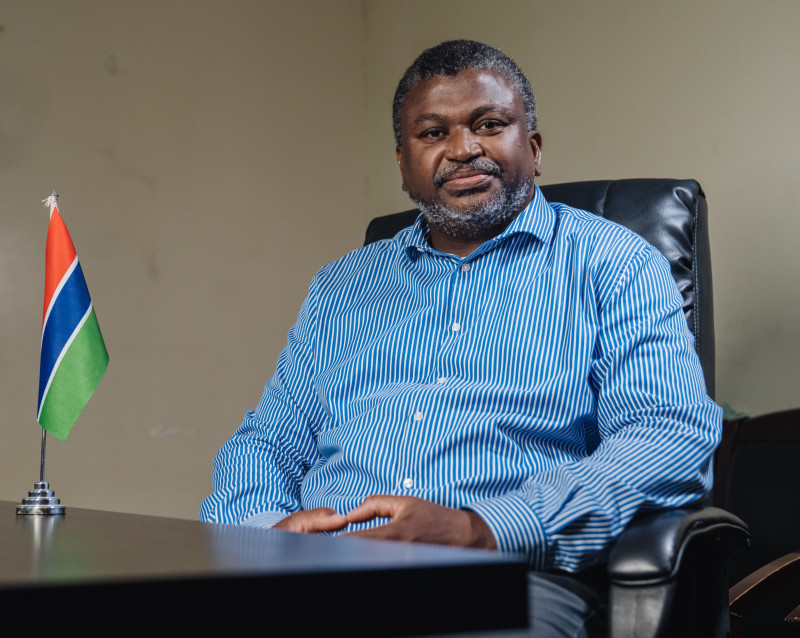
    DAKAR, Senegal, November 20, 2023/ — By Dr. Ahmadu Lamin Samateh, Minister of Health, Republic of The Gambia.

    In the realm of medicine, there are pivotal moments that can forever change lives. For me, that transformative moment occurred two decades ago when my path intersected with medical mission teams in our country, including Mercy Ships (www.MercyShips.org), an organisation committed to delivering life-changing surgeries to those who need it most. Witnessing their surgical interventions and the profound impact on people’s lives ignited my passion to become a surgeon.

    I realised that the human body’s needs transcend borders and the Gambian people deserved access to quality surgical care.

    Becoming a surgeon in The Gambia was not without challenges. With no medical school in our country at the time, I pursued education elsewhere. Armed with newfound knowledge and expertise, I returned to the country to make a positive impact on healthcare.

    Currently, the landscape of surgical care and education in The Gambia presents its own set of challenges. Surgery, being a diverse field, requires specialists, and specialists are often scarce in low-income countries like ours. Many individuals suffering from surgical conditions continue to endure unnecessary pain or rely on the assistance of organisations like Mercy Ships. Bridging this gap remains a significant challenge.

    In recent years the country has made notable progress, such as establishing a residency programme. This step is critical for sustainability and ensuring that we train our specialists in fields like surgery, gynaecology, internal medicine, paediatrics, and family medicine. However, expanding the scope of training to address the broad range of surgical disciplines remains a concern that also requires support from international partners.

    Resource limitations are deeply rooted in the country’s healthcare sector. With a population of approximately 2.7 million, our health budget pales in comparison to the staggering €2.9 billion budget I learned about during my recent visit to a European country. Treating acute appendicitis in New York, Tokyo, London, or Banjul requires the same expertise, yet our available resources differ significantly.

    The country also largely relies on imports for 100% of its medical consumables, making their cost and availability unpredictable. There is also a dire shortage of trained healthcare professionals. While we strive to equip our healthcare facilities with state-of-the-art equipment and medications, the lack of skilled personnel hampers our efforts.

    Despite these challenges, the government is actively working to address the gaps in its healthcare system, in collaboration with organisations like the World Bank, WTO, UNDP, UNICEF, UNFPA, Global Fund, and the World Food Program. These efforts, while commendable, require continuous dedication and strategic partnerships to achieve meaningful and lasting change.

    In the interim, we rely on the support of healthcare professionals from other countries, particularly Cuba and neighbouring African nations, to help us bridge the capacity gaps, ensuring that our patients receive the care they urgently need.

    In general, access to surgical care and education remains a critical concern across the continent. Finding ways to overcome these barriers is crucial. For instance, establishing manufacturing hubs in Africa to produce medical equipment and supplies would reduce dependency on imports and make these essential items more affordable and accessible.

    African countries should collaborate in training specialists, sharing knowledge and resources through partnerships and mutual training programmes. Through such partnerships we can strengthen healthcare infrastructure, improve access to quality services, and ultimately transform healthcare for the better.

    However, partnerships are not without their challenges. Limited resources, both financial and logistical, often hinder the progress of low-income countries. Limited health budgets make achieving global healthcare targets a daunting task. Despite the obstacles, we must capitalise on the resources available to us and maximise their potential to provide the best care possible.

    Partnerships with international organisations like Mercy Ships play a critical role in filling the gaps in surgical care. Mercy Ships’ recent field service in the country, where 92 patients were operated on and 122 healthcare professionals were trained, exemplifies the ripple effect of impactful interventions. Individuals who once faced social stigma and isolation due to their physical conditions now have a chance to thrive. Children who were unable to attend school due to disfigurements now have an opportunity to receive an education. Families burdened by the healthcare costs of their loved ones have found relief, enabling them to provide for their households.

    Continuing this collaboration, we are determined to expand the scope of interventions and address other critical areas, such as cancer care. By facilitating training opportunities for Gambian healthcare professionals on board Mercy Ships, we can enhance our local capacity and ensure sustainable healthcare services for our people.

    Looking ahead, our focus remains on building sustainable healthcare systems and ensuring access to quality surgery care for all. Uniting through partnerships, both within Africa and with international organisations, is crucial to overcome challenges and transform healthcare in Africa. The time for action is now! Together, we can bring hope, healing, and a brighter future to the millions of individuals who deserve nothing less.

    Distributed by APO Group on behalf of Mercy Ships.

    SOURCE
    Mercy Ships

  • Vice President Afif attends the Inauguration of the New Maldivian President

    Vice President Afif attends the Inauguration of the New Maldivian President

    20 November 2023 | Foreign Affairs

    The Vice President of the Republic of Seychelles, Mr. Ahmed Afif attended the Inauguration Ceremony of the new President of the Republic Maldives, H.E. Dr. Mohamed Muizzu which took place on 17 November 2023 at the Republic Square, Male.

    Following the Ceremony, the Vice President paid a courtesy call on President Muizzu at The President’s Office.  During the call, the Vice President congratulated the Maldivian President on his inauguration and wished him all the best in his tenure.

    The impact of climate change on the world, especially on Small Island Developing States (SIDS) was one of the main topics discussed. It was reiterated that in order to mitigate the effects of climate change SIDS should join forces and to voice out their concerns on the world stage. This will not only guarantee the protection of the islands but of its habitants for generations to come.

    Exchanges between the parliaments of both countries was another topic addressed. The Maldivian side expressed the importance exchanges of ideas and know how between those two institutions for their mutual development.

    Also present were several members of President Muizzu’s Cabinet.

    SOURCE

    Statehouse News Alerts