Blog

  • Reparation Justice for Africa Set to get Major Boost

    Reparation Justice for Africa Set to get Major Boost

    Story: Mohammed A. Abu

    Within the context of the Black History Month(BHM) Commemoration event, the maiden international conference of the All-Party Parliamentary Group on Afrikan Reparations (APPGAR) designed for in-person and virtual participation, is scheduled to take place at the weekend in the Westminster Houses of the British Parliament, London, UK, according to APPGAR’s  official sources.

    The inauguration of APPGAR constitutes one of the major highlights of the BHM event alongside the Indigenous Peoples Day of Resistance Commemoration, Preparatory Action learning for all Parliamentary Commission of Inquiry for truth, Reparatory Justice(APPCITARJ), Peoples hearing on the maangamizi crimes against Indigenous Peoples,

    APPGAR Event Chairpersons

    Being held within the context of the annual Black History Month(BHM) month commemorative event, the APPGAR is going to have as its Co-Chairpersons Bell Ribeiro-Addy, the Chair of the APPGAR, assisted by Diane Abbot, MP, and Dr. Julius Garvey.

    Opening Ceremony

    Two major African royals among the non-UK resident dignitaries of special mention who would be attending the APPGAR opening ceremony are, Osie Adza Tekpor VII, the Paramount Chief of Avatime, in Ghana’s Volta Region who is a Co-Chair of the MAATUBUNTUMITAWO Global Afrikan Family Reunion International Council (MAATUBUNTUMITAWO-GAFRIC); and Professor Mutjinde Katjiua, the Ombara Otjitambi (Paramount Chief) of the indigenous Ovaherero nation in and beyond Namibia in Southern Africa.

    Plenary & Breakout Sessions

    In addition to three Plenary sessions, the APPGAR International Conference will also have topical Breakout Sessions with Panel Lead Discussants to kick-start conversations on the Meaning,

    Key Thematic Areas

    Purposes and Politics of Afrikan Reparations, Faith and Spirituality, Pan-Afrikanism, Restitution, Education, Law and Reparatory Justice, Political Economy and Social Enterprising, Women, Community Regeneration, Geopolitics and International Relations, Environmental Justice for Planet Repairs, Local and National Governance, Heirs and Allies, and some others to be confirmed.

    Confirmed Participants

    Among the confirmed leading participants are also Professor Kimani Nehusi, now at Temple University in the USA, who is a Co-Founder of the erstwhile Afrikan Reparations Movement in the United Kingdom (ARM-UK), led by Ancestor Bernie Grant, MP.

    Other leading confirmed participants are Professor Maulana Karenga, the Founder of Kwanzaa, Akyaaba Addai-Sebo, the Founder of Black History Month in the United Kingdom, Dr. Jared Ball of the Black Power Media in the USA, Eugene Puryear of Break Through News, Besa Awletor Ashiagbor of the Afrikan Traditional Freedom Movement (ATFEM) in Ghana, Akin Bongani of the Benkos Bioho-founded Palenque San Basilio in Cartagena, Colombia, in Abya Yala, among several others.

    Other ARM-UK Co-Founders like Kwame Adofo Sampong, Explo Nani-Kofi of the Pro-Nkrumah Unity Movement (PRO-NUM) in Ghana and Kofi Mawuli Klu of PARCOE and the Stop the Maangamizi Campaign are expected to participate.

    Expected Participants 

    Expected as leading participants are Esther Stanford-Xosei of the Maangamizi Educational Trust (MET), Onyekachi Wambu of AFFORD and Kobina Amokwando of the Pan-Afrikan Reparations Youth Forum (PARYF) who, together with Kofi Mawuli Klu, are all members of the APPGAR Secretariat, with responsibility for working together with a wide range of organizations and networks in co-designing and facilitating the Conference among several others.


    .


  • Green Hydrogen: Shaping Africa’s Sustainable Energy Future in Partnership with Europe

    Green Hydrogen: Shaping Africa’s Sustainable Energy Future in Partnership with Europe

    CAPE TOWN, South Africa, October 17, 2023/ — As Africa and Europe jointly spearhead the global green hydrogen economy, energy dynamics are undergoing a significant transformation. The abundant renewable energy potential in Africa, coupled with Europe’s ambitious production and import goals, is forging new energy pathways and redefining existing standards.

    In line with this, African Energy Week 2023, the African Energy Chamber’s (AEC) premier energy event, featured a dedicated Hydrogen Summit under the theme ‘Powering the Future: Africa and Europe Unleashing the Green Hydrogen Revolution.’ The session, which was moderated by Ashutosh Singh, Director, Financial Services, S&P Global Commodity Insights, explored the far-reaching implications of this transformative shift.

    The discussion opened with a keynote by Kgosientsho Ramakgopa, Minister in the Presidency responsible for Electricity, South Africa, underscoring the importance of green hydrogen in South Africa’s energy strategy.

    “By 2040, Africa could produce 50 times more energy from renewables than the world’s estimated demand,” he said.

    Speaking on South Africa’s ambitions, he added, “We are looking at $1 per kg by 2050, equivalent to indigenous low-cost energy, making South Africa one of the competitive industrial economies.”

    The government has recognized green hydrogen as a key aspect of its just energy transition. It has implemented regulatory changes and introduced the Hydrogen Society Roadmap, serving as the industry’s comprehensive framework to facilitate large-scale investments.

    “The intention of this kind of strategy is to ensure that we are able to develop the kind of standard required for green hydrogen in the future,” said Ramakgopa.

    Meanwhile, in West Africa, Mauritania is spearheading large-scale projects, including the massive Aman project, the Nour Electrolyzer project and the Masdar-Infinity-Conjuncta green hydrogen project.

    “We have big potential in renewable energy and green hydrogen is available,” explained Nani Chrougha, Minister of Petroleum, Mines, and Energy, Mauritania.

    “We are working on the legal framework, which will help to see investments into these resources. We want to put the investors in a position that makes them comfortable investing,” he continued.

    With green hydrogen in demand, Africa can benefit from cutting-edge research and technological advancements in hydrogen production, allowing the continent to harness green hydrogen’s potential more effectively and contribute to its energy transition and economic growth.

    While there is a need for Africa to adopt technologies for green hydrogen and learn from the necessary experiences from European nations, Minister Ramakgopa stated, “We are not the recipients of technologies; we also have the capacity to develop it.”

    The panel discussed the need for infrastructure required to support the green hydrogen supply chain in Africa, highlighting some challenges and opportunities in its development.

    Minster Chrougha said, “We need to access financing to access our important resources, and this will be investment in infrastructure and in the mining sector, and we need to develop capacity in the mining sector, and these are two challenges.”

    Developing a skilled workforce is essential for advancing the production and utilization of green hydrogen. “For African countries, it is very vital to build local capacity. This is a technology that we have not been working on in a long time, so it is extremely important that governments and institutions start to work on building capacity across the entire value chain,” said, Solomon Nwabueze Agbo, Scientist and Project Coordinator at Forschungszentrum Jülich GmbH.

    Finally, to drive investment in green hydrogen, Africa can draw inspiration from Europe’s success stories. By implementing supportive policies and fostering international collaboration, the continent can attract the investments necessary for a thriving green hydrogen industry.

    “For us to get to the point of $2 per kilo, we need to get everyone around the table, including off-takers and financiers,” stated Chinnan Maclean Dikwal, Vice Chair, Board of Directors, African Energy Council.

    He added that for nations that haven’t had the resources for green hydrogen development, it necessitates strategic collaborations. Partnerships are likely to play a significant role.

    #AEW2023 takes place this week in Cape Town under a mandate to make energy poverty history by 2030. Keep following www.aecweek.com for more exciting information and updates about Africa’s premier energy event.

    Distributed by APO Group on behalf of African Energy Chamber.

    SOURCE
    African Energy Chamber

  • Driving Sustainability in the Hospitality Industry

    Driving Sustainability in the Hospitality Industry

    In a major stride towards advancing sustainability and ESG integration within the hospitality sector, Omnevue, a leading ESG reporting platform, has launched a partnership with The Energy & Environment Alliance (EEA) and official statement disclosed  in London,Tuesday.

    To mark the beginning of their partnership, they are inviting members of the hospitality industry to a webinar that offers practical advice and tips regarding ESG reporting and the issues surrounding compliance and disclosure.

    EEA, the global coalition comprising hospitality and lodging investors, developers, operators, and asset managers, is dedicated to guiding hospitality businesses toward achieving net-zero carbon (NZC) status and excelling in environmental, social, and governance (ESG) leadership.

    “ESG reporting is poised to become the defining issue of our time. We can clearly see the transformation taking place, but what’s less clear is the detailed regulatory landscape and how it will reshape organisations. This transformation is on a scale unlike anything senior executives have faced in the past 20-30 years,” remarked Ufi Ibrahim of EEA.

    “We are thrilled to unite with EEA in our shared mission to accelerate the sustainability agenda in the hospitality industry and help guide organisations through this transformative period,” said Daniel Jeczmien, CEO of Omnevue. “Together, Omnevue’s cutting-edge ESG reporting capabilities and the EEA’s extensive industry knowledge and passion to help its members attain NZC, will help businesses thrive.”

    Omnevue aims to be the ‘QuickBooks for ESG’ through its user-friendly and accessible interface. It seamlessly connects to a company’s financial, HR, and other data sources before collecting, analysing, and generating reports aligned with international accounting standards.

    “In response to new regulations, banks, corporates, and investors are now obligated to report on the carbon emissions of the SMEs within their value chains. Omnevue provides the solution that bridges the gap in ESG reporting and data quality,” stated Daniel Jeczmien.

    “Our platform delivers accounting-grade data that can be confidently shared with investors, lenders, and customers. We are committed to simplifying ESG reporting for SMEs, making it accessible and cost-effective.”

    Webinar: Comprehensive and Cost-Effective ESG Reporting for the Hospitality Sector

    Tuesday 31st October 10-11am

    Register: https://bit.ly/3QhKf7T

    For more information, please visit www.omnevue.com

  • African Medical Centre of Excellence Holds Inaugural Board Meeting

    African Medical Centre of Excellence Holds Inaugural Board Meeting

    CAIRO, Egypt, October 16, 2023/ — African Medical Centre of Excellence (AMCE Abuja) established by Afreximbank (https://www.Afreximbank.com/), has held its inaugural board meeting in Cairo, Egypt on October 6, 2023.

    AMCE Abuja, a landmark and visionary initiative by African Export-Import Bank (Afreximbank), entails the implementation and operationalization of a 500-bed quaternary level medical facility that will offer a wide range of services and specializations including oncology, cardiology, hematology, and general care capabilities.

    The AMCE Abuja will also provide a full range of medical services, including diagnostics, treatment, nuclear medicine, surgery and post-surgical care. It will operate in collaboration with the Kings College Hospital, London (KCH) (https://www.KCH.nhs.uk/), leveraging KCH’s diagnostic, clinical and capacity building expertise to become a world class healthcare institution.

    At the inaugural board meeting of the AMCE Abuja, the Board endorsed the appointment of Professor Benedict Oramah, President and Chairman of the Board of Directors of Afreximbank as its Chairman and appointed Mr. Amr Kamel as his alternate. The appointment of Professor Benedict Oramah reflects his significant contributions to and vision for the project, as well as his exemplary leadership qualities, which have led Afreximbank to remarkable growth. It is expected that under his leadership, the AMCE will successfully accomplish its mission of providing world class medical care, conducting innovative and groundbreaking research, facilitating development initiatives, and offering educational programs in collaboration with esteemed international organizations. Through establishing both international and Pan-African partnerships, AMCE Abuja will ultimately become a prominent global reference and a leading destination for medical tourism in the region.

    Other members of the AMCE Abuja Board, include Prof. Ghulam Mufti, Prof Adedayo Onitilo, Dr. Anwar Alhaq, Mr. Emmanuel Assiak, Mr. Brain Deaver, Dr. Zahoor Khan, Dr. Aisha Umar, His Excellency, Arc. Namadi Sambo, Mr. Amr Kamel, Ms. Oluranti Doherty, Mr. Olusola Babalola, and Dr. Gloria Rowland.

    Speaking after his appointment as Chairman of the AMCE Board, Prof Benedict Oramah, commented:

    “I am delighted to chair this first meeting of the AMCE Board. This project is of great significance to our continent, with Africans being among the largest importers of medical services globally due to a lack of modern, affordable, and well-equipped medical facilities, technologies and personnel on the continent who especially deal with lifestyle diseases. This facility, with an initial capital investment of nearly USD 300 million, is by far, the single largest private healthcare investment both in Nigeria and on the continent. It will be the first of many facilities being considered across Africa and will serve as the headquarters for AMCE on the continent.”

    In addition, the board has approved the proposal of the AMCE executives to organize a medical conference in the first quarter of 2024 in Abuja, Nigeria. This conference will serve as a unique platform for African leaders, researchers, policymakers, and stakeholders to exchange insights, discuss challenges, and explore opportunities in the realms of medical and scientific fields with the goal of increasing awareness and collaboration in the areas of research, innovation, and public health throughout the continent. The conference will align discussions and outcomes with the objectives of the African Union and the Africa Centre for Disease Control and Prevention (Africa CDC), by supporting the healthcare goals outlined in “Agenda 2063: The Africa We Want.”

    Brian Deaver, CEO of AMCE Abuja commented that “The AMCE initiative is a great step forward in addressing the continent’s healthcare needs. Its success will require strong leadership, commitment, and collaboration. The decisions taken at this first board meeting represent an integral step in ensuring that beyond these broad objectives, the AMCE can fulfil its mandate of delivering quality healthcare across Africa, and we are honored to have Professor Oramah as Chairman of the Board.”

    A significant focus of the AMCE Abuja is to perform innovative and ground-breaking research, development and educational programs in partnership with leading global institutions such as the KCH, the Christies Manchester and University of Wisconsin, USA, in order to develop additional insights into diseases and treatment trends to improve the quality of care available in Nigeria and the West African region.

    The facility will also provide first-class medical equipment and infrastructure that include PET CT scans, Cyclotrons that will produce nuclear isotopes, Linear Accelerators for radiotherapy, chemotherapy suites, fully equipped modular theatres, HTR/ HDR machines, among many others which are currently not available in sub-Saharan Africa in order to deliver superior quality of diagnostic and specialty services.

    With the initial capital outlay for the first phase of the AMCE Abuja at nearly 300 million US dollars, the facility is by far, the single largest private healthcare investment in Nigeria. This investment is set to rise to 700 million US dollars upon completion of the second phase of the project. The construction of AMCE Abuja commenced in 2022, and it is projected to be completed and commissioned in 2025.

    Distributed by APO Group on behalf of Afreximbank.
  • At the DRC Agribusiness Forum, Democratic Republic of Congo shares its ambition to feed Africa and announces $6.6 billion in investments in agriculture

    At the DRC Agribusiness Forum, Democratic Republic of Congo shares its ambition to feed Africa and announces $6.6 billion in investments in agriculture

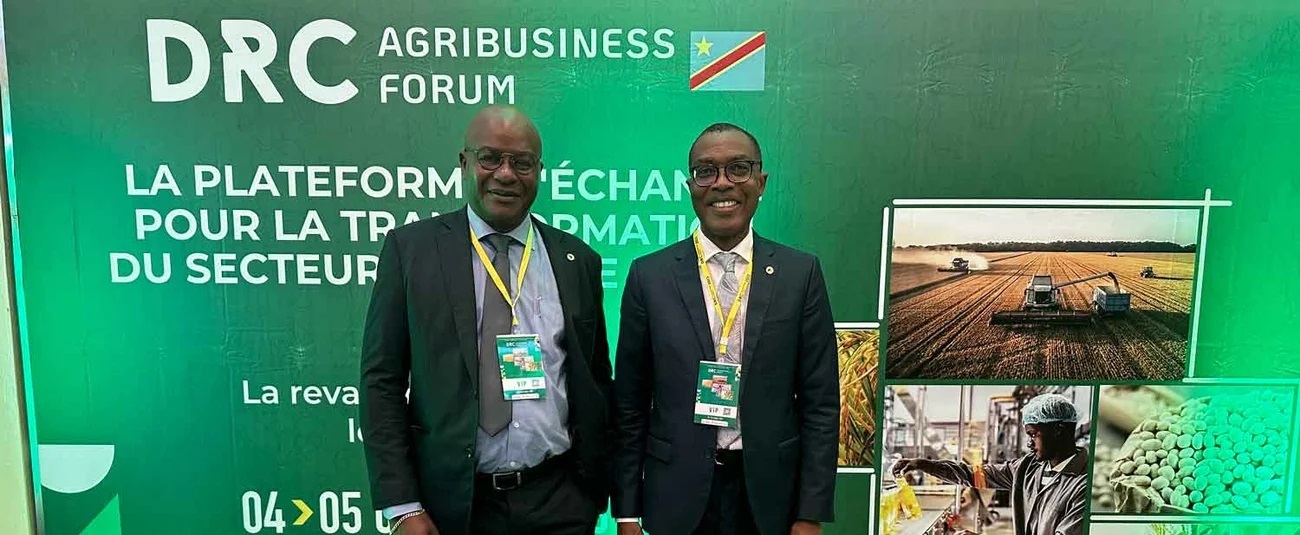
    ABIDJAN, Ivory Coast, October 15, 2023/ — The Democratic Republic of Congo aims to invest $6.6 billion over ten years in its Agriculture Transformation Programme (PTA) to fulfil its commitment to becoming Africa’s breadbasket. The announcement was made at the “DRC Agribusiness Forum”, held on 4 and 5 October 2023 in Kinshasa.

    The investment is evidence of the commitment of Congolese President Félix Antoine Tshisekedi to develop the country’s agricultural potential and ease the economy’s dependence on the extractive sector.

    “With its 80 million hectares of cultivable land, its four million hectares of irrigable land, its varied climate allowing year-round agriculture, its having 7 to 8% of the world’s exploitable fresh water, and its approximately 125 million hectares of grazing land, sufficient for 40 million head of livestock, coupled with the size of its population, especially young and female, DR Congo incontestably has the means to be the breadbasket of Africa, the epicentre of the continent’s agricultural industry and an incubator of prosperity,” said Solomane Koné, Deputy Director General of the African Development Bank for Central Africa and Country Manager for the DRC.

    The Forum, held at the initiative of the DRC Government with the support of the African Development Bank and the International Finance Corporation, aimed to stimulate private sector investment in agricultural value chains and boost agribusiness in the agricultural-resource-rich Central African country. The opening ceremony was chaired by Prime Minister Jean-Michel Sama Lukonde.

    More than 700 people from 28 countries took part, including government officials, representatives of technical and financial partners, heads of public and private companies, investors and actors in the agricultural sectors.

    At the event, the Democratic Republic of Congo presented its National Food and Agriculture Pact (https://apo-opa.info/46I0Bwg), made at the Food Sovereignty and Resilience Summit held in January 2023 in Dakar. The Pact is a product of the PTA.

    Serge N’Guessan, African Development Bank Director-General for Central Africa, said at the request of Democratic Republic of Congo, the African Development Bank will devote all of the country’s available allocations during the 2023-2025 Afrian Development Fund (ADF)-16 cycle to operations in support of the Agriculture Transformation Programme, which is the backbone of the Bank’s Country Strategy Paper for DRC over the next five years.

    The Bank’s delegation, led by Mr N’Guessan, included senior officials and several executives from the various areas of operations. The experts enriched discussions on the involvement of the private sector and of technical and financial partners for giving agribusiness a new impetus in DRC.

    Other topics discussed included approaches for sustainable and resilient agriculture, operational challenges to improve the resilience of the agriculture industry, the financing of agricultural value chains, the potential of the cassava sector, strengthening agribusiness, and the role of public-private partnerships and of energy and transport infrastructure for agribusiness development.

    Five main recommendations were made for developing agricultural value chains:

    1. Adopt a sectoral and project-based approach, with real support from government (tax and administrative facilities, availability of basic socio-economic and energy infrastructure, etc.) for the revival of the agricultural sector.
    2. Limit all charges, fees and taxes to a maximum of 25% of value for production and export activities.
    3. Set up a sovereign wealth fund to support agriculture and agriculture hubs to support and advise small agricultural investors.
    4. Strengthen the capacities and roles of decentralized territorial entities in the governance of the agricultural sector, ownership and effective application of the value-chains approach and sustainable agriculture, risk guarantee and mitigation mechanisms and access to finance.
    5. Harmonize the regulatory framework for Special Economic Areas (ZES), Law on Basic Principles for Agriculture, Law on Public-Private Partnerships (PPPs).

    The DR Congo Government reaffirmed its commitment to making agricultural transformation a key driver of development in the country, particularly through the necessary reforms and the establishment of a taskforce bringing together a number of ministerial departments and stakeholders to monitor implementation of the Forum’s recommendations.

    Distributed by APO Group on behalf of African Development Bank Group (AfDB).

    SOURCE
    African Development Bank Group (AfDB)

  • Addressing  Africa’s Youth Unemployment Burden

    Addressing Africa’s Youth Unemployment Burden

    Mohammed A.Abu

    Canon has recently added a yet another  impressive page to its existing record  of  youth centred initiatives as parts of its   Corporate Social Responsibilities (CSR) in Africa when it announced its  partnership with Dikan Center, a visionary non-profit institution based in Ghana, committed to providing visual education.

    This major collaboration marks the official launch of the Canon Young People Programme (YPP) in Ghana, with a mission to enable the next generation of creative young people, using their skills to tackle the sustainability issues that matter to them, using creativity and critical thinking.

    The introduction of Canon’s YPP in Ghana marks a significant milestone in the country’s landscape. This initiative will offer young people unprecedented opportunities for growth and impact on the African continent.

    Through YPP, young creative talent in Ghana can access essential resources, state-of-the-art equipment, and expert training that will empower their storytelling.

    This pioneering initiative provides a platform for young people to make their mark on the continent, positioning Ghana as a hub for emerging creative talent. The Dikan Center is renowned for its immersive Gallery, transformative StoryLab Studios, and visual library. Its mission is to foster a culture of curiosity, experimentation, and innovation throughout Africa.

    Jeanine El Moughrabi, Sustainability Manager Canon Middle East, and Central & North Africa says, “We are thrilled to embark on this transformative journey with Dikan Center, uniting Canon with Dikan Center’s vision for comprehensive visual education in Africa.

    Together, we will empower the next generation to make a significant impact on the African continent. Through YPP, we aim to inspire, educate, and empower these creative young people, enabling them to use their skills and to advocate for positive sustainable change on a global scale.”

    Paul Ninson, Founder of the Dikan Center says, “Dikan Center is proud to join forces with Canon’s Young People Programme to expand opportunities for young photographers in Africa.

    This collaboration reflects our shared commitment to nurturing creativity and innovation through visual education. Together we will amplify the journeys of emerging visual artists and bring their stories to the forefront.

    The Canon YPP initiative aligns seamlessly with our mission to cultivate a culture of curiosity, experimentation, and innovation throughout the continent, and we look forward to the impactful stories that will emerge from this collaboration.”

    The collaboration between Canon and the Dikan Center came about through Canon’s recognition of Paul Ninson’s work, the founder of the Dikan Center, and his commitment to empowering the youth in Africa. Canon saw a unique opportunity to align its mission of creating opportunities for young African talent, with the goals of the Dikan Center.

    The core of this collaboration is a series of immersive storytelling workshops designed to run every weekend over two months. Local trainers from Ghana, provided by Dikan Center, will work in partnership with Canon, offering resources and essential equipment.

    The focus of these workshops is threefold:

    Comprehensive Education: Participants will gain insights into the value of sustainability for our future using the framework of United Nations Sustainable Development Goals (SDGs)

    Technical Training: Participants will learn the technical side of how to use a camera, receiving training from experts in the field.

    Visual Storytelling: The heart of this programme is to empower young people to become storytellers for sustainable change. Participants will choose specific SDGs and capture evocative imagery that convey they personal stories.

    The journey will culminate in a professionally curated exhibition, scheduled to be held during a story  festival organized by Dikan Center, in December 2023. This platform will showcase the remarkable narratives and perspectives captured by the participants, fostering a profound exchange of ideas and visions. Looking ahead, both Canon and the Dikan Center intend to continue and expand this initiative in the future, creating further opportunities for African talent and collaborations that empower young people to create positive change.


    Media enquiries, please contact

    Canon Central and North Africa

    Mai Youssef

    e. Mai.youssef@canon-me.com

    APO Group – PR Agency

    Rania ElRafie

    e. Rania.ElRafie@apo-opa.com


  • Liquid Intelligent Technologies introduces Tanzania’s second Azure Stack, further accelerating the local digital transformation

    Liquid Intelligent Technologies introduces Tanzania’s second Azure Stack, further accelerating the local digital transformation

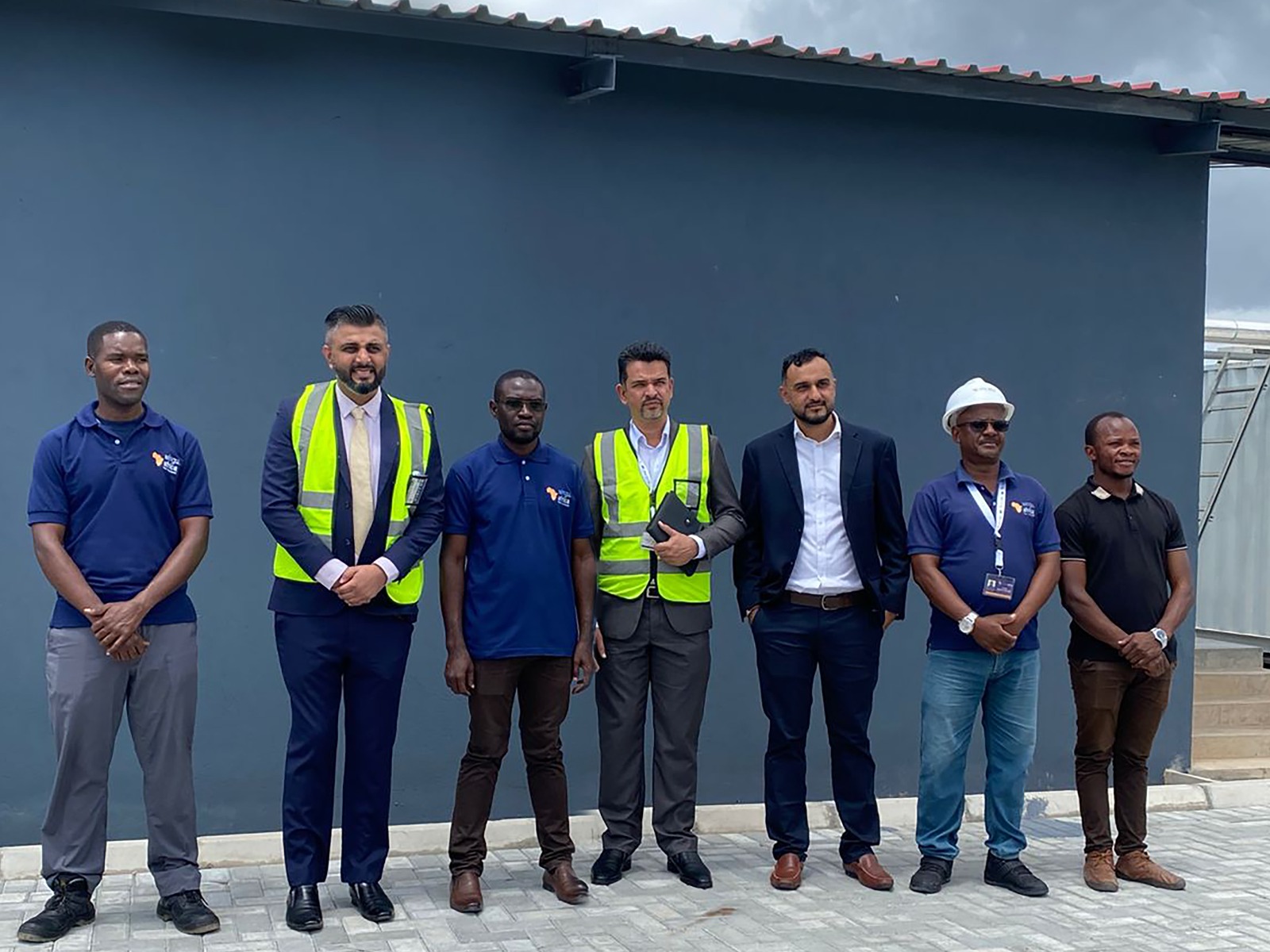
    DAR ES SALAAM, Tanzania, October 10, 2023/ — Liquid Intelligent Technologies (Liquid) (https://www.Liquid.Tech/), a business of Cassava Technologies, a pan-African technology group, has partnered with wingu.africa a pioneer provider of carrier-neutral data center services in Tanzania, and the foremost specialist carrier-neutral data center group in East Africa to introduce the second Azure Hyperconverged Infrastructure (HCI) stack. This investment from Liquid Tanzania will provide a more conducive environment for local businesses to accelerate their digital transformation journeys.

    “In 2021, we were the first to bring Azure Stack to Tanzanian businesses, helping them gain access to cloud solutions that met the local data regulatory requirements and efficiently run latency-sensitive business applications. This is yet another milestone we achieved as we continue to work towards empowering our customers to adopt cloud and contribute to making Tanzania a digital economy,” said Manish Govindji, Acting CEO of Liquid Intelligent Technologies Tanzania.

    The innovative solution offered by Azure Stack HCI ensures that businesses meet the local compliance standards by letting customers run applications designed for virtualised infrastructure. Additionally, with the carrier-neutral offering from the Wingu group, companies have a further advantage of choosing the connectivity service provider.

    “The Wingu group is thrilled to collaborate with Liquid Intelligent Technologies in introducing Tanzania’s second Azure Stack, a pivotal step in accelerating the nation’s digital transformation. By offering local businesses access to cutting-edge cloud solutions, we aim to empower them to thrive in the digital age.

    Our carrier-neutral data center complements this initiative, allowing companies to choose their preferred connectivity service provider. Together with Liquid, we are contributing to Tanzania’s digital economy, fostering economic ties, and leveling the technology playing field for local businesses.

    This partnership signifies a significant milestone in expanding technology access and affordability in Tanzania. We look forward to a future of increased connectivity, innovation, and growth for the region, “said Nicholas Lodge, Co-Founder and Chief Strategist at wingu.africa.

    Liquid’s continuous investment towards extending its fibre backbone and improving access to affordable digital solutions is critical to enhancing digital transformation in Tanzania and the rest of the continent.

    Ensuring local businesses have access to high-speed connectivity and digital services fosters economic and technological ties across countries. Also, it levels the technology playing field for businesses as they push themselves to a global stage to compete against their counterparts in more developed economies.

    “With the availability of the second Azure Stack in the region, Liquid is yet again ensuring that it is a one-stop shop for all technology requirements. Especially since one of the greatest deterrents to cloud adoption in Tanzania is the high cost of accessing cloud solutions locally.

    Liquid has deployed Azure Stacks in multiple African countries, and we have the in-house expertise required by our customers to ensure that their IT needs are catered to by us end-to-end while they focus on their core business,” concluded Govindji.

    Distributed by APO Group on behalf of Liquid Intelligent Technologies.
  • Gbewaa Damba Trophy goes back to Yendi

    Gbewaa Damba Trophy goes back to Yendi

    By: Mohammed A. Abu

    The highly patronized maiden friendly football match between age-long historical playmates, the people of Savulgu and Kumbungu in Western Dagbon ended on Saturday in a 1:1 draw at the Aliu Mahama Sports Stadium in Ghana’s Northern regional capital of Tamale.

    Held under the auspices of His Royal Majesty, Ndan Yaa Na Abukari II, King of the Dagbon Kingdom, Northern region of Ghana, the event doubled as a fundraiser cum major side attraction within the context of a recent Royal Decree permitting the rebranding of the centuries long Damba Festival for peace and development.

    In the absence of a winner the Damba trophy had to be returned by the Paramount Chief of the Pishigu Traditional Area, His Royal Highness, Dr. Alhassan Andani to His Royal Majesty, through the elders of His Royal Highness, the Kug Na for onwards delivery to His Royal Majesty, the King, as per Dagbon’s royal protocols best practice.
    It is anticipated that the second edition of the match, come the next Damba festival, would that time round, get a winner to take the cup home.

    Post-Match Savulgu-Kumbungu ‘Rivalry’

    Amidst the draw score  results, some people of Savulgu could be heard saying their mates from Kumbungu were “dam lucky”. Their team they contended, had wanted to teach their Kumbungu counterparts a bitter lesson they wouldn’t have forgotten in their lives but fortunately for them, by a stroke of luck on their part, the match was brought to an end, shortly after their equalizer and so they must thank their stars.

    The Savulgu protagonists further contended that, the draw notwithstanding, their team had totally beaten their Kumbungu counterparts in terms of professionalism, ball possession and number of corners.

    Their Kumbungu counterparts  were  heard to have come out with a sharp rebuttal and ridiculed the Savulgu claim of  ball possession and number of corners  an empty bluff. “If  the expertise you are claiming and  touting is true,why  were you all that while, unable to score us multiple goals to win but could only manage  with one miserable last minute goal as an equalizer for a draw?”,they quizzed.

    The Savulgu and Kumbungu historical playmates are known for their never quenching thirst for ‘rivalry’ whenever they chance to meet be it online or in-person. They are indeed, the most interesting duo to behold in Dagbon.

    Historical Antecedents

    The historical playmate relations between the people of Savulgu and Kumbungu characterized by teasing and cracking of very funny jokes with each other,started about some one hundred and twenty seven years(127) years ago but still active up till today thanks to the unwaning commitment on the part of both parties.

    Legend has it that a most  unfortunate incident that occurred was to result in a bitter  conflict between Kumbungu and one of its other neigbours, Zangbalun.The conflict is said to have developed  into a spill over to Savulgu sadly  resulting  into an eventual showdown between the people of Kumbungu and Savulgu.

    This most unpalatable development,is said to have prompted a most  decisive action and intervention by  then ruling King of Dagbon,Yaa Na Andani II(1858-1896) in order to restore peace in the Kingdom.

    Courtesy the King’s affirmative action,the narrative has it that,peace and harmony was restored once again between the people of Kumbungu and Savulgu.

    Both sides were therefore exhorted to ensure continuous peace building and to at all times, engender peaceful co-existence and never to give any chance again to the least strife let alone, the worst  of it,armed  conflict.

    The Savulgu-Kumbungu historical playmates relationship some contend,could be cited as a case study in conflict prevention, resolution, management, and peacebuilding driven by commitment and  passionate desire for lasting peace and its sustainability on the part of the parties to the conflict.

    Giving a friendly football match competition touch to the relations some observers have also contended, is not only a meaningful value addition to it, but also, it adds a yet another interesting dimension to Ghana’s football sports landscape.

  • Louvre Abu Dhabi welcomes over 200,000 visitors in summer

    Louvre Abu Dhabi welcomes over 200,000 visitors in summer

    Louvre Abu Dhabi received more than 200,000 visitors between June and August 2023, a record peak in summer visitation since the museum’s opening in 2017, reaffirming Abu Dhabi’s position as an internationally renowned cultural hub.

    The visitor and community experience remains a key priority for the Louvre Abu Dhabi, given its status as one of the UAE’s main cultural attractions.

    The museum witnessed a surge in attendance numbers compared to previous summers, as individuals and families alike engaged with artworks, explored immersive exhibitions, and sought inspiration from the museum’s architecture.

    The emirate welcomed 2.4 million hotel guests in the first half of the year, a 34 per cent increase compared to the same period a year ago, according to the Department of Culture and Tourism – Abu Dhabi (DCT Abu Dhabi).

    Louvre Abu Dhabi’s summer offerings
    To engage the community over the summer period, Louvre Abu Dhabi opened its latest Children’s Museum exhibition Picturing the Cosmos to the public in July inspired by the human fascination with the cosmos.

    The museum hosted an interactive live call from space with Emirati astronaut Sultan Al Neyadi in August as part of the exhibition’s programming. The exhibition welcomed over 30,000 visitors in just two months.

    Louvre Abu Dhabi’s summer offerings also focused on participatory learning and engagement, as young adults took part in the Art Lab, where they collaborated with UAE-based artists in engaging workshops.

    The museum welcomed teachers and children for a free exploratory visit ahead of the new school year.

    Visitors were able to enjoy a wealth of community activities such as free yoga on International Day of Yoga, which saw yoga enthusiasts gather under the iconic museum’s dome.

    “Louvre Abu Dhabi stands as a beacon of cultural diversity and artistic expression, and we take immense pride in our role as a global platform for cross-cultural dialogue. As we continue to strive for excellence, we remain dedicated to enhancing the visitor experience, fostering a deeper connection between our guests and the rich tapestry of human creativity,” said Manuel Rabaté, director of Louvre Abu Dhabi.

    The museum unveiled its collection of new loans and acquisitions this summer. The collection is on display in the permanent galleries.

    These included new acquisitions such as Les Marionnettes by Jean-Honoré Fragonard (France, 1775 – 1778), Femme à la mandoline (Mademoiselle Léonie assise) (France, 1911) by Pablo Picasso, and more.

    Visitors were treated to the exceptional loans from Musée du Louvre, Musée national des Châteaux de Versailles et de Trianon, Musée du quai Branly – Jacques Chirac, Musée d’Orsay, Centre Pompidou – Musée national d’art moderne, Musée d’Archéologie Nationale – Saint Germain en Laye, Musée des Arts décoratifs, and the National Museum of Archaeology in Valleta, Malta.

    Upcoming offerings
    Louvre Abu Dhabi has bolstered its position as a destination that visitors can look forward to seeing by organising a diversity of events and exhibitions that target different interests and age groups, cementing its position as the first universal museum in the Arab world.

    The museum will host two new exhibitions in the coming months as part of its ongoing 2023/24 cultural season. These include Cartier, Islamic Inspiration and Modern Design, and Louvre Abu Dhabi Art Here.

    It recently opened Letters of Light to the public, which will run until January 2024. These exhibitions will be complemented by programming and activities.

    Read: Abu Dhabi to welcome more than 24 million visitors this year
    SOURCE
    GULF BUSINESS