Blog

  • Opportunity through adversity: Eighth annual Africa Risk-Reward Index highlights the continent’s outlook amid growing geopolitical fragmentation

    Opportunity through adversity: Eighth annual Africa Risk-Reward Index highlights the continent’s outlook amid growing geopolitical fragmentation

    London, 19 September, 2023: Specialist risk consultancy, Control Risks (www.controlrisks.com), and its economics consulting partner, Oxford Economics Africa (https://www.oxfordeconomics.com/), announced the launch of the eighth edition of their Africa Risk-Reward Index today, themed ‘Opportunity through adversity’.

    The Africa Risk-Reward Index is an authoritative guide for policymakers, business leaders, and investors. The report details developments in the investment landscape in major African markets and delivers a grounded, longer-term outlook of key trends shaping investment in these economies.

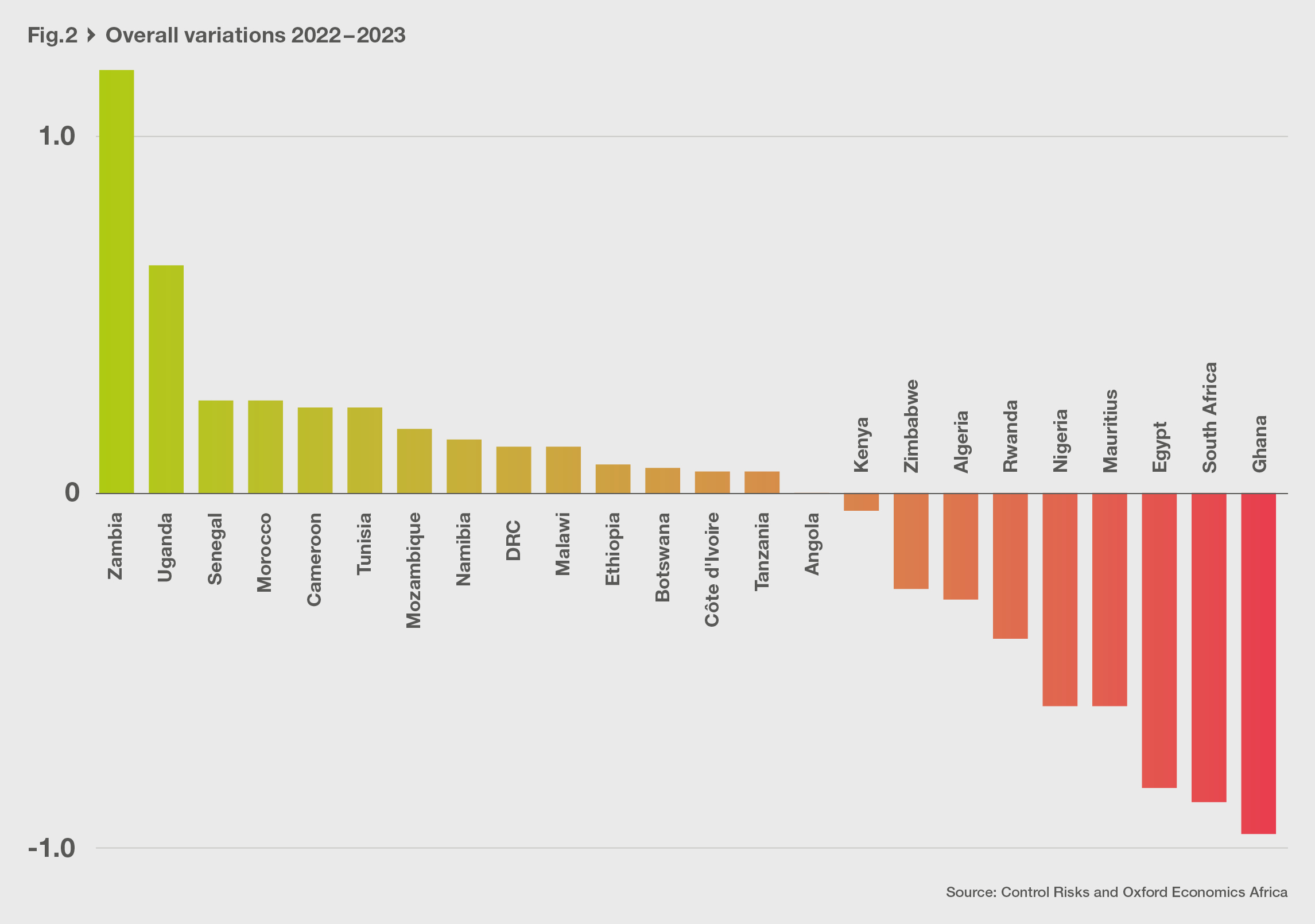
    The eighth edition of the Africa Risk-Reward Index is released at a time of geopolitical fragmentation and recent external shocks that will have a sustained impact on the African continent. African nations are contending with the lingering repercussions of the COVID-19 pandemic, disruptions in global supply chains due to the conflict in Ukraine, and a tightening of global financing conditions. According to Oxford Economics Africa, these factors have pushed GDP growth down from 5.4% in 2021 to 3.5% last year. Some of this weakness has persisted into this year, but Oxford Economics Africa anticipates a steady, albeit uneven, pick-up in economic activity in the next 12-18 months.

    The report examines three key themes outlined below, summarising Control Risks’ and Oxford Economics Africa’s views on Africa’s trajectory in the year ahead.

    The profits and pitfalls in polarisation

    The report’s first theme is the impact of global geopolitical fragmentation on Africa. The conflict in Ukraine has upended the geopolitical landscape: Western countries are seeking alliances on their stance against Russia, while Russia is also looking to gain support for its efforts in Ukraine. Beyond the geopolitical heavyweights, other emerging geopolitical “middle powers” are taking an interest in Africa and its rich resource potential. As jostling for influence continues, the shockwaves from the conflict have rippled out in the form of macroeconomic uncertainty and higher inflation, deep anxiety over the interconnectedness of global trade and economic systems, and a desire among global geopolitical powers to distinguish friends from foes.

    Conscious of their growing geopolitical stock, Africa’s largest economies are seeking to balance their desire for neutrality and their need for external financial support, while at the same time seeking to amplify Africa’s voice in global debates. But their attempts at non-alignment are coming under ever greater pressure.  Companies will be required to navigate the resulting regulatory complexity arising from global polarisation, including competing regulatory regimes, sanctions and export controls, and growing scrutiny on companies’ supply chains.

    African-led security interventions

    A collateral effect of the polarisation mentioned above is the upswing in African-led security interventions, which make the report’s second key theme. Global attention is split as the conflict in Ukraine continues, the US-China competition heats up, and countries in the Global North are increasingly focused on their domestic political concerns. The perceived inability of external forces to aid in bringing lasting security is leading African governments and institutions to gradually take on a greater role in responding to security crises on the continent.

    “These changes in tackling insecurity will present challenges for policymakers and businesses in Africa in the coming years. Businesses will be forced to navigate a more complex operating environment where military force, regional competition, and political and business interests are intertwined”, said Patricia Rodrigues, Associate Director at Control Risks. It will require careful monitoring of rapidly evolving security dynamics, and heightened efforts to maintain neutrality and avoid the potential reputational fallout. Operators working in conflict zones will also potentially have to navigate interactions with foreign or private military forces.

    Financing for the future

    We anticipate that increased geopolitical competition will in the longer term translate into new opportunities for African countries, as geopolitical powers seek to extend their influence through financing and investment. However, in the short term, African economies will continue to contend with challenging economic environments, and this will deter the more risk averse investors. Rising inflation and supply-chain constraints have exposed the continent’s imbalances and economic fragilities.

    “The Russia-Ukraine conflict and a tightening in global monetary conditions have unnerved international investors. This has raised concern that economic development on the continent might pause or even regress. One area where this has not been the case is financial services, and more specifically, the expansion of access to financial services through innovation,” said Jacques Nel, Head of Africa Macro at Oxford Economics Africa.

    While foreign investors have somewhat retreated to the perceived safe havens of advanced economies, home-grown African champions are emerging to fill this funding gap and are steadily consolidating their dominance in Africa’s financial services industry. The continent still has a long way to go to reach financial inclusion to the extent seen in more advanced economies. However, financial institutions from regional economic powerhouses South Africa, Egypt, Nigeria, Morocco, and Kenya are stepping in to help bridge access and inclusion divides.

    While the sector is likely to remain attractive for investors, there are still significant risks, including exposure to governance issues, fraud, cyber threats, vulnerability to terrorism financing, and growing international scrutiny of illicit financial flows.

    Methodology

    The Africa Risk-Reward Index is defined by the combination of risk and reward scores that integrate economic and political risk analysis by Control Risks and Oxford Economics Africa.

    Risk scores from each country originate from the Economic and Political Risk Evaluator (EPRE), while the reward scores incorporate medium-term economic growth forecasts, economic size, economic structure, and demographics.

    For details on the individual risk and reward definitions, please contact us at: communicationsEMEA@controlrisks.com or africa@oxfordeconomics.com

    To request a copy of the report please contact: tracy.walakira@apo-opa.com

    Issued on behalf of Control Risks and Oxford Economics Africa.

    For more information, please contact:

    Control Risks

    Claire Peddle
    Marketing Director, Middle East and Africa
    claire.peddle@controlrisks.com
    +971 50 600 5993 (Dubai)

    Oxford Economics Africa

    Shreena Patel

    Public relations and communications officer

    spatel@oxfordeconomics.com

    +44 (0) 7999379025 (London)

  • Ghana-Nebraska Captains of Industry Identify Areas for Mutual Collaboration

    Ghana-Nebraska Captains of Industry Identify Areas for Mutual Collaboration

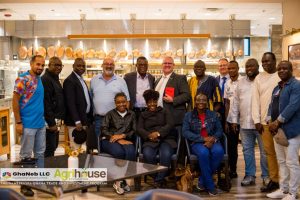
    The Nebraska-Ghana Trade and Investment Program and Husker Harvest Days event, which saw the participation of twenty-two (22) Ghana Government officials and Private Businesses, has ended successfully in Lincoln, Nebraska.

    The event, held from 11th to 14th September 2023, UNDER THE THEME – FACILITATING OPPORTUNITIES, has been described by participants as one of the most well-organized Trade and Investment Programs, which is poised to make significant impact, in establishing and building relevant and much needed partnerships.

    Senator Ken Schilz, the Lead and Co-founder of Nebraska GhaNeb LLC, expressed his satisfaction, with the quality of the Ghanaian delegates, their understanding of the sectors, in which they operate, and most importantly, their desire to establish long term and profitable business partnerships.

    Both GhaNeb LLC and Agrihouse Foundation have positioned ourselves to support to facilitate the opportunities and relationships, that have been established.

    We are confident, that creating this platform will help businesses expand their operations and contribute to economic development of both Nebraska and Ghana. Senator Schilz added.

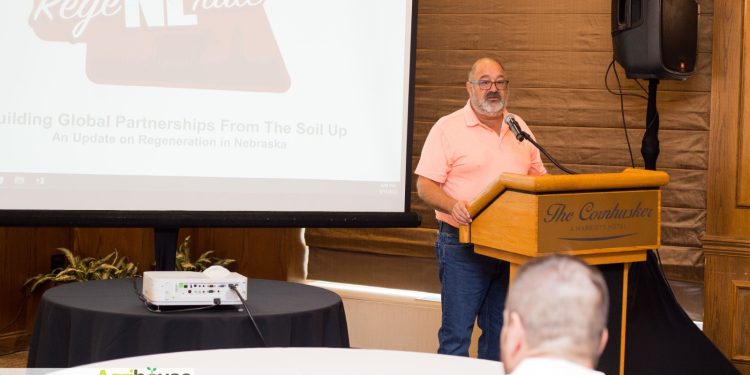
    Speaking to some participants, Cecil Sunkwa-Mills of T & C Farms, said, what stood out for the me, was the Business Presentations, where they learnt from the various Nebraska State legal practitioners, policy makers and farmers on focused issues, that addressed, the Legalities of Doing Business in Nebraska, Regenerative Agriculture, Digital Marketing for Retail Sales and Data Mining.

    Dr. Solomon Gyan Ansah, the Director of Crop Services at the Ministry of Food and Agriculture, expressed his deep admiration for the extensive array of machinery and equipment utilized by farmers in Nebraska. He noted that these advanced tools have significantly contributed to enhancing crop productivity in the region.

    The Chairman of the Ghana Federation of Livestock Inter-Professionals (GHAFLIP), Alhaji Akakade Moro, also shared similar sentiments about the event.  Describing it as not only insightful but also an eye-opener to the agricultural sector in Ghana.
    The delegates, who also met with leaders of Kreikemeier Farms, Lincoln Premium Poultry, RWH Energy, EZ Politix, Sandhills Global and Certified Piedmontese, expressed their satisfaction with the detailed business discussions, they had.

    ‘’We have together identified areas of Trade collaborations. There are meaningful technologies and enhanced equipment, that we will need. Talks and negotiations have already begun, and we are hopeful to seal some deals soon’’. Mashud Mohammed, Ghana’s 2021 National Best Farmer added.

    A pivotal highlight of the program for the Ghanaian delegates, was the visit the Husker Harvest Days event grounds, the renowned and illustrious showcase, acclaimed as the largest irrigated agriculture exposition in the United States.
    All the delegates spoke about the positive interactions they had with Exhibitors and vendors, their appreciation of cutting-edge technologies. They are positive of future collaborations.

    The delegates also had the opportunity to meet with Southeast Community College and Nebraska State University, who are looking at having Ghanaian students, enrol in their institutions in the immediate future.

    Alberta Nana Akyaa Akosa, the Executive Director of Agrihouse Foundation, enthusiastically expressed her excitement about the impactful and meaningful partnership, Agrihouse Foundation, has established with GhaNeb LLC, which has made the organizing  of the 1st Nebraska-Ghana Trade and Investment Program possible.

    I am excited about the future and the important role, we are playing with GheNeb LLC, in facilitating these relationships established. I am happy we have showcased our potential to support in driving innovation and growth in the agricultural sector, creating new avenues for both regions to prosper, she added.

    “The partnerships formed during this program are not just agreements on paper; they represent the fusion of expertise, resources, and visions from two different regions. These collaborations will drive innovation, promote sustainable practices, and ultimately contribute to the growth of our agricultural sectors. It’s incredibly exciting to witness the potential these partnerships hold for both Ghana and Nebraska,” stated Mad. Alberta.

    This symbolizes the collective commitment of both GhaNeb LLC, Agrihouse Foundation, and the participating regions to work hand in hand in augmenting the agriculture value chain.

    The Ghanaian delegation who participated in the 1st Nebraska-Ghana Trade and Investment Program and experienced the Husker Harvest Days included; Hon. Yaw Frimpong-Addo, Deputy Minister of Food and Agriculture (Crops), Mr. Fifi Fiavi Kwetey, General Secretary of the National Democratic Congress, representing former President John Dramani Mahama.

    The rest were,  Dr. Ansah Solomon Gyan, Director of Crop Services at the Ministry of Food and Agriculture, and Michael Kofi Akoto, Trade Promotion and Commercial Officer at the Embassy of Brazil, Mr. Mohammed Mashud, Chief Executive Director of Cudjoe Abimash Farms, Nana Osuman Abdulai, Managing Director of A.N.O Enterprise/Nana Atta Akara Co. Ltd, Al-Ayadi Fares Mohammed Khear, Irrigation Service Manager at Interplast and Alhaji  Akakade Moro, Chairman of the Ghana Federation of Livestock Inter-Professionals (GHAFLIP).

    Others included, Mashud Mohammed, Operation Manager at Agripower, Dorothy Opoku, General Manager of Agricultural Manufacturing Group Limited, Kwabena Danquah, General Manager of Operations at Agricultural Manufacturing Group, Seidu Abubakar, Project Specialist for Commercial Agriculture at Savannah Zone Agricultural Productivity Development Project (SAPIP), and Sunkwa-Mills of T&C Farms.

    Fidelity Bank’s Head of Agribusiness, Patrick Opoku, and Real Estate Investors Monica and Collins Atta Oteng, of Collinmon Investment Limited, were also present.

    SOURCE

    AGRIHOUSE FOUNDATION


  • Africa Women Innovation and Entrepreneurship Forum (AWIEF) Announces Finalists for 2023 AWIEF Awards

    Africa Women Innovation and Entrepreneurship Forum (AWIEF) Announces Finalists for 2023 AWIEF Awards

    CAPE TOWN, South Africa, September 20, 2023/ — The Africa Women Innovation and Entrepreneurship Forum (AWIEF) (https://www.AWIEForum.org) is delighted to announce the finalists for its 2023 AWIEF Awards.

    Launched in 2017, the prestigious annual AWIEF Awards is an initiative to recognise, honour, and celebrate women entrepreneurs and business owners in Africa across various industry sectors for their achievements and contribution to the continent’s inclusive economic growth and social development.

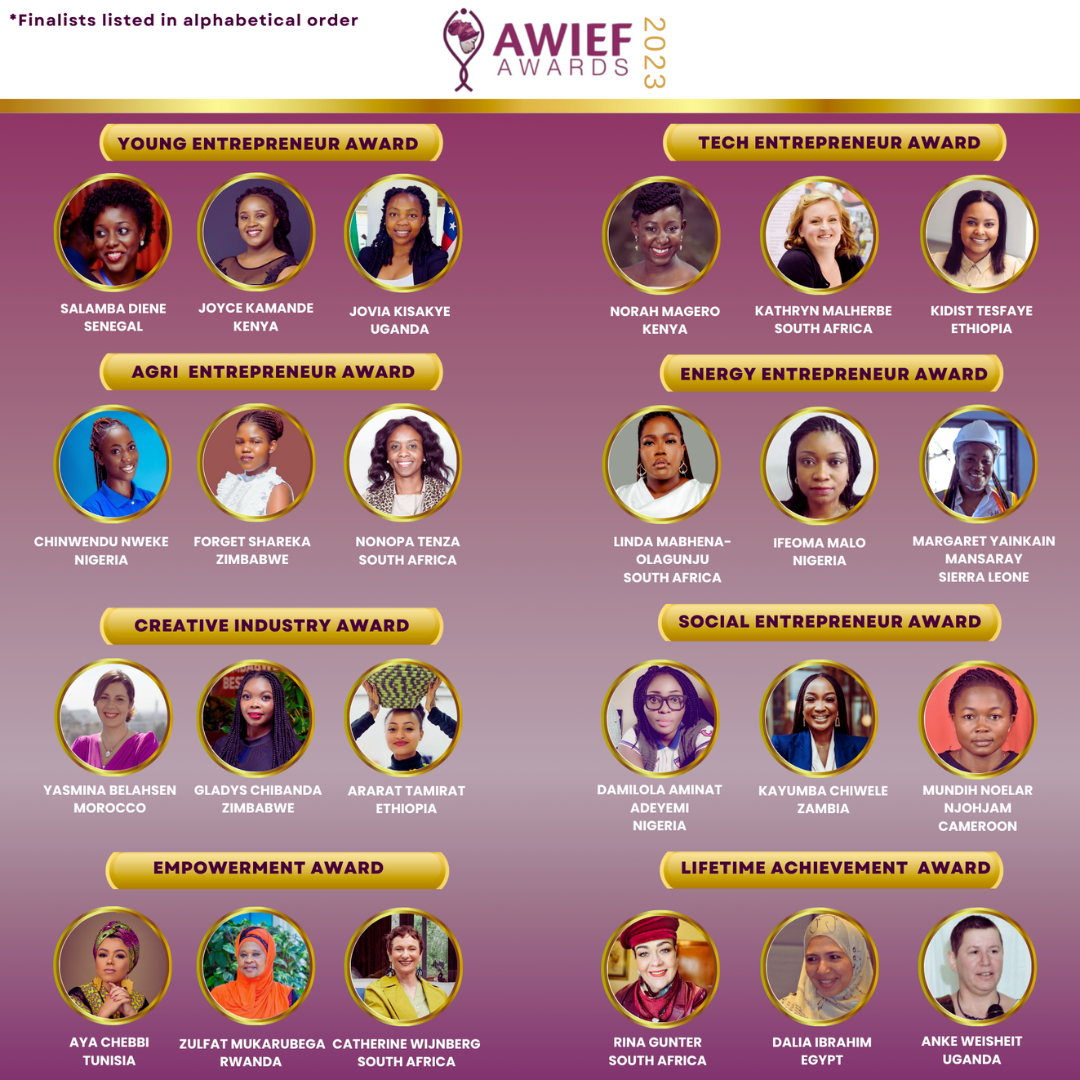
    An international and independent Panel of Judges selected the twenty-four (24) finalists across eight (8) categories. These outstanding women founders and business leaders operate in a diverse range of sectors and represent companies from fourteen (14) different African countries: Cameroon, Egypt, Ethiopia, Kenya, Morocco, Nigeria, Rwanda, Senegal, Sierra Leone, South Africa, Tunisia, Uganda, Zambia, and Zimbabwe.

    The 2023 AWIEF Awards winners will be announced and celebrated at a special ceremony and gala dinner at the AWIEF2023 Conference and Awards, taking place on 9 and 10 November at the Kigali Convention Centre, Kigali, Rwanda.

    AWIEF Founder and CEO, Irene Ochem, said: “Given the huge number and calibre of the nominations received this year, it is clear that female entrepreneurship and business leadership is thriving across Africa. It is our honour to recognise and celebrate the achievements and contributions of these women to the inclusive growth of their respective sectors, their countries and the continent’s economy.”

    A member of the 2023 AWIEF Awards Panel of Judges, John-Paul Iwuoha, Founder of Smallstarter Africa, said: “As a Judge, I was thoroughly impressed by the quality of applications in all the categories. It is great to see how AWIEF continues to attract innovative women across Africa who are creating enormous value for society.”

    The finalists for the 2023 AWIEF Awards are (listed in alphabetical order):

    Young Entrepreneur Award

    Salamba Diene, CEO, BIOSENE SARL, Senegal

    Joyce Kamande, Co-founder & CEO, Safi Organics, Kenya

    Jovia Kisakye, CEO, Sparkle Agro Brand, Uganda

    Tech Entrepreneur Award

    Norah Magero, Founder & CEO, Drop Access Limited, Kenya

    Kathryn Malherbe, CEO, Med Sol AI Solutions, South Africa

    Kidist Tesfaye, Founder & CEO, YeneHealth, Ethiopia

    Agri Entrepreneur Award

    Chinwendu Nweke, CEO, Bridge Merchant Enterprise, Nigeria

    Forget Shareka, Founder, Chashi Foods, Zimbabwe

    Nonopa Tenza, Founder & MD, Kevinot Farming, South Africa

    Energy Entrepreneur Award

    Linda Mabhena-Olagunju, Founder & CEO, DLO Energy Resources Group, South Africa

    Ifeoma Malo, CEO, Clean Technology Hub, Nigeria

    Margaret Yainkain Mansaray, Founder & CEO, Women in Energy Sierra Leone Limited, Sierra Leone

    Creative Industry Award

    Yasmina Belahsen, Founder, MayaDigital, Morocco

    Gladys Chibanda, Founder & CEO, Krafted Ink, Zimbabwe

    Ararat Tamirat, Founder & GM, Tuba By Ararat, Ethiopia

    Social Entrepreneur Award

    Damilola Aminat Adeyemi, Co-founder & CEO, D-Olivette Global Enterprise, Nigeria

    Kayumba Chiwele, Founder & Principal Psychologist, MindAid Zambia, Zambia

    Mundih Noelar Njohjam, Medical Doctor, Epilepsy Awareness, Aid and Research Association, Cameroon

    Empowerment Award

    Aya Chebbi, Founder & President, Nalafem Collective, Tunisia

    Zulfat Mukarubega, Founder, University of Tourism, Technology and Business Studies, Rwanda

    Catherine Wijnberg, Founder & CEO, Fetola, South Africa

    Lifetime Achievement Award

    Rina Gunter, Founding Partner, Gunter Attorneys, South Africa

    Dalia Ibrahim, CEO, Nahdet Misr Publishing House, Egypt

    Anke Weisheit, Co-founder & Chair, PHARMBIOTRAC, Mbarara University of Science and Technology, Uganda

    Tickets for the AWIEF2023 Conference and Awards are available online at: https://apo-opa.info/3JHKUem.

    Distributed by APO Group on behalf of Africa Women Innovation and Entrepreneurship Forum (AWIEF).

    For more information and media enquiries, email: info@awieforum.org

  • About Construction of the Tamale-Yendi-Zabzugu-Tatale Highway

    About Construction of the Tamale-Yendi-Zabzugu-Tatale Highway

    ……As Eastern Corridor Road Stakeholders Meeting ends in Yendi

     Mohammed A. Abu

    A stakeholders meeting of the construction of the Tamale-Zabzugu-Tatale road project has successfully ended in Yendi, the seat of Dagbon Kingship in the Northern Region of the West African nation of Ghana.

    A Ghana Ministry of Roads and Highways project-level grievance mechanism to address emerging grievances and complaints of dwellers of the affected communities in the project catchment area and a collective resolve by all parties with interest in the project, to keep their eyes on the project and report any observation, action or inaction deemed inappropriate, were the major outcomes of the event.

    Lead Convener

    With Concern Citizens of Yendi as lead convener, the meeting which was intended to deliberate on Project brief for LOT2, citizens’ expectations, emerging grievances and complaints, decisive actions on complaints among others, drew many participants representing stakeholder institutions and other various parties with a common interest in the project.

    They included the Regional Highway Authority (GHA), representatives from GHA Head Office, Accra, representatives of the Ministry of Roads and Highway (MRH), a representative from the Royal Gbewaa Palace, the Sang-Lana, representative of the Mion-Regent, Savana Signatures, the Contractor (CJIC & CSCEC), among several others.

    LOT2 Project Brief

    The Ghana Highway Authority is the implementing Agency of the project scheduled for completion on 4 th August, 2028. Under the Transport Sector Improvement Project (TSIP), the project was awarded on a modern contract system known as the Output and Performance Based Road Contract (OPBRC).

    The OPBRC contract system is underpinned by the “Tell me what you want but not how to do it” concept which unlike the traditional contract system where the contractor has to finish the entire construction works before payment, the OPBRC system recommends payment, if a maximum of 10km and a minimum of 5km work is completed.

    The contractor is expected to use three (3) years for the construction works and a 4-year maintenance work implying that, portions that see an early completion will be under maintenance up to the seventh year of the contract duration.

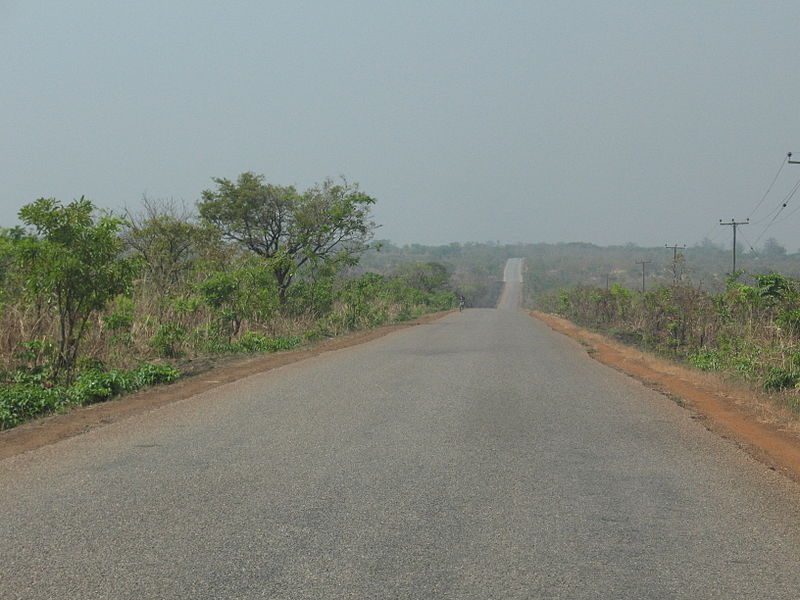
    The LOT2 stretch of the highway is a single carriageway un-asphalted road that will have roadside drains, 46 box and pipe culverts, 2 bridges, streetlights and sidewalks as well as stopping lanes and bus bays in the urbanized communities.

    However, 2.6km of the road into Yendi from Tamale will experience a one-way couple upgrading. All fibre optic infrastructure installations from Tamale to Yendi and to Tatale border post will be installed.

    Expectations of Citizens  

    Some socio-economic development interventions that come along the project are: the provision of eight basic schools, eight bole holes and one clinic to some communities alone the stretch.

    These interventions according to the GHA, were arrived at through a need-based assessment conducted by a consultant in 2019, which was also reviewed in 2021 to reflect the priority needs of the people.

    Nanton-Zuo in the Tamale Metropolis is one of the beneficiary communities of an 8-unit classroom block. Participants were happy about these ancillary project interventions but however questioned who and which communities the consultant consulted on the need-based assessment?

    Open Forum Session

    During an open forum session, the event lead Convener came out with a list of questions bordering on diverse issues while also offering other participants the opportunity to make their inputs.

    The issues included need for quality work that will offer value for money, the Yendi township portions of the road be given to the Eastern Corridor Contractor (LOT1) be given first-class road status, the first two culverts before Yendi township be demolished and reconstructed, a paradigm shift from current manual based compacting of side slopes of the road to mechanized based work, the sharp curve near Zobogu which causes lots of accidents be corrected, among others.

    The Dagbon Forum’s Tamale Chapter on its part asked why satellite markets were conspicuously missing in those ancillary projects meant for socio-economic intervention needs of the people while the 2nd Vice President of its Yendi Chapter, asked for the number of speed ramps on the highway ton be reduced both in number and in height specifically for reasons of patients’ transportation.

    Dagbon Forum Delegation

    The Dagbon Forum(DF) delegation was represented led by its Yendi Chapter’s President, Alhaji Mohammed B. Ibrahim while its Tamale Chapter was also led by its President, Mr. Zakaria Adam. Also in attendance, was the 2nd Vice president of DF Yendi Chapter, Madam Kande.

    Emerging Grievances & Complaints

    The Ministry of Roads and Highways established a project-level Grievance Mechanism to receive, evaluate, and address project-related grievances targeted at communities affected by the project.

    Mandate to Receive Complaints and Grievances

    Savana Signatures, a non-governmental organization has been mandated by the Ghana Highway Authority to receive complaints and grievances.

    Resources

    Under the project-level grievance mechanism complaints can be channeled to the Ministry telephony, electronic communication, physically via grievances boxes, grievance officer complaint offices created in both Yendi and Mion for the public to send their complaints directly.

    Toll-free number, 0800003333,website address:  www.tsipmrhgh.com

    E-mail:ym@tsipmrhgh.com.

    Decisive Action on Complaints  

    Participants pleaded to all the Authorities connected with the project to act decisively on complaints brought before them.

    Approval of major Proposal

    The Yendi township roads given first-class status, the replacement of the two culverts before entry to Yendi, the Zobogu curve correction, the loose excess chippings on the road that fly and break vehicles windscreens, all received positive approval.

    Issue of Compensation

    Project Background

    In June 2022, Vice President, Dr. Mahamudu Bawumia cut the sod for the construction of a 167km Tamale-Yendi-Tatale road project in the Northern region as part of the Eastern corridor road project.

    The Tatale-Yendi-Tamale Road Project is fully funded by a US$150 million World Bank facility which was approved on June 6, 2017, under the Transport Sector Improvement Project (TSIP).

    The project is expected to be completed in two years, but under the terms of the contract, the contractors will be undertaking maintenance works for five more years, unlike previous contracts where contractors are obliged to do one year of maintenance. This will bring the total project time to seven years.

    The project has been divided into what is called LOT1 and LOT2. The LOT1 stretches from Tatale-Zabzugu to Yendi highway (61.98km) whiles LOT2 is the stretch from Yendi to Tamale highway (106.02km). The Yendi stakeholders’ engagement meeting was for deliberations on LOT2.


  • dnata to cut CO2 emissions by 80 per cent in the UAE

    dnata to cut CO2 emissions by 80 per cent in the UAE

    Air and travel services provider dnata has taken steps to reduce its environmental footprint across its operations in the UAE.

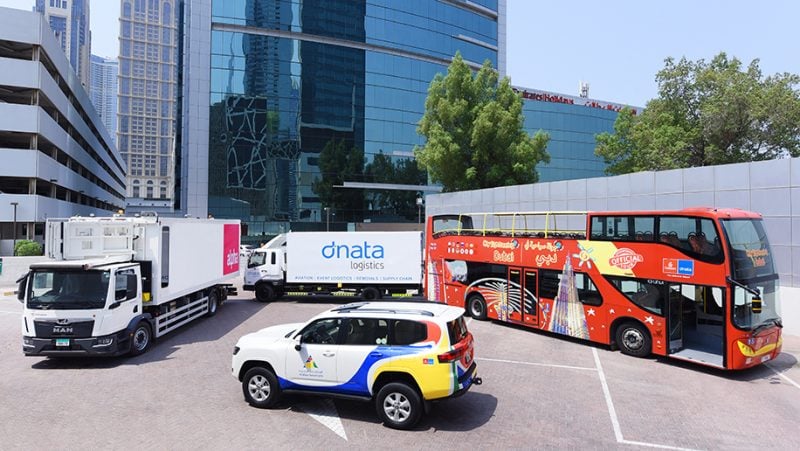
    dnata’s group brands dnata Logistics, Arabian Adventures, Alpha Flight Services and City Sightseeing have switched their vehicles to operate using a biofuel blend.

    dnata says that the move will save 80 tonnes of Carbon Dioxide (CO2) emissions per year, equivalent to over 320,000km driven by an average petrol-powered car.

    dnata Logistics has switched 31 of its trucks to run on a biofuel blend at its Dubai-based hub. Providing multimodal freight forwarding, logistics, supply chain and road transport services, its trucks cover up to a total 217,000km per month. The move saves almost 35 tonnes of CO2 emissions per year, the equivalent of eight petrol-powered cars driven for one whole year.

    City Sightseeing Dubai, a joint venture with dnata Travel Group, operates three tour routes, aiding viewing of Dubai’s top attractions, through the use of 21 open-top, biofueled buses. These cover an average 76,000km per month, removing over 32 tonnes of CO2 emissions each year – the equivalent of the electricity use of four average homes for 12 months.

    Alpha Flight Services (Alpha), dnata’s inflight catering joint venture, has already switched five landside vehicles to biofuel blend, and is also in the process of transitioning all of its Sharjah-based airside catering trucks. Alpha now sends its used cooking oil to the biofuel manufacturer and once recycled, it is then reused within its vehicles. One litre of oil recycled into biofuel avoids the emissions of 3kg of CO2, a reduction of 92 per cent compared to diesel fuel use. Alpha’s vehicles cover over 27,000km per month, supporting the company’s catering operations that create over 25,000 meals a day. As a result of the initiative, Alpha will save seven tonnes of CO2 emissions per year, the equivalent of charging over 850,000 smartphones.

    Arabian Adventures has also switched the generators at its desert safari camps to a biofuel mix. Arabian Adventures is saving almost five tonnes of CO2 emissions per year as a result of the initiative, equating to 1987 litres of diesel.

    Steve Allen, CEO of dnata Group, said, “The introduction of biofuel to a diverse range of our UAE businesses is an important step in our ongoing journey. It offers a simple and effective method of cutting emissions throughout the fuel lifecycle, without requiring any changes to equipment. We will continue to invest in our operations, including large-scale infrastructure solutions, to further enhance our sustainability performance and achieve our green operations targets.”

    dnata sustainability initiatives

    Dnata’s latest biofuel initiative is part of its efforts to reduce its carbon footprint and waste to landfill by 20 per cent by 2024 in line with its two-year green operations strategy.

    In June 2022, dnata said that that it would invest $100m in green operations in two years to enhance its environmental efficiency globally.

    The company offers ground handling, cargo, travel, catering and retail services in over 30 countries across six continents. More than 15 per cent of the company’s global fleet is now electrified.

    SOURCE

    GULF BUSINESS


  • Energy Investment Village 2023 Finalists Announced

    Energy Investment Village 2023 Finalists Announced

    JOHANNESBURG, South Africa, September 15, 2023/ — Africa’s boldest and most ambitious cleantech start-ups will take part in the Energy Investment Village (https://apo-opa.info/468SsAw), an exciting deal-pitching event at the Green Energy Africa Summit (https://GreenEnergyAfricaSummit.com), to be held in the heart of South Africa’s Cape Town on 10-11 October at the CTICC2.

    Held under the theme, “Unlocking Africa’s Sustainable Energy Potential,” the Green Energy Africa Summit (GEAS) will provide unrivalled opportunities throughout its two-day programme for the continent’s leaders in energy, finance, and social development, to meet with international investors, to find sustainable solutions to Africa’s energy needs and a just transition to a green economy.

    This highly anticipated event advocates for the harmonisation of Africa’s natural resources, as well as policy reforms, to help usher in an energy transition that ensures the continent remains competitive and attractive to global finance. With over 1000 delegates from 67 countries, GEAS invites both public and private stakeholders across the energy value chain to collaborate, offer solutions, and build partnerships to help unlock Africa’s true socioeconomic potential.

    GEAS is thrilled to welcome its strategic industry partners, including The Banking Association of South Africa (https://www.Banking.org.za/) and The African Forum for Utility Regulators (https://AFURnet.org/). This year’s agenda features a strong mix of discussions within dedicated content streams, from the Energy Strategy Forum on day one, to the Green Energy and Green Finance Forums on day two. Attendees can look forward to country and regional spotlights on South Africa and West Africa, as well as sessions led by finance and energy heavyweights. Find the full GEAS 2023 agenda here: https://apo-opa.info/3rfJNxm

    The Energy Investment Village (EIV) is the GEAS’s Lion’s Den-style pitching event for cleantech companies, which will be held on 11 October. The finalists will be given an extraordinary opportunity to gain exposure, network with potential clients, and receive vital market validation. Most importantly, they will be given the chance to pitch for funding (https://apo-opa.info/468SsAw) from international investors.

    “Africa’s traditional, fossil-fuel-based energy cannot keep pace with its swift development. While the continent’s abundance of natural resources can enable clean energy innovations, constraints like access to finance impedes the opportunities for local clean-tech innovators. Events such as the EIV open up direct pathways to decision-makers and funders, and are a critical enabler of the clean-tech ecosystem,” says RIIS CEO Davis Cook.

    In partnership with Saldanha Bay Innovation Campus (https://www.InnovationCampus.co.za/), RIIS (https://EnablingInnovation.Africa/), and Anza Capital (https://Anza.Holdings/), and supported by Africa Scotland, JSE, Oceanhub-Africa, Savant, Firecracker, CHIETA, and SASOL, the EIV is delighted to introduce the outstanding finalists that have been selected to present their projects, which aim to revolutionise the energy landscape and promote sustainable development in Africa:

    1. Therm Development: Pioneers in sustainable heating solutions, utilising innovative technologies for efficient energy consumption.
    1. AET Africa: Visionaries in renewable energy systems, specialising in solar and wind power generation across the African continent.
    1. Ceneco Green Power Limited: Experts in developing and operating environmentally friendly power plants, focused on reducing carbon emissions.
    1. Energy Cubes: Innovators in energy storage, offering scalable and cost-effective solutions for optimising power distribution.
    1. Powerstove Energy: Trailblazers in clean cooking solutions, providing efficient and clean-burning stoves for households and communities
    1. Revive Earth Limited: Leaders in waste-to-energy conversion, turning organic waste into renewable resources while mitigating environmental impact.
    1. Green Share Virtual Power Plant: Pioneers of a decentralised energy management system, enabling communities to generate, store, and share renewable energy.
    1. Thinkbikes: Innovators in sustainable urban transportation, designing and manufacturing electric bicycles for eco-conscious commuters.
    1. FLX EV: Visionaries in electric mobility, offering cutting-edge electric vehicles with a focus on performance, affordability, and sustainability.
    1. Impact Free Water: Experts in water treatment technologies, providing sustainable solutions for clean and accessible water in resource-challenged regions.

    Don’t miss out on the chance to engage with these visionary entrepreneurs and experts, as they demonstrate how their projects will address the energy challenges across Africa. From scalable solutions for rural communities, to innovative grid technologies, these finalists promise to inspire, educate, and shape a greener future for the continent.

    Organised by Hyve Group Plc., the Green Energy Africa Summit is where the world connects with the African Energy sector. Register to attend here https://GreenEnergyAfricaSummit.com/. Attend the Green Energy Africa Summit to be part of the solution and connect with industry leaders, charting the way towards a sustainable clean energy transition for Africa.

    Distributed by APO Group on behalf of Green Energy Africa Summit.

    Media Contact:
    Amie Sparrow
    PR Manager
    amie.sparrow@hyve.group

  • President Ramkalawan attends official opening of G77 and China Summit in Cuba

    President Ramkalawan attends official opening of G77 and China Summit in Cuba

    16 September 2023 | Foreign Affairs

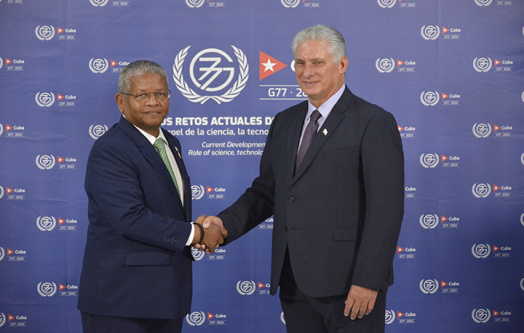
    Havana, Cuba 15 September 2023: The President of the Republic of Seychelles, Mr Wavel Ramkalawan joined fellow leaders of the Group 77 and China Summit of Heads of State and Government currently taking place in Havana Cuba. The two-day summit is taking place under the- guided theme “Current Development Challenges: The Role of Science, Technology and Innovation. ”

    The official opening ceremony was held on Friday morning (15th September), where President Ramkalawan was formally welcomed at the International Conference venue by the President of Cuba, President Miguel Diaz-Canel Bermúdez.

    During the opening ceremony President Diaz-Canel Bermúdez, welcomed and expressed appreciation to world leaders of the various G77 plus China members states for responding to the call of the summit and for their presence in Cuba. The Secretary General of the United Nations, Mr António Guterres took the floor before the G77 and China Heads of State and Government Summit was officially declared open.

    The ceremony was followed by the delivery of statements by Heads of State and Government during the General Debate session. The President was accompanied at the official opening ceremony by the Minister for Foreign Affairs and Tourism, Mr Sylvestre Radegonde.

    SOURCE

    STATEHOUSE NEWS

    » View all


  • EDITORIAL COMMENT

    EDITORIAL COMMENT

    To issue international sovereign bonds, financial markets require countries to have a credit rating from at least one or more of the three leading international credit rating agencies (CRAs) namely, Fitch, Moody’s and Standard & Poor’s (S&P).

    This constitutes a minimum requirement for capital market borrowing by market regulators, as adherence to international best practices of information disclosure and to reach out to a wider base of potential investors.

    The Financial and economic cost implications for Africa emanating from subjective credit ratings by international rating agencies(CRAs) has since left some African capital market players grumbling and dissatisfied as alluded to in various independent research study findings.

    The UNDP study report and policy brief on “Lowering cost of borrowing the role of Rating Agencies” has therefore come to make a yet most compelling case and sufficient justification for Africa to take her destiny into her own hands.

    On the back of this UNDP report came the African ministers, development actors and research institutes meeting on 14 April in Washington DC, on the margins of the 2023 World Bank/IMF Spring Meetings, to discuss the impact of credit ratings on the cost of development finance in Africa.

    At this meeting, organized by the United Nations Development Programme (UNDP), the Africa Growth Initiative at the Brookings Institution and AfriCatalyst, they raised the need to review international financing systems and particularly the determination of sovereign credit ratings for African countries, where data is often missing or of poor quality.

    The event was centered around a new study by UNDP which shows that African countries could save up to US$ 74.5 billion if credit ratings were based on less subjective assessments. This, in turn, would enable them to repay the principal of their domestic and foreign debt and free up funds for investments in human capital and infrastructure development.

    If we want to bring about change, we need to change the game, H.E. Oulimata Sarr, Minister of Economy, Planning and Cooperation, Republic of Senegal emphasized during the meeting in Washington.

    Subjective credit ratings, the Minister underscored, increase the cost of servicing debt, and put cash-strapped countries in a difficult position, having to choose between repaying debt and feeding their population.

    Furthermore, he noted, non-objective credit ratings also reduce the amount of investment that countries receive, as they are perceived to be riskier than they really are.

    “These negative impacts can occur even if the inaccurate credit ratings are not due to conscious bias, but rather to inadequate data and/or methodologies that are too subjective”.

    To issue international sovereign bonds, financial markets require countries to have a credit rating from at least one or more of the three leading international credit rating agencies (CRAs) – Fitch, Moody’s and Standard & Poor’s (S&P) – as a minimum requirement for capital market borrowing by market regulators, as adherence to international best practices of information disclosure and to reach out to a wider base of potential investors

    What Other Independent Studies say about CRAs

    It is worthy of note that it is not only the UNDP that has issues with subjective ratings by IRAs. In a review article on the study titled, “International credit rating agencies in Africa: Perceptions, trends and challenges” authored by Misheck Mutize, University of Cape Coast, Ghana and McBride Peter Nkhalamba African Peer Review Mechanism,

    Criticisms of CRAs by Researchers 

    In a quest to either improve or maintain favorable SCRs, governments subject themselves to the fiscal and monetary policy recommendations by the three international CRAs (Armstrong, 2016).

    Victims of CRAs downgrading

    South Africa

    Armstrong (2016) argues that a government that crafts an economic policy that contradicts the recommendations of the three international CRAs consequently suffers the loss of being downgraded. For instance, South Africa is facing a high threat of sovereign downgrade partly because of the land expropriation bill (IMF, 2018).

    Kenya

    Kenya facing downgrade by Moody’s following its delay to implement value added tax (VAT) on fuel products and proposal to remove petroleum tax (Irungu and Alushula, 2018). S&P warned South Africa against its R500 million stimulus package aimed at cushioning the economic impact of corona virus, citing that it will result in rising public debt.

    Barta and Johnston (2017) adds that there is an absence of sound economic logic behind CRA’s discouraging certain economic policies in emerging economies, which suggests that SCRs may be prone to being used as punitive measures against states that contradict western interests.

    Restrictive CRAs Policy Recommendations

    Policy recommendations by rating agencies are restrictive and forbid fiscal stimuli through government spending and tax relief, which usually align with emerging economies to increase consumer demand, encourage private investment, create jobs and stimulate economic growth.

    However, in contrast, extreme forms of these expansionary policies highly denounced in emerging economies are permitted and left unquestioned in the European and American setting under the banner of monetary easing and/or bailouts

    Despite the long-term economic potential in African countries, the credit rating methodologies over-emphasize the political risk in the rating criteria (Ahern and Painter, 2016).

    These circumstances have taken away the economic freedom of credit rated Africa governments and their sovereignty to freely craft their preferred long-term economic policies without threats of sovereign downgrades

    It is therefore against this background that, we of the Eco-Enviro News Africa magazine, wish to emphatically state that the decision of the AU to put in place a local African rating agency is appropriate and long than due but better late than never.

    It is our hope that the establishment of the African rating agency would bring sanity into the African capital market landscape and provide a level playing ground.

    Africa’s Ballooning Debt Overhung

    As a percentage of GDP, Africa’s share of external debt has risen from approximately 19% in 2010 to nearly 29% in 2022. Simultaneously, its external debt as a share of exports has risen from 74.5% to 140% over the same period.

    In 2022, public debt in Africa reached USD 1.8 trillion. While this is a fraction of the overall outstanding debt of developing countries, Africa’s debt has increased by 183% since 2010, a rate roughly four times higher than its growth rate of GDP in dollar terms.

    With Africa’s public debt now a cog in the wheel of the development of the continent, the need diversify mode of funding has become more imperative than ever before.

    Serious consideration ought to be given to alternative modes of development funding with relatively lower cost and also ensure investments in projects of strategic economic importance which has good returns on investments and can pay for itself.

    Alternative non interest based modes of funding as bridge financing, sovereign sukuk or zero interest Islamic bonds, public banking, etc. are worth considering.

    Mohammed A.Abu

  • African Union plans to launch its own credit ratings agency

    African Union plans to launch its own credit ratings agency

    FINANCIAL SERVICES

    African Union plans to launch its own credit ratings agency

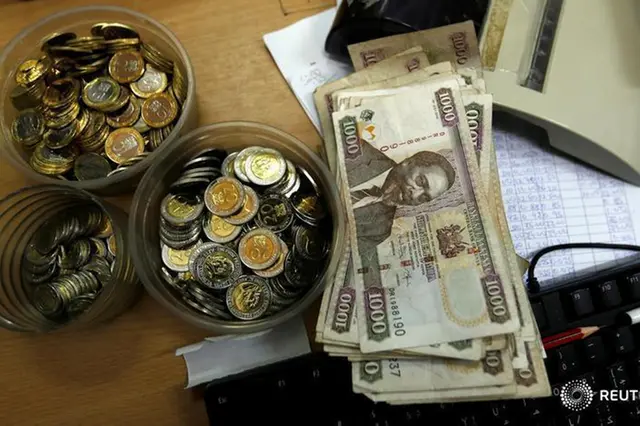
    Kenya shilling coins and notes are pictured inside a cashier’s booth at a forex exchange bureau in Kenya’s capital Nairobi, April 20, 2016. REUTERS/Thomas Mukoya
    Reuters Images

    The agency, which would craft its own assessment of the risks in lending to African countries

    Libby George, Reuters News

    September 12, 2023

    ECONOMYAFRICAFINANCIAL SERVICES

    The African Union plans to launch a new African credit rating agency next year to address the group’s concerns that ratings given to countries on the continent are unfair, an official told Reuters.

    The agency, which would craft its own assessment of the risks in lending to African countries, would be based on the continent, said Misheck Mutize, lead expert for country support on rating agencies with the African Union.

    It will also add context to the information investors consider when deciding whether to buy African bonds or lend privately to countries.

    “We already have quite a huge interest in the private sector to support the implementation of this,” Mutize said, adding they are targeting a launch in 2024.

    The AU, and leaders of member nations from Ghana to Senegal to Zambia, allege that the “big three” ratings agencies – Moody’s, Fitch and S&P Global Ratings – do not fairly assess the risk of lending to African countries, and say they are quicker to downgrade them during crises such as the COVID-19 pandemic.

    All three ratings agencies have denied bias and say their ratings follow the same formula across continents.

    Moody’s and S&P Global Ratings did not immediately respond to a request for comment. Ravi Bhatia, S&P’s lead analyst for sovereign ratings, told Reuters recently that the agency applies the same criteria consistently all regions.

    A Fitch Ratings spokesperson said all sovereign rating decisions use “globally consistent and publicly available criteria” and that all rating drivers were clearly identified.

    OUTSTANDING BONDS

    Broadly speaking, credit ratings are designed to gauge a borrower’s risk of default, and factor in the terms on which banks and others will lend to them. More than a dozen African countries have outstanding international bonds.

    A United Nations Development Programme study in April showed that African countries could save up to $74.5 billion if credit ratings were based on less subjective assessments, citing “idiosyncrasies” in the frequency of ratings actions for African countries as an example.

    Mutize said the new agency was a push to change the narrative.

    “Our goal has not been to replace the big three…we need them to support access to international capital. Our view has been to widen diversity of opinions,” he said.

    “We know the big three follow the opinion of other smaller ratings agencies. They’ve acknowledged that other smaller ratings agencies have got an edge in understanding domestic dynamics.”

    AU finance ministers passed a resolution over the summer to endorse the plan for the new agency, an effort spearheaded by the African Peer Review Mechanism (APRM), a branch of the AU formed last year to improve governance across the continent. The full AU executive council is expected to adopt the same resolution in February.

    The agency would be self funded and private-sector driven with AU oversight, Mutize said.

    “Investors have been quite positive. They want to see what will be the output of this,” he added. “Any investor will pay attention to anything that brings them information.”

    (Reporting By Libby George, additional reporting by Marc Jones, editing by Christina Fincher and Ed Osmond)

    SOURCE

    ZAWYA.COM