Blog

  • A Model for Africa: Côte d’Ivoire Health Ministry Announces New Initiative to Become Self-Sufficient in Paediatric Cardiology Surgery

    A Model for Africa: Côte d’Ivoire Health Ministry Announces New Initiative to Become Self-Sufficient in Paediatric Cardiology Surgery

    The goal of the new initiative is to build a national effort to diagnose and treat many more children

    ABIDJAN, Ivory Coast, July 7, 2023/ — Launched by Mitrelli Group, Menomadin Foundation, Save a Child’s Heart, Côte d’Ivoire Health Ministry and Abidjan Institute of Cardiology; Côte d’Ivoire Minister of Health: “Health-independence is a national strategic priority, and this project is a major step on the road to that vital goal.” ; Taking part in the project: Mitrelli’ s health subsidiary Promed International (Switzerland) and the Sylvan Adams Children’s Hospital (Israel), AFCAO and CHU Nantes (France).

    The Mitrelli Group (https://Mitrelli.com/), the Menomadin Foundation (https://MenomadinFoundation.com/), Save a Child’s Heart (https://SaveaChildsHeart.org/), and the Côte d’Ivoire Health Ministry, this week announced an innovative local-capacity-building initiative in Côte d’Ivoire to establish the country’s local capabilities in the field of life-saving paediatric cardiac surgery, and enable the country to become a model for self-sufficiency in this field in the continent.

    The initiative is rooted in the “UN’s Sustainable Development Goal to promote Good Health and Well Being”.

    Approximately 1 in every 100 babies born in the world suffers from congenital heart disease (CHD), which are structural heart anomalies that occur during pregnancy when the heart or major blood vessels fail to develop properly. CHD is the most common type of birth defect, but with advanced medical care and treatment, the chances of infants and children fully recovering from CHD and living normal adult lives are better than ever. However, in countries where the necessary treatments are unavailable, CHD is the leading cause of mortality in the first year of life.

    According to the WHO (https://apo-opa.info/3O1Ps2F), 2,700 out of 300,000 births registered each year in Côte d’Ivoire, suffer from congenital heart disease. However, the screening rate for these congenital heart diseases is very low (11%).

    The goal of the new initiative is to build a national effort to diagnose and treat many more children, while jointly establishing Côte d’Ivoire’s paediatric cardiac surgery health-independence with advanced medical knowledge and resources.

    As part of this new partnership, projected to last for 5 years, the Institut de Cardiologie d’Abidjan’s medical staff will undergo advanced training in various heart-related procedures from French and Israeli cardiology teams, enhancing their existing professional capabilities. Delegations of surgeons will travel throughout the year to Côte d’Ivoire, to perform operations on young patients, and provide training for local medical teams. In addition, medical teams from Côte d’Ivoire will benefit from state-of-the-art training in Israel in different fields of paediatric cardiac care.

    The project will serve Côte d’Ivoire as a model and a reference point for paediatric cardiac surgery in Africa – not only reducing mortality rates but also improving quality of life for children. Meanwhile, the most serious and urgent cases will be transferred for immediate care in Israel.

    The announcement of the initiative was made at a special meeting at the Côte d’Ivoire Ministry of Health and included the participation of nine children with heart deficiencies, ranging between the ages of 1 to 13 years old, who are traveling to Israel in the coming days to undergo life-saving heart procedures at the Sylvan Adams Children’s Hospital through Save a Child’s Heart.

    In 2020, during the early stages of the project, the foundation, “Children of Africa” under the patronage of First Lady Mrs. Dominique Ouattara, Mitrelli Group, Menomadin Foundation and the NGO “Save a Child’s Heart”, worked together to facilitate successful surgeries in Israel for five children suffering from cardiologic conditions.

    Minister of Health of Cote d’Ivoire Mr. Pierre Dimba spoke on the importance of health independence as a strategy of the government. “Patients with heart defects require not only surgery but also post-treatment. Sending children abroad for surgery is a blessing but not a long-term solution. Achieving health-independence in the field of paediatric cardiological care especially, is a national strategic priority, and this project is the first step on the road to that vital goal. Our vision is to stop outsourcing our healthcare, and instead begin to export our own capabilities to help others.”

    He added, “We are extremely pleased with the cooperation with our partners and the treatments of our children at the Sylvan Adams Children’s Hospital through Save a Child’s Heart and we are looking forward to establishing this extremely important and strategic health model for our country and happy to see it serve as a model cross-Africa.”

    Haim Taib, Founder and President of Mitrelli Group and Menomadin Foundation and President of Save a Child’s Heart Africa said: “This is an incredible opportunity to make a difference in the wellbeing of children and their future through upgrading local capacities and creating sustainable solutions. If 1% of children in the country need heart surgery, philanthropic activity, however blessed, is just a drop in the ocean. In order to create a significant, sustainable and long-term impact, the government must be involved, because only the government has the power to create a long-term solution.

    This is the Mitrelli model – to build long term sustainable development solutions in cooperation with our local partners in health, agriculture, education, and more, ​to create real impact. Together with Menomadin’s ability to provide solutions based on national roadmaps and impact management, I am sure that Cote d’Ivoire will be a model for additional countries.  We are extremely encouraged by Cote d’Ivoire leadership – the president and health minister – and their commitment to building a self-sufficient model to treat children, and proud to be working with such special partners.”

    Eva Peled, Mitrelli’s Partner in Côte d’Ivoire stated: “We have been working with the government of Côte d’Ivoire and its ministry of health for several years. We discovered a wonderful country with many hidden gems, among which is the Abidjan Institute of Cardiology (ICA). The ambitious vision of His Excellency Alassane Ouattara, President of Côte d’Ivoire, has made the health sector a priority for the nation’s citizens. Under the leadership of Prime Minister Patrick Achi and the guidance of the Minister of Health Pierre Dimba, we are honored and proud to join forces in this humane initiative, which reflects our shared beliefs and values. We believe that Côte d’Ivoire will not only become a point of reference for cardiac surgeries, but for many other sectors in Africa.”

    Professor Mohamed Ly, cardiac surgeon, and President of the AFCOA, added: “This extraordinary partnership signifies a monumental step towards providing essential surgical care and empowering local teams, ensuring a brighter future for children who currently lack access to these critical services.”

    Simon Fisher, Executive Director of Save a Child’s Heart: “We are very grateful to the Mitrelli Group and the Menomadin Foundation for their partnership and for initiating the expansion to Cote d’Ivoire of Save a Child’s Heart activities.

    The arrival of the group of nine children in Israel for lifesaving treatment at the Sylvan Adams Children’s Hospital is a major step in the implementation of this strategic initiative in partnership with the Côte d’Ivoire Health Ministry and the Institut de Cardiologie d’Abidjan.

    This group of children, and future groups to be treated in Israel, will complement the capacity building efforts in Côte d’Ivoire  led by the Association Française du Coeur pour l’Afrique de l’Ouest (AFCAO) and the Centre Hospitalier Universitaire (CHU) de Nantes from France turning this initiative into an truly international project that will lead to Côte d’Ivoire to  becoming self-sustainable in Paediatric Cardiac Care and a Regional leader in the field.”

    Distributed by APO Group on behalf of Mitrelli Group.

     
    For more information, please visit:
    www.Mitrelli.com
    www.MenomadinFoundation.com
    https://SaveaChildsHeart.org/
    https://apo-opa.info/44vgDZ9
  • Inter-Ethnic Dynamics in Northern Region

    TAMALE,Northern Ghana,July 6,2023-The attention of the Northern Regional Peace Council has been drawn to
    video commentaries on social media and press releases by certain
    individuals and youth associations which have heightened tension in the
    area.

    The council is deeply concern about the development and appeals
    to traditional authorities, religious leaders, organized groups and the
    general public to remain calm in the face of all forms of provocations as
    mandated institutions take steps to address the situation.

    The Council strongly condemns any act that undermines our collective
    progress and jeopardizes the peaceful environment we have strived to
    build.

    Citizens are entreated to act in ways that will contribute to
    sustainable peace and to make way for development of the region. We
    have the responsibility to ensure peaceful co-existence and to refrain
    from making sweeping generalizations.
    We call on all the people of the region to exercise restraint and
    circumspection in their comments and pronouncements on the matter.

    Social media users are entreated to avoid misinformation,
    disinformation, falsehoods, and use of abusive and insightful languages.

    This is the right time for reflections and to remind ourselves of the
    common values we hold as people of the region and we must be engaged
    in activities that will promote social cohesion.

    The Council further urges regional and national security institutions to
    swiftly arrest and prosecute any individual or group of persons seeking
    to undermine peaceful coexistence in the region.

    We entreat all groups to endeavor to undertake complimentary roles to
    address and improve growth rate in the region.

    Let’s allow peace to prevail in the Northern Region

    Thank you.

    Alhaji Mohammed Awal Alhassan
    For. Most. Rev. Matthew Yitiereh
    (NRPC Chairman)

  • “Konkombas and Dagombas Must Talk”-DCRC

    A revised 1930 Dagbon Constitution document currently subject to approval by the National House of Chiefs and onward submission to the Parliament of Ghana,has since generated misconceptions and misunderstandings relating to some part contents of the document. This has resulted into various threatening social media posts bolstered by a radio interview granted by a Konkomba chief triggering response audio recordings and messages from the side of their age-long neighbours,the Dagombas.

    The Dagbon Constitutional Review Committee(DCRC) has from the onset assured that the revised modern day version of the 1930 document equitably caters for the interest and guarantee the liberties of both Dagomba citizens and non-Dagomba citizens, of the centuries old Dagbon Kingdom.

    Non-Dagomba citizens of Dagbon include,the Konkombas,Basaris,Checkosis among others and who have together enjoyed centuries long peaceful co-existence with their Dagomba brethren.

    With particular reference to the Konkombas,they have enjoyed deep historical,nay,blood ties with their Dagomba brethren and it would rather be prudent using dialogue to resolve whatever misunderstandings that might have arisen out of the Constitution document rather than resort to violence more.

    Now read the full DCRC’s Press Release for more details

    The present rising tension between Konkombas and Dagombas is drawing the two sides to the
    brink of armed conflict. Although most people on both sides have seen the looming danger and
    fear the consequences of war, there seems to be no clear path towards constructive
    engagement so far.

    The irony is that after a war and all its horrors and unspeakable suffering,
    the two sides eventually sit down to discuss the issues over which they went to war. Why not
    avoid war by resorting to dialogue as the first option?

    In the raging social media and microphone sabre rattling, dialogue between the two sides
    seems to be viewed as condescension by one side and capitulation by the other. The fact
    however is that condescension or capitulation, as the case may be perceived, will secure the
    welfare of the Konkomba and Dagomba populations better than war.

    The issues at stake have crystalised around the Dagbon constitution which contains some
    centuries old traditions that some Konkombas view as being detrimental to the interest and
    aspirations of the people.

    That therefore provides a basis for the two sides to talk. To this end, it
    is necessary to provide some clarification on the matter as it appears that many people have not
    yet read the constitution and are not seeing things in their right context and perspective.
    The current dispute being a fall-out of the constitutional review exercise, it ought not be
    escalated to the level we are witnessing as there is a specific mechanism for dealing with the
    subject.

    When the review process was launched, it was given wide publicity and calls were made to
    individuals and groups to submit proposals for the exercise. An invitation was extended to the
    Konkomba Youth Association which responded by disassociating itself from the exercise. Some
    submissions were however received from some individual Konkombas.

    Furthermore, KOYA
    declined the invitation to attend the Constitutional Conference in November 2021 which
    scrutinised and adopted the draft prepared by the DCRC. The conference was however
    attended by some Konkombas from Sanguli. It is pertinent to also recall that the conference was
    attended by the Nakpalibor accompanied by an entourage.

    The conference coincided with the
    visit to Yendi of a government delegation led by the Hon. Minister of Defence to Yendi and this
    probably prevented the Uchabobor from attending.

    The DCRC comprises sixteen members and include the paramount chief of Saboba, the
    Uchabobor, and the paramount chief of Nakpali, the Nakpalibor. Even though it had been
    considered that these eminent chiefs had ably represented their respective jurisdictions, wider
    and direct consultations with stake holders in the areas would have added more value to the
    process.

    At a certain stage during the work of the committee, the consultants were accordingly directed
    by the DCRC to widen consultations with stakeholders who were known to harbour reservations
    or misconceptions about the committee’s work to clarify matters to them and to give them the
    opportunity to express their opinions.

    The Consultants visited the palaces of Diyali, Tolon,
    Banvim, and Gukpegu in a first round. The next round of visits started with Mion and should
    have continued to Saboba, Sanguli, Tatale and Cheriponi. It was however deemed prudent not
    to proceed there at the time KOYA was vehement in its rejection of the exercise and could have
    misconstrued the visit as a provocation.

    Some Konkomba opinion leaders indicated that such
    wider consultations would have brought to the fore much earlier the issues we are now
    confronted with today. The review exercise proceeded to the end and the draft of the
    constitution was adopted by the Dagbon Traditional Council whose membership includes the
    Uchabobor and Nakpalibor.

    It was subsequently approved by the Northern Region House of
    Chiefs and submitted to the National House of Chiefs which is yet to consider it for approval. If
    it is approved it is expected to go through the chieftaincy ministry to parliament.

    Some Konkomba stakeholders have been tracking the movement of the constitution and have
    become concerned that they may be bound by it even though they have not availed themselves
    of the opportunity offered earlier to make their views known. Be that as it may, the door is not
    shut on them .

    Instead of the ongoing expression of anger and threats of fierce resistance, a more peaceful
    approach should be resorted to. The DCRC has not been disbanded and the consultants are
    still at work.

    The concerns being expressed on social media could be formalised to include
    specific proposals and submitted to the DCRC through the consultants for consideration. This
    might pave the way for discussions, wider consultations and clarification of the expressed
    concerns and views.

    Until it reaches the end of the approval process which will take some more
    time, the constitution is still in its formative stage. Even when it its completed and gazetted, it will
    be subject to amendments after its first anniversary to take account of new developments. For
    now therefore the issue is a matter for the DCRC to try to manage.

    An appeal is therefore made
    here to Konkombas and Dagombas to de-escalate the matter and give an engagement within
    the framework of DCRC a chance. The media, social media and microphone sabre rattling by
    platform groups, youth organisations and individuals should be put on hold to allow government,
    concerned politicians, chiefs, elders, and opinion leaders to manage the situation.

    WHAT IS IN THE CONSTITUTION?
    It suffices for now to throw light on some of the immediate areas of contention pending any
    detail discussions on them if such engagement becomes possible.

    1.The constitution is a revision of the 1930 constitution. The objective is to update it by
    excluding or modifying traditions and customs that are no longer compatible with contemporary
    times and adding new concepts and practices to enhance and sustain peace, security, unity and
    development.

    2.The 1930 text stipulated Dagombas and classified all the other ethnic groups as ‘Subject
    Races’ under Dagombas. The DCRC expunged the term ‘subject races’ and provided for the
    equality of all ethnic groups.


    3.The 1930 text listed Gimba and Nafeba as distinct ethnic groups. On the advise of the
    Uchabobor, these two groups have been listed as Konkomba.

    4.The constitution contains a list of the different ethnic groups including Konkombas and does
    not consider any of them as Dagombas.

    5.In the matter of enskinment of the chiefs of Saboba, Sanguli, Nakpali and Cheriponi, the
    DCRC requested the respective traditional authorities to define the respective traditional bodies
    that select their paramount chiefs and to further define the ruling families and qualification for
    the skins. This has been done for Cheriponi, Saboba and Tatale. The paramount chiefs of these
    skins are to be selected in accordance with their respective customs by their accredited elders.
    It is the ceremonial installation or swearing in that is performed by Ndan Ya Na by mutual
    consent.

    6.t is worthy of note that the paramount chiefs of Saboba, Sanguli and Nakpali are responsible
    for the enskinment of their lower chiefs and elders. In a few cases however some chiefs under
    these paramount chiefs are still enskinned by Dagomba chiefs outside those paramountcies as
    had been the practice before the creation of the paramountcies. It is therefore not the case that
    all Konkomba or Basari chiefs are selected and enskinned by Dagomba chiefs.

    7.Currently all paramount chiefs and some divisional chiefs are members of the Dagbon
    Traditional Council. The new constitution provides for all paramountcies to eventually establish
    their own traditional councils subject to the appropriate conditions being available. That
    recognises the eventual creation of traditional councils for Cheriponi, Sanguli, Saboba and
    Tatale which will hold meetings to discuss their traditional affairs, adjudicate their traditional
    judicial matters and pass their own resolutions without the involvement of Dagombas.
    8.The name Dagbon is a geographical concept that recognises the separate existence of the
    different ethnic and cultural groups. It is therefore a multi-ethnic and multi-cultural entity based
    on peaceful coexistence.

    9.On the matter of land, the 1930 constitution described Ndan Ya Na as the alloidial owner of
    the lands encompassed in the geographical area known as Dagbon but it is clearly stated that
    the lands are held in trust for the all people living on it through the various paramount chiefs,
    divisional chiefs and village chiefs.

    This old tradition preceded colonialism by many centuries
    and had merely been captured in the 1930 constitution and carried over into the revised
    constitution.

    The respective ethnic groups who have historical roots in the lands they occupy
    are not constrained in any way by the new constitution which upholds the status quo. The new
    constitution does not seek to dispossess any group of its historical right to the land, Ndan Ya
    Na’s alloidial ownership of the lands not withstanding.

    Beyond the contested issues the constitution encompasses wider provisions governing
    security, peace, unity and development whose implementation should inure to the benefit of all
    the ethnic groups if genuine efforts are made to find common grounds that will put an end to
    disagreements and conflict.

    As the way forward, Konkombas and Basaris stakeholders are urged to engage with the DCRC
    through its consultants to discuss the issues of contention.

    The consultants are ready to
    continue the round of consultations that was truncated as mentioned above on mutually agreed
    dates and venues arranged in collaboration with Northern Region Peace Council which had
    made similar arrangements for the previous engagements in the aforementioned places.

    With the ravages of climate change, underdevelopment and the looming threat of terrorism,
    there is no worse time for conflict than now. It must be avoided at all cost in the spirit of the
    peace accord that was signed by Konkombas and Dagombas in 1995 in the wake of the the
    1994 war. Konkombas and Dagombas have no better option than living in peace with each other.

    Ambassador Ibrahim Abass
    Spokesman for DCRC Consultants
    On authority of the DCRC Chairman, Na Yaba Kuga Na Abdulai I.
    5TH JULY 2023, TAMALE

  • EEA Responds as ISSB makes Climate Risk Disclosure Mandatory for Hospitality Sector

    EEA Responds as ISSB makes Climate Risk Disclosure Mandatory for Hospitality Sector

    Story: Mohammed Abu, Accra.

    The London, UK based Energy & Environment Alliance (EEA) has lauded, the issuance of the inaugural standards, IFRSS S1 and IFRS S2 yesterday by the International Sustainability Standards Board(ISSB) while also noting that, this moment marks the beginning of a new era in which sustainability action and disclosure is no longer voluntary but now mandatory.

    IFRS S1 provides a set of disclosure requirements designed to enable companies to communicate to investors about the sustainability-related risks and opportunities they face over the short, medium and long term.

     IFRS S2sets out specific climate-related disclosures and is designed to be used with IFRS S1. Both fully incorporate the recommendations of the Task Force on Climate-related Financial Disclosures (TCFD).

    Ufi Ibrahim, CEO, EEA, in an official statement issued in London, Tuesday, notes, “The new standards which initially focus on materiality disclosure, will transform business as usual, embedding sustainability and broader ESG considerations in every aspect of running a business. S1 and S2 will come into effect in the 2024 financial year; so, that gives us just a few months to prepare the hospitality industry for adoption of the new disclosure rules.”

    The EEA, the statement disclosed, has already established a working group of industry leaders and experts to deliver meaningful guidance to EEA members and to work with the IFRS and ISSB on the development of sector specific standards.

    “It is critically important that our industry unites to provide collective and considered input to the IFRS process because the new requirements will impact all our businesses and all our asset values”, Ufi Ibrahim intimated.

    “With this formal announcement, the Alliance calls on industry leaders, investors and risk and compliance officers to support the EEA working group”, she added.

    EEA has been established to help the global hospitality industry achieve net zero carbon and ESG (environmental, social and governance) stewardship,

  • Investing in Africa Conference & Expo 2023 Gets Set

    Investing in Africa Conference & Expo 2023 Gets Set

    Now in its 10th year, AFSIC – Investing in Africa is set to host another world-class gathering of Africa-focused businesses, dealmakers and investors to discover and execute investment deals, network and share insights in London on 9-10th October 2023.

    IFC, Accion, Verdant Capital, RMB, Old Mutual, Citibank and more than 120 speakers are confirmed to present exceptional content in a highly structured, multi-stream programme which includes focused sessions on Banking, Informed Investing, Building, Fintech Innovation, Sustainable Growth, Agriculture and Power.

    The highly popular country investment summits led by in-country experts facilitate deep dives into specific African countries to explore and debate local issues and investment opportunities with interactive Q & A sessions.

    Underpinned by the Award-Winning AFSIC African Investments Dashboard, the expanded Quickfire sessions and investor networking sessions will showcase a wide range of African start-ups, growth companies and Africa-focused funds that are seeking capital, for a variety of different projects from zero emissions logistics solutions to secure payments systems to SME-target funds. Quickfire presenters benefit from a range of promotional opportunities across the group’s investor network in the lead up to AFSIC.

    British International Investment, Executives in Africa and FSD Africa head up an impressive group of loyal sponsors and partners with 27Four, Ebury, Mitco and Bank One welcomed as new sponsors for 2023. These sponsors exemplify African expertise in investment, financial services and human resources and will share key insights into the African investment ecosystem.

    The beating heart of physical events is physical networking which at AFSIC is driven by highly interactive sessions, panel debates, B2B meetings via the Event App and social functions.

    Don’t miss out on networking at the leading gathering of Africa-focused investors. Listen, learn and debate at presentations, country summits, quickfire pitch sessions, networking sessions, informal chats and social events – all making AFSIC 2023 an unmissable opportunity.

    AFSIC 2023 www.afsic.net

  • Global fintech giant invests in sustainable communities in West and Southern Africa 

    Global fintech giant invests in sustainable communities in West and Southern Africa 

    Having pioneered the development of online trading and digital investment solutions 22 years ago, global fintech company Admirals is today considered a market-leading provider of an innovative range of online trading and investment products.  

    The Admirals suite of products includes leveraged Contracts for Difference (CFD) products in the over-the-counter market, including Forex, indices, commodities, digital currencies, stocks, and ETFs, as well as listed instruments to retail, professional, and institutional clients. 

    The company is steadily increasing its footprint in Africa, having opened its first African office in Cape Town, South Africa in July 2022, followed by the launch of its Lagos office in Nigeria in February this year.

    Admirals currently serves clients across 176 countries world-wide.  

    With a physical presence in 18 countries across developed and emerging economies, Admirals is deeply committed to bridging the financial inclusion gap that spans across continents, economies, and societies. 

    “Financial freedom is a universal objective,” says Boriss Gubaidulin, Admirals Africa Director. “By offering simplified retail trading and investing processes and solutions, supported by accessible financial literacy and education material, we aim to encourage greater access to global financial markets in a transparent, secure, and sustainable manner,” he says.  

    “As we continue to expand our footprint, we are constantly witnessing the many social, economic, and environmental challenges affecting societies the world over,” he continues. “As a reputable neobroker with a growing base of savvy and socially conscious clients, Admirals is actively living its commitment as an ethical, and socially and environmentally responsible global citizen to drive the betterment of communities in which we operate,” Gubaidulin says. 

    In 2020, Admirals developed and rolled out its global environmental, social and governance (ESG) program which directs its strategic corporate social investment initiatives. These projects range from tree planting and reforestation, clean ocean initiatives, investing in renewable energy and scarce resource management projects, recycling, and the development of better living conditions for local communities. 

    Admirals’ ESG philosophy 

    Admirals has been at the industry forefront by engraining the principles of ESG as part of its strategic business imperatives. Incidentally, Admirals has taken on a carbon-neutral status in 2020, which is firmly integrated into the Admirals overall business model.  

    The company engaged a global third-party rating agency, ClimatePartner, to verify its carbon footprint, as well as certify the CSI projects in which Admirals is involved. 

    Here on the African continent, Admirals has been involved with two sustainable water management and renewable energy initiatives in Sierra Leone and South Africa respectively.  

    Project 1: Clean drinking water in Kono, Sierra Leone  

    Sierra Leone is a largely rural country where households typically use wood fuel on inefficient three-stone fires to purify their drinking, cleaning, and washing water. This process results in the release of greenhouse gas emissions from the combustion of wood. 

    However, these emissions can be avoided by using efficient borehole technology that does not require fuel to supply clean water. 

    Admirals’ support is helping communities in the Kono region to restore 57 wells. In cooperation with the local population, damaged wells are repaired and regularly maintained, which secures the regional water supply. The availability of clean drinking water eliminates the need to boil water, saving an average of 10,000 tonnes of CO2 emissions per year. 

    Not only does this initiative contribute to climate action but it also has a major social impact. In these rural areas, water sources are often located far from residential areas. Women and children, who are primarily responsible for fetching water, may have to travel long distances, sometimes several kilometres, to access water. This not only consumes their time and energy but also poses safety risks, especially for women and girls. 

    Project 2: Investing in the future of South Africa’s sustainable clean energy generation 

    South Africa has been in the grip of a severe energy supply shortage in recent years, and every effort possible is being made to generate additional electricity capacity. Admirals has heeded the call for investors to help drive clean energy projects by pledging its support to one of the country’s largest wind projects.  

    Close to the rural town of De Aar in South Africa, 96 wind turbines have been producing an average of 439,600 MWh of electricity per year since 2017, which is being fed into the South African grid. The aim of the project is to harness the region’s wind energy potential to balance its energy needs in a sustainable way. This diversifies the power supply and improves energy security in regions that are frequently affected by power shortages and outages. 

    The share of electricity now supplied by the wind farm would have otherwise been generated by fossil fuels. The wind power project avoids about 433,920 tonnes of CO2 emissions per year, which makes an important contribution to a clean energy supply and sustainable development with respect to the UN Sustainable Development Goals (SDGs). 

    In addition to the environmental benefits, the project assists the local community by creating jobs and improving the access to healthcare through its Mobile Health Clinic. Offering primary healthcare, dental, eye care services, more than 36 000 residents and members from nearby communities have been screened and serviced by this clinic. 

    The project supports local football clubs by funding equipment, events, travel and much more. It also provides financial funds to the Richmond Untied Ladies Football Club, the only female club in De Aar playing in the premier league. 

    The project supports a math enrichment programme for pupils in 10 primary and 4 high schools to encourage interest in this subject. Three Early Childhood Development Centres were renovated to support about 155 children between 2 and 6. About 108 students are currently on the project’s bursary scheme that covers tuition, accommodation, books, food, and laptops. 

    “Contributing meaningfully to society is one of the cornerstones of our business,” Gubaidulin says. “Admirals considers the environment, our actions, and the influence we can create as global leaders. We are deeply committed to leaving a legacy through shared success and by creating flourishing communities across the globe,” he concludes. 

    —————————————————————————————————————————————— 

    Admirals Group AS 

    Admirals Group AS is a global growing FinTech company, offering a wide range of products and services worldwide, meeting people’s needs and making personal financial management easy-to-use, affordable and secure through its regulated investment firms. 

    The online investment service providers that are owned by Admirals Group AS, are authorized to offer their clients with the ability to trade Forex, and CFDs on, inter alia, indices, metals, energies, stocks, bonds and digital currencies, but also to invest in Stocks and ETFs (product offering may vary depending on each investment service provider’s license obligations and the client’s country of residence). 

    Over the years, Admirals has received internationally recognized and respected awards and recognitions, including the ‘Best Broker of 2022’ awards from both Area de Inversion and Traders.com, as well as the Traders.com award for ‘Best Financial analyst of 2022’.  

    Since founded in 2001, Admirals continues to experience worldwide growth and evolution and is committed to providing its clients around the globe with advanced trading tools, access to financial security and various customer care policies.  Admirals is licensed in the Seychelles, UK, Cyprus, South Africa, Australia, Jordan, Canada and Kenya. 

    For more information about Admirals visit admirals.com. 

    Trading involves risks.  

  • CHIC Implements Accor digital solutions across owned portfolio in DRC

    CHIC Implements Accor digital solutions across owned portfolio in DRC

    Five hotels, including Novotel Kinshasa La Gombe will integrate Accor’s innovative digital solutions including mobile solution Accor key and Opera cloud systems 

    Compagnie Hoteliere et Immobiliere du Congo (CHIC), the leading hotel owner and developer in the Democratic Republic of Congo (DRC), at  AHIF 2023 in Nairobi, Kenya, announced the implementation of Accor driven digital solutions covering five hotels of the CHIC group, opening soon under under the Novotel and Ibis Styles brands across 4 cities, bringing 660 keys to the country. 

    This implementation, according to the official statement, aims to offer a unique experience to customers, due to the deployment of Accor’s innovative digital solutions which will be the first in DRC to integrate cloud solutions with mobile keys and Opera Cloud systems.

    These solutions, it noted, will facilitate “Fast Check-in and Check-out” for guests and allow them to access their room via their smartphone offering the option to avoid visiting the Front office as well as benefit from latest guest centric tools, fully mobile with optimized management of hotel operations. The move will further assist in reducing the ecological footprint of the hotels by limiting the use of paper and magnetic cards

    “We are delighted to partner with Accor, a major player in innovation in hospitality, to offer our customers an unprecedented experience in the DRC. The decision to bring the Accor Key and other cloud-based solutions to our hotels demonstrates our commitment to invest in cutting-edge solutions that exceed the needs and expectations of travellers, staying at any of our five hotels across DRC,” says Mr. Khalil Manji, Partner – CHIC”.

    “This strategic partnership with CHIC strengthens our presence and leadership in the DRC, a key market in Africa. We are proud to collaborate with a renowned hotel group that shares our vision of augmented hospitality and our commitment to sustainable development”, We are convinced that our innovative digital solutions will add value to the hotels of the CHIC group”, says Clinton Govender, IT Director Southern Africa at Accor

    The digital key solution allows customers to use their smartphone to open the doors of ACCOR hotels. Without a physical key, they can enter their room, the meeting rooms, the elevators and other spaces. The application is compatible with Android and iOS systems and is integrated with the Accor ALL Loyalty application.

  • State Visit Maldives – President Ramkalawan holds talks and conducts visits as part of Maldives State visit

    State Visit Maldives – President Ramkalawan holds talks and conducts visits as part of Maldives State visit

    14 June 2023 | Foreign Affairs

    Male, Maldives 14 June: President Ramkalawan, as part of his State visit in Maldives, held various discussions with various senior government officials and visited tourism establishments as part of his tour of the island nation.

    Amongst some of the high-level officials President Ramkalawan met with were the Vice-President of the Republic of Maldives, His Excellency Hon. Faisal Naseem, the Speaker of the Parliament of the Maldives, His Excellency Hon. Mohamed Nasheed and the Maldivian Minister for Foreign Affairs, His Excellency Hon. Abdulla Shahid.

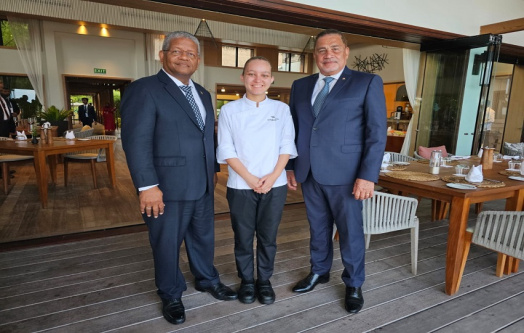
    Whilst visiting tourism establishments, the President took the opportunity to visit and interact with the two young Seychellois currently undergoing work-based training at Waldorf Astoria, Maldives; Mr. Samuel Marie and Ms. Naomi Payet. Mr Marie and Ms Payet are on the ‘Fitir’ program by Hilton Labriz Silhouette and were the two top participants from their cohorts nominated for the internship. The President and the First Lady also met with Ms Serena Mangroo a Seychelloise currently working in the Maldives for the past five years.

    The President also visited the Trans Maldivian Airways seaplane operation which is the world’s largest seaplane fleet. This was an opportunity for him to view their full operation and experience first-hand how the seaplane inter-island transfers are done in the Maldives and discuss possibilities of exchange. 

    Accompanied by the Minister for Foreign Affairs and Tourism, Mr Sylvestre Radegonde,  President Ramkalawan also toured various island resorts and held discussion on sustainable tourism practices being implemented by the Maldives. 

    Source:(State House News)

  • CityBlue Opens in South Sudan and Tanzania

    CityBlue Opens in South Sudan and Tanzania

    Openings in July 2023

     Date: 13 June 2023

    CityBlue Hotels, Africa’s fastest-growing local hotel chain, is pleased to announce the signing of management agreements and the commencement of operations from July 2023 of the CityBlue Panorama Hotel & Suites, Juba, South Sudan and Urban by CityBlue, Masaki, Dar es Salaam, Tanzania.

    The CityBlue Panorama Hotel & Suites in Juba is a 72-key property upscale mid-market property located in the airport zone in Juba, South Sudan while Urban by CityBlue in Dar es Salaam is a boutique 65-key lifestyle property with a rooftop restaurant.

    Andat Ghidey, director of the development company owning the CityBlue Panorama Hotel & Suites, said that CityBlue Hotels has developed a defined strategy of covering all East African markets, making it a natural partner to expand alongside. “CityBlue has a clear and distinguished history in East Africa – with properties in every city. Juba is the only market it is yet to penetrate. We will support CityBlue in the South Sudanese market across rooms, food, beverage and conferencing”.

    Khalil Hamadi, director of the property company behind Urban by CityBlue, Dar es Salaam, said that CityBlue had worked closely with its partners in Tanzania since 2019, before the COVID-19 pandemic, and he strongly believes that the business plan will now turn into reality. “Every member of CityBlue understands their role and we are almost ready to turn this partnership into a new dawn for the hotel market on the peninsula of Dar es Salaam”.

    Jameel Verjee, Founder & CEO of CityBlue Hotels, said “Our homework has been done and we have a fantastic team which understands African hospitality. We are focused on results – in terms of occupancy, rates, ESG targets, customer satisfaction, stakeholder support and human resource development. Juba and Dar es Salaam are two exciting markets and we proud to have such partners”.

    ABOUT CITYBLUE HOTELS

    CityBlue was founded by Jameel Verjee in 2013 as an African-born brand which he has developed from inception. Having opened the first CityBlue hotel in Rwanda in 2013, CityBlue has now expanded across eight major cities in East Africa, following a path to create one of the leading multi-jurisdictional African hotel chains. It is anticipated that by end-2024, CityBlue will have added to its existing portfolio with hotels across seven African countries and approximately 2,000 keys. 

    CityBlue’s portfolio features the following sub-brands: Urban by CityBlue in the business boutique space, Residences by CityBlue for long-stay guests, CityBlue Hotel & Suites in the business budget space and the CityBlue Collection for charming hotels that maintain their identity. A new venture called c3 was launched in 2023 as a smart hosting and property management company for the sub-Saharan African market. 

    ABOUT THE DIAR GROUP

    The Diar Group, a UAE-based office established by the Verjee family, includes a hospitality arm called Diar Hospitality, a hotel management company. The operations of CityBlue Hotels, its African-born hotel chain, are managed by Diar Hospitality.

    The Diar Group is also engaged in cultural heritage and philanthropy in East Africa.

  • Hospitality Leaders discuss supply chain challenges at AHIF 2023

    How intra-African trade measures, technology and a new generation of hospitality leaders are challenging “business as usual” 

    Date: 14 June 2023

    For too many years, African hospitality leaders have worked incredibly hard to maintain operational standards when critical products are unavailable to be sourced on time due to a myriad of reasons, from changing trade restrictions, poor transport infrastructure, currency fluctuations, and supply chain breakages.

    This week leaders across the hospitality sector have descended into Nairobi city, the vibrant capital of Kenya and hub of East Africa, to join the annual African Hospitality Investment Forum (AHIF) to discuss growth opportunities in the region, and to share their learnings from the last year including developments across the trade and operational landscape. Attending is Toggle Market’s CEO, Fuad Sajdi, and VP of Africa, Abraham Muthogo Kamau, where they have been leading discussions on leveraging local and regional sourcing, and the innovative ways the sector is reducing operational costs.

    Supply chain challenges in Africa have been one of the primary obstacles for economic growth and diversification, with businesses continuing to pay inflated prices for nearly every consumable and operational product that is not locally grown or manufactured – where even then it is more profitable to export outside the continent than to cater to the regional market due to weak intra-trade regulations.

    Today there are promising signs that this status quo is changing fast.

    The African hospitality industry is in the throes of a massive transformation. The catalysts? Ground-breaking trade measures, rapidly evolving technology, and a fresh generation of visionary leaders. These forces are challenging the traditional “business as usual” mindset and reshaping the African hospitality landscape.

    The African Continental Free Trade Area (AfCFTA), the largest free trade area globally since the formation of the World Trade Organization, is set to significantly bolster intra-African trade. By reducing trade barriers, it allows a more fluid movement of goods, services, and people across borders. The ripple effect will be profound, with the hospitality sector one of the many industries reaping the benefits of this regional integration.

    Breaking with the Past

    The lessons of the Covid-19 pandemic have been harshest on the world’s largest continent which has for so long relied on suppliers in far flung countries, most heavily on goods from China, European Union (EU) countries, United States and India.

    Take for instance South Africa which remains the largest importing country in Africa at 17% of all imports in the region. Its largest import partners in 2023 were China at 21.9%, followed by United States at 8.8%, Germany at 7.3%, India 5.8% and the UAE 3.6%.[1] The next largest importing countries are Nigeria, Egypt, Morocco, Kenya and Ghana.

    The elephant in the room is that Intra-African trade still stands at only 15.2%, a poor showing when compared with intra-continental trade figures for America, Asia, and Europe, which stand at 47%, 61%, and 67%, respectively, and which should be at the head of the pan regional efforts to support trade and business. Much of this is due to multiple trade restrictions that exist in the region and between neighbouring countries for instance.

    The recent World Bank 2022 AfCFTA report[2] shows that the borders between African countries rank among the most restrictive in the world and is the main reason there is relatively little intra-African trade and investment.

    The impact of this in real terms is putting the break on the growth of regional businesses while limiting the flow of the international supply chain which in turn heavily relies on intra-African trade routes (where goods are transported across several borders by land routes) due to poor infrastructure and lack of trade and custom harmonisation.

    For locally grown African hospitality investors and operators, the supply chain challenges remain acute, and ramifications have meant consistent delays in the growing pipeline of projects, along with sometimes turbulent price fluctuations on shipping and logistics services, as well as effects of weakened domestic currencies.

    Our research across Toggle Hospitality clients in Africa has shown examples of multiple duties paid in this way to receive goods crossing several borders resulting in highly inflated pricing for essential products and equipment.

    Trade Cooperation and Collaboration

    The good news is that there are signs across all industry sectors of more joined up thinking and increased regional cooperation. For instance, amongst East African nations there has been a noticeable increase in activities across both government backed and private sector efforts through the multiple alliances that exist such as the East Africa Business Council, the East African Chamber of Commerce and Trade, and the East African Association.

    In addition, the highly lauded and anticipated rollout of the African Continental Free Trade Area (AfCFTA) agreement is geared to be the largest free trade region in the world based on the number of countries – at once connecting 1.3 billion people across 55 countries with a combined gross domestic product (GDP) valued at US$3.4 trillion and with a major potential as well to lift over 30 million people out of the poverty line.

    For this to succeed there will need to be mutual and significant policy reforms and trade facilitation measures to reduce red tape, simplify customs procedures, and make it easier for African businesses to integrate into global supply chains. The upside is a boost of income gains around $300 billion.

    The role of technology and the importance of a knowledge-based economy will increasingly be a driving force for transforming economic prosperity. The latest report from UNCTAD has warned that neglecting the high knowledge-intensive services, such as information and communications technology services and financial services, will be a key reason holding back export diversification in Africa.[3]

    A new generation of hospitality leaders in Africa making waves

    One of the most exciting outcomes of more regional integration is the rise of home-grown hotel chains that are now expanding beyond their respective national borders. In 2022, intra-African travel accounted for 40% of the total number of hotel guests in the continent, up from 34% in 2019, according to the African Development Bank. This increase is partly attributable to the easing of travel restrictions and the growth of African hotel chains.

    The United Nations World Tourism Organisation (UNWTO), forecasts 134 million visitors by 2035. These figures make it the second fastest growing region in tourism after Asia Pacific.

    This new wave of hospitality brands is being led by a dynamic generation of African leaders who understand the local markets and are at the forefront of developing more viable value-based networks and forging stronger regional partnerships. These individuals are harnessing the benefits of the AfCFTA, using innovative practices to enhance the hospitality experience with a unique African flavour that can cater better to the African consumer needs while at the same time offering global standards of service. For example, today over 80 percent of safari lodges in South Africa are managed by indigenous brands and a part of the tourism sector that generates around 70 percent of hospitality revenue. This segment is growing rapidly across the region.

    “There is a major paradigm shift taking place with progressive trade policies and cutting-edge technology. This new generation of leaders are poised to redefine the essence of hospitality in Africa. We are delighted to be participating this year at AHIF 2023 which continues year on year to help shape the African hospitality industry and spotlight investment opportunities,” said Abraham Muthogo Kamau, VP of Africa at Toggle Market.

    Technology is a driving force behind this transformation. Digitization is permeating every facet of the hospitality experience from reservation systems to room service, with growing numbers of hotels now using a form of smart-room technology or employing AI-driven services such as chatbots for customer service and offering mobile apps for reservations and in-stay services.

    The integration of technology has also enhanced efficiency and sustainability within the sector. African hotels can see up to 30% increase in energy efficiency and 25% reduction in water usage, thanks to the adoption of smart technologies.

    Although Africa only receives 5% of the regional share of worldwide tourism,[4] this number is rising after the Covid slump with 2022 seeing 47 million tourists returning to the continent after the high of 69 million in 2019. UNWTO forecasts 134 million visitors by 2035 making it the second fastest growing region in tourism after Asia Pacific. There is also robust and growing domestic tourism within Africa as increasingly middle-class families and younger travellers opt for more local and regional travel.

    The supply chain, too, has been revolutionized by both trade facilitations and technology.

    A recent survey revealed that the average lead time for supply delivery dropped by 15% in 2022. This improvement is due to more streamlined cross-border processes and the implementation of digital supply chain management systems. Moreover, the increased use of this technology has led to more resilient and responsive systems. More hotel chains can now track their supply deliveries in real-time, forecast demand more accurately, and react swiftly to changes in the market.

    The wave of change isn’t confined to the large chains alone. It’s being felt in every corner of the industry, from boutique hotels in Accra that blend modern design with traditional Ghanian culture, to eco-friendly lodges in the Maasai Mara that champion sustainable tourism.

    As intra-African trade continues to flourish and the technological landscape evolves, the African hospitality sector is preparing for an exhilarating future. This new era is being ushered in by ambitious, tech-savvy leaders who are ready to shake off the old and bring forth the new.

    Source:(The Bench)