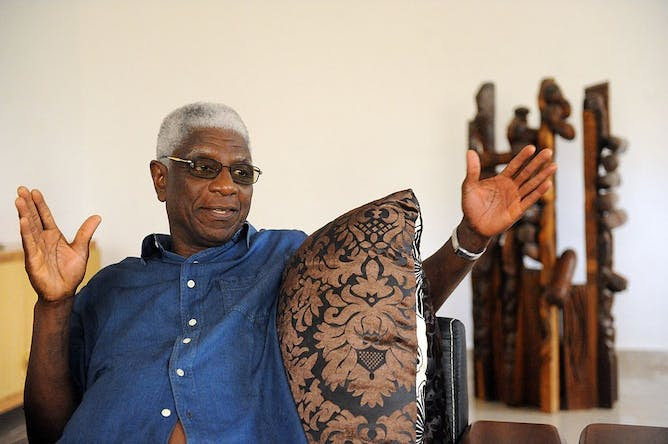
CAPE TOWN, South Africa, January 11, 2024/ — Herbert Mensah, President of Rugby Africa (www.RugbyAfrique.com), the continental governing body of rugby across Africa, issues end of year message reflecting on 2023:
Amidst our joyful farewell to 2023, I am thrilled to share my reflections as the President of Rugby Africa, the continental governing body of rugby in Africa. Together, our collective accomplishments have not only defined this year but have also laid a foundation for the promising future of Rugby Africa.
Milestones and Achievements
As we reflect on the remarkable journey of the past nine months, it is with immense pride that I share the highlights of our accomplishments. From the success of the Rugby Africa Women’s tournament in Madagascar to the significant Rugby Africa Men’s Olympic qualification tournament in Zimbabwe, the thrilling Rugby Sevens tournament in Mauritius, and the vibrant scene in Tunisia’s Monastir, our efforts have truly shone on the rugby stage. Notably, a significant portion of our achievements this year has been dedicated to francophone countries.
We celebrate the re-admittance of Nasser Bougja as Vice President, the return of the Moroccan Rugby Federation to Rugby Africa, an established pathway solution for Cameroon, Ghana and management of other upcoming elective Annual General Assemblies and the momentous milestone of signing the long-awaited agreement with the French Development Agency (AFD) to foster the development of women’s rugby in Africa.
We have addressed administrative challenges by rectifying loose agreements within Rugby Africa that were either uncontracted or unpaid. Internally, administrative efficiency has been enhanced with the establishment of committees, each equipped with clear terms of reference and KPIs for committee members.
Looking ahead, we are committed to annual reassessments, ensuring that our committees maintain the highest standards of performance. It’s important to note that accountability remains a cornerstone, and those unable to meet expectations will be subject to be reassigned from their roles.
Commitment to Progress
As President of Rugby Africa, I continue to call for a mindset change recognizing that sport is big business. This plea heralds a new era, challenging the status quo with a comprehensive constitutional review—a ground breaking initiative unprecedented in our history.
This review, initiated by Rugby Africa through the Executive Committee, involves input from various committees, our judicial council, external legal experts and a final presentation to member unions for ratification. This transformative process signifies our commitment to transparency and progress, setting a new standard for Rugby Africa.
Strategic Planning
We have successfully developed and received approval for our strategic plan, a blueprint aimed at providing financial support to all 39 member unions of Rugby Africa. Considering the limited funding from World Rugby, which primarily supports 21 out of the 39 Rugby Africa member unions, this strategic plan is a significant milestone for Rugby Africa.
The plan, meticulously reviewed and presented across our committees, places a strong emphasis on securing financial backing to ensure that all Rugby Africa member unions have the necessary support to play competitively and thrive in the world of rugby.
Financial Initiatives
In a strategic effort to maximize our resources, Rugby Africa has introduced a series of financial initiatives. For the first time ever, hosts are now entrusted with covering all hosting grants- a move anticipated to result in cost savings.
Guided by our Competition Manager, Johnbosco, calculations are underway to access the potential impact of these changes. Furthermore, Rugby Africa is in discussions for multiple sponsorship opportunities, with an official announcement expected mid 2024.
These initiatives underscore Rugby Africa’s commitment to foster more opportunities for rugby across the continent, reshape competitions and elevating the overall rugby experience. Among our own initiatives, we remain hopeful to receive greater levels of financial support from World Rugby, to further support our development and advance the growth of rugby in Africa.
Unity Among Unions
We approach the future with a sense of optimism and gratitude. My sincere appreciation goes to all the unions that have embraced the challenges. In Southern Africa, Lesotho, Eswatini, Mozambique and Botswana, have successfully organized a spirited competition, reflecting the true spirit of rugby.
Burkina Faso actively engaged in a Seven’s competition, demonstrating their dedication to the sport. Guinea participated in an international match with Sierra Leone, fostering unity in our rugby community.
Over the past two months, Ghana has actively engaged in matches with Benin and Togo. Beyond borders, collaborative efforts between Rwanda, Burundi and Tanzania are gaining momentum as they work towards organizing their own competitions.
I was particularly enthused by the huge efforts of Uganda’s test matches in Tunisia and Algeria’s proposed test match against Senegal. Furthermore, the 2023 Indian Ocean Island Games hosted by Madagascar, with countries such as Mauritius participating, provided an additional opportunity for increased game time. I am deeply grateful for the collective enthusiasm displayed by the unions across the continent. Together, as a federation, we are charting a path of enthusiasm and progress in the world of rugby.
Acknowledgement and Gratitude
I extend my heartfelt gratitude to APO Group, South Africa Rugby Union, French Rugby Federation (FFR), French Development Agency (AFD), and World Flair for their invaluable support. Their commitment and collaboration have provided us with a powerful platform to champion our firm belief that the development of rugby in Africa is not just a sport but an investment in the future of the continent.
Together, with the support our partners, we are building a foundation for the growth of rugby, fostering community engagement, and contributing to the overall development and well-being of Africa. Thank you for your unwavering dedication to this shared vision. This year, Rugby Africa has asserted itself on the global stage, making it abundantly clear that Africa is key player in the world of rugby.
During the Bloomberg Gateway Conference in Morocco, our message reached an audience of over 3.5 million people, emphasizing the vast business opportunities inherent in investing in rugby across Africa, showcasing our continent at the forefront in the global marketplace.
At the Africa Investment Forum in Marrakesh, I had the privilege of engaging in discussions with the President of the African Development Bank, highlighting rugby’s potential to drive economic growth through investment opportunities emerging from the continent itself. These events are instrumental in shaping Rugby Africa’s global positioning, paving the way to a future where rugby across Africa can ascend to new heights.
We continue to ask ALL to accept a mindset shift to give the opportunity of sports (Rugby) a chance. Sport is NOT a charity it is BIG business!
Reflections and Greetings
A substantial amount of work has been accomplished by members of the executive committee, along with dedicated efforts of staff members and myself. As President of Rugby Africa, I believe it becomes evident that 2023 has been dedicated to laying the foundational groundwork.
We anticipate that the fruits of our labour will begin to manifest from the second half of 2024 onwards. In extending my sincere gratitude, I wish season’s greetings to everyone, embracing the diversity of religious traditions that enrich our continent. This is a time for unity, for coming together, breaking bread, and celebrating the strides we made collectively.
God be with all of us!
Herbert Mensah
President of Rugby Africa
Download official letter here: https://apo-opa.co/
Media contact:
Nicole Vervelde
Communications Advisor to the President of Rugby Africa
rugby@apo-opa.com